
A ski rack is the piece of kit that carries your skis to the mountain and back, keeping them safe, steady and out of the way of everything else in the car. It sounds simple, and it is, but a bad ski rack is a miserable thing: skis that slide, clamps that freeze shut, a rack that whistles at motorway speed or, worst of all, a rack that lets go. The best ski racks of 2026 are the ones that make the trip to the slopes feel easy, so the skiing starts before you even arrive. This guide compares the main types, explains what to check before you buy, and picks the best rack for most cars, most families and most budgets.

What Makes a Ski Rack Good
The first thing to judge is the grip. A ski rack is only useful if it holds the skis tight, and the best racks have rubber-lined arms that close firmly around the skis without crushing them, a lock that stays locked, and a hold that does not loosen as the car bounces along a mountain road. Grip is the first test, and it is easy to feel: load the skis, lock the rack, and give them a firm shake. Skis that do not move are skis that are safe.
The second thing is the loading. A ski rack is used in the cold, often in gloves, often in the dark at the end of a long day, so a rack that needs fiddly buttons, tiny keys or two hands to open will be cursed every single time it is used. The best racks open with one hand, take the skis in a single smooth movement, and close with a clear click that tells you they are locked. Easy loading is worth paying for, because it is what makes the start and the end of the day pleasant.
The third thing is the fit. A ski rack has to suit the car as well as the skis, and the best racks fit the roof bars or the tow bar that the car already has, without adapters, bodges or guesswork. Check the bar shape before buying, because a rack made for square bars will not sit properly on aero bars, while a rack made for aero bars will wobble on square ones. A rack that fits the car and the family is a rack that works every trip.
The Main Types of Ski Rack
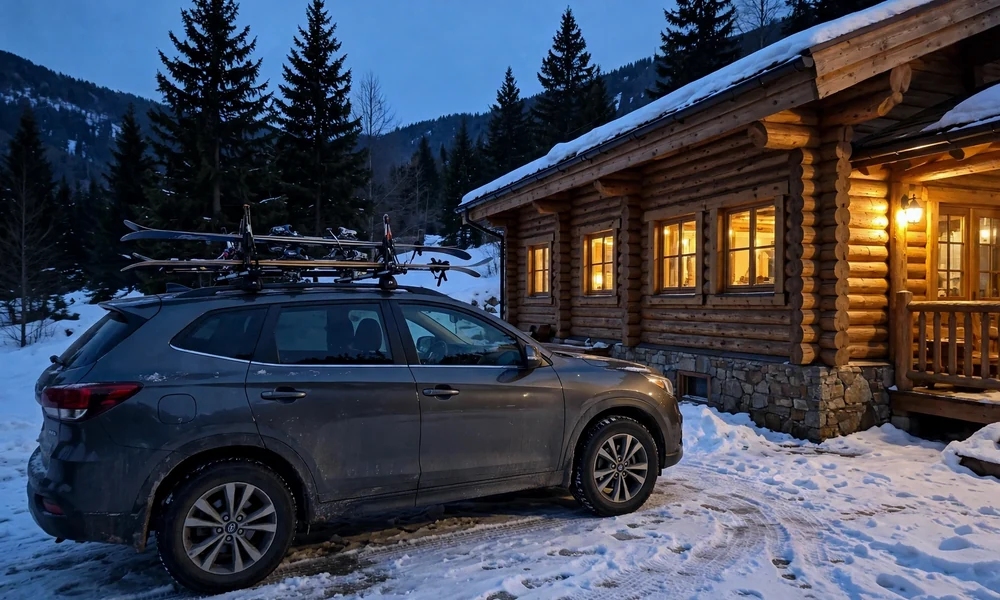
Roof-mounted ski racks are the classic choice. They clamp to the roof bars, they hold the skis flat above the car, and they are the best choice for most people, because they leave the boot free, they suit almost any car with roof bars, and they are easy to fit and remove. They suit a family car, and they are the easiest type to live with. The trade-off is the height: loading skis onto a tall car takes a stretch, and a roof rack adds wind noise and drag. For most skiers, a roof-mounted ski rack is the one to buy.
Hitch-mounted ski racks are the low-loading option. They fit onto the tow bar at the back of the car, they hold the skis upright behind the car, and they are the best choice for someone with a tall car or a bad back, because the skis load at waist height with no reaching up. The downside is the access: a hitch rack blocks the boot, and it needs a tow bar, which not every car has. For someone who hates reaching overhead, a hitch-mounted rack is the one that works.
Magnetic ski racks are the quick-fit option. They stick to a steel roof with strong magnets, they need no roof bars at all, and they are the best choice for a car without bars or for a hire car, because they fit in minutes and come off just as fast. The trade-off is the capacity and the speed: a magnetic rack holds fewer skis, and it is not meant for very high speeds or very rough roads. For an occasional trip in a car without bars, a magnetic rack is the one to buy.
Enclosed ski carriers are the protected option. They hold the skis inside a slim box on the roof, they keep the skis clean, dry and out of sight, and they are the best choice for a long journey or for expensive skis, because road salt, grit and spray never touch them. The downside is the price and the size: an enclosed carrier costs far more than an open rack, and it takes up the whole roof. For a long trip with dear skis, an enclosed carrier is the one that matters.
Rear-door ski racks are the budget option. They strap to the back door or the tailgate, they hold the skis upright behind the car, and they are the best choice for a small car or a tight budget, because they cost little and need no bars or tow bar. The trade-off is the security and the access: a strap-on rack is rarely as solid as a bolted one, and it blocks the rear door. For a short trip on a budget, a rear-door rack is the one to buy.

How to Choose the Right Ski Rack
Start with the car, not the rack. A car with roof bars needs a roof rack, while a car with a tow bar suits a hitch rack, and a car with neither needs a magnetic or strap-on rack. A rack that does not match the car will not fit, however good it is. Match the rack to the car first, and the choice narrows quickly. Buying the prettiest rack available and hoping it fits is the fastest way to end up with a rack that sits in the garage.
Then check the practical details. Count the skis before buying, because a rack that holds four pairs will not take five, while a rack that holds six pairs is heavy and wide for a solo skier. Check the width of the skis too: fat powder skis need wider arms than slim piste skis, and a rack that pinches wide skis will damage them. And check the weight: a rack that is too heavy to lift onto the roof on your own is a rack that will stay in the garage. A rack that fails any of these tests will be a problem on every trip.
Finally, think about the winter itself. Road salt, grit and freezing rain are hard on any rack, so look for rust-resistant fixings, rubber that stays flexible in the cold, and a lock that does not freeze shut after a night in the mountains. A rack that survives a season of salt and ice without seizing up is a rack that will still be working next winter, and a rack that still works next winter is money well spent.
The Best Ski Racks of 2026
The best roof-mounted ski rack for most people this year is a sturdy rack with rubber-lined arms, a one-hand opening, and a hold for four to six pairs of skis. It fits standard roof bars, it loads in seconds, and it is the rack for a family car. For most skiers, this is the rack to buy.
The best hitch-mounted ski rack of 2026 is a rack with a low loading height, a tilting frame that lets the boot open, and a firm hold for four pairs of skis. It needs a tow bar, but the easy loading is worth it. For someone who hates reaching overhead, this is the rack that works.
The best magnetic ski rack is a rack with strong magnets, a soft protective base, and a hold for two pairs of skis. It will not carry a whole family, but for a couple on a weekend trip, it is all that is needed. Cheap does not have to mean useless, and this rack proves it.
The best budget ski rack of 2026 is a simple roof rack, at a price that is less than a day’s lift pass. It is steady, it is easy to fit, and it is genuinely useful. For a first rack, this is the one to buy.
What Else You Need
A ski rack works best with a little help. A good roof box on the same bars will carry boots, helmets and poles, leaving the boot free for bags, and a bike rack that uses the same roof bars will keep the car useful all year round, not just in winter. And a pair of ski goggles that fits well will keep the eyes clear on the slopes, so the trip the rack made possible is actually enjoyable.
Common Mistakes to Avoid
The biggest mistake is buying a ski rack that does not fit the car. A rack made for the wrong bars will wobble, and a rack that wobbles is dangerous. Check the bar shape and the fixing type before buying, and buy a rack that fits with room to spare. The second mistake is overloading the rack: a rack that holds four pairs will not safely hold five, and skis squeezed in too tight will be damaged and may work loose. The third mistake is never locking the rack: skis left unlocked on a rack in a car park are an easy target, so lock the rack every time, even for a quick stop. Lock it, and the skis will still be there when you get back.
Another common mistake is choosing a rack for its looks rather than its grip. A pretty rack that lets the skis rattle is a bad rack, however nice it looks. Choose the rack for its grip first, and let the looks follow. A rack looked after this way will last for years.
How Ski Racks Fit a Winter Trip
A ski rack is the simplest way to make a winter trip work. It keeps the skis out of the car, it stops the inside of the car from getting wet and scratched, and it does it without anyone thinking about it. The rack is not exciting, but it is essential, and a good one is the kind of thing that is only noticed when it is missing.
The habit also pairs naturally with a little routine. A quick check of the clamps before each drive, a wipe of the rubber arms once a month, and a check of the lock at the start of the season will keep the rack working and the skis safe.
The Verdict
The best ski rack of 2026 is the one that matches the car. For most people that means a sturdy roof-mounted rack with rubber-lined arms and a one-hand opening. For someone with a tall car or a bad back, a hitch-mounted rack is the better choice. For a car without bars, a magnetic rack is the one that matters. Whatever the choice, count the skis first, check the bar shape, and test the grip before the rack is trusted on a motorway. Check the arms, check the lock, and check the fit, and the rack will do its job quietly for years. And that is worth more than any rack on a roof.


