
A roof box is the simplest answer to the oldest family travel problem: too much luggage, not enough car. It takes the bulky, awkward things — the pushchair, the skis, the tent, the suitcases that never quite fit — and puts them above your heads, leaving the seats and the boot for people and the things they need on the journey. Fitted well, a good box is quiet, dry and barely noticeable. Fitted badly, it whistles, leaks, eats fuel and turns every low car park into a hazard. The difference is rarely money. It is size, shape, fit and the small details of how the lid opens and locks.
This guide covers the best roof boxes of 2026 by the job they do, not by badge. A box that is perfect for a family holiday can be the wrong choice for skis, and a sleek low box that suits a small hatchback will frustrate anyone trying to load a tent. What follows is how to measure, what to look for, and which kind of box suits which kind of trip — so the one you buy is the one you actually use, year after year.

How to choose a roof box
Start with the roof, not the box. Every car has a maximum roof load, usually somewhere between 50 and 100 kilograms, and that figure includes the weight of the bars and the box itself. A typical empty box weighs 15 to 25 kilograms, so a car rated at 75 kilograms leaves roughly 50 kilograms for luggage. Check the handbook before you shop, and remember that the bars have their own limit too — the lowest of the three numbers is the one that counts.
Capacity is measured in litres, and the numbers are easier to use than they look. A box of around 300 litres suits a couple or a small family for a weekend. Four hundred litres covers a family of four for a week, including soft bags and coats. Five hundred litres and above is serious holiday kit: tents, sleeping bags, a pushchair and still room to spare. But litres alone mislead. A long, narrow box and a short, wide one can hold the same volume yet fit completely different things, so always check the internal length as well. Skis need length — most adult skis want at least 175 centimetres inside — while a pushchair or a golf bag wants width.
Next, look at how the lid opens. Dual-side opening, where the lid can be lifted from either side of the car, is the single most useful feature a roof box can have, especially if you park against walls or load from a pavement. Single-side boxes are cheaper and lighter, but they force you to walk around the car or lean across the roof, which gets old fast on a wet evening. Check the hinges and the struts too. The lid should stay open on its own without you holding it, and it should close with a firm, even pressure along the whole edge.
The shell matters more than the shine. Most hard boxes are made from ABS plastic, which is tough, light and easy to repair, or from a similar moulded plastic that trades a little toughness for a lower price. A good shell feels rigid when you press it, does not flex under its own weight, and has a lid that meets the base evenly all the way round. Soft fabric boxes exist, and they fold away when not in use, but they are noisier, harder to load neatly, and less secure. For most buyers, a hard shell is the right call.
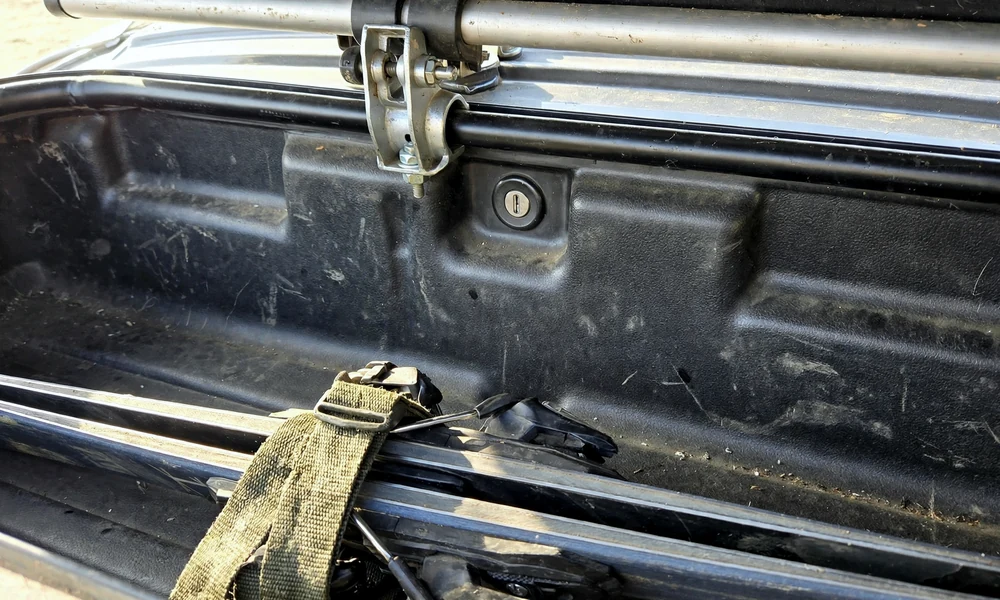
Security is not an afterthought. A central locking point that locks in several places at once is worth having, and the key should only come out when the box is properly shut — a small detail that stops you driving off with a lid that is not latched. The lock is a deterrent, not a safe, so do not leave valuables in a roof box overnight in an unfamiliar place. But a good lock keeps honest people honest and stops the lid flying open at motorway speed, which is the real risk.
Finally, think about the bars. A roof box clamps to cross bars, and the best mounting systems use a simple dial or lever inside the box that tightens around the bar without tools. These are faster to fit, easier to adjust, and less likely to be fitted wrong than older U-bolt systems. Before buying, measure the distance between your bars and check it against the box’s mounting range. Bars that are too close together make a long box wobble; bars too far apart may not reach the mounting points at all. Our guide to the best and worst roof racks of 2026 explains the bars, feet and clamps the box sits on, and it is worth reading before you spend anything.
Best roof box for family holidays
For a family holiday, the best box is a wide, mid-length one of around 400 to 470 litres with dual-side opening. Width is what makes family loading work: soft bags, coats, a travel cot and a pushchair all pack side by side, and you can reach everything without climbing onto a door sill. Look for a flat floor with no deep ridges, because ridges waste space and make bags slide, and for internal straps that keep the load from shifting when you brake.
Best roof box for skis and snowboards
Skiers need length first and everything else second. Look for a long, narrow box of at least 200 centimetres overall, with an internal length that covers your longest skis plus bindings. A slim profile also helps, because a narrow box leaves room on the bars for a bike carrier or a second box, and it cuts wind noise on the long drive to the mountains.
Best low-profile roof box
A low-profile box is the quiet choice. Because it sits closer to the roof and presents less frontal area to the wind, it whistles less, uses less fuel, and fits under more car park height barriers. The trade-off is capacity: a sleek box of the same length holds less than a tall one, and bulky items like a pushchair may not fit at all. It is the right pick if you carry skis, soft bags and flat kit, and the wrong pick if you need to swallow a tent.
Best roof box for small cars
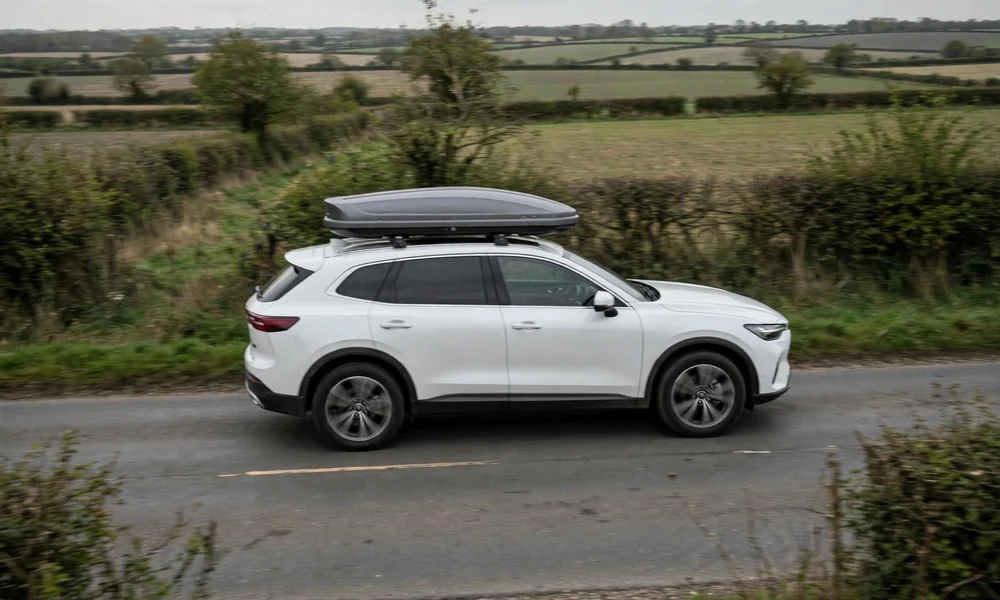
Small cars benefit most from a roof box, and they are also the hardest to fit one to. A short roof means short bars, and short bars mean a box that overhangs the front and rear more than it would on an estate. Choose a compact box of 300 to 350 litres, and check the overhang against the tailgate and the windscreen before you buy. The box should not extend past the front of the roof in a way that catches the wind, and the rear should not stop the tailgate opening fully.
Best roof box on a budget
A budget roof box can be perfectly good if you spend the saving on the right things. The shell and the lock are where cheap boxes cut corners, so press the lid, check the seal, and try the lock several times in the shop. If the lid flexes, the seal is uneven, or the key sticks, walk away. A well-made budget box from a known maker is a better buy than a flashy one from a name you have never heard of.
How to fit and load a roof box
Loading is where most people go wrong. Put the heavy, dense things in the middle of the box, over the bars, and the light, bulky things at the ends. Soft bags are better than hard cases because they fill the odd corners and do not rattle. Use the internal straps, and never let the load press against the lid: a lid forced shut over an overfilled box will not seal, and it will leak in rain. Close the lid, lock it, remove the key, and give the box a firm shake from the side. If it moves on the bars, refit it. Then drive a short distance, stop, and check the mounts again before joining the motorway.
Driving with a roof box
The first thing you will notice is the noise. Every roof box adds some wind sound, but a well-fitted, aerodynamic box at motorway speed should be a soft rush, not a whistle. A whistle usually means a gap somewhere — a bar end cap missing, a clamp not seated, or the box sitting too far forward. Move the box back a few centimetres, check the bar ends, and the noise often disappears. Fuel use rises too, typically by a small amount on a long run and more in town, where the extra weight and drag matter most. Driving a little slower on the motorway saves more fuel than any aerodynamic claim.
The car underneath matters as well. A roof box sits above the paint for hours at a time, and grit trapped under the bars can mark it. Washing the roof before fitting, and checking the paint when the box comes off, keeps small marks from becoming rust. If you want to protect the bodywork more generally, our comparison of the best and worst car covers of 2026 is a useful companion read, and it covers the same habit that makes a roof box last: keep the surfaces underneath it clean and dry.
Looking after your roof box
A roof box lasts longer if it is stored properly. Keep it out of direct sun when it is off the car, ideally hanging on a wall or standing on its end in a garage, with the lid slightly open so air circulates and the seal does not stick. Wash it with warm soapy water, not a pressure washer, and dry the seal before storing. A little silicone spray on the seal once a year keeps it supple, and a drop of oil in the lock stops the key sticking after a winter in the garage.
Mistakes to avoid
The most common mistake is buying on litres alone. A 500-litre box that does not fit your bars, clears your tailgate or stay under your roof load is worse than a 350-litre box that does. The second is overloading. The roof limit is a legal and safety limit, not a suggestion, and an overloaded roof changes how the car brakes and corners. Weigh the load if you are unsure — bathroom scales and a bag are enough.
Verdict
The best roof box of 2026 is the one that fits your car, your bars and your trips — wide and dual-opening for family holidays, long and slim for skis, low and sleek for quiet motorway miles, compact and light for a small car. Measure your roof load and your bar spacing first, choose capacity by what you actually carry, and spend your money on the lid, the lock and the mounts rather than the badge. Fitted well and loaded sensibly, a good roof box turns a car that is too small into a car that is just right, and it does it trip after trip. For the journeys themselves, it pairs naturally with the best SUVs for long road trips in 2026, which is where a roof box earns its keep: more people, more kit, and nowhere to leave any of it behind.


