
The best museums in Athens for first-time visitors turn a city of ruins into a city you can actually understand. Athens is not a place where the stones speak for themselves. The Acropolis looks magnificent from a distance, but without the sculptures, vases, jewellery and everyday objects kept in the museums below it, the ancient city stays a beautiful mystery. The right museum order makes the difference between a first trip that feels like a checklist and one that feels like a story coming together, piece by piece.
Key takeaways
- Start with the Acropolis Museum. It explains the Acropolis itself, and everything else you see afterwards makes more sense.
- Give the National Archaeological Museum a full morning. It is the biggest collection in the city, and rushing it is the most common first-timer mistake.
- Pair one big museum with one small one each day. A large museum plus a focused museum beats two large museums back to back.
- Book the Acropolis Museum and the National Archaeological Museum in advance when you can, and arrive at opening time on busy days.
- Leave at least one museum for a second visit. Athens rewards a slower second look more than a hurried first sweep.
How the best museums in Athens were ranked
The ranking weighs five things a first-time visitor actually feels: how well the museum explains what you are looking at, how strong the collection is, how easy it is to navigate in a limited visit, how much of Athens it helps you understand, and how well it suits a first trip rather than a specialist one. A museum with a world-class collection but confusing labels scores lower than a smaller museum that tells its story clearly. Opening hours, location and crowd flow count too, because a great museum you cannot get into is no help at all.
The best museums in Athens compared
| Museum | Best for | Time needed | Crowds | First-timer score |
|---|---|---|---|---|
| Acropolis Museum | Understanding the Acropolis | 2 to 3 hours | Very busy | 10 out of 10 |
| National Archaeological Museum | Ancient Greek art and sculpture | 3 to 4 hours | Moderate | 10 out of 10 |
| Museum of Cycladic Art | Minimal ancient art and design | 1 to 2 hours | Light | 9 out of 10 |
| Benaki Museum | Greek history from ancient to modern | 2 hours | Light | 9 out of 10 |
1. Acropolis Museum: the essential first stop
The Acropolis Museum is the best museum in Athens for first-time visitors because it is built around a single, clear idea: showing you the sculptures and objects that once stood on the Acropolis, in the order and the light they were made for. The building sits at the foot of the rock, and its top floor, the Parthenon Gallery, is aligned with the Parthenon itself, so you can look from the frieze to the temple and back again. That alignment is not a gimmick. It is the fastest way to understand what the Parthenon was.
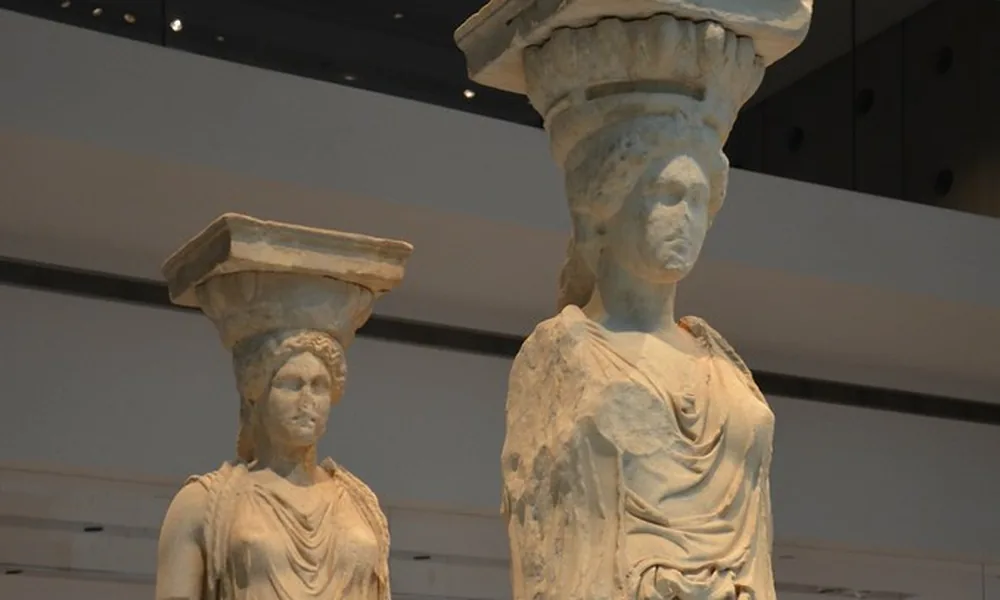
The ground floor walks you through the slopes of the Acropolis and the finds from everyday life around it, while the middle floors hold the Archaic sculptures, the Caryatids, and the pediments that once crowned the temples. The Caryatids are the museum’s most photographed objects, and they deserve the attention: five of the six originals stand here, their drapery and faces still sharp after more than two thousand years. The sixth remains in London, and the museum is honest about that absence rather than hiding it.
Plan two to three hours, and go early. The museum opens before the worst of the heat and the tour groups, and the first hour is noticeably calmer. Do not try to read every label. Read the introductions to each gallery, look at the objects that stop you, and save your energy for the Parthenon Gallery at the top. The glass floor over the excavation below is worth a look on the way in, but it is a bonus, not the main event.
2. National Archaeological Museum: the deepest collection
The National Archaeological Museum is the largest archaeological museum in Greece, and it holds the objects that every other museum in the country measures itself against. The gold of Mycenae, the bronze statues pulled from the sea, the marble figures from the Cyclades and the classical period, and the great vases are all here. If the Acropolis Museum explains one hill, this museum explains the whole of ancient Greece, from the earliest settlements to the late Roman period.
That scale is both its strength and its risk. The collection is so large that a first-time visitor can easily spend four hours and still feel behind. The answer is to choose three galleries and do them properly: the Mycenaean collection, the sculpture collection, and the bronze collection. The Mask of Agamemnon and the gold cups from the Mycenaean shaft graves are the famous starting point, but the bronze statues, including the Artemision Bronze and the Jockey of Artemision, are the pieces that most visitors remember longest, because they look alive in a way marble rarely does.
The museum sits a short walk from Victoria metro station, in a grand nineteenth-century building with a garden courtyard that makes a good rest stop halfway through. It is quieter than the Acropolis Museum, which is one of its advantages: you can stand in front of a masterpiece here without a crowd behind you. Give it a full morning, take the courtyard break, and do not schedule another large museum afterwards.

3. Museum of Cycladic Art: the calm, modern favourite
The Museum of Cycladic Art is the surprise favourite for many first-time visitors, because it is the opposite of the big archaeological museums. It is small, quiet, modern, and beautifully lit, and its marble figurines, those slim, folded-arm figures from the Cycladic islands, are instantly memorable. They look startlingly modern, which is why artists and designers keep coming back to them, and the museum does a good job of explaining that they were made more than four thousand years ago, not last century.
The permanent collection runs from Cycladic art through ancient Greek art to Cypriot art, and the temporary exhibitions are consistently strong. The museum shop and the cafe are among the best in Athens, which matters more than it sounds when you are planning a long day. One to two hours is enough, and the museum works well as a late-morning stop after the Acropolis Museum, or as a gentle first museum on the day you arrive.
4. Benaki Museum: Greek history under one roof
The Benaki Museum is the best single museum for the whole sweep of Greek history. Its main building, a neoclassical mansion on Vasilissis Sofias Avenue, takes you from prehistory through the Byzantine period, the Ottoman period, and into modern Greece, with costumes, jewellery, icons, furniture and paintings along the way. Where the archaeological museums stop at the ancient world, the Benaki keeps going, and that continuity is exactly what a first-time visitor needs to understand modern Athens.
The Benaki’s strength is its range. You will see Mycenaean gold, Byzantine icons, Cretan embroidery, and the traditional costumes of the Greek regions, all in one visit. The galleries are arranged chronologically, so the story builds as you walk, and the rooftop cafe, with its view towards the National Garden, is a fine place to pause. Two hours is a realistic visit, and the museum is rarely crowded, which makes it a good choice for a hot afternoon when the Acropolis area is at its busiest.

A first-timer plan for one day and two days
For one day, keep it simple. Start at the Acropolis Museum at opening time, spend two to three hours there, then walk through the Plaka for lunch. Spend the afternoon at the Museum of Cycladic Art, which is small enough to enjoy when your energy is lower, and finish with a walk to the Acropolis viewpoint at sunset. That is a full day, and it covers the essential story without exhausting you.
For two days, add the National Archaeological Museum on the second morning, when you are fresh, and follow it with the Benaki Museum in the afternoon. On the first day, do the Acropolis Museum and the Museum of Cycladic Art together, since the second is small enough to enjoy after the first. The second day then becomes the deeper dive, and you will find that the objects in the National Archaeological Museum make more sense because you have already seen the Acropolis context.
For a sense of how the same first-timer approach works in another European capital, the guide to the best museums in Madrid for first-time visitors follows the same idea of one big museum plus one small one per day. The Dublin version, in the guide to the best museums in Dublin for first-time visitors, is useful if your trip continues north after Greece. And if you are extending the trip beyond Athens, the guide to the worst beach resorts in Greece for families helps you avoid the resorts that disappoint, so the beach part of the trip matches the quality of the museum part.
Checklist: your first Athens museum visit
- Book the Acropolis Museum in advance and arrive at opening time.
- Visit the Acropolis Museum before the Acropolis itself, not after.
- Give the National Archaeological Museum a full morning and a courtyard break.
- Pair one large museum with one small museum each day.
- Carry water, wear comfortable shoes, and check opening days the night before.
- Leave one museum unvisited, so you have a reason to come back to Athens.
Frequently asked questions
How many museums should a first-time visitor see in Athens?
Two museums a day is the realistic limit, and four museums across two days is a strong first trip. The Acropolis Museum and the National Archaeological Museum are the essential pair, with the Museum of Cycladic Art and the Benaki Museum as the best additions.
Which museum should I visit first in Athens?
Visit the Acropolis Museum first. It explains the Acropolis, and everything you see afterwards, from the Agora to the National Archaeological Museum, makes more sense once you understand the sculptures and the layout of the sacred rock.
How long does the Acropolis Museum take?
Allow two to three hours. The Parthenon Gallery at the top deserves unhurried time, and the middle floors, with the Caryatids and the Archaic sculptures, reward a slow walk rather than a quick pass through.
Is the National Archaeological Museum worth it for a first visit?
Yes, it is one of the two essential museums in Athens. Choose three galleries, the Mycenaean, sculpture and bronze collections, and do them properly rather than trying to see the whole museum in one rushed visit.
Are Athens museums good for children and teenagers?
The Museum of Cycladic Art is the easiest win for teenagers, because it is small, modern and visually striking. The Acropolis Museum works well for children who have seen the Acropolis first, and the Benaki Museum helps younger visitors see how Greek life changed over the centuries.
Can I see the best Athens museums in one day?
You can see the Acropolis Museum and the Museum of Cycladic Art in one day and enjoy both. Trying to add the National Archaeological Museum to the same day is too much for most visitors, and the collection deserves a fresh morning of its own.
Bottom line
The best museums in Athens for first-time visitors are the Acropolis Museum and the National Archaeological Museum, with the Museum of Cycladic Art and the Benaki Museum as the best additions. Start with the Acropolis Museum, give the big collections the time they deserve, pair each large museum with a small one, and leave something unvisited for your next trip. Athens rewards the visitor who slows down, and its museums are the reason why.


