Best Nail Glues for Strong, Lasting Manicures in 2026
A good manicure should survive more than a day of typing, washing dishes and opening packages, and that is exactly where the best nail glue earns its place. Nail glue is the small, unglamorous product that decides whether press-on nails stay put for two weeks or pop off before lunch, whether a cracked nail gets a clean repair or a ragged break, and whether a set of tips looks salon-finished or slightly off. Pick the right one and your manicure simply stays where you put it.
Key Takeaways
- Brush-on nail glue gives the most even, controlled coat and is the best all-rounder for tips and full-cover nails.
- Tube glue delivers a thicker, stronger bond for repairs and for nails that take a beating, but it is easier to over-apply.
- Most nail glue holds tips for one to two weeks with good prep, and a few days less on oily or flexible nails.
- Prep decides the result: clean, dry, lightly buffed nails bond far better than shiny, oily ones.
- Never peel glued nails off. Soak them off in acetone and oil the nails afterwards to keep them healthy.
What Nail Glue Actually Does (and What It Can’t)
Nail glue is a fast-setting adhesive, usually based on cyanoacrylate, the same family of chemistry as household superglue but formulated for use on nails. It works by bonding two surfaces together in seconds: the natural nail plate on one side and the artificial tip, full-cover nail or repair patch on the other.
What it does well is mechanical: it sticks things to nails. It is the right tool for attaching tips and press-ons, for sealing a silk or fibreglass wrap over a split, and for gluing a cracked nail back together so it can grow out instead of tearing further. It fills the tiny gap between a tip and the natural nail, which is why a well-glued tip feels like part of the nail rather than something sitting on top of it.
What it cannot do is treat the nail. Glue will not strengthen a weak nail, feed a dry cuticle or repair damage from the inside. If your nails are peeling, bending or breaking because they are dry or thin, the fix is a treatment product, and our guide to the best nail strengtheners explains which of those actually help.
Brush-On vs Tube vs Pen: Which Applicator Wins
The applicator matters as much as the formula, because nail glue fails most often through uneven application: too much in one spot, too little at the edges, or glue flooding onto the skin. The three common applicators each suit a different job.
Brush-On Glue: The Best All-Rounder
Brush-on glue comes in a small bottle with a brush built into the cap, much like nail polish. The brush lays down a thin, even film across the whole nail or tip, which is exactly what a lasting bond needs. It is the easiest format to control, the hardest to over-apply, and the best choice for full-cover press-ons, where an even coat across the entire nail prevents air pockets and lifting edges.
Tube Glue: The Strongest Bond for Repairs
Tube glue is squeezed out in a thicker bead, closer to household superglue in feel. It delivers more adhesive in one place, which makes it the best option for repairs: gluing a split nail, reattaching a broken corner, or bonding a tip that keeps lifting at the sides. A tube releases glue quickly, and a pea-sized blob is far more than a nail needs. If you use a tube, apply a small dot and spread it with an orange stick or the tip itself rather than squeezing directly onto the nail.
Pen and Precision Dispensers: Best for Small Fixes
Pen-style dispensers release one small drop at a time through a fine nozzle, which suits quick repairs and people who only glue occasionally. A pen is the tidiest format to carry and the least likely to spill in a bag. It is less suited to full sets, because dispensing enough glue for ten nails one drop at a time gets tedious, and the thin nozzle can block. Think of a pen as a repair tool rather than a full-manicure tool.

Nail Glue for Tips, Full Covers and Repairs
Different jobs ask different things of a glue. A tip only needs a bond across the small contact area where it meets the natural nail. A full-cover press-on needs an even bond across the whole nail plate, or air gets trapped underneath and the nail lifts within days. A repair needs a strong, slightly flexible bond that holds a crack closed while the nail grows.
| Job | Best applicator | How much glue | Typical hold |
|---|---|---|---|
| Half tips | Brush-on | Thin coat on the tip well | 1–2 weeks |
| Full-cover press-ons | Brush-on | Thin, even coat on nail and press-on | 1–2 weeks |
| Cracked or split nail | Tube or pen | One small dot, spread thin | Until it grows out |
| Silk or fibreglass wrap | Brush-on | Thin coat under and over the wrap | 1–2 weeks |
| Reattaching a lifted edge | Pen | One drop under the edge | A few days |
| Rhinestones and charms | Tube | A tiny dot per stone | Days to a week |
How Long Does Nail Glue Really Last?
On a well-prepped nail, a glued tip or press-on typically lasts one to two weeks. The first three or four days are the most secure; after that, water, hand cream and normal flexing gradually work at the edges. Short, rounded nails hold glue longer than very long ones, because a long tip acts as a lever and every knock pries at the bond.
Three things extend hold more than any brand choice. The first is prep: glue bonds to a clean, dry, lightly roughened surface and slides off a shiny, oily one. The second is quantity: a thin, even coat bonds better than a thick one, because thick glue cures unevenly and leaves soft spots.
How to Apply Nail Glue So It Holds
Good application is a short routine, and skipping a step is usually what shortens wear. Start with clean, dry nails: remove old polish, wash your hands, and push the cuticles back gently. Then shape the natural nail with a file so the tip or press-on sits flush, and read our guide to nail files that shape without splitting if your nails tend to tear at the edges. Lightly buff the shine off the nail plate with the fine side of a buffer, just enough to remove the gloss, then wipe away dust and natural oils with a lint-free pad and a little acetone or alcohol.
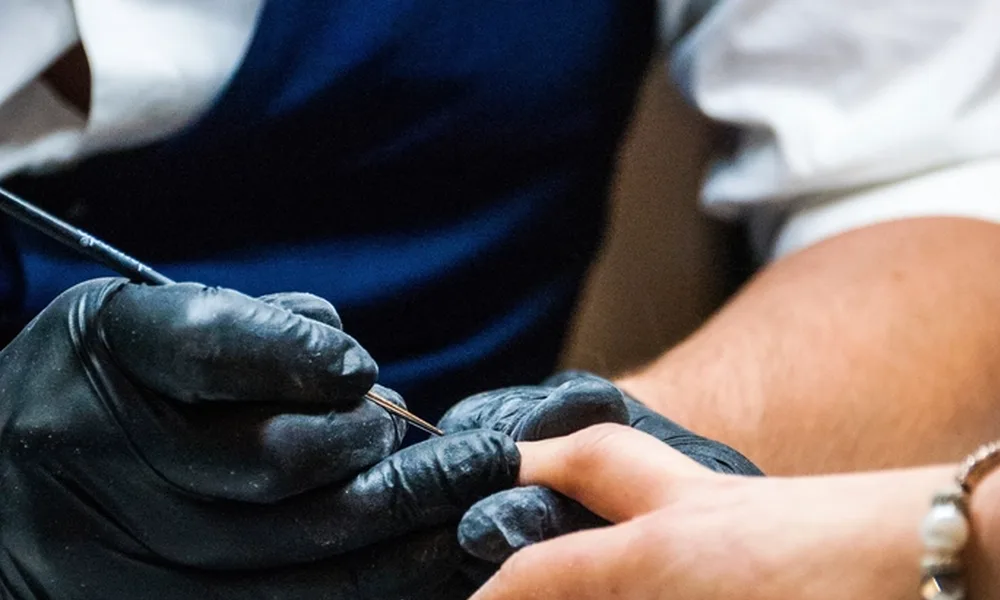
Apply a thin coat of brush-on glue to the natural nail and a thin coat to the underside of the tip or press-on. Line the tip up at a slight angle, starting from the cuticle end, and lower it onto the nail so no air is trapped underneath. Press firmly for ten to fifteen seconds, holding the tip still rather than wiggling it into place.
For a repair, the routine is shorter. Hold the crack closed, apply one small dot of glue along the split, and press gently until it sets. A silk wrap over the top, sealed with a thin coat of brush-on glue, adds strength for a nail that keeps splitting in the same place.
Removal Without Wrecking Your Nails
Removal is where most nail damage actually happens, and it is almost always avoidable. Never peel, pry or force a glued nail off. Peeling lifts layers of the natural nail plate with it, leaving thin, sore, peeling nails that take weeks to recover. The correct method is to soak the bond away.
Trim the tips short first, then file the shiny top layer off the press-on or tip so the acetone can reach the glue. Soak a cotton pad in pure acetone, place it on the nail, and wrap the fingertip in foil for ten to fifteen minutes. Check one nail: if the tip slides off with gentle pressure, the rest are ready. Once the nails are off, push any softened glue residue away gently with an orange stick, wash your hands, and let the nails rest.
After removal, nails often look dry and a little rough, which is normal after acetone. This is the moment for care rather than another set: a drop of oil massaged into each nail and cuticle helps restore flexibility, and our guide to nail oils that repair and shine covers which oils suit dry, brittle nails best.
Safety: What to Know Before You Glue
Nail glue is safe for most people when used as directed, but it deserves the same respect as any strong adhesive. The fumes can irritate eyes and airways, so work in a ventilated room and keep the bottle away from your face. If glue touches skin, do not pull it off; soak the area in warm soapy water and peel gently once it softens.
Allergic reactions are uncommon but real, and they usually show up as itching, redness or swelling around the nails a day or two after application. People with known acrylate sensitivity should look for a glue labelled hypoallergenic or acrylate-free, and patch-test any new product on one nail before a full set. Keep glue away from eyes, store it out of reach of children, and never use it on broken or infected skin around the nail.
Nail Glue Buying Checklist
- Choose brush-on glue for full sets and tips, tube glue for repairs, and a pen for quick fixes.
- Check the set time: five to ten seconds gives you room to position a tip; two seconds does not.
- Buy a small bottle if you glue occasionally, so the glue stays fresh instead of thickening in the drawer.
- Look for a fine brush and a bottle that closes tightly, so the brush does not clog between uses.
- Patch-test a new glue on one nail first if you have sensitive skin or have reacted to adhesives before.
- Keep acetone and cuticle oil on hand before you start, so removal and aftercare are never an afterthought.
Frequently Asked Questions
How long does nail glue last on press-on nails?
With good prep, most press-ons stay secure for one to two weeks.
Can nail glue damage your natural nails?
Glue itself rarely damages nails; incorrect removal does. Soaking off in acetone and oiling afterwards keeps nails healthy, and a day or two of rest between sets helps.
Is brush-on or tube nail glue better?
Brush-on glue is better for full sets and tips because it spreads thin and evenly. Tube glue is better for repairs because it delivers a thicker, stronger bond in one spot.
Can you use nail glue on a split or cracked nail?
Yes, and it is one of the best uses for it. Hold the crack closed, apply a small dot of glue along the split, and add a silk wrap sealed with brush-on glue for extra strength.
How do you remove nail glue without acetone?
Warm soapy water and oil can loosen glue over time, but they are slow and unreliable for a full set. Acetone soaking is the reliable method.
Why do my press-on nails keep popping off?
The usual causes are oily or shiny nail plates, too much glue, trapped air under the nail, or a press-on that does not match the natural nail’s curve. Buff off the shine, degrease the nail, use a thin coat, and press firmly for fifteen seconds.
The Bottom Line
The best nail glue is not the strongest one in the shop; it is the one that matches the job, spreads evenly, gives you a few seconds to position the nail, and comes off cleanly when you soak it. Get the prep right, use a thin coat, and remove with acetone rather than force, and a manicure that used to last a day will last a fortnight.