A long flight should leave you rested, not stiff. The best neck pillows for long flights 2026 are built for exactly that problem: hours in a narrow seat, a head that keeps sliding forward, and a neck that pays for it the next morning. The right pillow holds your head upright, supports your chin, and lets you drift off without waking every twenty minutes.
The difference between a good travel pillow and a great one is easy to feel but harder to spot in a listing. Firmness matters more than softness, and shape matters more than size. A pillow that looks plush in a photo can still let your head droop the moment you fall asleep, while a firmer, well-shaped design can carry you through a ten-hour flight without an ache.
This guide compares the pillow styles that work best on long-haul flights, from classic memory foam U-shapes to wraparound designs and packable foam. Every pick is judged on what matters at 35,000 feet: neck support, comfort over many hours, packability, washability, and value.
Key takeaways
- Memory foam U-shaped pillows offer the best all-round support for most long-haul travellers.
- Chin support is the single most important feature: without it, your head drops forward as you sleep.
- Side sleepers should choose a wraparound or J-shaped pillow that supports the head from one side.
- Compressible and inflatable pillows save the most bag space, but give up some firmness.
- Always test your pillow at home first and wash the cover before your first flight.
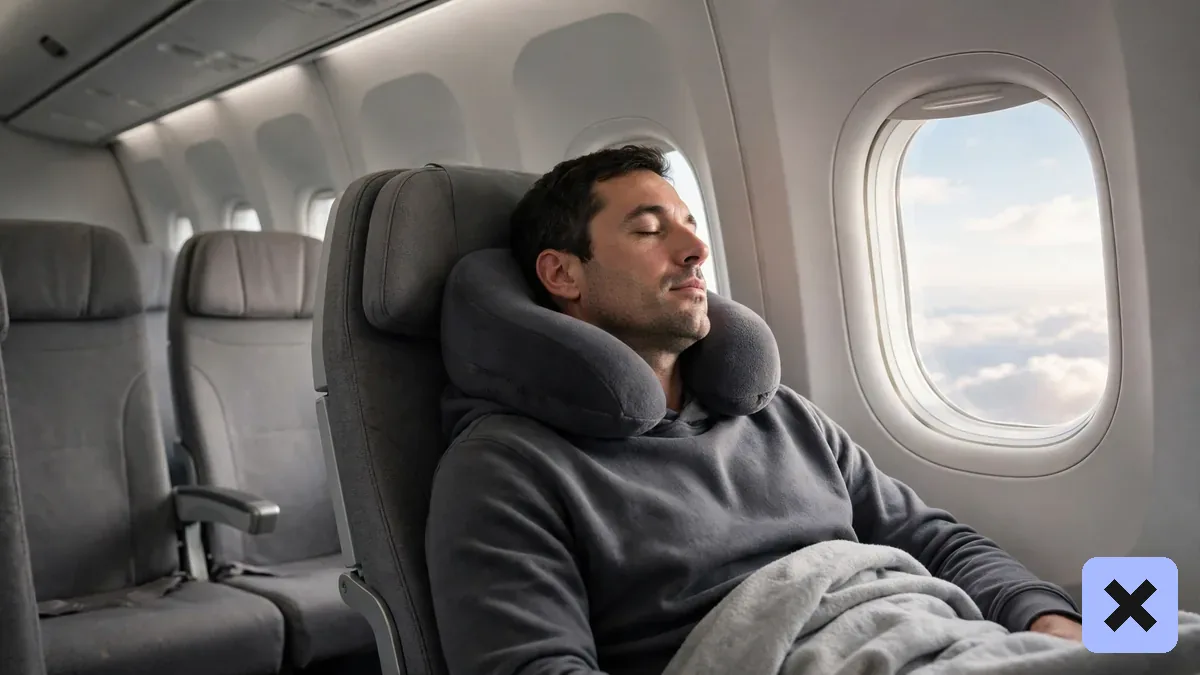
What Makes a Great Neck Pillow for Long Flights
A short hop forgives a weak pillow. A long flight does not: after four or five hours, every flaw shows up, from foam that goes flat to a cover that traps heat. The best long-flight pillows are designed around endurance, not first impressions.
Support comes first. Your neck needs a pillow that keeps your head close to neutral, the position it holds when you stand upright. Memory foam does this well because it moulds to your neck and jaw, then slowly springs back instead of collapsing. Look for dense foam that resists your grip; if it flattens easily in your hand, it will flatten faster under your head. The best travel pillows for long flights all share this trait: they hold their shape for hours, not minutes.
Chin support is the feature most travellers discover too late. Ordinary U-shaped pillows support the back and sides of the neck but leave the front open, so the head tips forward the moment you doze off. Designs with a raised front, a chin cup, or a wraparound strap solve this directly, and if you regularly wake with your chin on your chest, this one feature will change your flight more than any other.
Comfort over time is the third test. A pillow can feel wonderful for ten minutes and miserable after three hours. Breathable covers and soft velour or bamboo fabrics help, especially on warm overnight flights, and a removable, washable cover keeps a pillow you use on every trip fresh.
Finally, think about the journey around the flight. A bulky pillow that will not fit in your bag becomes a burden in the airport and at your destination. Compressible foam, clip-on straps, and compact carry cases all make a real difference: the best pillow is the one you actually bring every time.
The Best Neck Pillows for Long Flights 2026
The pillows below are the strongest choices for long-haul travel in 2026, grouped by the type of sleeper they suit best. There is no single winner for everyone: a side sleeper and a back sleeper need different shapes, and a light packer values different things from a comfort-first flyer. Our neck pillows for flights roundup covers the wider range, but these four are the picks that hold up best when the flight stretches past six hours.
Best Overall: The Classic Memory Foam U-Shape
The classic memory foam U-shape remains the best starting point for most travellers. Dense memory foam cradles the neck from behind and both sides, keeping the head centred through turbulence, meal services, and long stretches of sleep. The best versions use a slightly flattened back so the pillow sits neatly against the headrest instead of pushing your head forward.
Choose a model with a removable washable cover and foam that resists your grip and recovers slowly when squeezed. A carry bag or compression strap is a bonus, though these pillows are the bulkiest of the bunch. If you only buy one travel pillow, buy this shape first.
Best for Side Sleepers: The Wraparound J-Shape
Side sleepers suffer most with standard U-shaped pillows, which leave a gap on the side the head leans toward. A wraparound or J-shaped pillow fills that gap with a long arm of foam running down one side of the neck and across the shoulder, giving the head something solid to rest on when it tips sideways.
These designs also work well against the cabin wall or window, where side sleepers naturally drift. Look for an adjustable closure so you can wear it on either side, and a profile flat enough not to force your neck into an awkward angle. For window-seat sleepers, this shape is often the difference between real sleep and a sore neck.
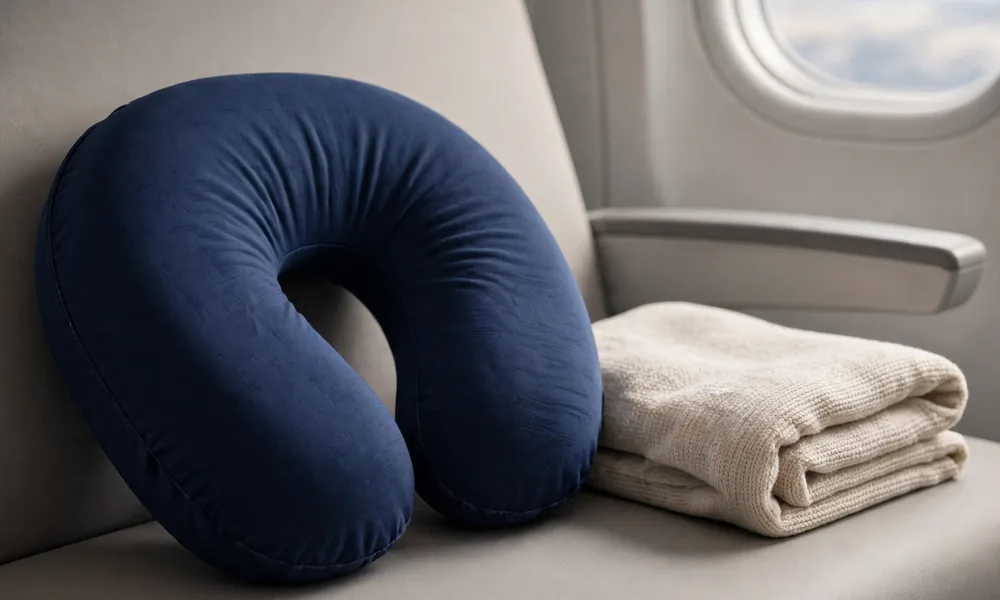
Best for Neck Pain: High Chin Support
If you land with a stiff or aching neck, your pillow is probably failing at the front. High chin support designs raise the front of the pillow into a cup or wedge that catches the chin before the head can drop. Some use a firm foam wedge; others use an adjustable strap that pulls the two ends together under the jaw.
The trade-off is a snugger fit that some travellers find restrictive at first. Give it a full night of sleep at home before judging it: the firmness that feels odd on day one is usually what keeps you pain-free on day three. Pair it with a seat that reclines even slightly, and most of the strain leaves your neck entirely.
Best Compressible: The Packable Foam Pillow
Compressible foam pillows roll or fold down to roughly a third of their size, then spring back when unpacked. They are the best choice for travellers who pack light, fly with only a personal item, or simply refuse to carry a bulky pillow through the airport on a strap.
Expect slightly less firmness than solid memory foam, and check recovery time after compression: good ones regain their shape within a minute or two. The cover matters more here, since you will handle the pillow often; a durable, washable fabric keeps it fresh trip after trip.
Comparison Table: The Best Neck Pillows for Long Flights at a Glance
| Pillow type | Best for | Support | Packability | Price range |
|---|---|---|---|---|
| Memory foam U-shape | Most travellers | Excellent | Bulky | Mid-range |
| Wraparound J-shape | Side sleepers | Excellent | Bulky | Mid to high |
| High chin support | Neck pain | Excellent | Moderate | Mid to high |
| Compressible foam | Light packers | Good | Excellent | Mid-range |
How to Choose the Right Neck Pillow
Start with how you sleep. Back sleepers do best with a classic U-shape and good chin support. Side sleepers need a wraparound design or a pillow thick enough on one side to fill the gap between head and shoulder. Stomach sleepers, who rarely sleep well upright anyway, should look for the softest option that still holds its shape.
Next, consider your seat. Window seats reward taller, firmer pillows you can lean against the wall, while middle seats demand a pillow that supports the head without leaning on a neighbour. Aisle seats need something secure, since every passing trolley can jolt you awake. If you regularly wake with travel pillows for neck pain on your mind, the problem is usually a mismatch between pillow shape and sleeping position, not the pillow alone.
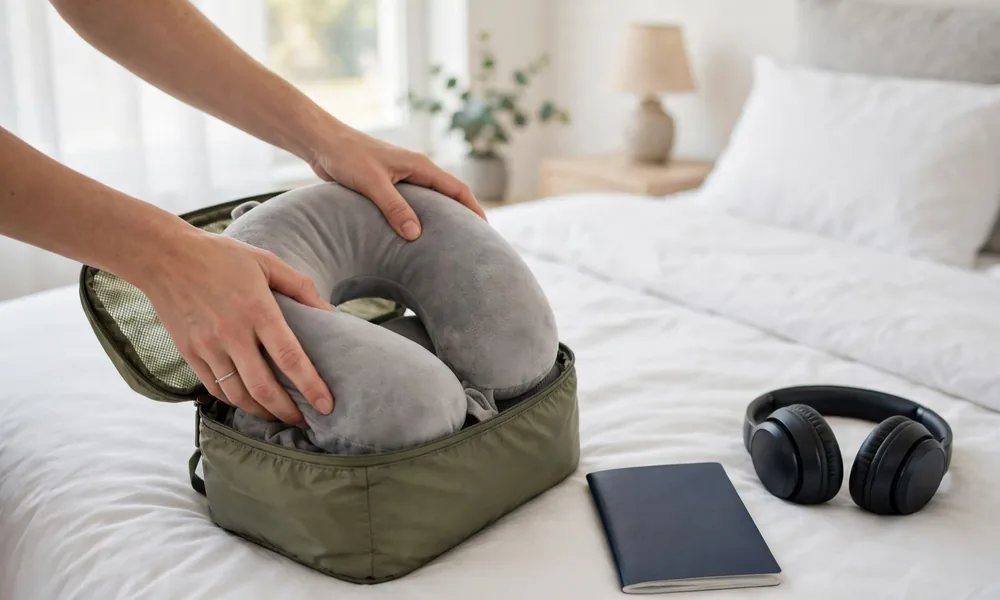
Then weigh size against comfort honestly. A pillow that packs small but leaves you aching is a poor trade on a twelve-hour flight, and the firmest pillow is useless if you leave it behind because it will not fit in your bag. The sweet spot for most people is compressible memory foam: real support that still fits in a carry-on.
Finally, check the practical details before you buy. A removable washable cover is essential for anything you press against your face for hours, and a carry bag, clip, or compression strap makes the pillow far easier to live with. If you have a sensitive neck, a firmer pillow with proper chin support is worth the extra money every time.
How to Sleep Better on a Long Flight
A great pillow works best as part of a small sleep system. Wear it before you feel tired, not after: putting it on once your neck already aches is too late. Settle it high on the neck, close to the jaw, rather than letting it slide down toward the shoulders where it does nothing.
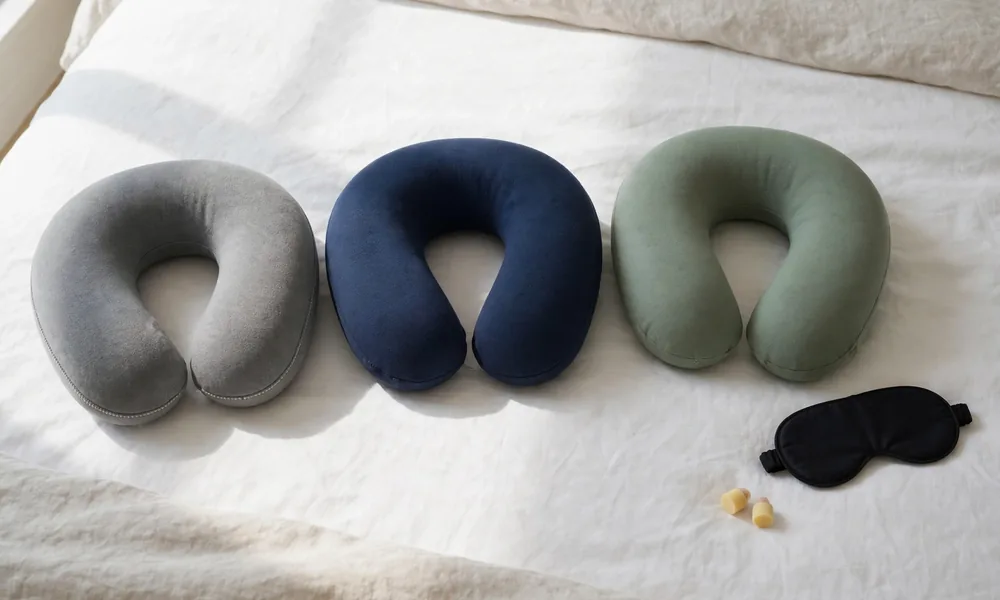
Recline your seat even a little, and use the headrest wings if your seat has them; they work with the pillow to keep your head centred. A sleep mask and earplugs or noise-cancelling headphones block the light and cabin noise that wake light sleepers. Keep water within reach, since dehydration makes stiffness worse.
Move when you wake. A short walk, a few shoulder rolls, and a gentle neck stretch every couple of hours keep stiffness from building up. The pillow handles the hours you are asleep; movement handles the hours you are awake. Together, they are the closest thing to a good night’s sleep you will get at altitude.
Long-Flight Sleep Checklist
- Test your neck pillow for a full night at home before the trip.
- Wash the removable cover and pack the pillow in its carry bag.
- Wear the pillow high on the neck, close to the jawline.
- Pack a sleep mask, earplugs, and a light blanket or scarf.
- Recline slightly and use the headrest wings to centre your head.
- Stand, stretch, and walk the aisle every two to three hours.
Frequently Asked Questions
Are neck pillows worth it for long flights?
Yes, for most travellers. A good neck pillow keeps the head upright, reduces strain on the neck, and makes it far easier to fall asleep and stay asleep. On flights over six hours, the difference is hard to miss.
What type of neck pillow is best for sleeping on a plane?
Memory foam U-shaped pillows suit most people, while wraparound J-shaped designs suit side sleepers best. Whatever the shape, look for firm support and a raised front that stops the head dropping forward.
How do I stop my head from falling forward when I sleep on a plane?
Choose a pillow with real chin support, wear it high on the neck, and recline your seat slightly. Headrest wings and a window to lean against also help.
Are memory foam or inflatable neck pillows better?
Memory foam gives far better support and comfort on long flights, while inflatable pillows win on weight and pack size. If comfort matters more than bag space, choose foam.
Can I bring a neck pillow on a plane as well as hand luggage?
Yes, in almost all cases. Most airlines treat a neck pillow as a personal comfort item rather than a bag, and many travellers wear it around their neck or clip it to their bag.
How do I clean a travel neck pillow?
Remove the cover and wash it on a gentle cycle. Foam cores should be spot-cleaned only and left to air dry completely. Never put memory foam in a washing machine or tumble dryer, as it breaks down the foam.
The bottom line: the best neck pillow for long flights is the one that matches how you sleep, supports your chin, and actually travels with you. For most people that means a firm memory foam U-shape; side sleepers should try a wraparound design, and light packers should look at compressible foam. Pick the right shape, test it at home, and your next long flight will feel easier.