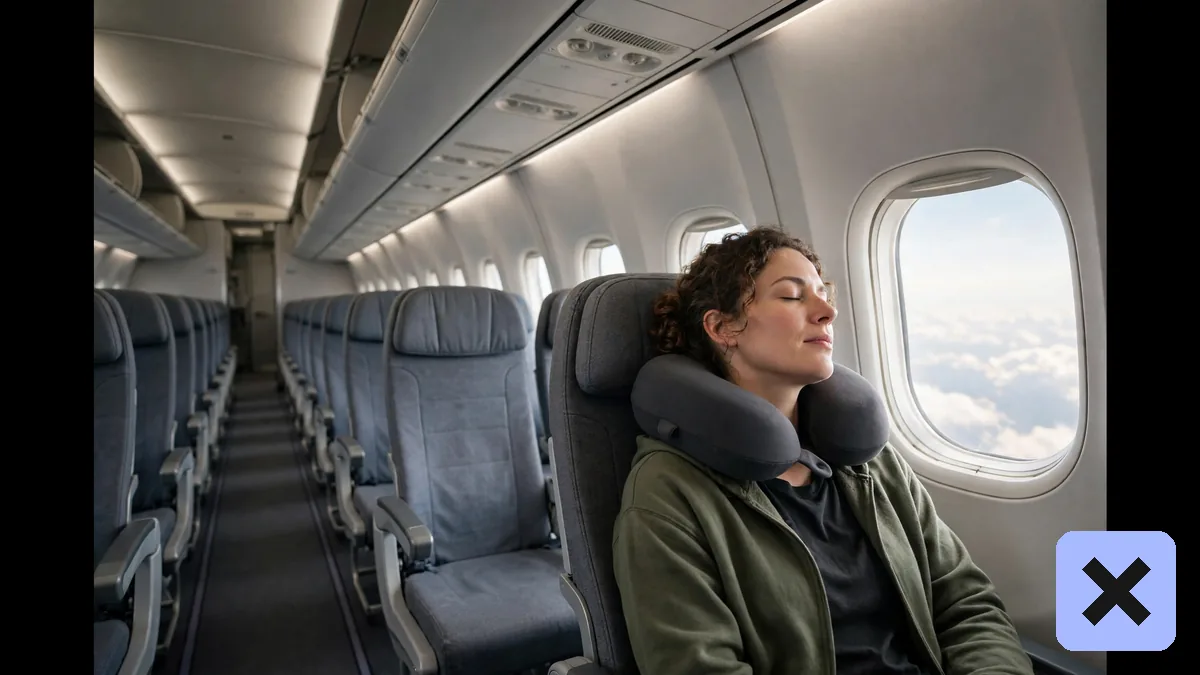
The best neck pillows for flights in 2026 can be the difference between landing refreshed and landing with a stiff neck and a ruined first day. Anyone who has tried to sleep upright in an economy seat knows the problem: the moment you drift off, your head tips forward or flops sideways, and you wake up every few minutes with a sore neck. A good one holds your head in a neutral position so you can actually sleep instead of fighting the seat.
Not every neck pillow does the job. The cheap inflatable ring from the airport gate often deflates by hour two, while a bulky foam pillow can feel hot and eat half your carry-on. The best ones balance support, comfort, packability and breathability.
This guide compares the best neck pillows for flights in 2026 across the main designs: memory foam U-pillows, wraparound scarf styles, inflatable pillows and hybrid sets, judged on support, comfort, size, washability and value.
Key takeaways
- Memory foam U-pillows give the best all-round support for most flyers, especially on flights over four hours.
- Wraparound scarf pillows suit side sleepers and window-seat sleepers who need support on one side.
- Inflatable pillows are the lightest and smallest option, but they rarely match foam for comfort.
- Look for a removable, washable cover and a clip so the pillow never eats carry-on space.
- Try the pillow at home first: one that feels fine for ten minutes can ache after three hours.
What Makes a Great Flight Neck Pillow
A flight neck pillow has one job: keep your head from falling. The best designs support the head from the front and the sides, because the chin drop is what wakes most people up. A pillow that only cushions the back of the neck leaves the head free to tip forward.
Firmness matters more than softness. A pillow that feels cloud-soft in the shop often collapses under the weight of your head after an hour. Memory foam works well because it holds its shape yet moulds to your neck and jaw.
Fit is the third piece of the puzzle. A pillow that is too loose slides around and does nothing, while one that is too tight presses on the throat. Most good pillows come in one adjustable size with a drawstring or clasp at the front. Breathability matters too: foam traps heat, so look for a breathable, removable cover you can wash after every trip.
The Best Neck Pillows for Flights 2026
The pillows below cover the four main designs, so there is a strong option whatever your sleep style and budget. All cost far less than a single seat upgrade, and a good one lasts for years.
| Pillow type | Best for | Support | Packed size | Price range |
|---|---|---|---|---|
| Memory foam U-pillow | Most flyers, long flights | Excellent | Medium | Mid-range |
| Wraparound scarf pillow | Side sleepers, window seats | Very good | Small | Mid-range |
| Inflatable pillow | Light packers, short flights | Fair | Tiny | Budget |
| Hybrid pillow set | People who want it all | Excellent | Medium | Premium |
| Microbead pillow | Soft feel, short naps | Fair | Medium | Budget |
Memory Foam U-Pillows
The classic U-shaped memory foam pillow is the best neck pillow for flights for most people, and the design to start with. The dense foam cradles the neck and jaw, the raised sides stop the head flopping sideways, and a raised front stops the chin drop.
The trade-off is bulk. A foam pillow does not compress much, so hang it from the outside of your carry-on with the clip or strap most quality pillows include.
When you shop, press the foam and watch how it recovers. Slow-rebound foam is usually denser and more supportive than fast, bouncy foam. Check that the cover unzips for washing, and look for a flat back so the pillow does not push your head forward.

Wraparound Scarf Pillows
Wraparound pillows look like a thick scarf with a foam core, wrapping once around the neck and fastening at the front. They suit side sleepers and window-seat sleepers, because you can twist the bulk to the side that needs support.
The wrap design fits a wider range of neck sizes than a fixed U-shape, and it packs flatter in a bag. The downside is that the support is less even: the layers can shift during the night, and the fastening can feel snug if cinched too tight. Choose a model with a flat clasp that does not dig into the chin.
Inflatable Pillows
Inflatable neck pillows are the lightest option by far. Deflated, they fold down to the size of a phone and weigh almost nothing, ideal for travellers who count every gram. They also let you tune the firmness by adding or letting out air.
The catch is comfort. Air does not mould to the neck the way foam does, so inflatable pillows feel bouncy and can shift as you move. The best ones use a flocked cover and a wide valve that inflates in a few breaths. They suit short flights or as a backup, but for a ten-hour overnight flight, most people will sleep better on foam.
Hybrid Pillow Sets
Hybrid sets pair a memory foam neck pillow with extras such as an eye mask, earplugs and a carry bag. They cost more, but they solve the whole sleep problem in one purchase with the same quality of foam as a standalone pillow.
A good eye mask matters more than people expect: cabin lights, screens and sunrise all break sleep, and a contoured mask makes a real difference. Hybrid sets suit light sleepers who need every advantage to rest on a plane. If you already own a good eye mask and earplugs, a standalone pillow is better value.
How to Choose the Right Pillow for Your Flight
Start with your sleep position. Back sleepers do best with a U-pillow that has a raised front to stop the chin drop. Side sleepers should look at a wraparound or a pillow with tall sides that fill the gap between the head and the shoulder. For flights under three hours, almost any pillow will do, but for long-haul flights, dense foam is worth the extra spend.
Consider your seat too. Window seats give you a wall to lean on, so a wrap pillow or a tall-sided U-pillow works well. Middle and aisle seats offer no lean, so you need a pillow that holds the head upright on its own. The best travel pillows for long flights are worth comparing side by side, since a pillow built for a twelve-hour journey handles a short hop with ease. Whatever you choose, clip it outside your bag.
How to Sleep Better on a Flight
A pillow alone will not guarantee sleep, but a few habits help. Book a window seat when you can, so you have a surface to lean on and nobody climbs over you. Wear the pillow before you get sleepy: put it on once the seatbelt sign goes off and settle in.
Layer your comfort. A light blanket or a large scarf keeps you warm as the cabin cools, and warm muscles relax faster than cold ones. An eye mask blocks the light, earplugs or noise-cancelling headphones block the engine drone, and thick socks keep your feet warm. Time your sleep to your destination: on an overnight flight, sleep mid-flight and wake an hour before landing. Avoid caffeine before you sleep, and skip alcohol: it breaks up sleep and leaves you groggy.

Getting Comfortable in Economy
Economy seats are narrow and upright, so small adjustments matter. Slide the pillow slightly to one side and lean into it rather than sitting dead straight. Use the headrest wings if your seat has them, folding them in to cradle your head. A small cushion behind your lower back takes pressure off the spine. Keep water and headphones within reach.
What to Pack Around Your Pillow
Your neck pillow works best as part of a small sleep kit. Pack an eye mask, earplugs, a neck pillow and a light layer in one pouch so you can pull them out in seconds. Travellers who fly with children should also check the best travel pillows for kids, since a child-sized pillow fits a small neck far better than an adult one.

What to Avoid When Buying a Neck Pillow
The worst neck pillows for flights share the same flaws. The first is a pillow with no front support: a simple ring that leaves the chin free to drop will not help you sleep, no matter how soft it feels. The second is a cover that cannot be removed: a pillow you cannot wash will smell of cabin air after two trips.
Watch out for pillows that are too big for your frame: an oversized pillow pushes your head forward and strains the neck. If you are petite, look for a compact or slim model. Be wary of very cheap foam: low-density foam flattens within an hour and often smells of chemicals. A mid-range pillow from a known travel brand is a safer buy than the cheapest airport option.
Flight Neck Pillow Checklist
Use this checklist before you buy, and again before you pack.
- Front support: the pillow stops your chin dropping forward when you fall asleep.
- Firm, slow-rebound foam or a wrap that holds its shape for hours.
- Removable, washable cover in a breathable fabric that stays cool.
- Adjustable fit with a clasp or drawstring so the pillow sits snug without pressing the throat.
- Clip, strap or carry bag so the pillow hangs outside your luggage.
- Tested at home for at least an hour, so you know it stays comfortable.
Frequently Asked Questions
Are neck pillows allowed on flights?
Yes. Neck pillows are allowed on flights and do not count as carry-on luggage on most airlines. You can wear one around your neck or clip it to your bag. A few budget airlines have tightened personal item rules, so check before you travel.
Which neck pillow is best for long flights?
A dense memory foam U-pillow with raised front support is the best choice. It holds the head in a neutral position for hours without flattening.
Do neck pillows really help you sleep on a plane?
Yes, if you choose the right one. A good pillow stops the head from falling forward or sideways, the main reason people keep waking up on flights. It will not make an economy seat feel like a bed, but most travellers sleep longer and wake with less neck pain.
How do I clean a travel neck pillow?
Remove the cover and machine wash it on a gentle cycle, then air dry it. Most memory foam cores should not go in the washing machine: spot clean them with a damp cloth and mild soap, then air dry fully.
Should I choose memory foam or inflatable?
Choose memory foam for comfort on long flights and inflatable for light packing on short trips. Foam supports better and lasts longer, while inflatable pillows pack down to almost nothing and cost less.
What size neck pillow should I buy?
Most adults fit a standard one-size pillow with an adjustable clasp or drawstring. If you have a slim neck, look for a compact or wrap style that cinches close. If you are tall or broad, check the sides are tall enough to reach your jaw.
The Bottom Line
The best neck pillows for flights are the ones that hold your head still, stay comfortable for hours and pack without a fight. For most travellers, a dense memory foam U-pillow is the safest bet, while side sleepers should try a wraparound and light packers should consider an inflatable. Match the pillow to your sleep style, seat and flight length, test it at home, and pack it with an eye mask and earplugs. A good pillow costs less than a single airport meal, and it pays for itself the first time you land rested. For the rest of your carry-on, the best carry-on bags for weekend trips pair well with a clip-on pillow.