The best travel pillows for neck pain 2026 do one thing most travel pillows do not: they hold your head in a neutral position so your neck muscles can finally switch off. If you have ever stepped off a plane with a stiff neck and a dull headache, the problem is rarely the flight itself. It is the hours your head spent drooping forward or flopping sideways with nothing solid to lean on.
A good pillow for neck pain is not the softest or the most expensive one. It is the one that matches how you sleep, supports the natural curve of your neck and keeps your head from tipping too far. Firmness matters more than fluff, and shape matters more than brand.
This guide explains what to look for, compares the main types side by side, and walks through the designs that work best for sore necks in 2026, so you can arrive feeling rested instead of wrenched.
Key Takeaways
- Choose a pillow that supports your neck from the sides and the back, not just from underneath.
- Memory foam gives the most consistent support for neck pain: it moulds to your shape and holds it.
- A firm pillow beats a soft one: soft pillows collapse, and your head ends up hanging again.
- Test the fit first; it should touch your jaw, chin and shoulders without pushing your head forward.
- Use it every time you sleep while travelling, not only on overnight flights.
Why Travelling Hurts Your Neck
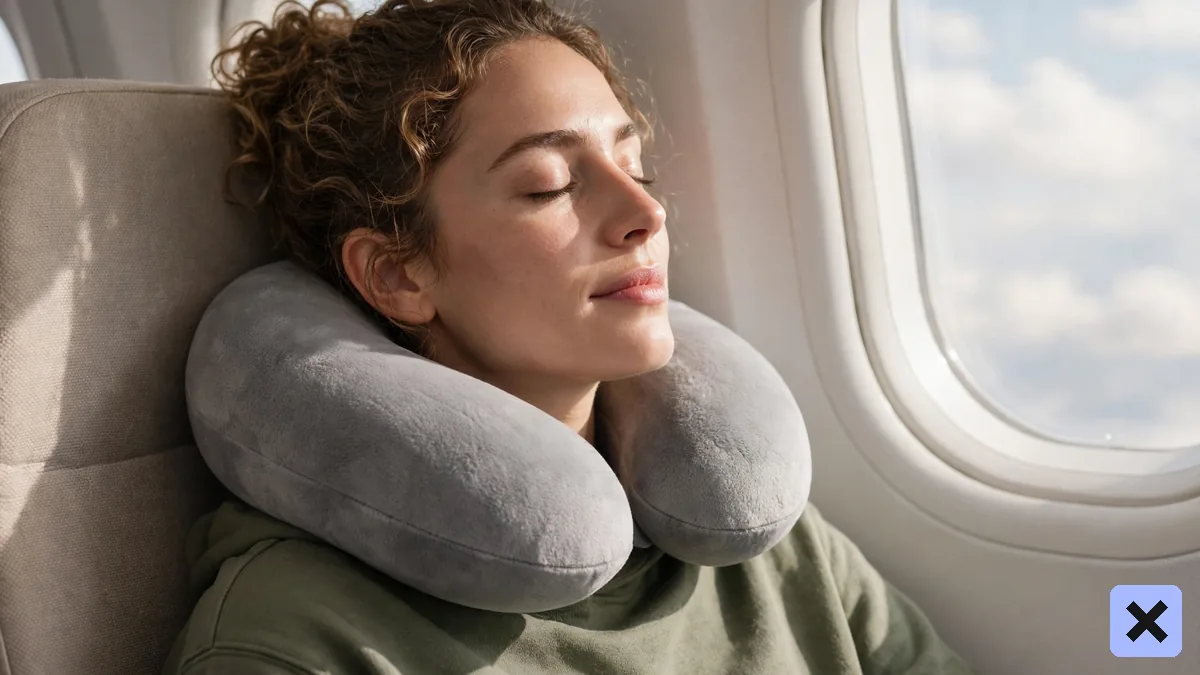
When you fall asleep sitting upright, the muscles that hold your head steady relax completely. Your head weighs around five kilograms, and without muscle support it drops forward or slides to one side, stretching the small joints and ligaments in your neck for hours.
Seats make it worse: economy headrests are flat and low, car headrests push your head forward, and train seats offer almost nothing. The result is a stiff neck that takes a day or two to loosen, a headache, or a sharp twinge when you turn your head.
What Makes a Travel Pillow Good for Neck Pain
The best travel pillows for neck pain share four qualities: lateral support so your head cannot flop sideways, chin support so it cannot drop forward, a shape that keeps the neck in its natural gentle curve, and a fit that stays put. A pillow that slides around while you sleep is no support at all.
Firmness is the single most important factor. A pillow that feels wonderfully soft in the shop often flattens under your head within twenty minutes, while medium-firm to firm memory foam holds its shape through a whole flight. If you can squeeze a pillow almost flat between your hands, it will not support your neck.
Support, Not Softness
Think of a travel pillow as a brace, not a cushion. The most comfortable one is the one you barely notice once asleep. Soft pillows feel lovely for five minutes and useless for five hours.
Fit and Breathability
The pillow should fill the gap between your neck and shoulders without lifting your head: longer necks need taller side walls, broader shoulders need a deeper pillow. Memory foam can run warm, so look for a breathable cover and ventilated foam, and keep the weight under 400 grams.
Comparison Table: The Main Types at a Glance
| Type | Neck Support | Comfort | Packability | Best For |
|---|---|---|---|---|
| Memory foam U-shaped | Excellent | High | Moderate | Most neck pain sufferers |
| J-shaped / wraparound | Excellent | High | Low | Side sleepers and window leaners |
| Inflatable | Good | Moderate | Excellent | Light packers and short trips |
| Scarf-style / wrap | Good | Moderate | Excellent | Forward head droop |
| Microbead | Fair | Moderate | Moderate | Occasional travellers |
The Best Travel Pillows for Neck Pain 2026
The designs below are the strongest options for sore necks this year. They differ in shape and feel, but all hold your head still and support your neck from more than one direction. For a broader look, the best travel pillows of 2026 cover the full range of styles, including lighter options.
Memory Foam U-Shaped Pillows
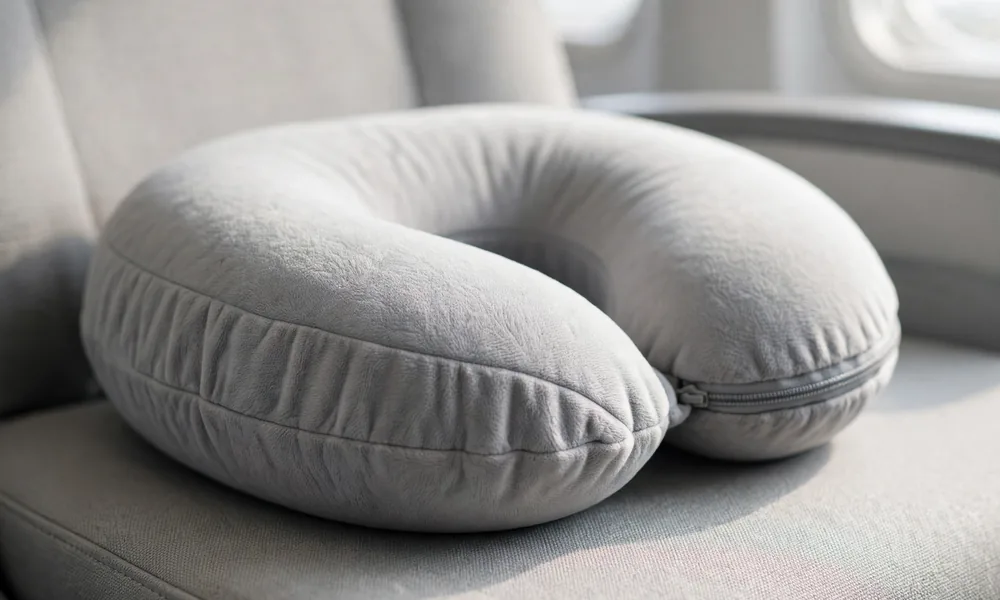
The classic U-shaped memory foam pillow is the best all-round choice for neck pain. Dense foam moulds to your neck and jaw and holds that shape, so your head stays upright even in deep sleep. Raised side walls stop the sideways flop that causes most travel neck pain, while a flattened back panel keeps it from pushing your head forward against a headrest. Look for a removable, washable cover and a front clasp that keeps the ends together for chin support. The main drawback is bulk, though most models come with a compression sack.
J-Shaped and Wraparound Pillows
If you sleep on your side or lean against the window, a J-shaped pillow may suit you better. It wraps around the neck and extends down one side, and the extended arm supports the jaw and cheek, taking the load off the neck muscles on that side. The trade-off is that J-shaped pillows are one-sided, so you must flip them if you change sides, and they are bulkier than U-shaped designs. They suit taller travellers well, because the long arm fills the space between shoulder and ear that shorter pillows leave empty.
Inflatable Travel Pillows
Inflatable pillows have improved enormously. The best 2026 models use flocked surfaces and internal baffles that stop air shifting from side to side, the flaw that made older inflatables useless for neck pain. You can adjust firmness by adding or releasing air, and deflated it packs down to the size of a phone. The catch is that even the best inflatable cannot match dense memory foam, since air compresses slightly under sustained pressure. For shorter flights and light packers, though, it is a sensible compromise.
Scarf-Style and Wrap Pillows
Scarf-style pillows wrap around the neck like a thick collar and fasten at the front. Their strength is chin support: they cradle the jaw and stop the head dropping forward, the most common cause of travel neck pain. Because they wrap snugly, they stay in place better than any other type, even when you shift in your seat. They are weaker at lateral support, so if your head flops sideways, a U-shaped or J-shaped design will serve you better. They pack flat, weigh very little and double as a neck warmer.
How to Choose the Right Pillow for Your Neck
Start with how you sleep. If you nod forward, prioritise chin support and look at scarf-style or high-front U-shaped designs. If your head rolls sideways, prioritise tall side walls and a J-shaped or firm U-shaped pillow. If you lean against the window, a wraparound design is the natural pick. Matching the pillow to your sleep position matters more than any brand.
Next, consider your neck itself: a long neck needs a taller pillow, a short neck a shallower one, and broader shoulders a deeper design. With a diagnosed neck condition, choose firm memory foam and avoid very soft or flat pillows entirely. Long-haul flyers should pick maximum support over packability, and comparing your options against the best neck pillows for flights is a useful next step, since those picks are tested in aircraft seats.
How to Use a Travel Pillow Properly
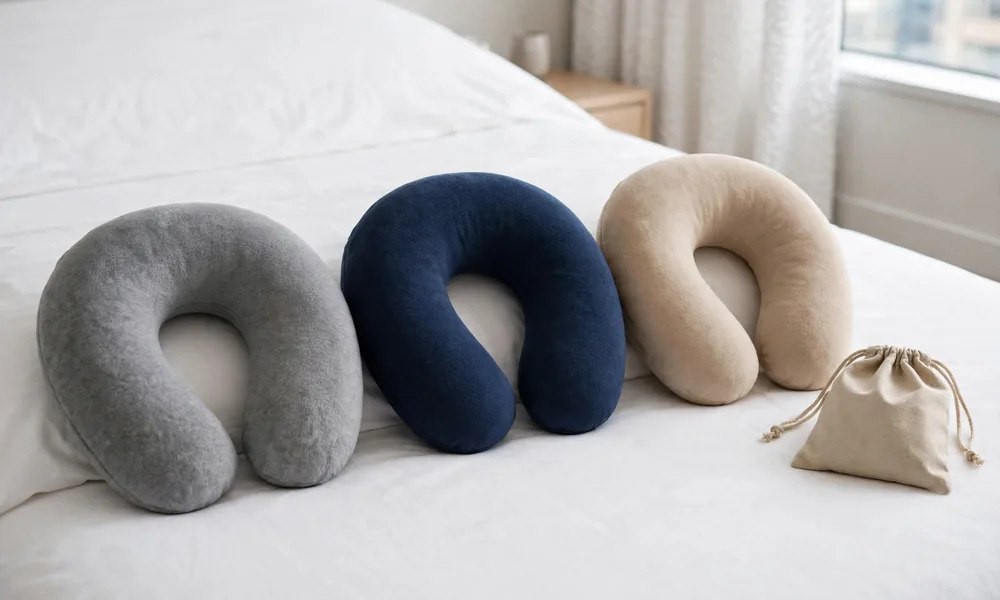
Even the best pillow fails if worn wrong. The most common mistake is wearing a U-shaped pillow backwards, with the opening at the back of the neck. The opening should sit at the front, under the chin, with the thickest part supporting the back and sides of the neck. Worn backwards, it pushes your head forward and worsens neck pain.
Position the pillow high, so it touches the base of your skull and your jaw, not low around the shoulders. Fasten any clasp so the ends stay close, and lean back so the headrest and the pillow share the load. Trial it before a big trip: wear it for an hour at home while dozing in a chair. A pillow that feels fine for five minutes in a shop can reveal its flaws after forty minutes of real sleep.
Common Mistakes That Make Neck Pain Worse
The first mistake is choosing a pillow that is too soft: it feels inviting, but it collapses under your head and leaves your neck unsupported for most of the journey. The second is buying the cheapest pillow at the airport, which is almost always thin, under-filled and shaped for looks rather than support.
The third mistake is using the pillow only on overnight flights: neck strain builds up on every journey where you sleep sitting up, including short flights, long drives and train rides. The fourth is ignoring the seat itself. Straighten up, support your lower back with a small cushion or rolled jacket, and let the travel pillow do the job it was designed for.
Travelling Long Haul With a Sore Neck
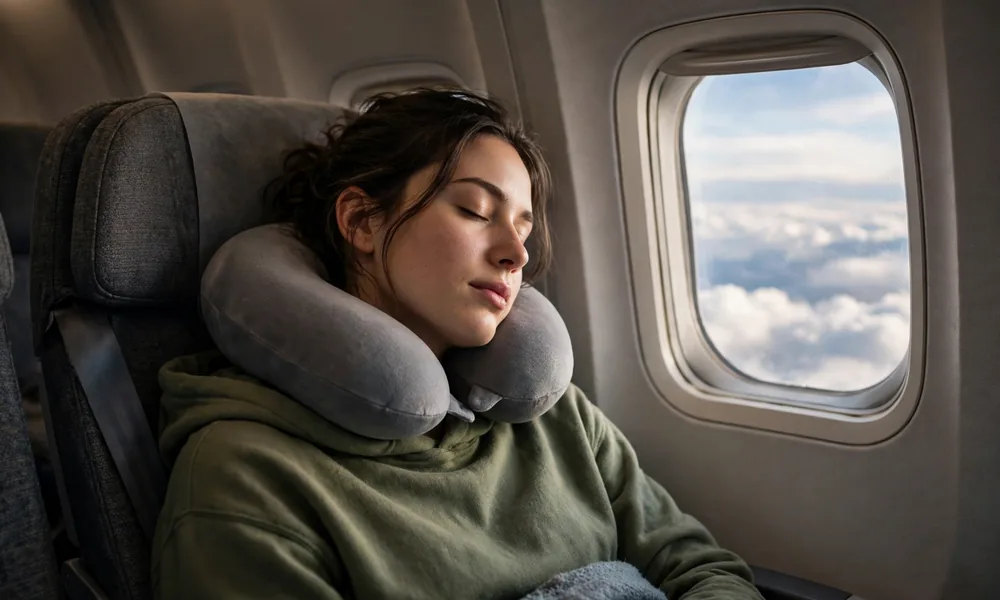
Long-haul flights are the hardest test for any travel pillow, because the hours are long and the seats are upright. Support matters more than packability, so choose the firmest memory foam design you can carry comfortably and wear it from the moment you settle in, not only when you feel sleepy.
Move little and often: every hour or so, sit up, roll your shoulders and turn your head gently from side to side. Staying hydrated helps too. If you want a deeper comparison of designs built for the longest journeys, the travel pillows built for long flights focus on exactly that problem.
Checklist: Before You Buy
- Check firmness: press it firmly and make sure it springs back instead of staying flat.
- Check the fit: it should touch chin, jaw and shoulders without pushing your head forward.
- Check the cover: removable and washable.
- Check the weight: under 400 grams is comfortable; heavier designs tire the neck.
- Check packability: it should compress, clip or roll small enough for your bag.
- Check the return policy: buy where you can return it after a real trial at home.
Frequently Asked Questions
Are travel pillows actually good for neck pain?
Yes, when they fit well and are firm. A good travel pillow holds your head in a neutral position while you sleep sitting up, stopping the stretching and twisting that causes most travel neck pain. A badly fitting pillow will not help.
Which type of travel pillow is best for neck pain?
Memory foam U-shaped pillows are the best all-round choice, because they mould to your neck and hold their shape for hours. J-shaped pillows suit side sleepers, scarf-style pillows suit forward-nodders, and inflatables are a good lightweight compromise for short trips.
Should a travel pillow be firm or soft?
Firm. Soft pillows collapse under your head within minutes, leaving your neck unsupported. A medium-firm to firm pillow feels less plush at first, but it keeps working through a whole flight.
How do I stop my head from falling forward when I sleep on a plane?
Use a pillow with strong chin support, such as a scarf-style pillow or a U-shaped pillow with a front clasp, worn with the opening at the front under your chin. Leaning your seat back slightly also helps.
Can a travel pillow make neck pain worse?
Yes, if it is the wrong shape or worn backwards. A pillow that pushes your head forward, lifts your chin too high or leaves a gap on one side can strain your neck more than sleeping without one. Always trial one at home first.
How do I clean a travel pillow?
Remove the cover and wash it on a gentle cycle. Memory foam itself should not go in a washing machine; spot-clean it with a damp cloth and mild soap, then air-dry it fully.
The Bottom Line
The best travel pillows for neck pain 2026 are firm, well-shaped and fitted to how you actually sleep. A dense memory foam U-shaped pillow is the safest choice for most travellers; J-shaped and scarf-style designs win for side sleepers and forward-nodders. Choose support over softness, trial the pillow at home, and wear it on every journey where you might sleep.