The best outdoor swings in 2026 are the ones that give a garden a place to sit and sway. A freestanding swing stands on its own legs in the open air, on a lawn or a patio, with no porch ceiling above it and no wall behind it. This guide covers the outdoor swings that work in real gardens: canopy bench swings, tree swings and glider benches, judged on frame strength, comfort, weatherproofing and how much ground they need.
An outdoor swing is not the same buy as a porch swing. A porch swing hangs from a ceiling or a beam, and its whole design assumes a roof overhead; our guide to porch swings covers those in full. An outdoor swing carries its own frame, stands up to wind and rain on its own, and has to be anchored, shaded and drained as a piece of garden furniture.
Key Takeaways
- A freestanding frame is the heart of an outdoor swing: check the steel or hardwood frame and the weight rating before anything else.
- Canopy fabric matters more than it looks: UV-rated, water-resistant fabric lasts seasons, while cheap fabric fades and tears within a year.
- Measure the swing plus its arc, not just the footprint of its legs.
- Wooden swings need an annual oil coat; metal swings need rust checks at the joints and bolts.
- A tree swing is the cheapest way into outdoor swinging, but only a healthy branch of the right thickness is safe to hang from.
Outdoor Swings at a Glance
| Type | Seats | Needs | Best for | Weak point |
|---|---|---|---|---|
| Wooden canopy bench | Two or three | Flat lawn or patio | Long evenings, classic look | Annual oiling |
| Metal-frame canopy swing | Two or three | Flat ground, anchoring | Easy setup, moving around | Canopy in high wind |
| Tree swing | One or two | Healthy branch, 20 cm plus | Low cost, natural feel | Branch and rope wear |
| Glider bench | Two or three | Flat patio or deck | Gentle motion, no hanging | Glide mechanism wear |
What Makes an Outdoor Swing Different from a Porch Swing
The difference is the structure. A porch swing borrows its support from the house: chains or ropes hang from a ceiling joist or a beam, and the porch roof keeps the rain off. An outdoor swing brings its own support. Its frame is a pair of A-shaped legs joined by a top bar, and the bench hangs from that bar.
Because it stands in the open, an outdoor swing has to solve three problems a porch swing never faces. First, wind: a canopy acts like a sail, so the frame must be heavy or anchored. Second, ground: the legs sit on grass, soil or paving, so they need to stand level and stay put. Third, rain: there is no roof, so the canopy, the cushions and the frame all get wet, and they must dry without rotting or rusting.
The Main Types of Outdoor Swing
Most outdoor swings fall into four families.
Wooden Canopy Bench Swings
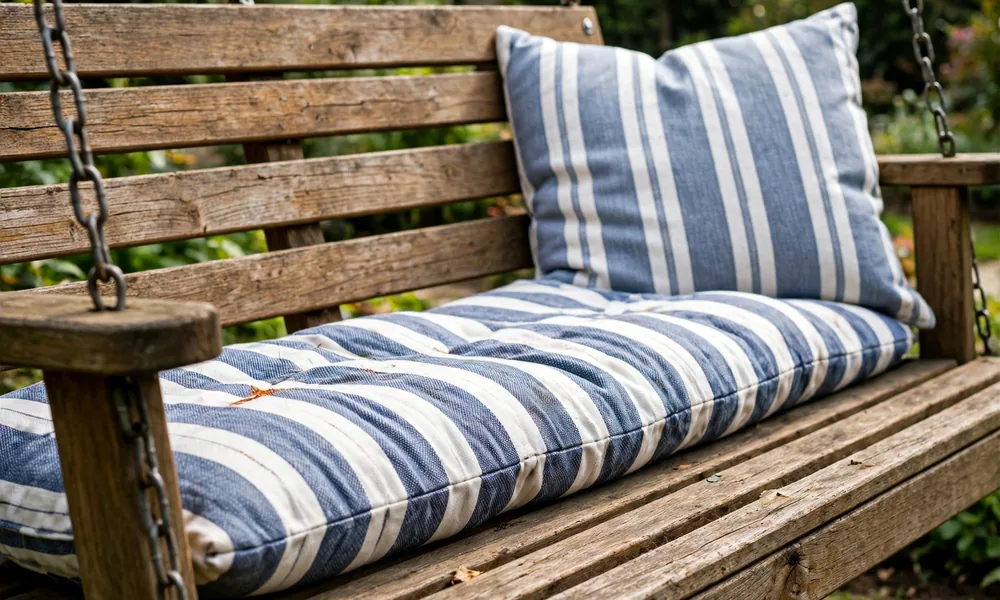
The wooden canopy bench is the classic garden swing: a slatted hardwood bench, often cedar or teak, hanging from a wooden A-frame with a fabric canopy above. Wood feels warm, looks better with age, and suits almost any garden style. Cedar resists rot and insects naturally, while teak is the most durable of all but costs the most.
The weakness is maintenance and weight. An unfinished wooden swing left in full sun and rain will grey and crack within a couple of seasons unless it gets a coat of exterior oil once a year, which takes less than an hour. Look for thick, joined timbers and galvanised or stainless steel hanging hardware.

Metal-Frame Canopy Swings
A metal-frame canopy swing is the easiest outdoor swing to buy and set up. A powder-coated steel or aluminium frame stands on the lawn or patio, the bench hangs from its top bar on chains, and a fabric canopy keeps off sun and light rain. Aluminium frames never rust, while powder-coated steel is stronger but needs its coating kept intact.
The canopy is the weak point. Cheap fabric fades and tears within a season, and strong wind can turn the whole frame into a sail, so look for UV-rated, water-resistant fabric and anchor the legs to the ground or to heavy patio slabs if your garden catches the wind.
Tree Swings
A tree swing is the simplest outdoor swing of all: a wooden plank or a small bench seat hung by ropes or straps from a branch. It costs the least, needs no frame, and feels the most natural, because the tree does the work. Rope is traditional and quiet, while flat webbing straps spread the load on the bark and are kinder to the tree.
The branch is everything. It must be a living hardwood branch at least 20 centimetres thick, high enough that the seat hangs 45 to 50 centimetres off the ground, and clear of fences, walls and other branches in the swing arc. Check the rope or straps every spring for wear.

Glider Benches
A glider bench looks like a swing but moves differently: instead of hanging from chains, the bench sits on a mechanism that slides it gently back and forth on a fixed base. There is no arc, no height change and no need for overhead clearance, which makes gliders the best choice for a small patio or a deck where a swinging bench would hit something.
The mechanism is the thing to judge. Cheap gliders use thin steel arms and plastic bearings that wear and start to clunk within a year; good ones use heavy arms and sealed bearings that glide silently.
What to Check Before You Buy
Frame Strength and Weight Rating
Check the weight rating first, and buy a swing rated comfortably above the weight it will carry. A two-person bench swing should be rated for at least 200 kilograms once people, cushions and the push of swinging are counted. Look at the joints: welded steel or mortise-and-tenon wood joints last, while thin bolts through thin tubes work loose.
Ground and Anchoring
Decide where the swing will stand before you buy it, and measure the ground. A canopy bench swing needs a flat patch about 2 metres wide and 1.5 metres deep, plus clear space in front and behind for the swing arc. Buy ground anchors or sandbags with the swing if your garden is windy, and fit them on day one rather than after the first storm.
Canopy Fabric
Read the fabric specification, not just the colour. UV-rated, water-resistant polyester or acrylic canvas lasts several seasons; thin unrated fabric fades in one summer and tears at the seams.
Cushions and Seat Comfort
Sit on the swing for five minutes, not five seconds. Slatted seats need cushions; solid seats need drainage. Outdoor cushions should be quick-drying foam with removable, washable covers.
Size and the Swing Arc
Measure the swing plus its movement, not just its footprint. A bench swing moves forward and back by 30 to 40 centimetres, so leave at least 60 centimetres clear in front and behind, and 15 centimetres on each side. Our guide to garden chairs is worth a look if the space turns out to be too small for any swing at all.
The Best Outdoor Swings in 2026
The swings below were chosen for what makes a garden swing good: a smooth, quiet motion, a seat that stays comfortable for an hour, and a build that survives weather.
Best Overall: Wooden Canopy Bench Swing
The wooden canopy bench swing is the default recommendation. Cedar resists rot and insects without treatment, the slatted seat drains rain, and the A-frame is heavy enough to stay put in wind. It looks right in almost any garden, and with an annual oil coat it lasts a decade.
Best Metal Frame: Powder-Coated Steel Canopy Swing
The best metal-frame swing is a powder-coated steel frame with a UV-rated canopy and a bench rated for 250 kilograms. It assembles in an afternoon, costs less than the wooden equivalent, and can be moved when the garden changes.
Best Tree Swing: Hardwood Plank Swing with Straps
The best tree swing is a thick hardwood plank with flat webbing straps and a rope option for higher branches. It is the cheapest way into outdoor swinging, it is silent, and it suits a garden with one good tree. Check the branch first, fit the straps correctly, and inspect them every spring.
Best Glider: Three-Seater Glider Bench
The best glider is a three-seater with heavy steel arms and sealed bearings, on a base that sits flat on a patio or deck. It gives the gentle motion of a swing without the arc, so it fits small spaces and suits sitters who find hanging swings too lively.
Best Budget: Simple Metal Canopy Swing
The best budget pick is a simple two-seater metal canopy swing with a plain polyester canopy and no frills. It will not last as long as the wooden bench, and the cushions will be thin, but it swings smoothly, sets up quickly and costs a fraction of the premium picks.
Keeping an Outdoor Swing in Good Shape
A swing lasts longest when it gets a little care twice a year. In spring, oil the wood, check the chains and bolts, and wash the canopy with mild soap. In autumn, take the cushions indoors, remove the canopy if it is detachable, and cover the frame or move it under shelter. A swing left out all winter with wet cushions will smell of damp by spring, while a swing stored dry will look nearly new. The same weatherproofing habits in our guide to outdoor chairs apply here too.
Outdoor Swing Checklist
- Measure the spot plus 60 centimetres of clear swing arc in front and behind.
- Check the weight rating covers everyone who will use it, with room to spare.
- Confirm the frame joints are welded steel or joined hardwood, not thin bolted tubes.
- Check the canopy fabric is UV-rated and water-resistant, and that it tilts or removes.
- Buy ground anchors or wide feet with the swing if the garden is windy or soft.
- Sit on it for five minutes to test seat depth, height and cushion comfort.
Frequently Asked Questions
How much space does an outdoor swing need?
A two-seater canopy bench needs a flat patch about 2 metres wide and 1.5 metres deep, plus at least 60 centimetres of clear space in front and behind for the swing arc.
Can an outdoor swing stay outside all winter?
The frame can, if it is hardwood or powder-coated steel, but the cushions and canopy should come indoors.
What is the difference between an outdoor swing and a porch swing?
A porch swing hangs from a ceiling or beam under a roof, while an outdoor swing stands on its own frame in the open garden. The outdoor swing has to handle wind, rain and uneven ground on its own.
How do I anchor a swing on grass?
Use ground anchors screwed into the soil at each leg, or heavy patio slabs under the feet, or sandbags over the base rails.
Is a tree swing safe for adults?
Yes, if the branch is a living hardwood branch at least 20 centimetres thick, the straps or rope are rated for the load, and the seat hangs 45 to 50 centimetres off the ground with clear space around it.
How long should an outdoor swing last?
A good wooden canopy swing lasts ten years or more with an annual oil coat; a metal-frame swing lasts five to eight years with rust checks and a canopy replaced every two or three seasons.
The Bottom Line
The best outdoor swing is the one that fits your garden, your ground and your weather. A wooden canopy bench is the best all-rounder; a metal-frame swing is the easiest buy; a tree swing is the cheapest where there is a good branch; a glider suits a small patio.