What Is the Best Pecan in 2026? Halves, Pieces and Toasted Pecans That Stay Buttery
The best pecans in 2026 are fresh, buttery halves with a clean snap and no bitter aftertaste. A good pecan tastes sweet and almost creamy, with a soft crunch that gives way to a rich, oily kernel. A stale one tastes flat, waxy and faintly bitter, and no amount of salt, sugar or toasting will rescue it. That is the whole secret of buying pecans well: freshness first, form second, and flavourings a long way behind. This guide explains what makes a great pecan, which form suits snacking and which suits baking, how roasting changes the nut, and how to store a bag so it stays buttery for months rather than weeks. It also draws the line between the nut itself and the dishes it stars in, so you buy the right bag for the job in front of you.
Key Takeaways
- Buy halves for snacking and for topping dishes, pieces for baking, and meal only when a recipe calls for it.
- Fresh pecans smell sweet and nutty, snap cleanly, and taste buttery rather than bitter or waxy.
- Raw pecans suit baking best, while dry-roasted or lightly toasted pecans suit eating straight from the bag.
- Skip candied and honey-roasted pecans for everyday snacking; the coating hides stale nuts and adds sugar.
- Store pecans in the fridge once opened, and in the freezer for anything kept longer than a month.
What a Pecan Actually Is
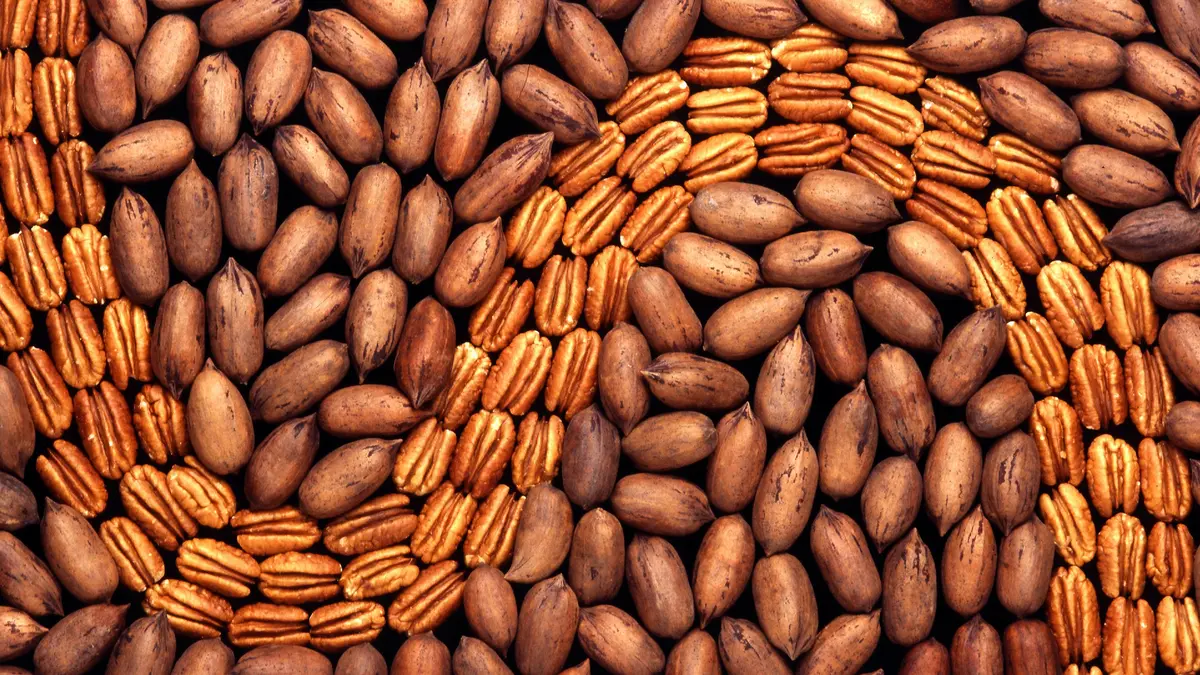
A pecan is the kernel of a hickory tree native to North America, and it is the only major tree nut that comes from that continent. The kernel sits inside a smooth, oval shell that is thin enough to crack by hand in the paper-shell varieties, and the kernel itself splits naturally into two halves. That shape is why halves dominate the shelf: a pecan half is the whole kernel, unbroken, and it is the form that shows off the nut best. Pecans are rich in monounsaturated fat, which is where their buttery flavour comes from, and that same fat is why they turn rancid faster than almonds or hazelnuts. A pecan is at its best within a few months of harvest, and it rewards careful storage more than any other common nut. The flavour is sweet and mild, with none of the bitterness of a walnut skin and none of the green snap of a pistachio.
Halves, Pieces and Meal: Which Form to Buy
Halves are the premium form and the right default for most buyers. A whole half looks good on a salad, a porridge bowl or a cheese board, and it toasts evenly because every piece is roughly the same size. Halves also make it easy to judge quality: you can see the colour, the plumpness and whether the kernel is broken or shrivelled. Pieces are halves that broke during shelling, sold at a lower price, and they are the smart buy for baking. Chopped into a brownie, a banana bread or a stuffing, a piece behaves exactly like a half, and you pay less for the privilege. Pecan meal is finely ground pecan, and it belongs in recipes that call for it, such as pecan-crusted chicken or a nut flour bake, rather than in a snacking bag. Meal goes stale fastest of all, because grinding exposes far more surface to air, so buy it in small bags and use it quickly.

Raw, Dry-Roasted and Toasted: What Changes
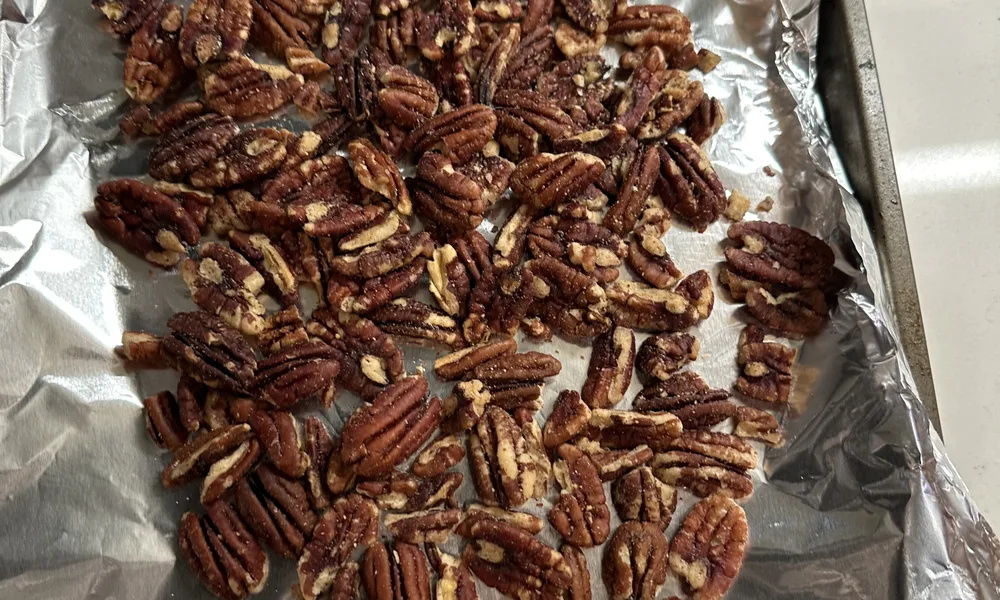
Raw pecans are the most versatile form. They are soft, sweet and mild, and they take on the flavour of whatever they are cooked with, which is why bakers prefer them. A raw pecan folded into a cake batter toasts gently as the cake bakes, so it never needs pre-toasting. Dry-roasted pecans have been heated without oil, which deepens the flavour, firms the crunch and brings out a caramel note that raw pecans keep quiet. They are the best choice for eating straight from the bag, and they hold up better in a salad, where a raw pecan can taste soft and pale. Toasted pecans are simply pecans you toast yourself, in a dry pan or a low oven for five to eight minutes, and they are the best of both worlds: you control the heat, you can toast exactly the amount you need, and the kitchen smells wonderful. The rule is simple. Buy raw for baking, buy dry-roasted for snacking, and toast your own when a recipe asks for toasted pecans rather than paying a premium for a bag that was toasted weeks ago.
How to Judge a Bag Before You Buy It
Start with the date. Pecans are harvested in autumn, so a bag packed soon after harvest is the freshest you will find, and a bag with no date at all is a bag to skip. Next, look through the bag if you can. Good halves are plump, golden-brown and roughly the same size, with very few broken pieces or crumbs at the bottom. Dark, shrivelled or dusty-looking kernels are old, and a bag with a lot of dust has been handled too much. Smell the bag when you open it: fresh pecans smell sweet and nutty, while stale ones smell faintly of old oil or paint. Taste one before you commit the bag to a recipe. A fresh pecan snaps cleanly and tastes buttery; a stale one bends, feels waxy and leaves a bitter note at the back of the tongue. Salt is the only flavouring worth paying for, and lightly salted is enough. Honey-roasted, candied and praline-coated pecans are treats, not everyday nuts, and the coating is often doing the work of hiding a mediocre kernel.
Pecan Forms at a Glance
| Form | Best for | Freshness | Price |
|---|---|---|---|
| Halves | Snacking, salads, topping dishes | Good | Highest |
| Pieces | Baking, stuffings, porridge | Good | Lower |
| Raw | Baking, cooking, toasting yourself | Best | Mid-range |
| Dry-roasted | Snacking, salads, cheese boards | Good | Mid-range |
| Meal | Crusts, nut-flour baking | Shortest | Mid-range |
| In-shell | Table cracking, longest storage | Longest | Lowest per kernel |
Pecans Against the Other Nuts
Pecans sit in the sweet, buttery corner of the nut shelf, and that sets them apart from their neighbours. Walnuts are the closest rival in shape, but they carry a bitter skin and a sharper, more tannic flavour that suits savoury dishes better. Almonds are firmer, drier and more neutral, which makes them better for everyday snacking but less interesting on a dessert. Cashews are softer and creamier, yet they lack the pecan’s toasted depth. Hazelnuts are sweeter and rounder in flavour, closer to chocolate than to butter. If you are building a snacking habit rather than buying one nut, our guide to the best nuts for snacking compares the whole shelf on freshness, flavour and value, and it is the right place to start. Pecans also appear in most good blends, and the best mixed nuts explains how to tell a blend built around pecans and almonds from one built around cheap peanuts.
Baking With Pecans
Pecans are the baker’s nut, and they earn that title in three ways. First, they chop cleanly without crumbling into dust, so a brownie or a banana bread gets distinct pieces rather than a muddy crumb. Second, they toast as they bake, so a raw pecan folded into a batter comes out of the oven golden and fragrant without any extra step. Third, they pair with the flavours bakers reach for most: brown sugar, maple, cinnamon, vanilla, chocolate and bourbon all sit comfortably beside a pecan. The classic test is the pie, and our guide to the best pecan pie explains why fresh nuts matter more there than anywhere else, since a stale pecan in a pie filling has nowhere to hide. For everyday baking, pieces are the right buy, and toasting them for five minutes before they go into the batter deepens the flavour without drying them out. A pecan crust, made from meal, butter and a little sugar, is one of the easiest upgrades in baking: it presses into a tin in minutes and bakes into a base that tastes far more expensive than it is.
Storing Pecans So They Stay Buttery
Pecans go stale because their oils meet air, light and heat, so storage is about removing all three. An unopened bag keeps in a cool, dark cupboard for a few weeks, but once the bag is open, move the nuts into an airtight jar and put that jar in the fridge. In the fridge, pecans stay fresh for about three months; in the freezer, sealed in a bag with the air pressed out, they keep for up to a year and thaw in minutes. Never store pecans beside onions, garlic or strong spices, because the oils pick up smells quickly. Buy in-shell pecans if you want the longest life: the shell is a far better wrapper than any bag, and in-shell nuts kept cool and dry can last six months or more.

The 6-Point Pecan Checklist
- Check the pack date and choose the freshest bag, ideally packed soon after the autumn harvest.
- Pick halves for snacking and topping, pieces for baking, and meal only for recipes that need it.
- Buy raw for baking and dry-roasted for snacking, and toast your own when a recipe asks for it.
- Smell and taste one nut first: sweet and nutty is fresh, bitter or paint-like is stale.
- Skip candied and honey-roasted bags for everyday eating; the coating hides mediocre kernels.
- Store opened pecans airtight in the fridge, and freeze any bag that will last longer than a month.
Pecan FAQs
Are pecans healthy?
Yes, in a small handful. Pecans are rich in monounsaturated fat, fibre and minerals, and about thirty grams is a sensible daily portion.
Should I buy halves or pieces?
Halves for snacking and for any dish where the nut is visible, pieces for baking and cooking. Pieces taste the same and cost less, so they are the better buy whenever appearance does not matter.
Do pecans need to be toasted?
Not for baking, where they toast in the oven anyway. For snacking and salads, a short toast deepens the flavour a lot. Five to eight minutes in a dry pan or a low oven is enough.
How long do pecans last?
A few weeks in a cupboard unopened, about three months in the fridge once opened, and up to a year in the freezer in a sealed bag. In-shell pecans kept cool and dry last longest of all.
Why do my pecans taste bitter?
Bitterness usually means the nuts are stale or were stored warm, or that they were over-toasted. Fresh pecans taste sweet and buttery, never bitter, so a bitter bag is a bag to replace.
Are pecans the same as walnuts?
No. Pecans are sweeter, softer and more buttery, while walnuts are firmer, sharper and slightly bitter from their skin. They can swap in some recipes, but the flavour of the finished dish changes.
The Bottom Line
The best pecans in 2026 are fresh halves, bought in a small bag, kept in the fridge, and toasted at home when a recipe asks for it. Buy pieces for baking, skip the candied coatings for everyday eating, and trust your nose: a sweet, nutty smell means a good bag, and a bitter or oily one means it is time to buy fresh. Treat pecans as a short-life luxury rather than a cupboard staple, and they will taste buttery every time.


