
The best pre-workout in 2026 does one thing well: it turns a tired afternoon into a training session you actually enjoy. The right formula gives you steady energy, sharper focus and a little extra endurance, without the jittery crash that sends you reaching for a second coffee an hour later. The wrong one leaves you wired, nauseous and staring at the ceiling at midnight.
The best pre-workout supplements share a simple formula. They use caffeine at a dose that wakes you up without overwhelming you, pair it with ingredients that support blood flow and endurance, list every dose openly on the label, and skip the proprietary blends that hide what you are actually taking. When a pre-workout hits all four, it earns its place in your gym bag.
This guide compares the best pre-workout options of 2026 across the types that matter most: high-stimulant formulas, low-stimulant formulas, stimulant-free options and natural alternatives. We explain what each ingredient does, how to time your dose, and how to choose the right pre-workout for your training, your sleep and your budget.
Key Takeaways
- Look for 150–200 mg of caffeine per serving; more than 300 mg is rarely better and often worse.
- Choose a fully transparent label: every ingredient with its exact dose, no proprietary blends.
- Citrulline at 6 grams and beta-alanine at 3.2 grams are the best-supported doses for performance.
- Take pre-workout 20–30 minutes before training, and never within six hours of bedtime.
- Stimulant-free formulas suit evening trainers and anyone sensitive to caffeine.
What Makes a Great Pre-Workout
A pre-workout has three jobs: energy, focus and endurance. Energy comes mainly from caffeine, which blocks the sleepiness signal in your brain and helps you feel alert. Focus comes from ingredients such as L-theanine and tyrosine, which smooth out the caffeine and help you concentrate on the set in front of you. Endurance comes from citrulline, which supports blood flow to working muscles, and beta-alanine, which buffers the burn that makes you stop a set early. A good formula covers all three, at doses that match the research, and tells you exactly what is inside. If the label hides doses behind a blend, you cannot know whether you are getting an effective dose or a sprinkle.
Caffeine: The Right Dose Matters More Than the Biggest Dose
Caffeine is the most reliable ingredient in any pre-workout, and the dose makes the difference between a great session and a bad evening. Research supports 150 to 200 milligrams for most adults, roughly the caffeine in two cups of coffee, taken twenty to thirty minutes before training. That dose improves strength, endurance and perceived effort for most people. Doses above 300 milligrams add jitters, a racing heart and broken sleep without adding much performance, and they build tolerance fast, so the same scoop stops working within weeks. If you already drink coffee, count it: a morning coffee plus a high-stimulant pre-workout can push you past 400 milligrams before you have lifted a weight. Start with half a scoop on your first day to test your tolerance, and never take pre-workout after late afternoon if you value your sleep.
Best High-Stimulant Pre-Workout in 2026
High-stimulant pre-workouts suit early-morning lifters and anyone who trains before the day has properly started. The best formulas pair 200 milligrams of caffeine with six grams of citrulline and 3.2 grams of beta-alanine, plus L-theanine to smooth the edge, and they list every dose openly. Expect a strong kick within twenty minutes, sharper focus through the session, and a clear crash two to three hours later if you take it on an empty stomach, so eat something light first. These formulas are not for everyone: if you train in the evening, drink a lot of coffee, or feel anxious on caffeine, a high-stimulant scoop will cost you more sleep than it gains you in the gym.
Best Low-Stimulant Pre-Workout in 2026
Low-stimulant pre-workouts are the best choice for most people, because they deliver the performance ingredients without the caffeine overload. A good low-stimulant formula carries 100 milligrams of caffeine or less, with the full six grams of citrulline and 3.2 grams of beta-alanine, so you get the pump and the endurance without the jitters. These formulas suit lunchtime trainers, people who already drink coffee, and anyone who wants a pre-workout they can use five days a week without building tolerance. They also play nicely with sleep: a 100-milligram dose at midday is mostly cleared by bedtime, while a 300-milligram dose at the same time is not. If you only buy one pre-workout, make it a low-stimulant one, and save the stronger stuff for the days you genuinely need it.
Best Stimulant-Free Pre-Workout in 2026
Stimulant-free pre-workouts skip caffeine entirely and lean on citrulline, beta-alanine and electrolytes to support your session. They will not wake you up, but they will improve blood flow, delay the muscle burn and keep you hydrated through a long workout, which is exactly what evening trainers need. The best formulas also add a small amount of tyrosine for focus and a pinch of salt for sweat replacement, and they taste clean without the artificial sweetness that heavier formulas hide behind. These are the right choice if you train after 6pm, if caffeine makes you anxious or restless, or if you are taking a break from stimulants. Pair one with a banana or a small coffee if you still want a lift, and you get most of the benefit with none of the sleep cost.
Best Natural Pre-Workout Alternatives in 2026
You do not need a tub of powder to train well, and the simplest natural pre-workout is a strong black coffee taken thirty minutes before training, with a banana for quick energy and a glass of water for hydration. Coffee gives you 100 to 150 milligrams of caffeine, the banana gives you fast carbohydrate and potassium, and the water replaces what you will sweat out. Beetroot juice is the other proven natural option: its nitrates support blood flow in the same way citrulline does, and a small glass two hours before training has real evidence behind it.

How and When to Take Pre-Workout
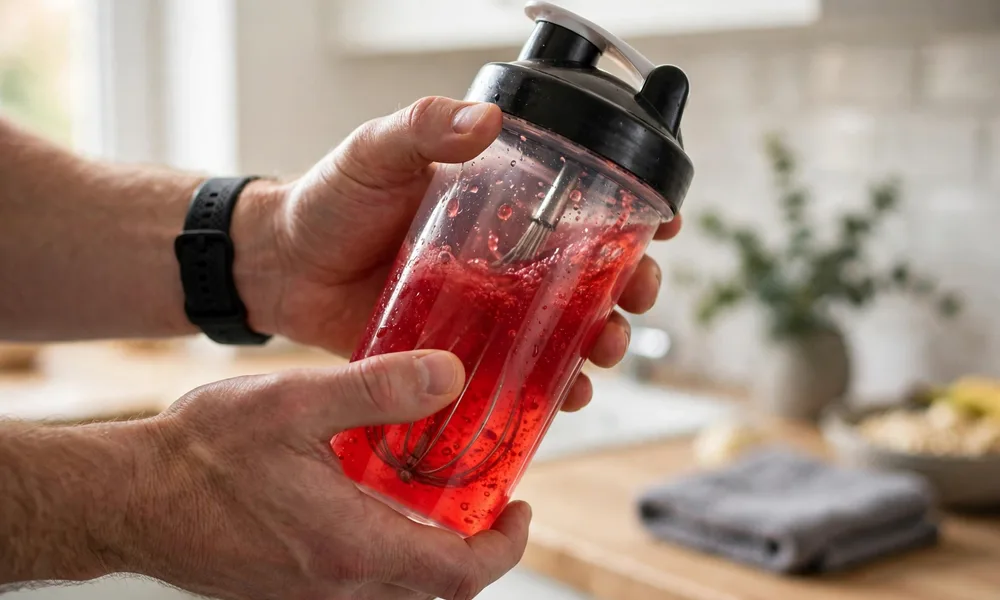
Timing is simple: mix one scoop with 300 to 400 millilitres of cold water and drink it twenty to thirty minutes before you start training, so the caffeine peaks as your warm-up ends. Taking it too early wastes the peak on the drive to the gym, and taking it too late means the caffeine is still climbing when you finish. Eat a light snack an hour before if you train fasted, because caffeine on an empty stomach causes nausea in many people. Never take a second scoop mid-session, and never use pre-workout as an energy drink for work or study: the dose is built for training, and using it as a daily stimulant builds tolerance fast. If you train in the evening, switch to a stimulant-free formula, and if you track your training and recovery, our guide to the best fitness trackers for 2026 covers the watches and bands that show whether your sleep and recovery are actually improving.
Pre-Workout Side Effects and Who Should Skip It
Most pre-workout side effects are mild and predictable. Beta-alanine causes tingling in the hands, face and neck for thirty to sixty minutes, which is harmless but unsettling the first time. Caffeine causes jitters, a racing heart and broken sleep when the dose is too high or taken too late. Sugar alcohols and artificial sweeteners can upset the stomach, especially on an empty stomach or at a double dose. More serious concerns apply to a small group: anyone with high blood pressure, a heart condition, or anxiety should talk to a doctor before using a high-stimulant formula, and teenagers, pregnant women and anyone sensitive to caffeine should skip stimulant pre-workouts entirely. The safe rule is simple: start with half a scoop, take it before noon, and stop using it if you notice palpitations, headaches or sleep problems that were not there before.
Best Pre-Workout Compared
| Pre-Workout Type | Caffeine Per Serving | Key Ingredients | Best For | Typical Price Per Serving |
|---|---|---|---|---|
| High-stimulant | 200–300 mg | Citrulline 6g, beta-alanine 3.2g | Early-morning heavy sessions | £0.90–£1.40 |
| Low-stimulant | 75–150 mg | Citrulline 6g, beta-alanine 3.2g | Everyday training | £0.80–£1.20 |
| Stimulant-free | 0 mg | Citrulline 6g, electrolytes | Evening training | £0.80–£1.20 |
| Natural (coffee + banana) | 100–150 mg | Caffeine, fast carbs, water | Budget and simplicity | £0.20–£0.40 |
| Endurance formula | 100–150 mg | Citrulline, electrolytes, carbs | Running and cycling | £0.90–£1.30 |
| Focus formula | 150–200 mg | L-theanine, tyrosine | Technical lifting sessions | £1.00–£1.50 |

Pre-Workout Buying Checklist
- Check the caffeine dose first: 150–200 mg suits most people, and over 300 mg is a warning sign.
- Demand a fully transparent label with exact doses for every ingredient, and no proprietary blends.
- Confirm citrulline at 6 grams and beta-alanine at 3.2 grams, the doses the research actually supports.
- Match the formula to your training time: stimulant-free for evenings, low-stimulant for most days.
- Start with half a scoop to test your tolerance before you commit to a full serving.
- Compare cost per serving, not tub price, and check how many servings the tub really contains.
Frequently Asked Questions
Is pre-workout safe?
For healthy adults, a transparent pre-workout at the recommended dose is generally safe. The risks come from very high caffeine doses, hidden ingredients and double scoops. Start with half a serving, take it before noon, and talk to a doctor first if you have high blood pressure, a heart condition or anxiety.
How long does pre-workout last?
The effects start within twenty to thirty minutes and last two to three hours, with caffeine peaking around forty-five minutes after you drink it. The tingling from beta-alanine fades within an hour, while the endurance benefit builds over weeks of regular use rather than a single scoop.
Can I take pre-workout every day?
You can, but your tolerance will climb and the same scoop will stop working. Most people do better using pre-workout on their three or four hardest sessions a week, and taking one stimulant-free week every six to eight weeks to reset. Stimulant-free formulas can be used daily without the tolerance problem.
Should I take pre-workout before cardio?
Yes, a low-stimulant or endurance formula works well before running or cycling, because the caffeine and citrulline support effort and blood flow. Skip high-stimulant formulas before hard cardio, because a racing heart plus hard effort is an uncomfortable combination, and take it with water rather than on an empty stomach.
What is the best pre-workout for beginners?
A low-stimulant formula with a transparent label is the best starting point: 100 milligrams of caffeine or less, full doses of citrulline and beta-alanine, and no proprietary blend. Try half a scoop first, train at your usual time, and only move to a stronger formula once you know how your body responds.
Can I take pre-workout and protein powder together?
Yes, they do different jobs: pre-workout fuels the session, protein powder supports recovery afterwards. Take the pre-workout thirty minutes before training and the protein within a couple of hours after. If you want to compare powders, our guide to the best protein powders of 2026 covers whey, isolate and plant blends. For the rest of your kit, our roundup of the best gym essentials for 2026 covers the pieces actually worth owning.
The Bottom Line
The best pre-workout in 2026 is not the strongest scoop on the shelf; it is the one that matches your training time, your caffeine tolerance and your goals. A low-stimulant formula with transparent doses of citrulline and beta-alanine is the right default for most people, a stimulant-free formula is the right call for evening training, and a black coffee with a banana beats an expensive tub on most ordinary days. Start with half a scoop, watch your sleep, and let the formula serve the training, not the other way round.


