
The best room sprays of 2026 are the ones that fix a room in seconds. A good room spray turns stale air fresh with one or two short bursts, smells like a clean room rather than a perfume counter, and fades gracefully. A bad one hits you with a chemical blast, vanishes within minutes, or leaves a sticky film behind. This guide compares the best room sprays for instant freshness in 2026, judged on scent, staying power, mist quality and safety around fabrics, pets and children.
Room sprays are the fastest tool in home fragrance: there for the moment you need it, before guests arrive or after cooking, unlike a plug-in or diffuser that works slowly in the background. That speed is also their weakness, because no spray freshens a room all day, and the cheapest cans make up for a short life with a heavy dose of perfume. The sprays below earn their place by doing the quick job well, without overdoing it.
Key Takeaways
- Match the spray to the moment: aerosols for whole rooms, trigger sprays for fabrics, fine mists for small rooms.
- A good room spray smells like a clean room, not a perfume counter: citrus, linen and green herbs suit most homes.
- One or two short bursts in the centre of the room is enough; more spray only makes it stronger at first, not longer-lasting.
- Check the label before spraying near fabrics, pets or children: some sprays stain silk and velvet, and some are unsafe around cats, birds or babies.
- Ventilation comes first: ten minutes with a window open often does more than a whole can.
How We Picked the Best Room Sprays for 2026
A room spray earns its place by making a room smell fresh the moment you walk in, without announcing itself from the hallway. First, scent quality: does it smell like a clean room, or like a sweet chemical? Second, staying power: a scent that vanishes in ten minutes is no use at all. We also weighed the mist, because a fine mist settles gently while a coarse spray leaves damp spots, and running cost, because a cheap can that needs half its contents per room is no bargain. Safety mattered too: the best sprays say clearly whether they are safe around pets, children and fabrics.

The Best Room Sprays of 2026 at a Glance
| Spray | Best for | Scent life | Mist |
|---|---|---|---|
| Citrus Burst Aerosol | Whole-room freshness in seconds | One to three hours | Fine aerosol |
| Linen Air Trigger | Bedding, curtains and sofas | Two to four hours on fabric | Targeted trigger |
| Herb Garden Fine Mist | Small rooms and bedrooms | One to two hours | Very fine mist |
| Pet-Safe Fresh Air | Homes with cats, dogs or birds | One to two hours | Fine aerosol |
| Odour-Clear Kitchen Spray | Cooking smells and bins | Two to three hours | Targeted trigger |
The Best Room Sprays of 2026
Best Overall: Citrus Burst Aerosol
A light citrus aerosol is the easiest starting point and the best all-round room spray for 2026. Citrus reads as clean to almost everyone, suits kitchens, bathrooms and living rooms alike, and fades gracefully instead of lingering as a sweet cloud. The fine even mist reaches across a whole room with one short burst, settling after a few minutes at a level that feels fresh rather than perfumed. Avoid cans that trade scent quality for a bigger cloud. One can lasts most homes a month or more, so the cost per spray is very low.
Best for Fabrics: Linen Air Trigger
Some smells live in fabric, not air: curtains, sofas, bedding and rugs hold odours long after the room has been aired. A trigger spray made for fabrics answers that problem directly, because you can aim it at the cushion or the curtain rather than filling the whole room. The linen scent is deliberately light, so it reads as freshly washed rather than perfumed, and the mist dries without leaving damp patches on most upholstery. Test it first on a hidden corner of velvet or silk, and never spray it on leather.
Best for Small Rooms: Herb Garden Fine Mist
Small rooms punish heavy sprays. A bedroom or study needs a gentle touch, and a fine mist is the right tool: its tiny droplets hang in the air and settle softly instead of falling onto surfaces. The herb scent, green and slightly sharp, suits a bedroom far better than a sweet floral, and it fades within an hour or two, which is exactly what you want before sleep. The pump gives the same dose every time, and the bottle fits on a bedside table.
Best for Pet Homes: Pet-Safe Fresh Air
Most room sprays are not made with pets in mind, and some fragrance chemicals are unsafe around cats and birds, whose lungs are far more sensitive than ours. A pet-safe spray is formulated without the worst offenders and says so on the label, with clear guidance about airing the room and keeping animals out while you spray. The scent is deliberately mild, more fresh air than perfume, and it works best as a quick lift rather than a heavy cover. Spray, air the room for a few minutes, and let pets back in once the mist has settled.
Best for Kitchens: Odour-Clear Kitchen Spray
Cooking smells are the hardest test for a room spray: frying, garlic and fish leave oils in the air that sweet perfume only layers over. A kitchen spray built around odour neutralisers works differently: instead of adding a strong scent, it traps the molecules that cause the smell, then leaves a light clean fragrance behind. Spray it after cooking, not during, aimed at the centre of the room. It also suits the area around the bin, where plain perfume does nothing. Keep it away from food and worktops.
Aerosol, Trigger or Fine Mist?
The three spray types do different jobs, and buying the wrong one is the most common mistake. Aerosols give the fastest, widest coverage: one short burst fills a whole room, the best choice before guests arrive or after cooking. Their weakness is control: the same burst that freshens a living room overwhelms a small bedroom. Trigger sprays give the most control: aim them at a cushion or curtain, which makes them best for fabrics and spot freshness. Fine mists sit in between: a gentle pump spray for small rooms, with droplets so fine they barely dampen anything. Most homes do best with two types, an aerosol for the living room and a trigger or fine mist for bedrooms and fabrics.
Matching a Room Spray to the Room
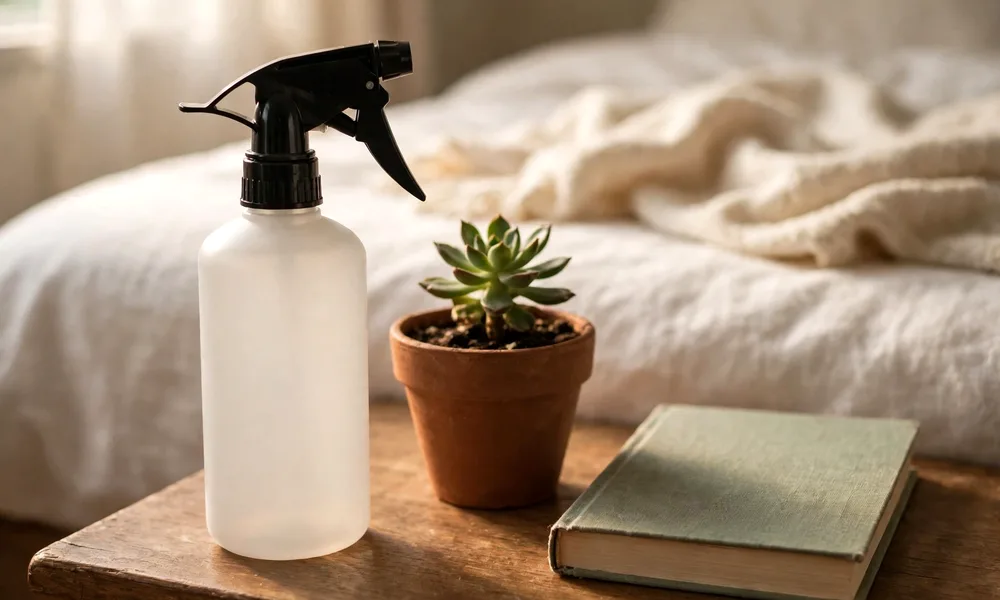
Buy for the room, not for the shelf. A bathroom needs only a quick aerosol burst after use, and a light scent that fades fast beats one that lingers. A living room needs an aerosol with a clean citrus or linen scent, used sparingly, to cover its larger volume of air. A bedroom needs the gentlest option, a fine mist with a calm scent, used an hour before sleep. A kitchen needs an odour neutraliser rather than a perfume, because the smell has a clear source. If you want steady background scent instead of quick bursts, our guide to the best reed diffusers covers the slow, flameless option, and our guide to the best air fresheners compares every type side by side.
Room Sprays, Pets and Small Children
Safety is where cheap sprays fail most often. Never spray directly at a person or a pet, or into a cot, car seat or pet bed while it is occupied. Keep cans out of reach of small children and away from heat: an aerosol can is pressurised. Around cats and birds, choose a spray that states it is pet-safe, air the room, and keep the animal out until the mist has settled. If anyone in the house has asthma, test a new spray with one short burst and a window open, because a heavy perfume can trigger a coughing fit.

How to Use a Room Spray Well
Technique matters more than brand. Hold the can upright and spray into the centre of the room, not at the ceiling or walls, because mist aimed at a surface lands on it and stays there. One or two short bursts are enough; walk out for a few minutes, then come back to judge the scent, because your nose adjusts within seconds and you will keep spraying long past the point of freshness. Spray before guests arrive, not as they walk in. For fabrics, hold the bottle about thirty centimetres away and spray lightly, then let the fabric dry before sitting on it. A room spray is a finishing touch after airing and cleaning, never a substitute for either.
Your Room Sprays Checklist
- Pick the spray type for the job: aerosol for whole rooms, trigger for fabrics, fine mist for small rooms.
- Choose a light, clean scent such as citrus or linen.
- Use one or two short bursts in the centre of the room, then wait before judging the scent.
- Check the label for pet, child and fabric safety before you buy, not after you spray.
- Store cans upright, away from heat and out of reach of children.
- Air the room first: ten minutes with a window open beats a whole can of spray.
Frequently Asked Questions
How long does a room spray last?
Most room sprays freshen the air for one to three hours, depending on scent, room size and how much you spray. Fabric sprays last longer, often two to four hours, because the scent clings to fibres. No spray gives all-day freshness; for that, a diffuser or plug-in suits the job better.
Can I spray a room spray on my sofa?
Only if the label says it is safe for fabrics. Aerosols are made for air, not upholstery, and can leave damp patches on velvet and silk. A trigger spray made for fabrics is the right tool for sofas and curtains; test it on a hidden corner first.
Are room sprays safe around cats?
Some are, and many are not. Cats are sensitive to several common fragrance chemicals, so choose a spray that states it is pet-safe, spray sparingly, air the room, and keep the cat out until the mist settles. Birds are more sensitive still: never spray in the same room as a caged bird.
Why does my room spray smell strong for five minutes, then vanish?
That is normal for a cheap aerosol: the propellant carries a big cloud of perfume that your nose notices at once, then fades fast. A better spray uses a finer mist and a slower fragrance, so the scent lasts one to three hours instead of ten minutes.
Should I use a room spray or an odour eliminator?
They do different jobs. A room spray adds a pleasant scent to the air, while an odour eliminator neutralises the molecules that cause a bad smell. For kitchens, pet areas and bins, an eliminator works better, because perfume layered over a real smell only makes it sweeter. Our guide to the best odour eliminators explains the difference in full.
Can room sprays stain walls or furniture?
Yes, if sprayed too close or too often. Mist aimed at a wall or wooden surface can leave a faint sticky film, and repeated spraying in the same spot can mark paint and varnish. Always spray into the centre of the room.
The Bottom Line
The best room sprays freshen a room in seconds without overdoing it: the Citrus Burst Aerosol for most rooms, the Linen Air Trigger for fabrics, the Herb Garden Fine Mist for small rooms, the Pet-Safe Fresh Air for homes with animals, and the Odour-Clear Kitchen Spray for cooking smells. Pick the type for the job, choose a light scent, use one or two short bursts, and air the room first. A good room spray is a small thing, but when guests are due, it is the difference between a home that smells lived-in and one that smells fresh.


