
The Rubber Gloves That Protect Hands While Cleaning in 2026
The rubber gloves that protect hands while cleaning are the cheapest piece of protection in the house, and the easiest to get wrong. Every cleaning job puts your hands in contact with something harsh: hot water, bleach, strong sprays, and dirty water. Without gloves, skin dries out, cracks, and stings, and small cuts turn into sore, slow-healing spots. The right rubber gloves keep water and chemicals off your skin while still letting you grip a sponge, wring a cloth, and hold a brush. This guide covers the rubber gloves worth buying in 2026: the main materials, what makes one pair protect well without turning clumsy, and how to look after them.
Key Takeaways
- Rubber gloves are waterproof cleaning gloves, made for wet jobs with water, detergents, and household chemicals — not for warmth, gardening, or heavy work.
- Nitrile is the best all-round material in 2026: strong, chemical-resistant, and safe for people with a latex allergy.
- Fit matters more than brand: gloves that are too loose slip and fill with water, while gloves that are too tight tear and tire your hands.
- A longer cuff keeps water and cleaning spray from running down inside the glove, which is where most soggy, irritated hands come from.
- Rinse gloves after every use, let them dry inside out, and replace them when they thin, tear, or start to smell.
Why Cleaning Is So Hard on Bare Hands
Cleaning is hard on hands because it combines three things skin dislikes: water, chemicals, and friction. Hot water strips the natural oils from your skin, leaving it dry and tight. Detergents and bleach do the same job faster, and they can sting any small cut. Then scrubbing adds friction, which roughens skin already softened by water. Do that a few times a week, and the result is familiar: red, dry hands, cracked knuckles, and nails that split and peel.
Gloves break that cycle by keeping the water and the chemicals off your skin entirely. A good pair also keeps your grip: wet hands drop glasses and slip on handles, while a textured rubber palm holds a sponge, a bottle, and a brush firmly even when everything is soapy. The trick is choosing a pair that protects without getting in the way. A glove that is too thick makes it hard to feel what you are holding, and a glove that is too thin tears on the first rough surface. The best rubber gloves of 2026 balance those two demands.
The Main Types of Rubber Glove
Rubber cleaning gloves come in several materials, and the right one depends on your skin, your cleaning products, and how hard you scrub. Latex, nitrile, and vinyl look similar on the shelf, but they behave very differently in use, and the wrong choice can mean an allergic reaction or a torn glove.
Latex Rubber Gloves
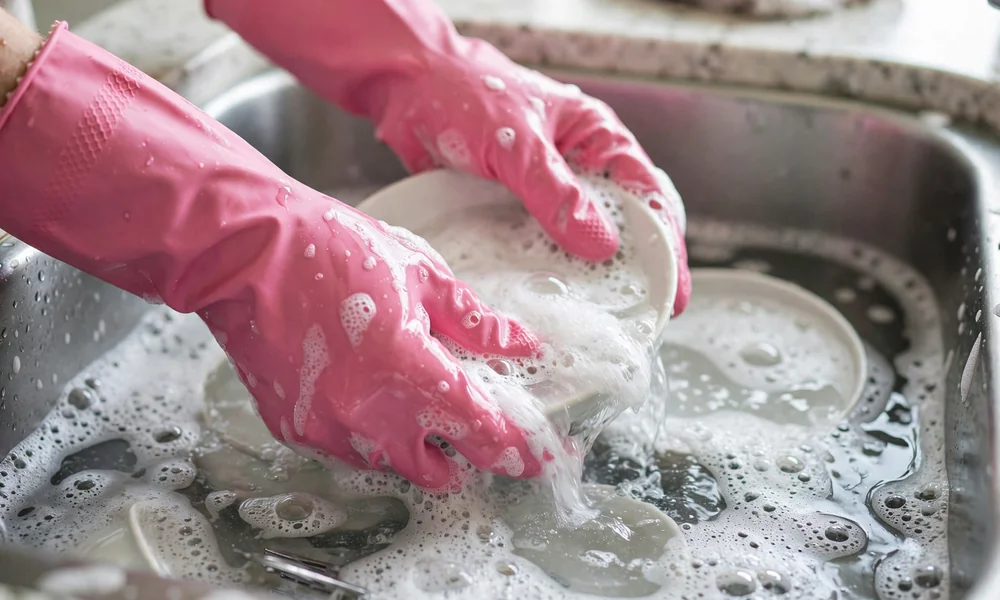
Latex is the classic rubber glove material, and it is still popular for good reasons. It stretches well, fits snugly, and gives the best grip and fingertip feel of any cleaning glove, so you can pick up small items and wring a cloth properly. It is also cheap and widely available. The drawback is allergy: some people react to natural latex, with itching or redness, and a household where anyone has a latex allergy should avoid it entirely. Latex also wears out faster than nitrile when it meets oils and some solvents.
Nitrile Rubber Gloves
Nitrile is the best rubber glove material for most homes in 2026. It is a synthetic rubber that resists chemicals, oils, and punctures better than latex, and it does not cause latex allergies, which makes it the safe choice for shared households. Nitrile gloves are slightly stiffer than latex at first, but they soften as they warm up, and modern versions are thin enough for good dexterity. They cost a little more than latex, but they last longer with strong cleaners.
Vinyl Rubber Gloves
Vinyl gloves are the lightest and cheapest option, and they suit short, gentle jobs such as a quick wipe-down or washing a few dishes. They are loose-fitting, easy to put on and take off, and they do not trigger latex allergies. Their weakness is durability: vinyl tears easily, it offers the least chemical protection of the three materials, and water can run inside the loose cuff. Treat vinyl as a light-duty, short-job option.
Lined and Flocked Gloves
Lined gloves have a soft cotton or flock lining inside the rubber, and they are the most comfortable choice for longer cleaning sessions. The lining absorbs sweat, stops the rubber sticking to damp skin, and makes the gloves easier to put on and take off. They take longer to dry, so they need proper drying between uses. If your hands sweat quickly, or you clean for an hour at a time, a lined pair is worth the small extra cost.
Long-Cuff and Heavy-Duty Gloves
Long-cuff gloves reach halfway up the forearm, and they are the best choice for jobs where water runs down your arms: scrubbing a bath, cleaning inside a deep sink, or washing the car. The extra cuff stops water pooling inside the glove, which is the main cause of that cold, soggy feeling. Heavy-duty gloves use thicker rubber and a textured palm for extra grip, and they suit rough jobs such as scrubbing tiles. They are less nimble than thin gloves, so keep a lighter pair for delicate work such as washing glasses.
Rubber Gloves at a Glance
| Glove type | Best for | Protection | Comfort |
|---|---|---|---|
| Latex gloves | Everyday cleaning | Good | Excellent grip and feel |
| Nitrile gloves | Strong cleaners, allergies | Excellent | Very good |
| Vinyl gloves | Short, light jobs | Basic | Loose, easy to wear |
| Lined gloves | Long cleaning sessions | Good | Best for sweaty hands |
| Long-cuff gloves | Baths, deep sinks | Excellent | Good, keeps water out |
| Heavy-duty gloves | Rough scrubbing | Excellent | Less nimble |
How to Choose the Right Size and Fit
Size is the single most important choice after material. A glove that fits properly feels like a second skin across the palm, with no loose fabric at the fingertips and no tight pull across the knuckles. Measure around your dominant hand at the knuckles, and check the maker’s size chart, because sizes vary between brands. If you are between sizes, size up for lined gloves and size down for thin unlined ones. Try the grip test: pick up a wet glass, wring a cloth, and turn a tap with the gloves on. If the fingertips bunch, the glove is too big; if the rubber pulls white across your knuckles, it is too small. Keep two pairs if you clean in different ways: a thin nitrile pair for dishes, and a thicker lined or long-cuff pair for the bathroom deep clean. Rubber cleaning gloves are not work gloves. Our guide to the best work gloves covers the leather and coated gloves made for tools, timber, and heavy handling.
How to Use and Care for Rubber Gloves
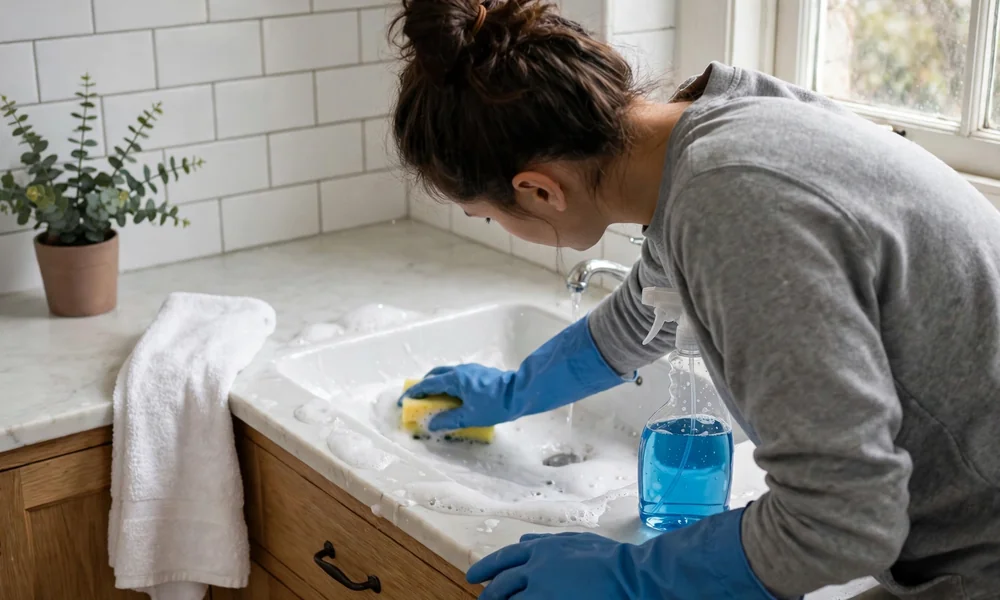
Put gloves on with dry hands, and pull the cuff up over your wrist so water cannot run inside. If you are using a spray cleaner, spray the surface first, not the glove. After cleaning, rinse the gloves while you are still wearing them, using clean water and a little soap, then peel them off without touching the dirty outside with bare skin. Turn them inside out to dry, hang them by the cuff in a ventilated spot, and do not store them wet in a closed cupboard. Check them before each use for thinning, small holes, or cracks. A glove with a hole is worse than no glove at all, because it traps dirty water against your skin while you think you are protected.

Good gloves last for weeks of regular cleaning, but they do not last forever. Replace a pair when the rubber thins, the grip goes smooth, the lining smells even after washing, or the cuff splits. Keep a spare pair in the cupboard, so a torn glove never tempts you to finish a job bare-handed. A pair of garden gloves is built for thorns and soil, not for bleach and hot water, and using the wrong glove for the job wears it out fast.
What to Avoid With Rubber Gloves
The biggest mistake is wearing the same gloves for everything. A pair used for the toilet should never be used for washing dishes, and a pair used with strong chemicals should not be used for food preparation. Keep one pair for the bathroom and one for the kitchen, in different colours. The second mistake is ignoring a latex allergy: if anyone in the house reacts to latex, switch the whole household to nitrile. The third mistake is storing gloves wet and crumpled, which breeds smells and weakens the rubber. The fourth is choosing by price alone: the cheapest pair usually tears first. Warm gloves are a different product: our guide to gloves that keep your hands warm covers insulated winter gloves, made for cold weather, not for wet cleaning.
Your Rubber Glove Checklist
- Choose nitrile if anyone in the house has a latex allergy, or if you use strong cleaners.
- Pick a lined pair if your hands sweat, or if you clean for an hour at a time.
- Check the fit: no bunching at the fingertips, no tight pull across the knuckles.
- Use a long cuff for baths and deep sinks, so water cannot run down inside the glove.
- Keep separate pairs for the bathroom and the kitchen, in different colours.
- Rinse, dry inside out, and replace gloves when they thin, tear, or start to smell.
Frequently Asked Questions
Are nitrile gloves better than latex gloves for cleaning?
For most homes, yes. Nitrile resists chemicals and punctures better, lasts longer with strong cleaners, and does not cause latex allergies. Latex still wins on stretch and feel, so it suits light cleaning if nobody in the house is allergic to it.
How long do rubber cleaning gloves last?
A good pair lasts several weeks of regular cleaning. How long depends on the material, how hard you scrub, and how you store them. Replace them as soon as they thin, tear, crack, or smell after washing, rather than waiting for a fixed date.
Can I wash rubber gloves in the washing machine?
It is better not to. Machine washing can damage the rubber and the lining, and it can shrink lined gloves. Rinse them by hand while wearing them, wash the inside with a little soap, and let them dry inside out in a ventilated spot.
Why do my hands still sweat inside rubber gloves?
Rubber gloves do not breathe, so sweat builds up during longer jobs. A cotton-lined pair absorbs sweat and feels far more comfortable, and taking the gloves off for a few minutes between rooms helps. Dusting your hands lightly with talc-free powder before putting them on can also help.
Do I need different gloves for the bathroom and the kitchen?
Yes. Keep one pair for the bathroom and one for the kitchen, in different colours, so germs and strong chemicals from the toilet never reach the dishes. It costs little, and it is the simplest hygiene rule in the whole cleaning cupboard.
What size rubber gloves should I buy?
Measure around your dominant hand at the knuckles and check the maker’s size chart, since sizes vary by brand. The glove should fit snugly across the palm with no loose fingertips. If you are between sizes, size up for lined gloves and down for thin unlined ones.
The Bottom Line
The best rubber gloves in 2026 are nitrile for most homes: strong, chemical-resistant, and safe for latex allergy sufferers, with a lined or long-cuff version for longer jobs. Get the size right, keep separate pairs for bathroom and kitchen, rinse and dry them properly, and replace them at the first sign of wear. Good gloves cost very little, and they are the simplest way to keep cleaning from costing your skin.


