Top Shower Doors That Don’t Leak in 2026
The top shower doors that don’t leak in 2026 have one thing in common: they were chosen for their seals, not just their looks. A shower door is the only thing standing between a hot shower and a wet bathroom floor, and when it fails, the damage is slow and expensive.
Key Takeaways
- Leaks come from the seals and bottom edge, not the glass, so judge a door by its sweeps, magnets, and threshold.
- Frameless doors are easier to wipe down, but framed doors seal more forgivingly and cost less.
- Sliding doors suit tight bathrooms with no room for a door to swing, while hinged doors seal better and open wider for cleaning.
- Measure the opening at top, middle, and bottom: walls are rarely straight, and a door ordered to one measurement leaks at the other end.
- A thirty-second squeegee after every shower keeps a glass door clear and leak-free better than any coating or cleaner.
Why Shower Doors Leak in the First Place
Water is patient. It finds the gap under a worn sweep, the corner where a seal has shrunk, and the hinge that has dropped a millimetre since installation, and it uses those gaps every single morning. Most leaks are not dramatic: a damp patch by the threshold after every shower, until the skirting board softens. The glass itself is almost never the problem. Tempered glass does not leak. What leaks is the system around it: the bottom seal, the magnetic strip, the hinge, and the threshold. The second cause is the bathroom itself: walls are rarely plumb, and a tray fitted in a hurry can slope toward the door instead of the drain. A good door tolerates that, with seals that compress and hinges that adjust.
How We Judged These Doors
We judged every door the way a household actually lives with one: a daily shower, a quick wipe-down if you are lucky, and a deep clean when someone finally notices the limescale. Sealing came first: the bottom sweep, the magnetic closure, and how well the door copes with a wall that is not straight. Then came the glass, the hardware, how easy the door is to open and close with wet hands, how simple it is to clean, and whether the design suits a small bathroom or needs room to swing.
| Door | Best for | Type | Glass | Seal system |
|---|---|---|---|---|
| Frameless hinged door | Walk-in showers | Hinged | 10 mm clear | Magnetic + sweep |
| Black-framed sliding door | Tight bathrooms | Sliding | 8 mm clear | Overlap + sweep |
| Semi-frameless pivot door | Alcove showers | Pivot | 8 mm clear | Magnetic + seal |
| Corner-entry sliding door | Corner showers | Sliding | 6 mm clear | Overlap + sweep |
| Framed hinged door | Family bathrooms | Hinged | 6 mm toughened | Full frame + seal |
The Top Shower Doors That Don’t Leak in 2026
1. The frameless hinged door
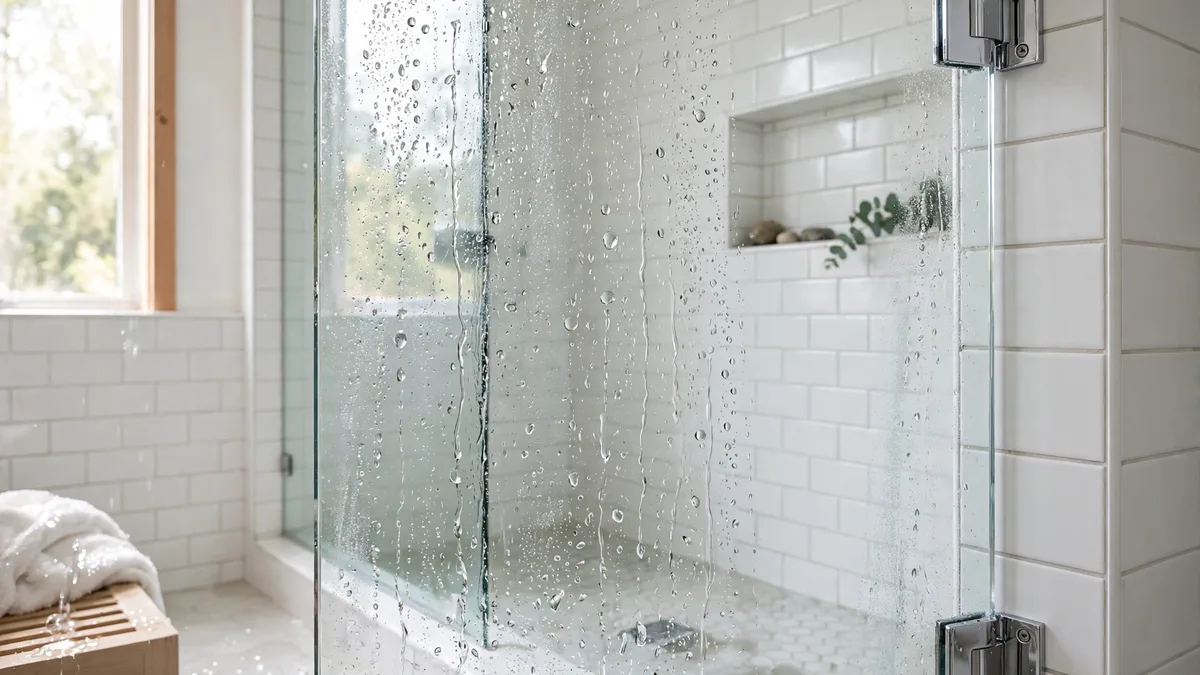
This is the door for the walk-in shower, and it is the one that makes a bathroom feel like a hotel. A single sheet of 10 mm tempered glass hangs on solid hinges, with no frame to trap water or grime, The bottom sweep is a flexible fin that brushes the threshold and stops water without dragging, and because there is no frame, there is nowhere for mould to hide. A frameless door needs the wall plumb and the tray level, and it costs more than a framed door.
2. The black-framed sliding door
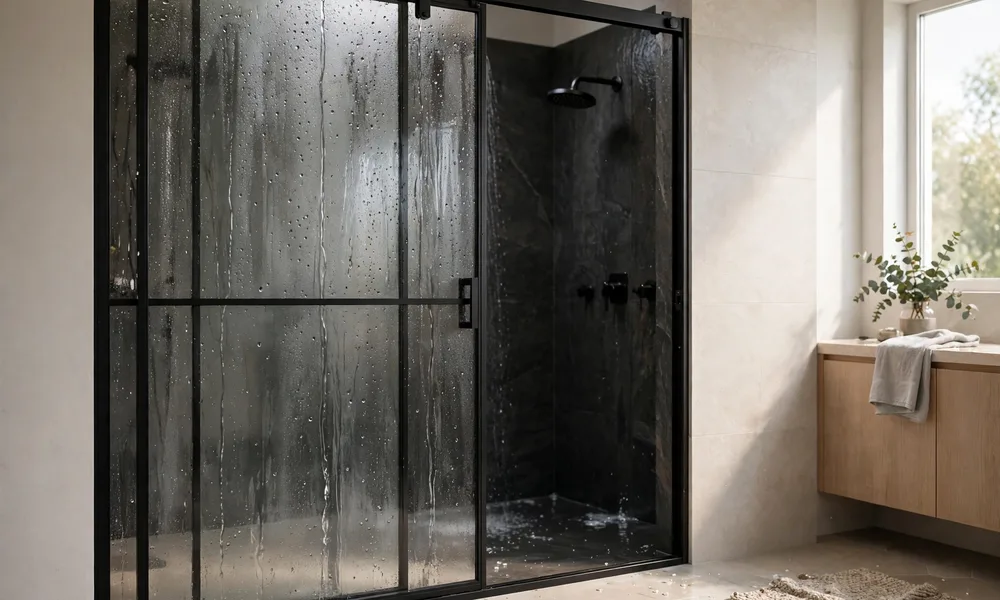
For a bathroom where a hinged door would hit the toilet or the vanity, a sliding door is the only sensible answer, and this black-framed version is the best of the type. Two panels overlap on a top-hung track, so the door never swings into the room, and the overlap itself is part of the seal. The black frame keeps the panels square even when the walls are not, and the rollers are adjustable,
3. The semi-frameless pivot door
Alcove showers, the kind built into a recess with a door across the front, need a door that seals well and opens wide, and a pivot door does both. It swings on a pivot, so it needs less clearance than a hinged door and opens wide enough to clean the whole shower. The semi-frameless design keeps a slim frame around the glass for rigidity and a proper seal, while leaving the centre of the door clear, so the shower still looks open.
4. The corner-entry sliding door
Corner showers are the hardest to keep dry, because they have two open sides and a door that meets in the middle, and this sliding corner-entry door is built for exactly that problem. Two sliding panels meet at the corner, and the overlap plus a deep bottom sweep closes the gap corner doors usually leak from. The 6 mm glass keeps the unit light enough to slide smoothly, and the frame is slim enough that the shower still feels open rather than boxed in. It saves the most floor space, which makes it the right choice for an ensuite or a cloakroom shower.
5. The framed hinged door
Some bathrooms need a door that simply works, every day, for years, without fuss, and that is the framed hinged door. The full frame gives it a complete seal on all four sides, which is the most forgiving sealing system in this guide and the best choice for a family bathroom where the shower gets used four times a day. The 6 mm toughened glass is light, the hinges are adjustable, and the frame covers small gaps in the wall that would defeat a frameless door. It is the cheapest, the most tolerant of imperfect walls, and the least likely to leak.
Framed vs Frameless: Which Seals Better?
The framed-versus-frameless argument is really an argument about tolerance. A framed door seals on every edge and copes with leaning walls; a frameless door relies on its magnetic strip and sweep, so it needs the opening to be right. In an older bathroom, where nothing is quite square, a framed or semi-frameless door will seal better for longer, because its frame absorbs the imperfections instead of passing them on to the seal.
Cleaning is the other half of the decision. A frameless door has almost no hiding places: one sheet of glass, two hinges, and a sweep. A framed door has channels where water sits, needing a proper clean every week or they go grey. A good shower curtain keeps water in cheaply, but a glass door seals better, lasts longer, and never billows into you mid-shower.
Sliding vs Hinged: The Space Question
The choice between sliding and hinged comes down to one measurement: how much clear floor is in front of the shower. A hinged door needs a full door’s width of clear space to swing open, and in a small bathroom that space is often where the toilet or the vanity sits. A sliding door needs no swing space, but only half the opening is ever open at once, and the track needs cleaning or it drags. Check the opening direction before ordering: a hinged door that opens the wrong way will hit the towel rail.
Seals, Sweeps, and Keeping the Water In
The seal is the whole game, and it is worth understanding the three parts that do the work. The bottom sweep is a flexible strip that brushes the threshold. It wears out first and is the cheapest part to replace, so check spares exist before buying. The magnetic strip runs down the closing edge and pulls the door shut against the fixed panel; close the door and feel for a firm pull.
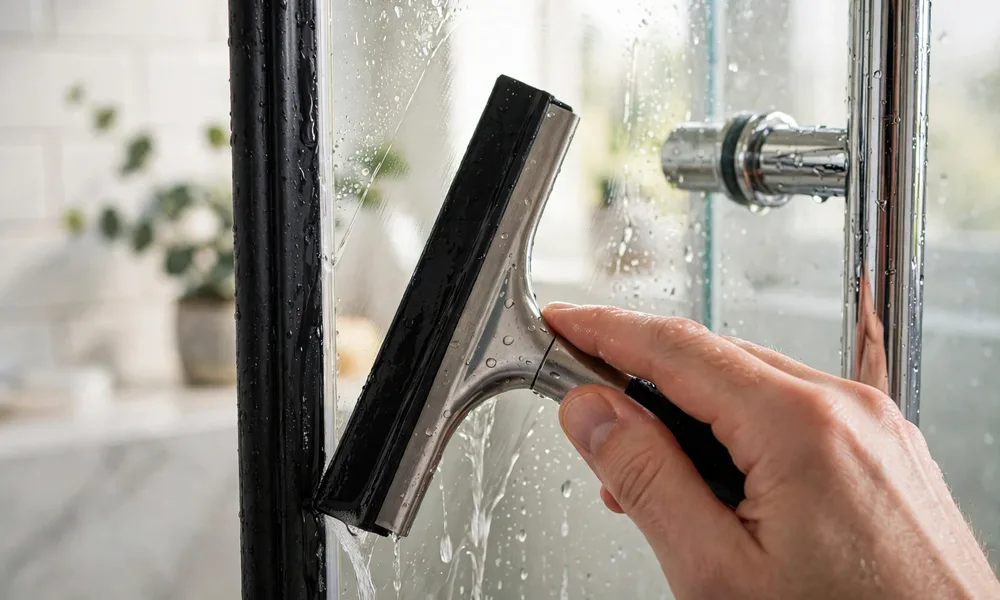
Water also escapes over a low threshold: a tray with a raised lip, or a threshold sloping back toward the drain, stops far more water than any seal can. And once the door is fitted, the habit that keeps it leak-free is the squeegee. A thirty-second squeegee after every shower keeps the glass clear and the seals lasting longer. The cleaning routine matters here as much as the hardware, and a good bathroom cleaner used once a week keeps limescale off the glass and the seals supple, which is what stops the slow leaks that start months after installation.
Measuring and Installing: Getting It Right the First Time
Measure the opening in three places: top, middle, and bottom. Walls lean, and a door ordered to the top measurement will gap at the bottom, which is exactly where the water is. Take the smallest measurement and check the door’s adjustment range covers it. Installation is a two-person job: glass is awkward, so level the track or hinges before tightening anything, and seal the outside of the frame only, never the inside. Leave the silicone to cure for a full day before using the shower.
Before You Buy: The Shower Door Checklist
- Measure the opening at top, middle, and bottom, and order to the smallest.
- Check the bottom sweep, the magnetic strip, and the side seals, and confirm replacement sweeps are available.
- Choose sliding if there is no room to swing, hinged for the best seal and widest opening.
- Check the wall is solid enough for the hinges, and the tray slopes toward the drain, not the door.
- Pick 8 mm or 10 mm glass for daily use, and check the handle works with wet hands.
- Plan to squeegee the glass after every shower, and keep a spare sweep in the cupboard.
Frequently Asked Questions
Why does my shower door leak at the bottom?
Almost always because the bottom sweep has worn, shrunk, or lifted from the threshold. The sweep is a cheap, replaceable strip, and fitting a new one usually fixes the leak in minutes. If it does not help, check whether the door has dropped on its hinges or the tray slopes toward the door.
Are frameless shower doors more likely to leak?
Not if fitted properly, but they are less forgiving than framed doors. A frameless door relies on its magnetic seal and bottom sweep, so it needs straight walls and a level tray. In a bathroom that is not quite square, a framed or semi-frameless door seals more reliably.
How do I stop water escaping under a sliding shower door?
Check the overlap between the two panels and the bottom sweep first, because most sliding-door leaks come from there. Make sure the panels overlap fully when closed, replace a worn sweep, and check the track is level.
What thickness of glass is best for a shower door?
For a daily-use door, 8 mm or 10 mm glass feels solid, closes with a reassuring weight, and resists flexing that can open a gap in the seal. Thinner 6 mm glass is fine for a light-use guest shower, but it flexes more and needs a good frame.
Can I fit a shower door myself?
Yes, if you are comfortable with a drill, a level, and silicone, and you have a second person to hold the glass. Measure carefully, level everything before tightening, and seal the outside of the frame only. If the opening is out of square, hire a fitter.
How do I keep a glass shower door clear of limescale?
Squeegee the glass after every shower, which takes thirty seconds and removes most water before it dries into spots. Once a week, clean with a bathroom cleaner made for glass, and avoid abrasive pads that scratch the surface. A door squeegeed daily stays clear for years.
The Bottom Line
The top shower doors that don’t leak in 2026 are the ones with honest seals, adjustable hardware, and glass thick enough to stay square. Measure in three places, choose the type that fits the space, and spend on the sealing system rather than the finish. A door that is fitted square, sealed properly, and wiped down daily will keep the floor dry for years, and a dry floor is the whole point. A shower mat that grips the floor will catch the drips the door was never meant to stop.


