A shower hose is the part of the shower nobody thinks about until it fails. It kinks, it drips at the joint, it goes stiff in cold water, or it is simply too short. The head gets all the attention, but the hose decides whether the water arrives where you aim it. The best ones bend without kinking, seal without dripping, and stay flexible for years.
Key Takeaways
- Measure the reach first: 60 inches suits most showers, 72 inches or more for tall showers, baths, children and pets.
- Steel braided hoses last longest, silicone stays most flexible in cold water, and PVC is cheapest to replace.
- Brass nuts with a fresh washer seal far better than plastic threads, and a swivel nut stops the hose twisting.
- Check the fitting first: most showers use a half-inch connection, but older taps and some imported heads do not.
- A hose that drips, stiffens, smells musty or kinks in the same spot is finished: replace it, don’t tighten harder.
Shower Hoses 2026 at a Glance
| Hose type | Best for | Flexibility | Watch out for |
|---|---|---|---|
| Stainless steel braided | Most homes, longest life | Good | Cheap braiding can fray and snag |
| Silicone | Cold bathrooms, gentle handling | Excellent | Can stretch and sag when long |
| PVC, smooth bore | Budget replacements, rentals | Fair | Stiffens with age and kinks easily |
| Metal spiral, double-lock | Heavy daily use, hard water | Good | Heavier, and noisy against tile |
| Anti-twist, swivel nut | Shared bathrooms, handhelds | Excellent | Check the swivel actually turns |

What a Shower Hose Actually Does
A shower hose is a flexible pipe with a nut at each end: one screws onto the shower outlet or mixer tap, the other onto the shower head. Inside sits an inner tube, usually EPDM rubber or PVC, that carries the water. The outer layer decides whether it bends or kinks; the inner tube decides whether the water keeps its pressure. A braid can fray while the inner tube holds; an inner tube can split while the outside looks perfect. The joints are where most hoses fail. Our guide to the best shower heads covers the head itself.
The Main Types of Shower Hose
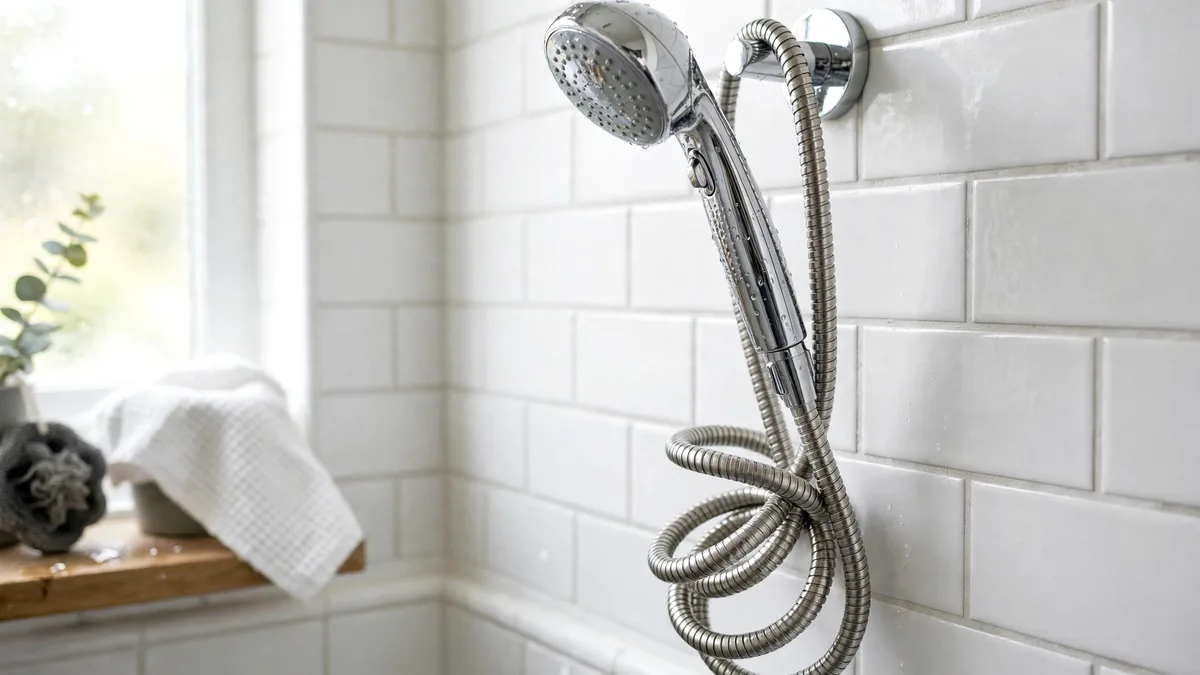
Stainless steel braided hoses are the default choice, and for most homes they are the right one. A rubber inner tube is wrapped in a woven steel braid, which protects it from knocks and stops it ballooning under pressure. A good braided hose bends in a smooth curve and springs back without a crease. The catch is quality: a thin braid frays at the edges, and once a single wire lifts, it snags on everything and scratches tile. The braid should feel tight and even.
Silicone hoses are the softest option, and they suit cold bathrooms best. Silicone stays flexible when the room is cold, so the hose hangs straight and does not twist the head out of its bracket on a winter morning. The trade-off is stretch: a long silicone hose sags under its own weight and trails on the floor, so it suits shorter lengths and lighter heads.
PVC hoses are the cheapest, and they are honest about it. A smooth PVC outer layer over a PVC or rubber core, usually with plastic nuts, costs very little and fits anywhere. In a rental or a shower used once a week, that is enough. In daily use, PVC stiffens with age, especially in hard water and cold rooms, and a stiff hose kinks instead of bending. A kink narrows the bore and weakens the wall at the fold, which is where the hose eventually splits. Buy PVC when the budget is tight and the use is light, and expect to replace it sooner.
Metal spiral hoses, sometimes sold as double-lock hoses, are the heavy-duty option. Interlocking metal strips form a flexible tube that resists crushing, survives being stepped on, and keeps its shape for years. They suit family bathrooms, hard-water areas, and showers used several times a day. The trade-offs are weight and noise: a metal spiral hose is heavier than a braided one, and it clinks against tile when it swings.
Anti-twist hoses are less a material than a fitting: a swivel nut at one or both ends lets the hose rotate freely, so it never winds itself into a coil as you move the head. They suit handheld heads best, because a handheld is picked up, aimed, and docked dozens of times a week, and every one of those movements twists a fixed hose a little further. Our guide to the best handheld showerheads covers mounting and hose length. Check the swivel actually turns under load before you commit, because a stiff swivel is no better than a fixed nut.
Length: The Choice That Decides Everything Else
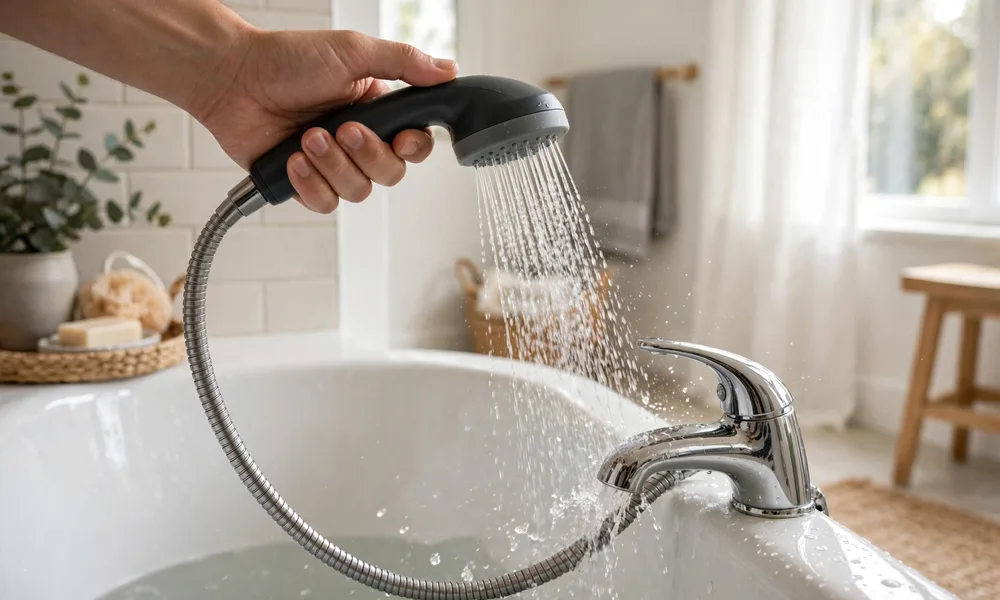
Measure the distance from the outlet to the farthest point the head must reach, then add slack for the curve. The standard lengths are 48, 60, 72 and 84 inches, and most homes land on 60.
A 48-inch hose suits a compact shower stall where the head stays docked and the user stands in one place. It is tidy and suits a fixed head that is rarely lifted. It is too short for almost everything else: washing a child, rinsing a dog, cleaning the far corner of the tub, or reaching the floor of a tall shower. If the hose pulls tight when the head is at its lowest useful point, it is too short, and no better material will fix that.
A 60-inch hose is the standard for a reason. It reaches across a normal bath and hangs in a neat loop when docked. A 72-inch hose is the pick when the shower is tall, the bath is wide, or the head is used over the bath for children and pets. An 84-inch hose suits walk-in showers and wet rooms, but it needs somewhere to hang, because a very long hose that coils on the floor is a trip hazard and a dirt trap, and a hose that trails in a puddle stays damp between showers, which is where musty smells start.
Fittings, Threads and Washers
Most showers use a half-inch BSP thread at both ends, so most hoses fit without an adapter. Older mixer taps and some imported heads use different threads, and the wrong thread will never seal. Check the thread on the old hose before you order, and check each nut holds a rubber washer: a missing washer is the usual cause of a drip on a new hose.
The nut material matters more than the hose material at the joint. Brass nuts are the standard worth paying for: they thread smoothly, they do not crack when tightened, and they survive years of being undone for cleaning. Plastic nuts are lighter and cheaper, but they cross-thread easily and crack under a spanner, and a cracked nut will never seal again. Fit any metal nut hand-tight plus a quarter turn, never more.
The washer is a small rubber ring, and it does the actual sealing. Washers harden with age and heat, and a hardened washer is the usual reason an old hose starts dripping at the joint even though the hose itself is fine. Keep a spare pair in the cupboard: replacing one takes a minute and saves a hose with years left in it.
Flow, Pressure and Hard Water
A hose can quietly steal your pressure. The bore, the inside diameter of the tube, decides how much water gets through, and a narrow bore on a long hose is the most common cause of a shower that feels weaker after a hose change. Most hoses have a bore of around 8 to 10 millimetres, which suits normal household pressure. If your shower already runs weak, choose a full-bore hose and check the filter washer is clean.
Hard water is a hose’s slow enemy. Limescale builds up inside the bore and on the braid, stiffening the hose and narrowing the flow a little each year. Smooth silicone wipes clean; a braided layer traps scale between the wires. If your area has hard water, a shower filter on the supply can help, and our guide to shower filters that soften hard water explains the cartridge types.
When to Replace a Hose, and How to Fit the New One
Replace a hose when it drips at the joint after a new washer, when it sprays from a pinhole, when it kinks in the same spot every time, when it has gone stiff, or when it smells musty even after a clean. A musty smell means the inner tube has gone porous, and no cleaning will fix that. Do not wait for a split: a burst hose floods a bathroom in minutes.
Fitting a new hose is a ten-minute job and needs no plumber. Turn the shower off, unscrew the old hose, and check the threads for scale. Fit a fresh washer into each nut, screw the new hose on hand-tight, then give it a quarter turn with the spanner and no more. Turn the water on slowly and watch both joints: a drip means the washer is missing or pinched. Over-tightening cracks plastic nuts, crushes washers, and seizes metal threads. Hang the hose in a smooth loop, and leave a tightly coiled new hose flat for an hour before fitting.

Before You Buy Checklist
- Measure the reach and buy the shortest hose that covers it: 60 inches for most showers, 72 inches or more for tall showers, baths, children and pets.
- Choose stainless steel braided for the longest life, silicone for cold rooms, and PVC only for light use and tight budgets.
- Check both threads are the standard half-inch fitting, and confirm a fresh washer sits inside each nut before you fit the hose.
- Pick brass nuts over plastic, and a swivel nut at the head end if the shower uses a handheld head.
- Check the bore is full size, around 8 to 10 millimetres, so the new hose does not cut your pressure.
- Hang the hose in a smooth loop, and replace it at the first sign of a pinhole spray, a permanent kink, or a musty smell.
Frequently Asked Questions
What length shower hose should I buy? A 60-inch hose suits most adults in a standard shower. Choose 72 inches or more for children, pets, tall showers, or over-bath use. Too short strains the connection; too long trails and kinks.
Are stainless steel shower hoses better than plastic ones? Yes, for daily use. A braided steel hose resists kinking and keeps its shape for years, while PVC stiffens with age and kinks more easily.
Why does my shower hose leak at the connection? Usually a worn, missing or pinched washer inside the nut, not the hose itself. Fit a fresh washer, tighten hand-tight plus a quarter turn, and check again. If it still drips, the nut may be cracked, and the hose needs replacing.
Can I fit a shower hose myself? Yes. Unscrew the old hose, fit a fresh washer into each nut of the new one, screw it on hand-tight, and give it a quarter turn with a spanner.
How often should a shower hose be replaced? A good braided hose lasts several years in daily use, while cheap PVC may last a year or two. Replace it at once if it sprays from a pinhole, kinks in the same spot, or smells musty.
Will a new hose improve my water pressure? It can, if the old hose was kinked, scaled up inside, or had a narrow bore. A full-bore hose with a clean filter washer restores the flow the head was designed for.
The Bottom Line
The best shower hose of 2026 is the one you forget about: the right length for your shower, a steel braid or flexible silicone body, brass nuts, and a swivel fitting for handheld heads. Measure the reach, check the thread, and hang it in a smooth loop. Do that, and the hose will quietly carry the water where you aim it for years.