Choosing the best sippy cups in 2026 starts with a simple question: does your child need a spout or a straw? Sippy cups are the bridge between a bottle and an open cup, and the right one teaches a toddler to drink without soaking every shirt, while the wrong one leaks into the changing bag or falls apart into seven fiddly pieces at wash time. This guide compares sippy cups vs straw cups head to head and helps you match the cup to your child’s age.
Key Takeaways
- Hard-spout sippy cups suit first-time drinkers, while straw cups suit older toddlers who can manage a steady suck.
- A cup that seals properly when it tips over is worth more than any extra feature, because a leak ruins the bag it rides in.
- Flow matters more than size: a valve that sticks starves a thirsty child, and a spout that pours too fast teaches a toddler to dread the cup.
- Cups that come apart into two or three simple pieces stay clean, while fiddly valves and narrow spouts trap old milk and grow mould.
- Buy the cup for the age your child is now, and move to an open cup once they can hold one steady.
The Main Types of Sippy Cup
Sippy cups look alike on the shelf, but the family splits into a few clear types, each earning its keep at a different stage. The spout decides how the drink flows before any feature on the box matters.
The Hard-Spout Cup: The First Cup to Buy
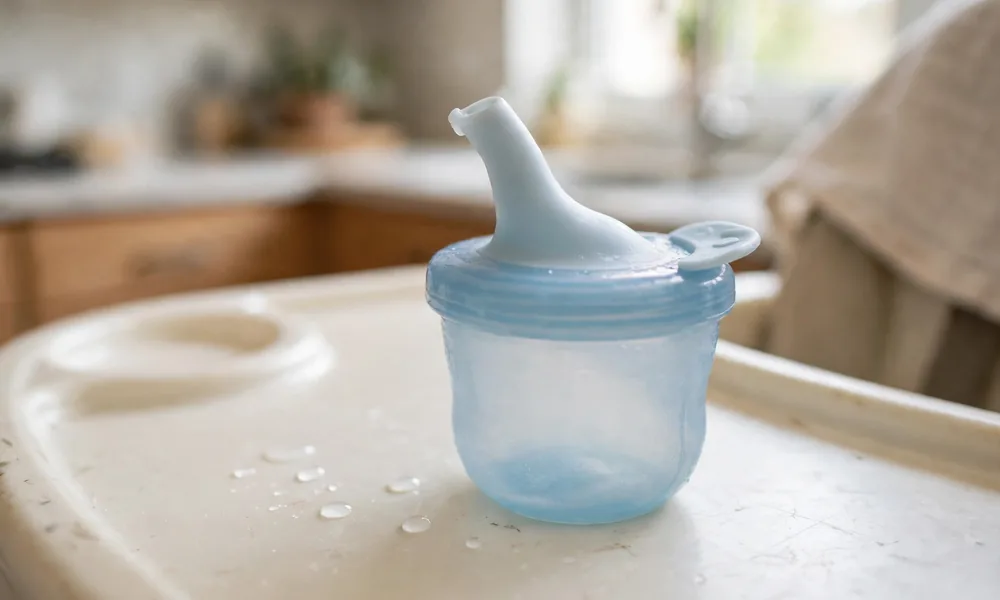
The hard-spout cup is the classic first sippy cup, and it is the one most parents should buy first. A firm spout shaped for a small mouth gives a steady flow a toddler can manage without choking, and a lid that locks on with a firm twist keeps the drink inside when the cup is knocked over. A spout that is too hard and too long bangs against small teeth, and a cheap one cracks after a few drops. Check that the spout is smooth, short and firmly fixed.
The Soft-Spout Cup: The Gentle Step Up
The soft-spout cup suits a child who has outgrown the hard spout but is not ready for a straw. A silicone spout is kinder on gums and new teeth, and it bends instead of jabbing. Its trade-off is flow: a soft spout that is too floppy collapses when the child bites it, so the drink stops coming. Buy a spout that springs back to shape after a squeeze.
The Straw Cup: The Best Cup for Older Toddlers
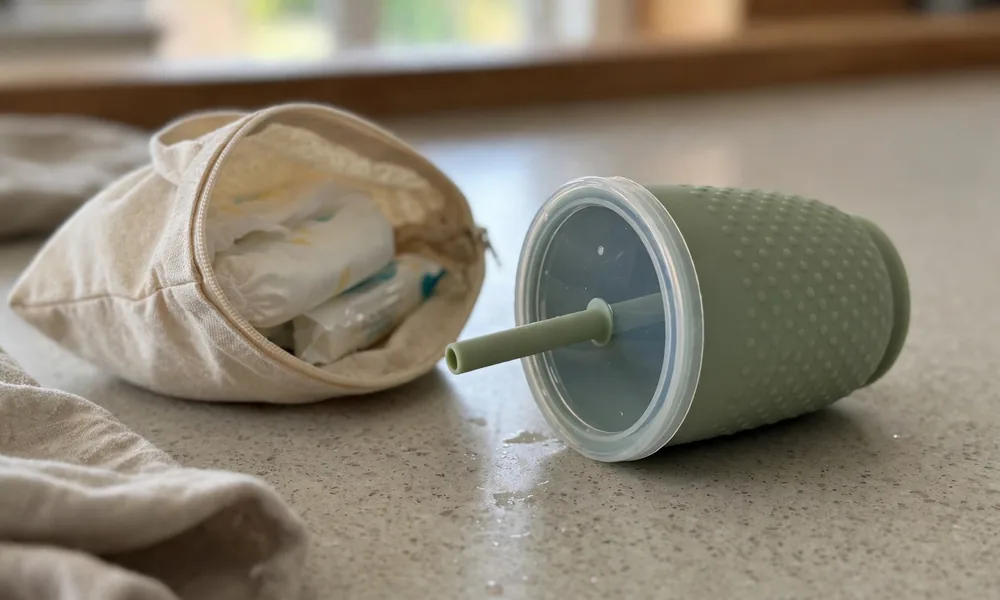
The straw cup is the best sippy cup for an older toddler, and it is the one dentists most often recommend once a child can manage it. Drinking through a straw works the lips, tongue and cheeks in a way a spout never does, building the mouth strength a child needs for clear speech. A good straw cup keeps the straw short, firm and fixed, with a weighted end that follows the drink as the cup tips. A bad one lets the straw flop or clog, and a straw that is too long pools liquid where a small child cannot reach it. Our guide to the best tumblers covers the next step up, for children old enough to carry a grown-up style cup without a lid.
The 360 Cup and the Open Cup: The Final Steps
The 360 cup looks like an ordinary cup but seals all the way around its rim, so a child can drink from any edge without a spill. It is a clever bridge to open-cup drinking, but a child must suck gently at the rim while tipping. The open cup is the destination itself, best introduced at home once a child can sit steady and hold a cup with both hands.
Sippy Cups vs Straw Cups Compared
The table below puts the main cup types side by side. Read it by your child’s age, not by the prettiest colour: the right row names the stage your child is at now.
| Cup type | Best age | Flow control | Leak risk | Cleaning |
|---|---|---|---|---|
| Hard-spout sippy cup | 6 to 12 months | Steady, easy to manage | Low with a good seal | Easy, few parts |
| Soft-spout sippy cup | 9 to 18 months | Gentle, can collapse | Low to medium | Easy, check the seam |
| Straw cup | 12 months and up | Child controls the suck | Low when the valve holds | Harder, straw needs brush |
| Weighted-straw cup | 12 to 24 months | Steady at any angle | Medium, weight can loosen | Hardest, small parts |
| 360 cup | 12 months and up | Needs a gentle suck | Low, spills if seal wears | Easy, wide mouth |
What to Check Before You Buy
A sippy cup has one job above all others: hold a drink inside until a child wants it, then let it out at a sensible pace. The checks below separate the cups that do that job from the ones that turn a simple drink into a wet, sticky chore.
Flow and the Valve
The valve decides whether the cup works or fights your child. A good valve gives a steady flow a small mouth can manage, so the drink arrives with a normal suck and stops when the child stops. A bad valve sticks, so the child sucks hard and gets almost nothing, or it is missing, so the drink pours out in a rush the moment the cup tips. Test the flow with water before the first real use.
The Seal and the Leak Test
A cup that leaks when it tips over is the first sign of a bad design, because the seal has failed and the bag it rides in will be wet by lunchtime. Fill the cup with water, close it firmly, and turn it upside down over the sink. Then shake it and lay it on its side. A good cup stays dry through all of it, and a cup that weeps from the rim will only get worse as the seal wears.
Cleaning Without Hidden Corners
Cleaning is where cheap cups cut the deepest corners, and parents wash these cups several times a day, usually when they are tired. A good cup comes apart into two or three simple pieces, with a wide mouth a brush can reach and no hidden corners where old milk can hide. A bad one has a valve made of tiny parts and a lid with grooves that trap liquid and grow mould within days. If you cannot see into every part, you cannot be sure it is clean.
Size, Handles and Material
Size matters more than it looks: a cup a child cannot hold is a cup that gets dropped. Small hands need a cup under 200ml with handles they can grip, while an older toddler manages a larger cup with one handle or none. Handles that come off are useful, because the same cup can grow with the child. Stainless steel keeps drinks cool and survives drops, while good plastic is lighter and lets you see how much is left.
Matching the Cup to Your Child’s Age
At six to nine months, a hard-spout cup with handles is the right first step, offered at mealtimes with a little water. At nine to twelve months, a soft-spout cup suits a child who is chewing the hard spout. From twelve months, a straw cup is the best daily cup for most toddlers, because it builds mouth strength and travels well. By eighteen months, many children can manage a 360 cup, and by two years a small open cup at the table is worth practising. Move at your child’s pace, not the age on the box.
Six Checks Before You Pay
- Tip it, shake it and drop it with water inside: a cup that leaks in the shop will leak in the changing bag.
- Take it apart in your hands: two or three simple pieces is right, and seven fiddly parts is a cleaning chore you will hate.
- Suck through the spout or straw yourself: the flow should be steady, not a trickle and not a flood.
- Check the spout for seams and sharp edges, and squeeze a soft spout to make sure it springs back to shape.
- Put the cup in your child’s hands: it should sit steady, feel light, and let small fingers wrap around the handles.
- Look for spare spouts and valves for that exact cup, because the cup is useless once its one small valve wears out.

Mistakes That Waste Money on Sippy Cups
The commonest mistake is buying a whole set of one type before you know whether your child likes it. The second is choosing by colour or character instead of by seal and flow, which is how the prettiest cup in the shop becomes the leakiest one in the bag. The third is keeping a cup whose valve has worn out: a new valve costs less than a bag of wet clothes. The fourth is skipping the cleaning check, because a cup with hidden corners will grow mould long before it looks dirty. Our guide to the worst sippy cups shows the failure patterns to avoid, from lids that never seat to spouts that split along a seam. And remember the feeding kit around the cup: our guide to the best baby food pouches covers the rest of the mealtime kit that travels with the cup every day.
Frequently Asked Questions
When should a baby start using a sippy cup?
Most babies can start at around six months, offered at mealtimes with a little water. Start with a hard-spout cup with handles, keep milk in the bottle or breast at first, and let the cup be practice rather than a test.
Are sippy cups or straw cups better for toddlers?
Straw cups are better from about twelve months, because drinking through a straw builds lip, tongue and cheek strength that a spout never does. Sippy cups are better before that, because a spout is easier for a younger baby to manage.
Do sippy cups affect teeth or speech?
A hard spout used for too long can affect how the teeth meet and how a child learns to swallow, which is why dentists suggest moving to a straw cup or an open cup once a toddler can manage one. The risk comes from long use past the toddler years, not from a few months of practice.
How do I stop a sippy cup from leaking?
Check that the lid seats fully on the first twist, that the valve is fitted the right way round, and that the seal is not cracked or squashed. If a cup that once sealed now leaks, replace the valve or seal first, and replace the cup if the lid is warped.
How often should I replace a sippy cup?
Replace a sippy cup when the spout cracks, the valve sticks or the seal no longer holds, usually every few months of daily use. Replace it straight away if you find mould in a part you cannot reach with a brush.
Can I put a sippy cup in the dishwasher?
Most cups are dishwasher-safe on the top rack, but take the valve and straw out first so the water reaches inside them. Run a small straw brush through the straw every few days, because a dishwasher alone will not clear it.
The Bottom Line
The best sippy cups of 2026 fit your child’s age and your routine: a hard-spout cup first, a straw cup from twelve months, and an open cup at the table once they can hold one steady. Check the seal, the flow and the cleaning before you pay.