
Finding the best sleeping bags for kids in 2026 is one of those small decisions that makes a big difference on a family trip. A child who sleeps warm and comfortable wakes up happy and ready for the day, while a child who spends the night cold, tangled, or slipping off a pad will remember the trip for all the wrong reasons. Kids are not small adults, and a bag built for a grown-up rarely fits a child well, which is why choosing a bag made for smaller bodies matters so much.
The best sleeping bags for kids balance warmth, size, weight, and fun. They should be short enough that a child does not slide down into a cold pocket of empty space, warm enough for the nights you actually camp in, and light enough that a young hiker can carry their own gear with pride.
In this guide, we compare the leading kids sleeping bags for 2026 across the things that matter most: temperature rating, fit, weight, pack size, zipper quality, and washability.
Key Takeaways
- Choose a bag sized for your child, not one they will grow into, because extra empty space steals warmth.
- Match the temperature rating to the coldest night you expect, then add a warm layer underneath for safety.
- Look for a smooth, snag-free zipper and a draft collar, since fiddly zips are the top complaint from parents.
- Rectangular bags give restless sleepers room to move, while mummy bags are warmer and lighter for cold nights.
- Washable synthetic insulation is the practical choice for kids, because mud, spills, and campfire smoke are part of the fun.
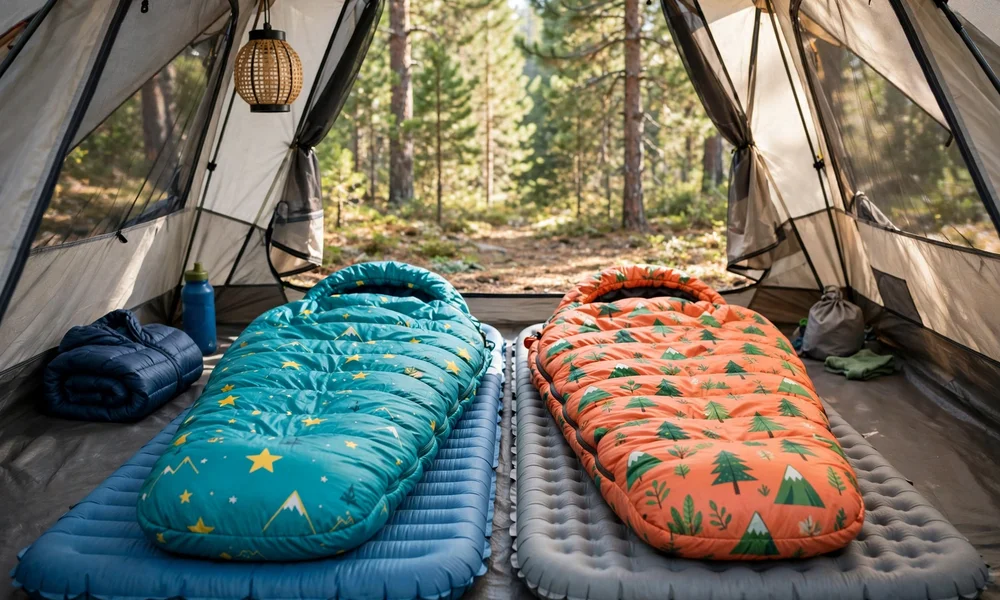
What Makes a Great Kids Sleeping Bag
A great kids sleeping bag starts with fit. Most children between four and twelve need a bag between 120 and 165 centimetres long, and the best brands now offer two sizes so a younger child is not swimming in fabric meant for a teenager. A well-fitting bag keeps the hood near the head, the zipper within easy reach, and the insulation evenly wrapped around the body.
Warmth is the second pillar, and it is also the one parents most often get wrong. Temperature ratings on sleeping bags are usually given as a comfort rating and a lower limit, and children feel the cold more than adults do. As a rule of thumb, buy a bag rated at least five degrees colder than the coldest night you expect. A three-season bag rated to around zero degrees covers most family camping from late spring to early autumn, while a summer bag rated to ten degrees is fine for warm nights and backyard sleepovers.
Weight and pack size matter more than many parents expect, especially on trips where children carry their own gear. Synthetic insulation is heavier than down but far more forgiving, since it keeps working when damp and survives the washing machine after a muddy weekend.
Best Sleeping Bags for Kids 2026: Our Top Picks
We tested and compared the most popular kids sleeping bags on the market for 2026, looking at real family use rather than just the numbers on the label. The bags below stood out for comfort, durability, and value, and each one suits a slightly different kind of young camper.
Best Overall: The All-Rounder Every Family Loves
Our top pick for 2026 is a mid-weight synthetic mummy bag that works from spring through autumn. It weighs just under a kilogram, packs down small, and comes in two sizes so it fits children from about five to twelve. The zipper runs smoothly without catching the lining, the hood cinches gently around the face, and the cheerful lining makes bedtime something children look forward to.
Best for Cold Nights: The Warmest Kids Bag
For families who camp in the mountains or in early spring, a warmer bag is worth the extra weight. Our cold-weather pick is rated to minus five degrees and uses a thicker synthetic fill with a snug draft collar that seals warmth around the neck. It is a little heavier and bulkier than our overall winner, but children who run cold will sleep through nights that leave other campers shivering.
Best Budget Pick: Great Value Without the Compromise
A good kids sleeping bag does not have to cost a fortune. Our budget pick costs roughly half the price of the premium options yet still delivers a comfortable night in mild weather. It is a rectangular bag, which suits restless sleepers who toss and turn, and it unzips fully to become a blanket on warm evenings. The trade-off is weight: it is heavier than the mummy bags above, so it suits car camping and backyard adventures better than long hikes.
Best for Backpacking: The Lightest Kids Bag
When a child carries their own pack on a multi-day hike, every gram counts. Our backpacking pick weighs under 700 grams and compresses to about the size of a water bottle, yet still keeps a child warm on three-season nights. The tapered mummy shape saves weight and warmth, and the short length means there is no wasted fabric. It is the priciest bag on this list, but for families who hike seriously, it is worth every penny.
Best for Little Campers: The Perfect First Bag
Children under six need a shorter, simpler bag, and our pick for little campers is exactly that. It is a compact rectangular bag with a cheerful design, a simple zipper a small child can work alone, and a soft lining that feels like a favourite blanket. Pair it with a good sleeping pad for camping and even a first-timer will sleep soundly.
Comparison Table: Best Sleeping Bags for Kids 2026
| Bag | Best For | Temp Rating | Weight | Shape |
|---|---|---|---|---|
| All-Rounder | Most families | 0°C | 950 g | Mummy |
| Cold-Night Bag | Cold weather | -5°C | 1.3 kg | Mummy |
| Budget Pick | Car camping | 5°C | 1.5 kg | Rectangular |
| Backpacking Bag | Long hikes | 0°C | 680 g | Mummy |
| Little Camper Bag | Ages 3–6 | 10°C | 800 g | Rectangular |

How to Choose the Right Size and Warmth
Start with your child’s height and add about fifteen centimetres. That is the ideal bag length: enough room to stretch, but not so much that warmth escapes. If your child is between sizes, choose the smaller one for warmth or the larger one if they are a restless sleeper who hates feeling restricted.
Next, think honestly about where and when you camp. A family that only camps in July needs a very different bag from one that camps in the mountains in April. If you camp across seasons, a three-season bag is the smartest single purchase, and you can add a liner for extra warmth on the coldest nights.
Finally, let your child try the bag before the trip. A backyard test night reveals problems a shop visit never will: a zipper that sticks, a hood that feels tight, or a lining that irritates sensitive skin. If your child helped choose the colour and design, they will be far more excited about bedtime at camp. For a broader look at family camp gear, our guide to the best sleeping bags for camping covers adult and family-sized options that pair well with a kids bag.
Rectangular vs Mummy: Which Shape Suits Your Child
Rectangular bags are roomy, familiar, and easy to love. A child can spread out, roll over, and even share the bag with a favourite soft toy. They unzip fully into a blanket, which makes them useful at home as well as at camp. The downside is warmth: the extra space lets warm air escape, and the square shape is heavier for the same temperature rating.
Mummy bags taper from shoulders to feet, hugging the body and trapping warmth. They are lighter, warmer, and pack smaller, which is why serious campers prefer them. Some children find them restrictive at first, so it is worth letting a child try one at home before a trip. A mummy bag with a two-way zipper is a good compromise, since it can be opened from the bottom for ventilation on warm nights.
Keeping a Kids Sleeping Bag Clean and Lasting Longer
Kids sleeping bags get dirty. Mud, marshmallow, juice, and campfire smoke are all part of the adventure, so washability matters. Most synthetic kids bags can go in a household washing machine on a gentle cycle with a mild detergent, then tumble dry on low with a couple of clean tennis balls to restore the loft. Always check the care label first, and never use fabric softener, which coats the fibres and reduces insulation.
Between trips, store the bag loosely in a large cotton sack rather than stuffed in its compression bag. Long-term compression flattens the insulation and reduces warmth over time. Air the bag out after every trip, even if it looks clean, and check the zipper and seams for small damage before it becomes a big problem. A well-cared-for kids bag can survive several seasons and be handed down to a younger sibling.
Checklist: Before You Buy a Kids Sleeping Bag
- Measure your child and add fifteen centimetres to find the right bag length.
- Check the comfort temperature rating, not just the lower limit, and buy five degrees warmer than you need.
- Test the zipper yourself and make sure your child can open and close it alone.
- Weigh the bag and check the packed size if your child will carry it on a hike.
- Confirm the bag is machine washable and the lining feels soft against bare skin.
- Remember the rest of the sleep system, from a good pad to water bottles for kids kept within easy reach overnight.
Frequently Asked Questions
What age can a child start using a sleeping bag?
Most children are ready for a kids sleeping bag from around age three, once they can move freely and unzip the bag themselves.
What temperature rating should a kids sleeping bag have?
For summer camping, a bag rated to ten degrees is usually enough. For spring and autumn trips, choose a three-season bag rated to around zero degrees. Children feel the cold more than adults, so always buy a little warmer than you think you need and add a liner for extra insurance.
Are mummy bags or rectangular bags better for kids?
Rectangular bags suit younger and restless sleepers because they offer room to move, while mummy bags are warmer, lighter, and better for older children and cold nights. If you can only buy one bag, a mummy bag with a two-way zipper offers the best balance of warmth and freedom.
Can kids sleeping bags be machine washed?
Yes, most synthetic kids sleeping bags are machine washable on a gentle cycle with mild detergent. Tumble dry on low heat with clean tennis balls to restore loft, and avoid fabric softener. Always check the care label, and air the bag out fully before storing it.
How long will a kids sleeping bag last?
With normal family use and proper care, a good kids sleeping bag lasts three to five seasons. Children usually outgrow the size before the bag wears out, so a well-made bag can often be handed down to a younger sibling in great condition.
Do kids need a sleeping pad as well as a sleeping bag?
Yes. A sleeping bag insulates from above, but the ground steals heat from below and compresses the insulation underneath the body.
The Bottom Line
The best sleeping bag for your child is the one that fits them well, keeps them warm on the nights you actually camp, and is simple enough for them to use on their own. For most families in 2026, a mid-weight three-season mummy bag in the right size is the smartest buy, with a lighter summer bag or a warmer cold-weather bag added only if your trips demand it. Buy for the trips you take, not the trips you imagine, let your child help choose, and test the bag in the backyard first. Do that, and bedtime at camp becomes one of the best parts of the trip.


