What Is a Slipcover?
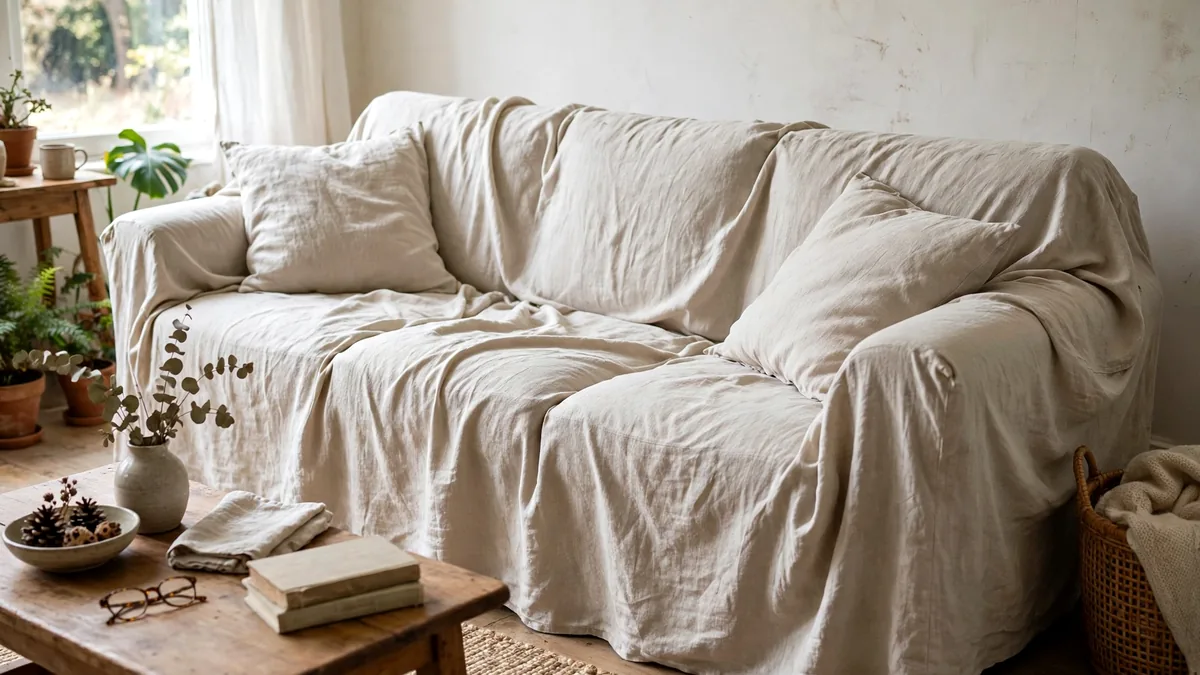
A slipcover is a loose, removable fabric cover that drapes over a whole sofa or armchair, from the top of the back down to the floor. It is not fitted like a second skin and it is not nailed or stapled on: it hangs with soft folds, a little give, and enough spare fabric to tuck into the creases where the seat meets the back and arms.
That looseness is the whole point. A slipcover hides a stained or dated sofa without reupholstering it, and when it gets dirty you take it off, wash it, and put it back on. The best slipcovers in 2026 are cut for real sofas: separate pieces for the body and each cushion, and fabrics that wash well and hold a tuck.
Key Takeaways
- A slipcover is a loose, draped cover for a whole sofa or armchair, held in place by its own weight, ties, and tucks — not by stretch or elastic alone.
- Buy the slipcover for your sofa’s shape first: a two-seater, a three-seater, and an L-shaped sectional need different cuts.
- Cotton and linen look the most like real slipcovers, but a cotton-polyester blend washes better and holds a tuck longer in a house with kids or pets.
- Measure the back height, the seat width, and the arm height, then check the cover’s size range against all three — never trust the headline size alone.
- Order one set and live with it for a week before you commit: the tuck test on day seven tells you more than any photo.
Slipcover vs Sofa Cover: The Difference That Matters
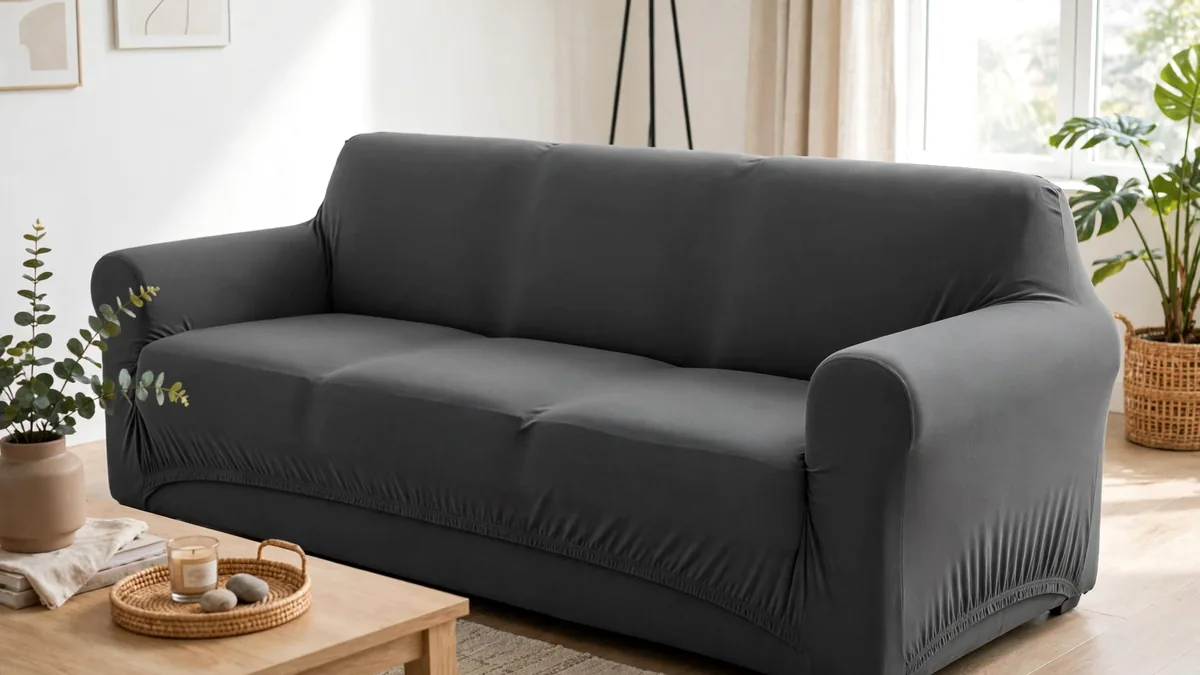
Shops use the two words as if they meant the same thing, and they do not. A slipcover is loose by design: it drapes, it folds, and it is held in place by gravity, ties, and tucks. A fitted sofa cover pulls tight over the sofa with stretch fabric and an elastic hem, like a fitted sheet on a mattress. Both protect a sofa, but they look different and suit different rooms.
The relaxed look is the slipcover’s signature: the fabric pools slightly at the arms, the skirt brushes the floor, and the cushions wear their own separate covers. A fitted cover aims for the opposite: smooth, tailored, and invisible, so the sofa looks reupholstered rather than covered.
Fit decides which one works on your sofa. A sofa with rolled arms, a curved back, or deep button tufting will defeat a stretch cover, because stretch fabric needs fairly straight lines to pull tight. The same sofa takes a slipcover happily, because loose fabric follows curves instead of fighting them. The same rule holds at chair scale.
Slipcover Types Compared
| Type | Best For | Fit | Washing | Price Range |
|---|---|---|---|---|
| Relaxed linen slipcover | Sofas and armchairs, lived-in look | Loose, draped, skirted | Machine wash, cold | Mid |
| Tailored slipcover | Straight-arm sofas, neater rooms | Semi-fitted, piped seams | Machine wash, gentle | Mid to high |
| Stretch slipcover | Plain sofas, quick refresh | Snug, elastic hem | Machine wash, cold | Low |
| Waterproof slipcover | Pets, kids, spills | Loose with grippy backing | Machine wash, cold | Mid |
| Separate cushion covers | Cushions only, mixed sets | Zip, cushion-sized | Machine wash, cold | Low |
The Main Types of Slipcover
Relaxed linen slipcovers are the classic: cut generously, with a skirt that reaches the floor, meant to look soft rather than sharp. They suit sofas with rolled arms and curved backs, where a tight cover would fight the shape. The price is maintenance: one needs smoothing after every sit.
Tailored slipcovers are the neater cousin: cut closer to the sofa, with piped seams along the arms and back, and sometimes ties at the back corners instead of a full skirt. They suit straight-arm sofas where the relaxed look would feel too casual.
Stretch slipcovers use a polyester and spandex blend that pulls over the sofa like a second skin. They are the cheapest and the easiest to fit, but they only suit fairly standard shapes: a sofa with very wide arms, a curved top rail, or a chaise end will defeat one, and forcing it on is how covers split at the seams.
Waterproof slipcovers add a water-resistant layer under the decorative fabric: the right choice for a sofa a dog sleeps on or a toddler eats on. Separate cushion covers protect just the parts that take the wear and come off with a zip. Our guide to the best cushion covers of 2026 explains how to match them to the cushions you already own.
Which Fabric Should You Choose?
Cotton and linen look the most like real slipcovers. They breathe, they soften with every wash, and they take dye in soft, slightly uneven tones. The trade-off is that they crease, they shrink if you wash them hot, and they stain more easily than synthetics: a cotton slipcover that goes into a hot wash can come out a size smaller.
Polyester blends are the practical choice. A cotton-polyester mix keeps most of the natural look and washes far better: it holds its shape, it resists stains, and it dries quickly. For a house with pets, a tight-weave performance polyester is the honest choice: it is the fabric that survives claws. Colour matters too: white looks wonderful in photographs and terrible after a week of real life, so a mid-tone grey, beige, or sage hides far more and still brightens a room.

How to Measure a Sofa for a Slipcover
Measure the sofa, not the cover. Four numbers decide the fit: the width from outside arm to outside arm, the height of the back from the floor to the top rail, the depth of the seat, and the height of the arms. Write them down in centimetres, then compare them with the cover’s size range; a good listing gives a range, such as a width of 180 to 210 centimetres.
Check the shape as well as the size. A sofa with rolled arms needs a cover made for rolled arms, a sofa with a very tall back needs an extra-tall size, and a sofa with a chaise or an L-shaped corner needs a sectional cut. Finally, check the skirt length: one that ends halfway down the legs looks unfinished, while one that pools on the floor is a trip hazard.
Fitting and Tucking: Making It Look Deliberate
Fitting a slipcover is a two-person job the first time, and a ten-minute job after that. Start with the body piece: drape it over the back, centre it so the seams sit evenly on both arms, then pull it down until the skirt hangs level. Work from the centre outwards, smoothing the fabric before you touch the seat.
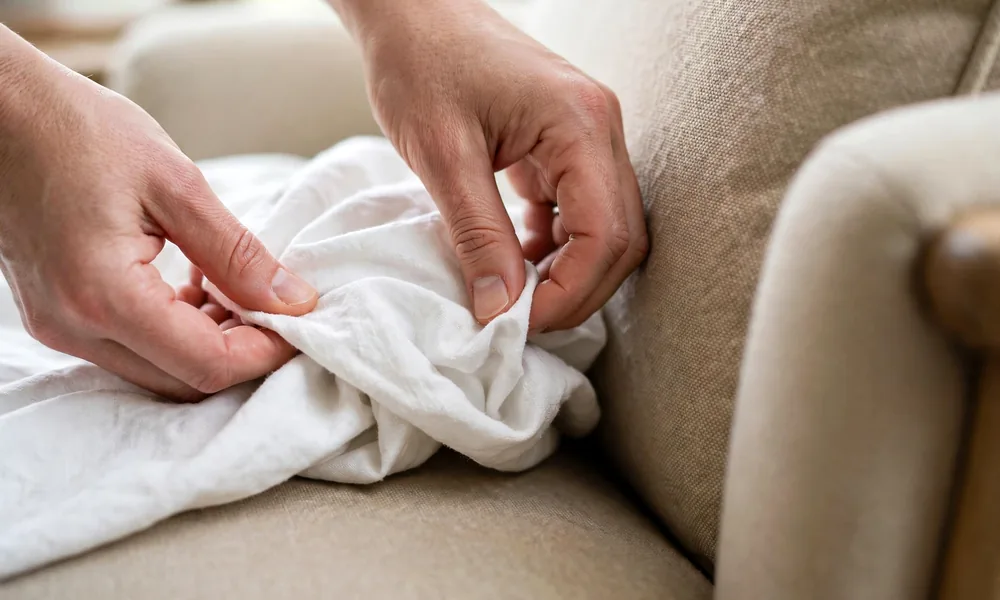
The tuck is what separates a slipcover that looks intentional from one that looks thrown on. Push the spare fabric deep into the creases where the seat meets the back and arms, using a wooden spoon handle if your fingers cannot reach. A heavier fabric holds a tuck better than a light one, so choose a medium-weight blend if you hate re-tucking.
Foam rollers, sometimes sold as slipcover stays, help more than ties do. Slide a foam cylinder into the crease after tucking and it wedges the fabric in place. Expect the first week to be a settling-in period. If it still needs re-tucking after every single sit, the cover is the wrong size or the wrong weight for your sofa.
Washing and Looking After Slipcovers
Most modern slipcovers are machine washable, and that is their main advantage over reupholstering. Wash them cold on a gentle cycle, with a mild detergent and no fabric softener: softener coats the fibres and can reduce the stretch over time. Dry them on the line when you can, since high heat shrinks cotton and weakens elastic. If you must use a dryer, use the lowest heat and take the cover out while it is still slightly damp, then put it back on the sofa to finish drying in shape.
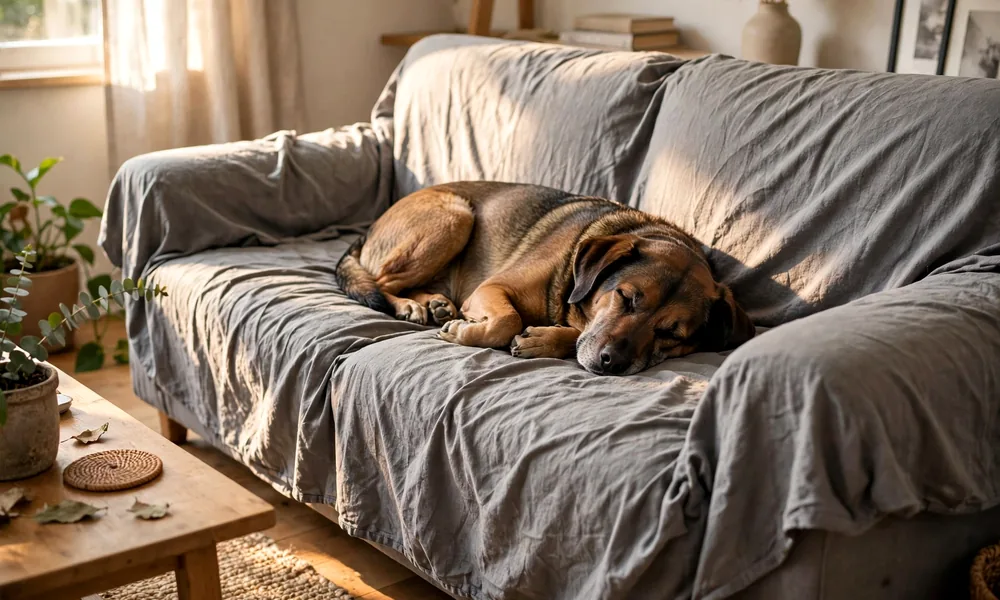
Keep a spare set if you can afford it: one set on the sofa and one in the wash means a spill never leaves a bare sofa, and it doubles the life of each set. For pets and children, choose a tight-weave, water-resistant fabric in a colour that hides fur, and start stains with cold water, never hot.
Mistakes That Ruin a Good Slipcover
The most common mistake is buying on colour alone. A slipcover in the perfect shade that does not fit is worse than one in a second-choice colour that does. Fit first, colour second, and live with one set for a week before you buy a second.
The second mistake is choosing a fabric too light for the sofa. A thin cotton looks lovely on the hanger and slides off the arms within an hour. A medium-weight fabric, around 250 to 300 grams per square metre, holds a tuck and stays where you put it. If the listing does not state the weight, ask.
The third mistake is treating a slipcover like reupholstery. It is not permanent: a slipcover that is never removed, never washed, and never re-tucked will look tired within months. In a rented home, where you cannot reupholster a landlord’s sofa, that reversibility is the whole reason to buy one. A set of matching cushion covers and a couple of new throw pillows that make any sofa look styled will finish the change for less than a single reupholstery quote.
Before You Buy: A Quick Checklist
- Measure width, back height, seat depth, and arm height, and check the cover’s size range against all four.
- Confirm the cover suits your sofa’s shape: rolled arms, straight arms, chaise, or L-shaped sectional.
- Check the fabric weight: medium-weight cotton or a cotton-polyester blend holds a tuck and survives washing.
- Look for ties, a grippy backing, or foam stays so the cover stays put when someone stands up.
- Confirm it is machine washable, and wash cold on a gentle cycle with no fabric softener.
- Order one set first and live with it for a week before buying a spare set or a second colour.
Frequently Asked Questions
What is the difference between a slipcover and a sofa cover?
A slipcover is loose and draped, held by its own weight, ties, and tucks. A fitted sofa cover pulls tight with stretch fabric and an elastic hem. Slipcovers suit curved and rolled-arm sofas; fitted covers suit plain, straight-arm sofas.
Do slipcovers fit all sofas?
No. A slipcover must match your sofa’s width, back height, seat depth, and arm shape. Sectionals, chaises, and recliners need their own cuts. Measure first and check the size range.
Will a slipcover slide off when I stand up?
A good one will not, if it is the right size and the tucks are deep. Foam stays, ties at the back corners, and a grippy backing all help. A cover that is too large is the one that slides.
Can I wash slipcovers in the washing machine?
Most cotton, linen, and polyester slipcovers can be machine washed cold on a gentle cycle. Skip fabric softener, dry on the line when you can, and put the cover back on while it is still slightly damp so it dries in shape.
Are slipcovers good for homes with pets?
Yes, if you choose a tight-weave, water-resistant fabric in a colour that hides your pet’s fur. A slipcover protects the sofa from claws, fur, and accidents, and it is far easier to wash than to clean upholstery.
Are slipcovers cheaper than reupholstering?
Far cheaper. A good set usually costs less than a tenth of a reupholstery job, and you can remove it, wash it, or change the colour whenever you like.
The Bottom Line
A slipcover is a small purchase that does a big job, but only when the fit, fabric, and fastening are right for your sofa. Measure first, choose a medium-weight fabric in a colour you will actually wash, and tuck it deep. Get those three things right and the cover will look like part of the sofa, and the sofa underneath will stay clean for years longer.