The Sofa Cover That Actually Stays Put
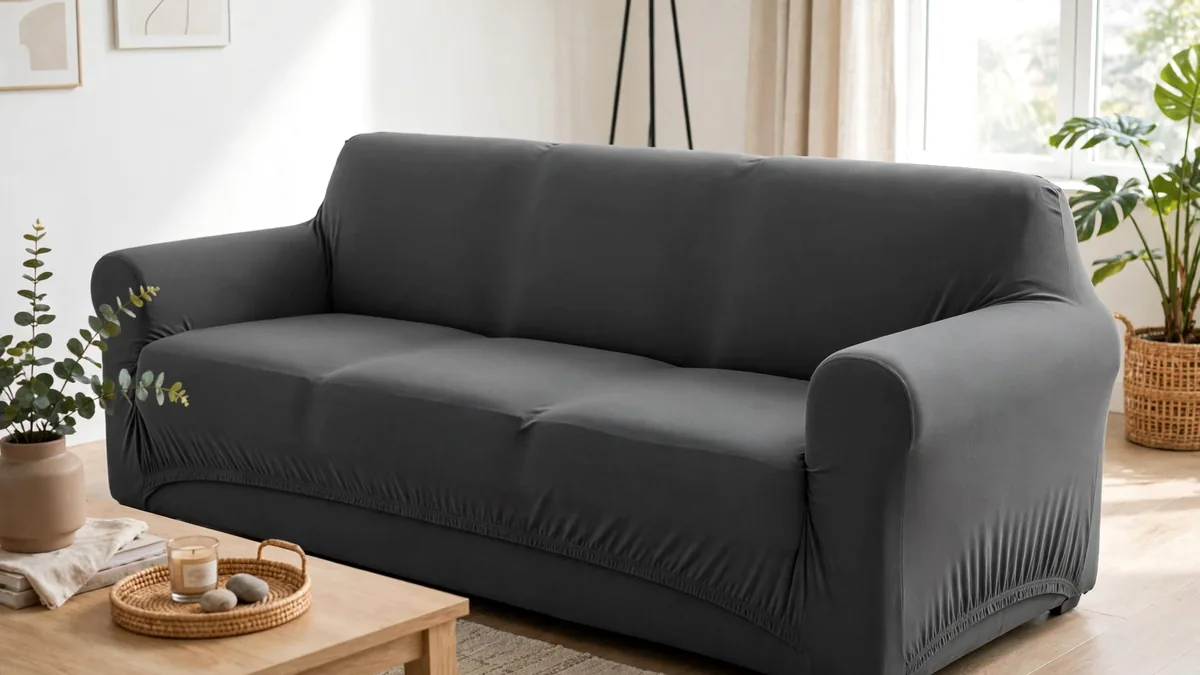
The best sofa cover is the one you forget is there. It pulls tight over the sofa, it does not ride up when someone stands, and it does not need re-tucking every time the dog jumps up. It looks like the sofa was always that colour.
The worst sofa cover is the one that slides. It bunches at the corners, it creeps up the arms, and it makes a decent sofa look like it is wearing a bin bag. The difference between the two is rarely the price: it is the fit.
This guide is about fitted sofa covers: stretch covers that pull over a sofa like a second skin, waterproof covers that survive pets and children, and sectional covers that fit an L-shaped sofa without a fight. A loose, draped slipcover is a different product, and our guide to the best slipcovers of 2026 explains when that relaxed style is the better buy.
Key Takeaways
- A fitted sofa cover pulls tight with stretch fabric and an elastic hem; it suits plain, straight-arm sofas, while loose slipcovers suit curved and rolled-arm ones.
- Buy the cover for your sofa’s shape: a two-seater, a three-seater, and an L-shaped sectional need different cuts, and a chaise end needs its own piece.
- Polyester-spandex blends are the easiest to live with: they stretch, wash well, and resist stains better than cotton alone.
- Measure the width, the back height, and the arm height before ordering, and check the cover’s size range, not just the headline size.
- Elastic hems, foam anchors, and straps matter more than pattern: a cover that slips off is a cover you will stop using.
Sofa Cover Types Compared
| Type | Best For | Fit | Washing | Price Range |
|---|---|---|---|---|
| Stretch sofa cover | Plain two- and three-seaters | Snug, elastic hem | Machine wash, cold | Low |
| Sectional sofa cover | L-shaped and corner sofas | Multi-piece, per section | Machine wash, cold | Mid |
| Waterproof sofa cover | Pets, kids, spills | Snug with grippy backing | Machine wash, cold | Mid |
| Recliner sofa cover | Reclining sofas | Split back, moving parts | Machine wash, cold | Mid |
| Sofa throw cover | Seat and back only | Draped, tucked | Machine wash, cold | Low |
The Main Types of Sofa Cover
Stretch sofa covers are made from a polyester and spandex blend that pulls tight over a plain sofa like a second skin. They are the most popular type for a reason: they fit a wide range of sofa sizes, they do not need ties or pins, and they look tailored rather than draped. The trade-off is that they only suit fairly standard shapes.
Sectional sofa covers come in separate pieces, one for each section of an L-shaped or corner sofa, plus a piece for the corner itself: a single-piece cover cannot follow the corner. Measure each section separately, and check whether the corner piece is included.
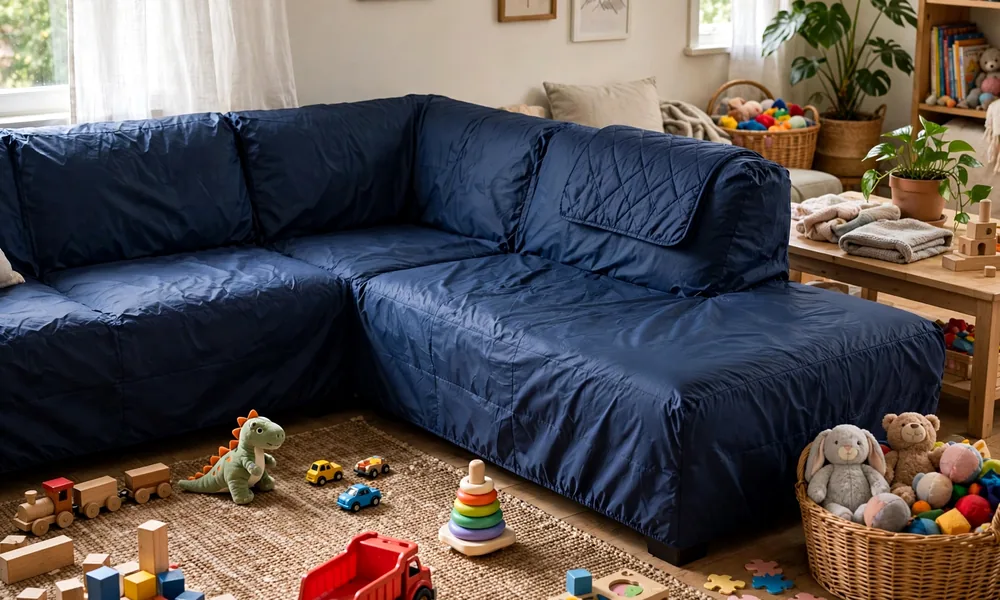
Waterproof sofa covers add a water-resistant layer under the decorative fabric: the right choice for a sofa a dog sleeps on or a toddler eats on. Recliner sofa covers are cut in separate pieces for the back, the seat, and each arm, so the mechanism can move without fighting the fabric: a one-piece cover on a recliner will jam the footrest or tear at the hinge within weeks. Sofa throw covers protect just the seat and the back and tuck into the creases; they slide more than a fitted cover, so they suit a sofa that is sat on gently rather than lived on hard.
How to Measure a Sofa for a Cover
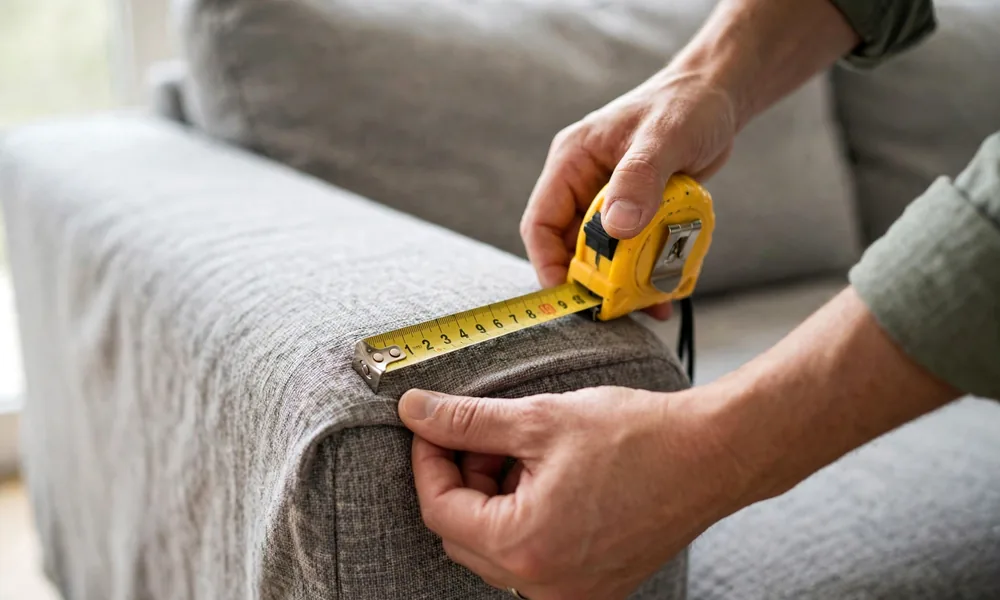
Measure the sofa, not the cover. Three numbers decide the fit: the width from outside arm to outside arm, the height of the back from the floor to the top rail, and the height of the arms from the floor. Write them down in centimetres, then compare them with the cover’s size range; a good listing gives a range, such as a width of 180 to 210 centimetres.
Check the shape as well as the size: a sofa with a very tall back needs an extra-tall size, and a sofa with a curved or sloping back will defeat a cover cut for a straight one. For a sectional, measure each section on its own, and measure the corner separately: the corner is where most sectional covers fail. Finally, check the drop: a cover that ends halfway down the legs looks unfinished, while one that pools on the floor is a trip hazard.
Which Fabric Should You Choose?
Polyester-spandex is the default for a fitted cover, for a reason. It stretches, it holds its shape after washing, it resists stains better than natural fibres, and it dries quickly. A cover with at least ten percent spandex pulls tight and stays tight; one with less than five percent will sag within weeks.
Cotton and linen look better and feel better, but they crease, shrink, and stain more easily, and they do not stretch. A cotton cover that goes into a hot wash can come out a size smaller, which is a miserable discovery on a three-seater. For a fitted cover, a cotton-polyester blend is the compromise: most of the natural look, with enough give to fit. For a house with pets, a tight-weave performance polyester is the honest choice: it survives claws, while a loose weave snags and pulls.
Keeping a Sofa Cover in Place
A cover that slips is a cover you will stop using, so the fastening matters more than the pattern. The elastic hem is the first line of defence: it should grip the bottom of the sofa all the way round, not just at the front, and be wide and stitched, not a narrow cord that rolls.
Foam anchors, sometimes sold as cover stays, are the second line. Push a foam cylinder into the crease where the seat meets the back and arms, after the cover is on, and it wedges the fabric in place. Straps that run under the sofa and clip at the back do the same job for the whole cover.
A grippy silicone backing on the inside of the cover stops it sliding on smooth upholstery, and it matters most on leather or faux-leather sofas. Expect the first week to be a settling-in period: the fabric stretches slightly and the anchors find their depth. If the cover still needs re-tucking after every single sit, it is the wrong size for your sofa.
Washing and Looking After Sofa Covers
Most modern sofa covers are machine washable, and that is their main advantage over reupholstering. Wash them cold on a gentle cycle, with a mild detergent and no fabric softener: softener coats the fibres and can reduce the stretch over time. Dry covers on the line when you can, since high heat shrinks cotton and weakens the elastic in a stretch cover. If you must use a dryer, use the lowest heat setting and take the cover out while it is still slightly damp, then put it back on the sofa to finish drying in shape.
Keep a spare set if you can afford it: one set on the sofa and one in the wash means a spill never leaves a bare sofa, and it doubles the life of each set. For pets and children, choose a tight-weave, water-resistant fabric in a colour that hides fur, and start stains with cold water, never hot.
Mistakes That Ruin a Good Sofa Cover
The most common mistake is buying on colour alone. A cover in the perfect shade that does not fit is worse than one in a second-choice colour that does. Fit first, colour second, and order one piece before you order a full sectional set: a single test piece costs little and tells you everything about the fit, the fabric, and the colour in your light.
The second mistake is buying a one-piece cover for a sectional: a single piece cannot follow an L-shaped corner, and the result is a baggy corner and a tight straight run. The third mistake is choosing white for a house with small children and a dog. White covers look wonderful in photographs and terrible after a week of real life, so a mid-tone grey, beige, or sage hides far more. Our guide to the best sectional sofas for big living rooms is worth reading before you measure, because the shape of the sofa decides the cover more than any listing does.
Where Sofa Covers Work Best
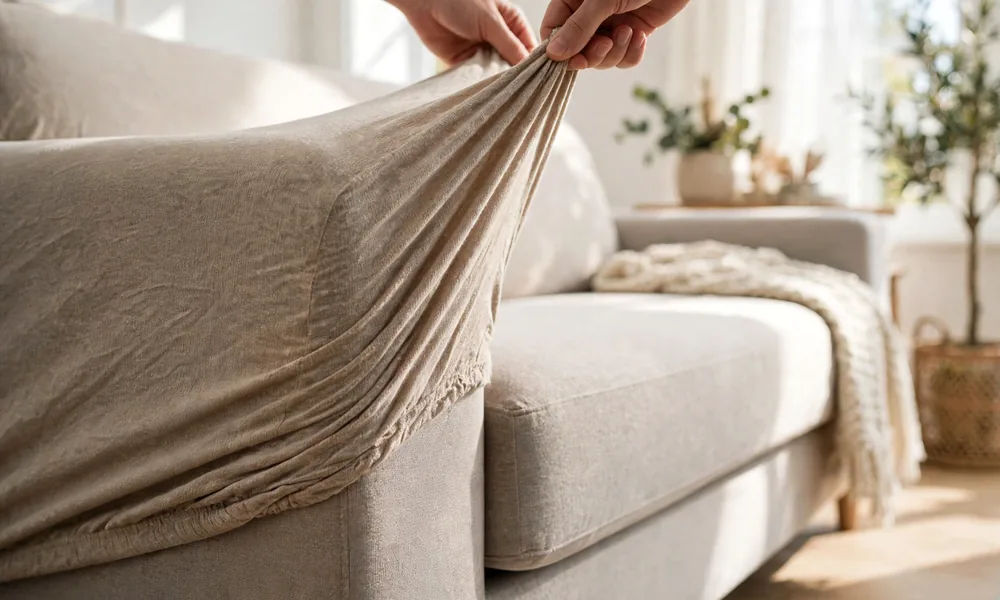
In a living room, a stretch cover is the obvious choice for a plain sofa. It pulls tight, it looks tailored, and it lets you change the colour of the room for the price of a few metres of fabric. Buy it when the sofa underneath is sound but the colour is wrong, or the fabric is stained beyond cleaning.
Covers also shine in rented homes, where you cannot reupholster a landlord’s sofa and cannot throw a stained one away. They are less suited to a sofa with a recliner mechanism, where a standard one-piece cover will jam the footrest, and to a sofa with deeply buttoned or curved arms, where loose fabric follows the shape better than stretch does. Our guide to the best chair covers of 2026 covers the same fit question at chair scale.
Before You Buy: A Quick Checklist
- Measure width, back height, and arm height, and check the cover’s size range against all three.
- Confirm the cover suits your sofa’s shape: two-seater, three-seater, L-shaped sectional, chaise, or recliner.
- Check the fabric: spandex or elastane for stretch, at least ten percent for a cover that stays tight.
- Look for an elastic hem, foam anchors, or straps so the cover stays put when someone stands up.
- Confirm it is machine washable, and wash cold on a gentle cycle with no fabric softener.
- Order one piece first to test the fit, fabric, and colour in your own light before buying the full set.
Frequently Asked Questions
Do sofa covers fit all sofas?
No. Stretch covers fit most plain, straight-arm sofas within their stated size range, but sofas with rolled arms, very wide arms, or unusual curves need a cover made for that shape. Sectionals need a multi-piece set.
Will a sofa cover slide off when I stand up?
A good one will not. Look for a wide elastic hem, foam anchors, and a grippy silicone backing, and make sure the size is right: a cover that is too large is the one that slides.
What is the difference between a sofa cover and a slipcover?
A fitted sofa cover pulls tight with stretch fabric and an elastic hem, so the sofa looks reupholstered. A slipcover drapes loosely, held by its own weight, ties, and tucks, for a relaxed, lived-in look. Fitted covers suit plain sofas; slipcovers suit curved and rolled-arm sofas.
Can I wash sofa covers in the washing machine?
Most polyester-spandex covers can be machine washed cold on a gentle cycle. Cotton covers can usually be washed cold too; check the label, skip fabric softener, and dry on the line.
Are sofa covers good for homes with pets?
Yes, if you choose a tight-weave, water-resistant fabric. A cover protects the sofa from claws, fur, and accidents, and it is far easier to wash than to clean upholstery. Match the colour to your pet’s fur so shedding shows less.
Are sofa covers cheaper than reupholstering?
Far cheaper. A set of fitted covers usually costs less than reupholstering a single sofa, and you can remove, wash, or change them whenever you like.
The Bottom Line
A sofa cover is a small purchase that does a big job, but only when the fit, fabric, and fastening are right for your sofa. Measure first, order one piece to test, and choose a stretch fabric with an elastic hem and foam anchors for everyday use. Get those three things right and the cover will look like part of the sofa, and the sofa underneath will stay clean for years longer than it would have done uncovered.


