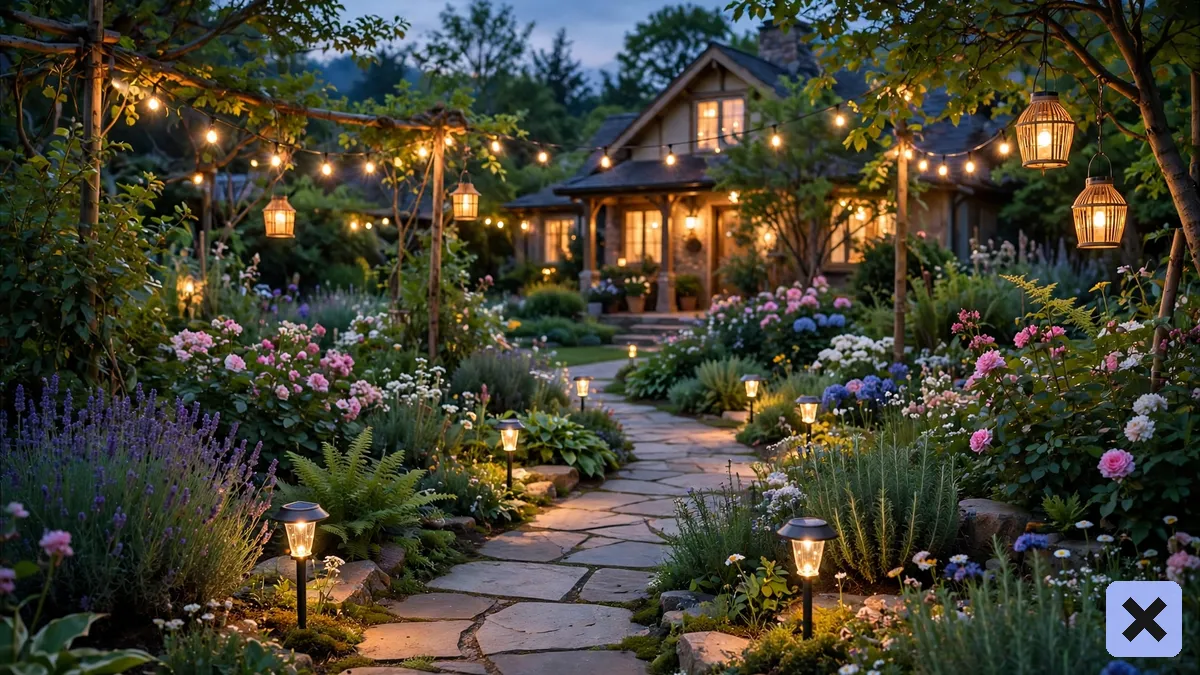
The best solar lights for garden use in 2026 turn an ordinary backyard into a place you actually want to spend time in after dark. No wiring, no electrician, no rising power bill — just sunlight by day and a warm, welcoming glow by night. The latest generation of solar garden lights is brighter, longer-lasting, and far better looking than the dim plastic stakes that used to define the category.
Choosing well still matters. Cheap lights fade after a few months, batteries die in winter, and weak panels leave you with a dark garden on the evenings you most want to use it. The difference between a disappointing purchase and a garden that glows all evening comes down to panel quality, battery capacity, brightness, and weatherproofing.
This guide walks through the best solar lights for garden spaces in 2026, from path lights and string lights to spotlights and lanterns. You will find a comparison table, a buying checklist, and answers to the questions most gardeners ask, so you can pick lights that suit your space, your style, and your budget.
Key takeaways
- Look for lights with a monocrystalline solar panel and at least 600 mAh of battery capacity for reliable all-night performance.
- Warm white (2700–3000K) suits most gardens; cool white works better for security and modern landscaping.
- Path lights are best for walkways, spotlights for trees and features, and string lights for patios and entertaining areas.
- An IP44 rating is the minimum for outdoor use; IP65 or higher handles heavy rain and winter weather.
- Place the solar panel in direct sun for at least six hours a day, and clean it monthly for the brightest light.

Why Solar Garden Lights Are Worth It in 2026
Solar garden lighting has improved dramatically in the last few years. Modern LED bulbs are far more efficient, lithium batteries hold a charge through the night, and panels harvest usable power even on overcast days. The result is garden lighting that is genuinely bright rather than decorative in the dimmest sense of the word.
The practical benefits are hard to argue with. There are no cables to bury, no outdoor sockets to install, and no running costs beyond the purchase price. You can move lights whenever you redesign a bed or rearrange the patio, which makes them ideal for renters, since nothing is fixed to the house.
There is also the simple pleasure of it. A garden lit with warm solar light feels larger, safer, and more inviting. Paths are easier to navigate, steps are visible, and the plants you worked on all summer get a second act after sunset.
The Technology Behind the Glow
Every solar garden light follows the same basic design. A small photovoltaic panel charges a rechargeable battery during the day, a light sensor switches the LED on at dusk, and the battery powers the light until dawn. Monocrystalline panels are the most efficient and the best choice for gardens that get partial shade, while lithium batteries last longer and hold more charge than the older nickel-metal hydride cells still found in budget lights.
Types of Solar Garden Lights
Different parts of the garden call for different lights. Understanding the main types helps you build a layered lighting plan rather than buying a dozen identical stakes and hoping for the best.
Solar Path Lights
Path lights are the workhorses of garden lighting. They mark walkways, driveways, and steps, making the garden safer to cross at night while adding a gentle line of light that guides the eye. Most are stake-mounted and install in seconds. For the best effect, space them about two to three metres apart and stagger them slightly rather than lining them up in a rigid row.
Solar String Lights
String lights are the fastest way to make a patio or seating area feel magical. Draped along a fence, pergola, or tree branch, they cast a warm, even glow that is perfect for evening meals and late conversations. Many 2026 sets come with remote controls, timers, and multiple lighting modes, and you should check the lead length from the panel to the first bulb so the panel can sit in the sun while the lights hang in the shade. A good set pairs naturally with the best outdoor rugs for patios to complete the look underfoot.

Solar Spotlights
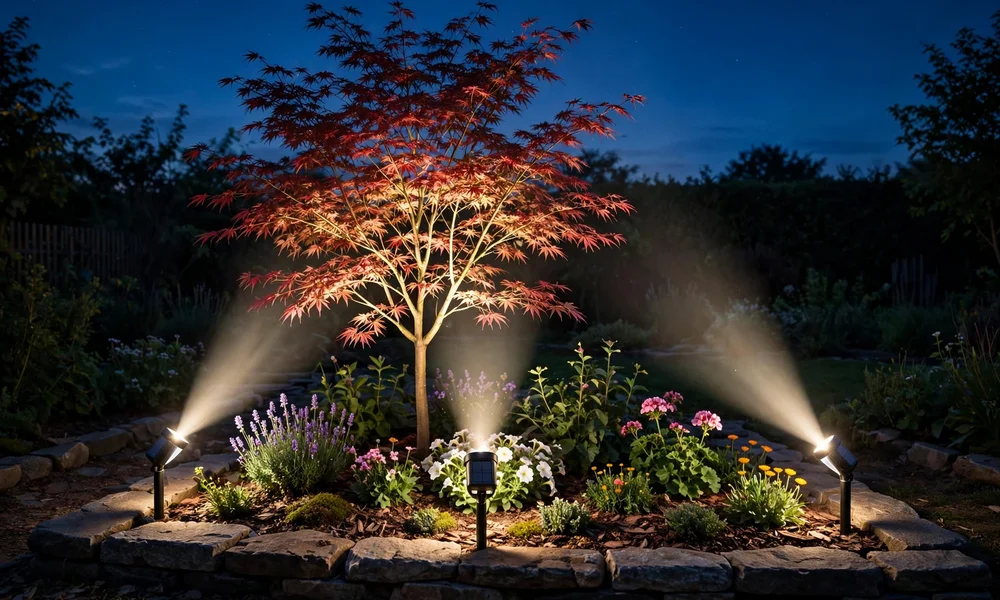
Spotlights are also the best choice for security lighting, especially models with motion sensors that switch to full brightness when someone approaches. Place them low and aim upward for the most flattering effect on trees and shrubs.
Solar Lanterns and Decorative Lights
Decorative lights — fairy lights in jars, glowing orbs, and light-up garden ornaments — are the finishing touches. They work best in small numbers, used as accents rather than spread across the whole garden. For portable light you can carry to a picnic or a campsite, the best camping lanterns use similar LED and battery technology in a tougher, travel-ready form.
Comparison Table: Best Solar Lights for Garden 2026
| Type | Best For | Typical Brightness | Runtime | Price Range |
|---|---|---|---|---|
| Path lights | Walkways and steps | 10–25 lumens | 8–10 hours | $20–$60 per set |
| String lights | Patios and pergolas | 5–15 lumens per bulb | 6–8 hours | $15–$50 per set |
| Spotlights | Trees and features | 100–300 lumens | 6–12 hours | $15–$40 each |
| Lanterns | Tables and seating | 10–30 lumens | 8–10 hours | $10–$35 each |
| Wall lights | Fences and house walls | 50–150 lumens | 8–10 hours | $15–$45 per pair |
| Flood lights | Security and large areas | 300–800 lumens | 4–8 hours | $25–$60 each |
How to Choose the Best Solar Lights for Your Garden
Start with the garden, not the catalogue. Walk outside at dusk and note where you actually need light — the path to the back door, the steps by the deck, the dark corner by the fence — and where you want light for beauty rather than safety. That short walk tells you how many lights you need and which types belong where.
Next, check your sunlight. Solar lights live or die by the charge they get during the day. A south-facing garden with six hours of direct sun will run almost any light well. A shaded courtyard needs lights with larger panels, better batteries, and a detachable panel you can position in the sunniest spot. If your garden is heavily shaded, consider fewer, higher-quality lights rather than many cheap ones.
Brightness and Colour Temperature
Brightness is measured in lumens, and more is not always better. A path light at 10 to 15 lumens is plenty; a spotlight on a large tree may need 200 or more. Layering several gentle lights usually looks better than one harsh beam.
Colour temperature shapes the mood. Warm white light, around 2700 to 3000 kelvin, flatters plants, wood, and stone, and it feels cosy. Cool white, around 5000 to 6500 kelvin, looks modern and crisp and is better for security areas. Many 2026 lights let you switch between the two, which is useful if you are still deciding on a style.
Battery Life and Charging
Check the battery capacity before you buy. A 600 mAh battery will run a small path light through the night in summer; in winter, when days are short, a 1200 mAh or larger battery makes a real difference. Lights with replaceable batteries are worth seeking out, since a fresh battery can add years to a light’s life. The same solar technology powers portable chargers for phones and devices — see the best solar chargers for travel for outdoor use.
Weatherproofing and Durability
Outdoor lights face rain, frost, heat, and the occasional knock from a mower. The IP rating tells you how well a light handles water and dust: IP44 is the minimum for garden use, IP65 handles heavy rain, and IP67 can survive brief immersion. In cold climates, look for lights rated to work below freezing, and avoid thin plastic bodies that crack in the cold.
Installing and Placing Solar Garden Lights
Installation is the easy part. Most solar lights push into soft soil with a ground stake, screw to a fence or wall, or simply sit on a flat surface. Place path lights where people actually walk, aim spotlights upward at a slight angle so the beam washes across a tree or wall, and keep the solar panel clear of overhanging leaves and facing the sun’s path.
Common Placement Mistakes
The most common mistake is putting the panel in the shade. A light tucked under a bush may look charming, but if its panel never sees the sun, it will never charge. If you love a spot that is shady, choose a light with a separate panel on a cable so the panel can sit in the sun.
The second mistake is over-lighting. A garden needs darkness as well as light; shadows give it depth and make the lit areas stand out. Start with fewer lights than you think you need and add more only where the garden still feels dark.
Maintenance Tips That Keep Lights Bright
Solar lights need very little care, but a little goes far. Wipe the panel with a damp cloth once a month to remove dust, pollen, and bird droppings, which can cut charging by a surprising amount. In autumn, clear fallen leaves from around the lights. Replace rechargeable batteries every one to two years, and bring delicate decorative lights indoors during the harshest winter weeks if you want them to last.
Best Solar Lights for Garden 2026: Buying Checklist
- Measure your garden and count the areas that need light before buying anything.
- Choose monocrystalline panels and lithium batteries for the longest, brightest runtime.
- Match the light type to the job: path lights for walkways, spotlights for features, string lights for patios.
- Check the IP rating — IP44 minimum, IP65 or higher for exposed and rainy spots.
- Pick warm white for atmosphere and cool white for security and modern styles.
- Buy one set first, test it in your garden for a week, then buy the rest.
Frequently Asked Questions
Do solar garden lights work on cloudy days?
Yes, though they charge more slowly. Solar panels still harvest diffuse daylight on overcast days, so most lights will glow for a few hours even after a grey day. Lights with larger, more efficient panels and bigger batteries cope best with a run of cloudy weather.
How long do solar garden lights last?
A well-made solar light lasts three to five years, with the rechargeable battery usually needing replacement after one to two years. Metal and glass lights outlast plastic ones, and lights with replaceable batteries can be kept going almost indefinitely with a fresh cell.
Can solar garden lights stay out in winter?
Most quality solar lights are designed to stay outside all year, provided they are rated IP44 or higher and built for cold temperatures. Expect shorter runtimes in winter, since the days are shorter and the sun is weaker. Bring delicate decorative lights indoors during hard frosts to extend their life.
Do I need direct sunlight for solar lights to work?
Direct sun gives the best charge, and six hours a day is ideal. In shaded gardens, choose lights with a detachable panel so you can place the panel in the sunniest available spot, or pick models designed for low-light charging.
Do solar garden lights attract bugs?
Warm white LEDs attract far fewer insects than cool white or ultraviolet light, which is one more reason to choose a warm colour temperature for seating and dining areas. Keeping lights away from doorways also helps.
Can I leave solar lights on all night?
Most solar lights switch on automatically at dusk and run until the battery is empty or dawn arrives. In summer, a good light will last all night. In winter, it may switch off in the early hours, which is normal and nothing to worry about.
The Bottom Line
The best solar lights for garden spaces in 2026 are brighter, tougher, and better looking than ever, and they cost nothing to run. Start with your garden’s real needs, choose quality panels and batteries, and layer path lights, string lights, and spotlights to build a garden that glows from dusk until dawn. Buy one set, test it where it will live, and let the garden tell you what to add next.