Steak Knives That Cut Cleanly Without Tearing in 2026
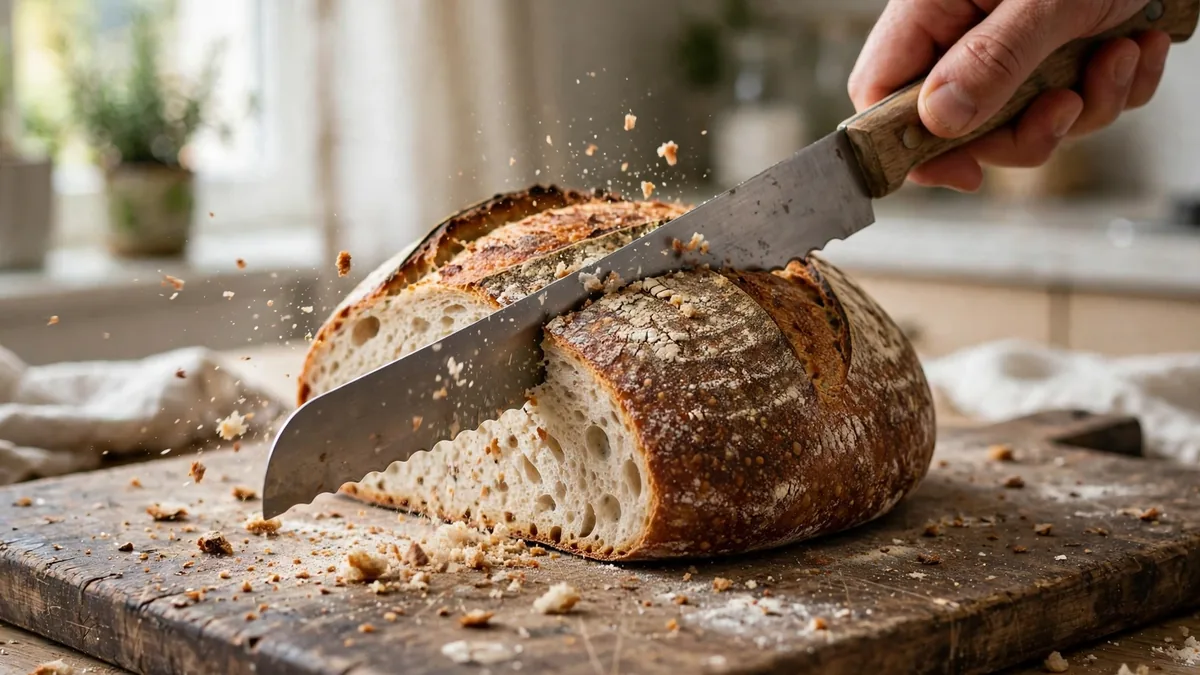
The best steak knives cut through a rested steak with one smooth stroke, leaving a clean face on the meat and the juices where they belong: inside the slice. A poor steak knife saws, drags and tears, shredding the fibres and squeezing moisture onto the plate. The difference is not price alone. It is the edge, the steel, the balance and the way the handle sits in your hand.
Steak knives live a harder life than most table cutlery. They meet hot, rested meat, hard ceramic plates and the occasional bone, several times a week, for years. A knife that feels fine on the first steak can go dull within months if the steel is soft or the edge is ground too thin.
Key Takeaways
- A straight edge slices cleanest on a well-rested steak, while a serrated edge is more forgiving on crusty, well-done or tougher cuts.
- Forged high-carbon stainless steel holds an edge far longer than cheap stamped blades, and it is worth the extra cost in a set you use weekly.
- Balance matters more than weight: a knife should feel steady at the bolster, not heavy in the handle or tip.
- Full-tang construction with riveted handles is the most durable design, and it is easy to check before you buy.
- Hand washing and a wooden block or in-drawer tray protect the edge far better than a dishwasher or a loose drawer.
What Makes a Steak Knife Cut Cleanly
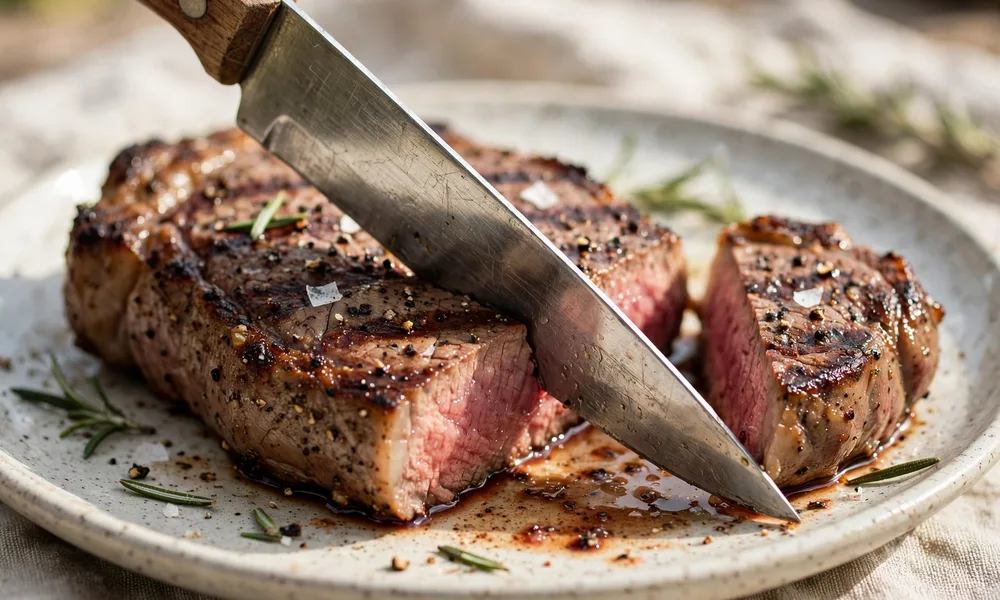
A clean cut is a shearing action, not a sawing one. A sharp, well-ground edge parts the meat fibres in a single pass, so the surface of the slice stays smooth and the juices stay locked in the muscle. A dull or badly ground edge crushes the fibres first and tears them second, which is why a torn steak looks ragged and tastes drier even when it was cooked perfectly.
Pressure is the hidden enemy. When you have to push hard, the blade compresses the meat before it cuts, and the juices escape. A good steak knife does the work with its own weight and a gentle draw stroke.
Serrated vs Straight Edge: Which Cuts Better?
Most steak knives sold today have serrated edges, and for a reason: serrations stay useful long after a straight edge would have gone dull, because the points keep biting even when the valleys between them wear. They are the low-maintenance choice, and they handle crusty, well-done and fibrous cuts better than a straight edge.
A straight edge, properly sharpened, cuts more cleanly than any serration. It leaves a smooth face on the slice and glides through a rested medium-rare steak with almost no resistance. The trade-off is maintenance: a straight edge needs honing and occasional sharpening, and it goes dull faster on ceramic plates.
Micro-Serrated: The Middle Ground
Micro-serrated edges use very fine teeth that feel almost smooth to the touch. They cut more cleanly than coarse serrations and stay sharp longer than a plain straight edge. They are also the hardest type to sharpen at home, since the tiny teeth need professional equipment.
What About the Crust?
A steak with a hard seared crust is where serrations earn their keep. A straight edge can skate across a very hard crust before it bites, especially on a well-done steak. If your household prefers steaks cooked well done, or you often eat cuts with a thick char, lean serrated. If you cook medium-rare and rest your steaks properly, a straight edge will reward you.
Blade Steel and Hardness
Most good steak knives are made from high-carbon stainless steel, a blend that resists rust while taking a keen edge. The important number is hardness, measured on the Rockwell scale. Blades around 55 to 58 HRC are tough and easy to maintain; they sharpen readily and resist chipping. Blades at 60 HRC and above hold an edge longer but can chip if they hit bone or a hard plate.
For a table knife, the middle of the range is usually right. A steak knife is not a chef knife: it does not need the hardest steel, because it does a short, simple job. What it needs is steel that stays sharp through a meal, survives the occasional knock against a plate, and comes back easily with a honing steel or a whetstone.
Stamped versus forged is the other question people ask. Forged blades are shaped from a single piece of heated steel, and they tend to have a bolster, a thicker spine and better balance. Stamped blades are cut from a sheet of steel, so they are lighter, thinner and cheaper. A well-made stamped knife can cut beautifully. Forging is a mark of quality, not a guarantee of it: a bad forged knife is worse than a good stamped one.
Handles: Balance, Grip and Weight
A steak knife spends its life in the hand, so the handle matters as much as the blade. The classic test is the balance point: rest the knife across your finger at the bolster, where blade meets handle. A well-balanced knife sits level or tips very slightly toward the blade. A handle-heavy knife feels clumsy and tires your wrist.
Handle materials each have their character. Wood handles, especially walnut and pakkawood, feel warm and grippy, and they look better with age, but they need hand washing and occasional oiling. Resin and composite handles are nearly indestructible, though some feel slippery when wet. Metal handles are hygienic and beautifully made, but they can be cold and heavy in smaller hands.
Size matters too. A blade of around 11 to 13 centimetres suits most people and most plates. Shorter blades struggle with thick steaks, while longer blades feel unwieldy at a crowded table. If you can, hold the knife before buying: the handle should fill your palm without the end digging into it, and your fingers should clear the plate when the blade is flat.

Steak Knife Comparison
| Type | Cut Quality | Edge Life | Maintenance | Best For |
|---|---|---|---|---|
| Straight-edge forged | Cleanest cut | Good | Regular honing and sharpening | Medium-rare steaks, keen cooks |
| Serrated | Good, slightly ragged | Excellent | Very little | Well-done steaks, busy households |
| Micro-serrated | Very good | Excellent | Professional sharpening only | Everyday use without fuss |
| Laguiole-style | Very good | Good | Hand wash, occasional honing | Table presentation, gifts |
| Budget stamped | Decent when new | Short | Replace rather than sharpen | Occasional use, starter sets |
The table shows the real trade-off: the cleanest cut and the longest edge life do not live in the same knife. A straight-edge forged set rewards the owner who maintains it, while a serrated or micro-serrated set rewards the owner who does not. For a broader look at how knives are judged as a set, see our guide to the best knife sets for beginners, and the head-to-head best vs worst knives of 2026.
How to Test a Steak Knife Before You Buy
If you can try a knife in a shop, a few simple checks tell you most of what you need to know. Hold it as you would at the table and make a slow cutting motion in the air: it should feel steady, not twitchy. Look down the edge against the light: it should be a clean, even line, with no visible nicks or wavy sections.
Check the tang by looking at the handle. On a full-tang knife, you can see the steel running the whole length of the handle, usually sandwiched between two handle scales held by rivets. Full tang is stronger and better balanced, and it is the construction to prefer in a set you expect to keep for a decade.
At home, the honest test is a rested steak. Cut one slice with a slow, drawing stroke and almost no downward pressure. A good knife glides through and the slice falls away cleanly. A poor one needs sawing and leaves a ragged face.
Care and Sharpening
How you look after a steak knife decides how long it stays good. The rules are simple, and they are worth following even for a budget set.
Washing
Hand wash with warm soapy water and dry immediately. Dishwashers dull and chip blades, and wooden handles can crack or swell.
Storage
Store steak knives in a wooden block, on a magnetic strip, or in an in-drawer tray with individual slots. Never toss them loose into a drawer, where they knock against other metal and dull each other.
Honing vs Sharpening
Honing and sharpening are different jobs. Honing, with a steel rod, straightens an edge that has folded over in use; it does not remove metal, and it is worth doing every few uses on a straight-edge knife. Sharpening, with a whetstone or a professional service, grinds a new edge. Serrated knives need a ceramic rod or a professional, and many owners simply replace them when they finally dull. If you grill often, our round-up of the best BBQ tools for grilling covers the rest of the kit that goes with a good steak knife.

Before You Buy: A Six-Point Checklist
- Choose straight edge for the cleanest cut, serrated for low maintenance, micro-serrated for a middle ground.
- Pick high-carbon stainless steel around 55 to 58 HRC for the best mix of sharpness and toughness.
- Check for full-tang construction with riveted handles before paying for a premium set.
- Hold the knife first if you can: it should balance near the bolster and fill your palm comfortably.
- Match the blade length to your table, around 11 to 13 centimetres suits most people.
- Plan to hand wash and store the set in a block or tray, never loose in a drawer or in the dishwasher.
Frequently Asked Questions
Are expensive steak knives worth it?
Up to a point, yes. A mid-priced forged set with good steel will cut better and last far longer than the cheapest set on the shelf. Beyond that point you are paying for design, branding and presentation rather than cutting performance.
Should steak knives be serrated or straight?
Straight edges cut cleanest on rested, medium-rare steak but need regular honing. Serrated edges stay useful much longer with no maintenance and handle crusty or well-done cuts better. Choose the one that matches how you cook and how much upkeep you will actually do.
Can you sharpen serrated steak knives?
Yes, but not with a flat whetstone. Each serration needs a tapered ceramic rod, and the work is slow and fiddly. Most owners have serrated knives sharpened professionally, or replace the set when it finally goes dull.
How long should a good set of steak knives last?
A well-made set that is hand washed and stored properly should last ten years or more. A straight-edge set can last decades if it is sharpened occasionally. A cheap stamped set may be excellent for a year or two and then dull beyond easy recovery.
What size steak knife is best?
A blade of around 11 to 13 centimetres suits most people and most plates. Shorter blades struggle with thick steaks, while longer blades feel unwieldy at a crowded table.
What is the best way to store steak knives?
A wooden block, a magnetic wall strip or an in-drawer tray with individual slots all protect the edge. The key is that the blades do not touch other metal. A loose drawer is the worst option and will dull even a good set within months.
The Bottom Line
The best steak knives in 2026 are the ones that match your cooking and your habits. If you rest your steaks, cook them medium-rare and enjoy looking after your tools, a straight-edge forged set will give you the cleanest cut you can get at the table. If you want a set that simply works, night after night, with no maintenance at all, a good serrated or micro-serrated set is the wiser buy. Either way, choose full-tang construction, steel in the middle of the hardness range, and a handle that balances in your hand.