Top Food Steamers for Vegetables, Dumplings and Fish in 2026
A food steamer is the quietest appliance in the kitchen, and one of the most useful. It cooks with nothing but hot steam, so vegetables keep their colour and crunch, fish stays moist without oil, and dumplings come out tender without sticking to a pan. The top food steamers of 2026 come in three main forms: electric multi-tier steamers, bamboo baskets that sit over a pot or wok, and steel basket inserts that turn a saucepan you already own into a steamer. This guide explains how each type works and which steamers are worth your money.
Key Takeaways
- Steaming cooks food gently in hot steam without oil, so vegetables keep their colour and fish stays moist.
- Electric steamers are the easiest choice for everyday cooking, with stacked tiers and a timer that switches off by itself.
- Bamboo steamers give dumplings and buns the best texture and cost very little, but need a pot underneath.
- Choose capacity by the meals you cook: two tiers suit one or two people, three tiers feed a family.
- A steamer is not a rice cooker or a slow cooker: it cooks quickly with steam, for food that should stay bright and tender.
How a Food Steamer Actually Cooks
A food steamer works by boiling a small amount of water and letting the steam rise through the food. The steam is hot, around one hundred degrees, and it surrounds the food on every side, cooking it evenly without direct contact with the water or the heat source. Food boiled in water loses flavour and nutrients into the water, while food fried in a pan picks up oil and can dry out. Steaming avoids both problems at once.
The result is food that tastes like itself. Broccoli stays bright green and keeps its bite, carrots stay sweet instead of turning to mush, and a fillet of fish stays moist all the way through because the steam never lets the surface dry out. Dumplings steam beautifully because the moist heat cooks the wrapper evenly without making it soggy. A steamer does not brown or crisp food, so it will not replace a grill or a frying pan, but for anything tender, bright and moist, it is hard to beat. Our guide to the best rice cookers covers the other gentle-cooking appliance in the kitchen.
The Main Types of Food Steamer
Food steamers fall into three families, and the right one depends on how often you steam and how many people you cook for.
Electric Multi-Tier Steamers
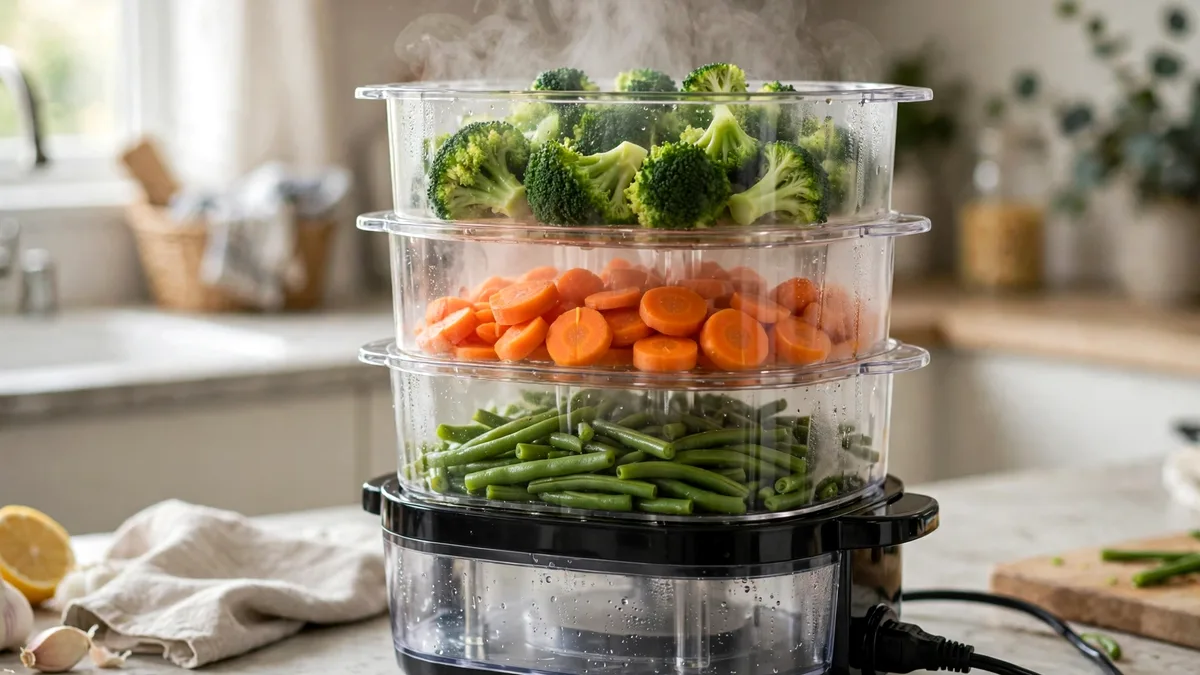
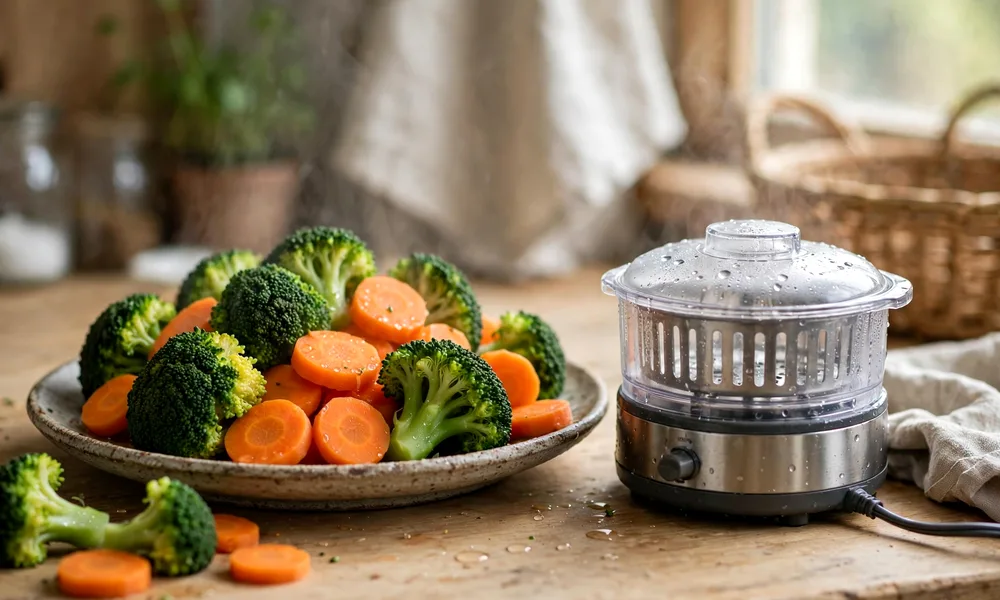
An electric steamer is a self-contained appliance with a water reservoir at the bottom, a heating element, and two or three stacking tiers on top. You fill the reservoir, load the tiers, set the timer, and the machine does the rest, switching itself off when the time is up. The tiers let you cook a whole meal at once: fish on the bottom tier where the steam is hottest, vegetables in the middle, and rice or dumplings on top.
Bamboo Steamers
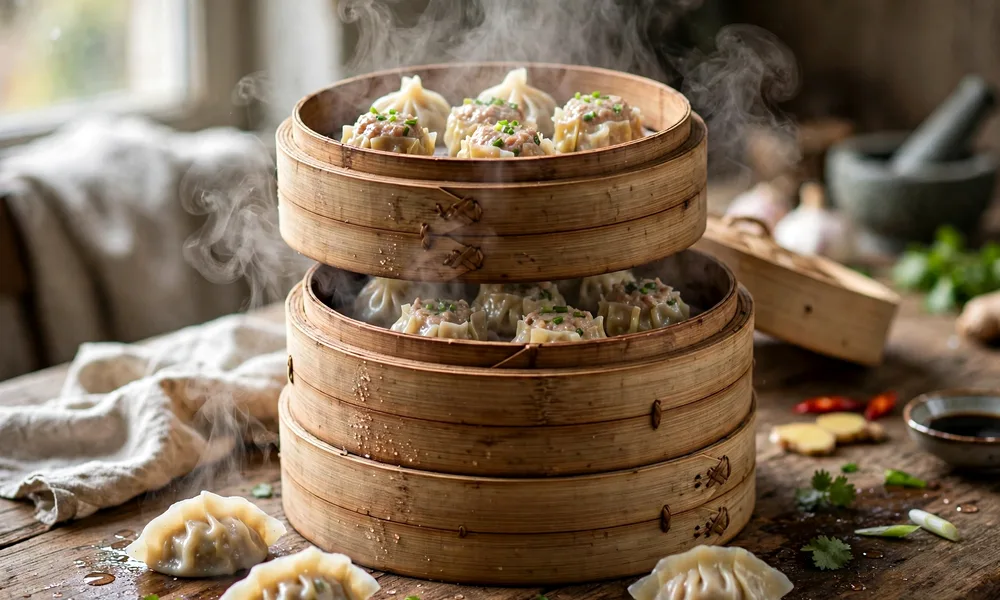
A bamboo steamer is a stack of woven baskets with a lid, designed to sit over a pot or wok of boiling water. It is the traditional way to steam dumplings, buns and dim sum, and it is still the best at it: the bamboo absorbs excess moisture, so the wrappers stay tender without going soggy. Bamboo steamers cost very little and stack neatly for storage. They need more attention than an electric steamer, because you have to watch the water level in the pot underneath, and they must be dried properly after washing or they can go mouldy.
Steel Basket Inserts and Stovetop Steamers
A steel basket insert is a folding or fixed basket that sits inside a saucepan you already own, turning it into a steamer for very little money. It takes up almost no storage space, and it is the easiest to clean, since it is just a piece of steel. The trade-off is capacity: a single basket holds one layer of food, so it suits vegetables or a few dumplings for one or two people, not a family meal. Dedicated stovetop steamers hold more and seal better.
Food Steamers Compared at a Glance
| Food Steamer | Type | Tiers | Best For |
|---|---|---|---|
| Tefal Convenient Series Deluxe | Electric | Three | Family meals |
| Philips Daily Collection Steamer | Electric | Two | Everyday vegetables and fish |
| VonShef 3-Tier Food Steamer | Electric | Three | Best value |
| Helen Chen Bamboo Steamer Set | Bamboo | Two | Dumplings and buns |
| Oxo Good Grips Steamer Basket | Steel insert | One | Small households |
What to Look For Before You Buy
The details that separate a good steamer from a frustrating one are practical. Check them before you buy.
Capacity and Tiers
Capacity should follow the meals you actually cook. A two-tier electric steamer, around five to seven litres, suits one or two people. A three-tier model, nine litres or more, feeds a family of four or five and can cook a whole dinner: fish below, vegetables in the middle, rice on top. Bamboo steamers are sized by diameter: a twenty-five-centimetre basket suits two people, while a thirty-centimetre basket feeds a family.
Timer, Auto Shut-Off and Water Level
A timer with auto shut-off is the feature that makes an electric steamer genuinely convenient. Set the time, walk away, and the machine stops itself when the food is done, so nothing overcooks while you set the table. A visible water-level window matters just as much: if you cannot see how much water is left, you will either overfill it and get water in the food, or underfill it and have the element boil dry.
Materials and Cleaning
Electric steamers mostly use clear plastic tiers, which are light and let you see the food, but they can stain and cannot take the highest heat. Bamboo steamers need to be washed by hand and dried thoroughly, ideally standing on their sides so air circulates, or they can develop mould in the weave. Steel baskets are the easiest of all to clean: they go straight in the dishwasher and they never stain.
What to Steam, and What Not To
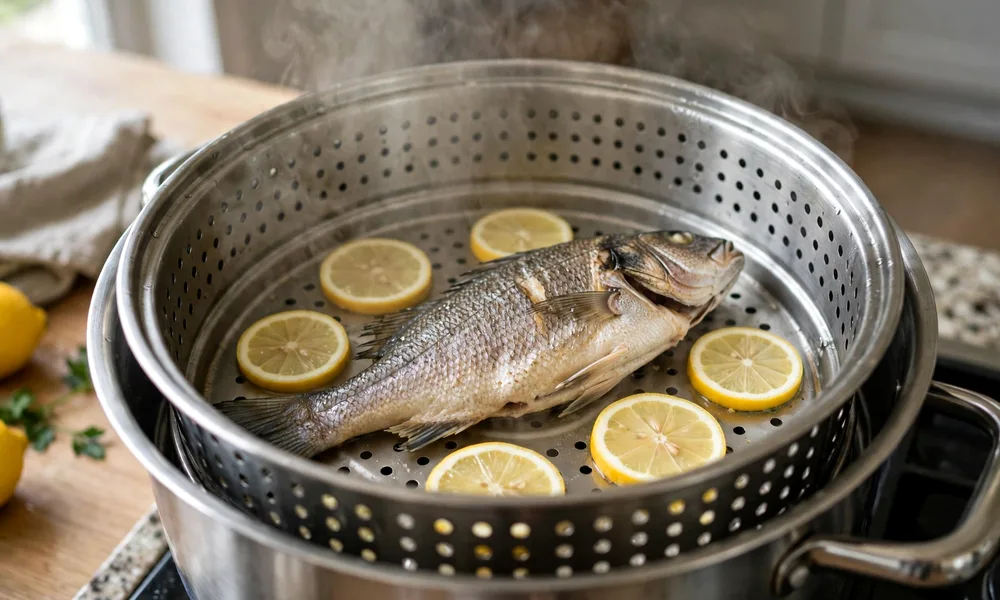
A steamer excels at food that should stay moist, bright and tender. Vegetables are the obvious starting point: broccoli, green beans, carrots, asparagus, peas and cauliflower all steam in five to fifteen minutes and come out with their colour and bite intact. Fish is the second great steaming food: a fillet of salmon, sea bass or cod steams in eight to twelve minutes and stays moist all the way through.
A steamer is the wrong tool for food that needs browning, crisping or long slow cooking. It will not crisp chicken skin, brown a steak or caramelise onions, because steam never gets hot enough to brown. It is also a poor choice for food that needs hours of gentle heat, like a stew or a braise: that is the job of a slow cooker, and our guide to the best slow cookers covers those in detail.
Steamer vs Double Boiler: The Difference That Matters
A food steamer and a double boiler are both gentle, water-based cooking tools, and they are easy to confuse, but they do different jobs. A steamer cooks food in the steam itself: the food sits in a basket above boiling water, and the hot steam surrounds it. A double boiler heats food in a pot that sits above simmering water, so the food never touches the water or the steam directly: the gentle, indirect heat melts chocolate, thickens custards and makes sauces without scorching. Our guide to the best double boilers explains that tool in detail.
The practical difference is simple. If the food should be cooked through by moist heat, like vegetables, fish and dumplings, you want a steamer. If the food should be melted or thickened gently without ever boiling, like chocolate, hollandaise or custard, you want a double boiler. A steamer cannot melt chocolate properly, and a double boiler cannot steam vegetables: neither replaces the other.
How to Get the Best Results From a Steamer
Good steaming is mostly about timing and arrangement. Put the food that takes longest on the bottom tier, where the steam is hottest, and the quickest food on top. Cut vegetables to a similar size so they finish together, and do not pack the tiers too tightly: steam needs room to move, and an overfilled tier steams unevenly.
Do not lift the lid to check the food more than you have to, because every lift lets the steam out and adds minutes to the cooking time. Season after steaming, not before: salt and sauces wash off in the steam, so a pinch of salt, a squeeze of lemon or a drizzle of soy sauce after the food comes out gives you far more flavour.
Before You Buy: A Quick Checklist
- Choose electric for everyday family cooking, bamboo for dumplings, and a steel basket insert if you steam once a week or less.
- Size the steamer to your household: two tiers for one or two people, three tiers for a family of four or more.
- Look for a timer with auto shut-off, a visible water level, and an external refill opening on electric models.
- Check that the tiers are dishwasher safe, or that the bamboo can be dried standing on its side to prevent mould.
- Confirm the steamer fits your storage: nested tiers or stackable bamboo baskets save a whole cupboard shelf.
- Descale monthly in hard-water areas with white vinegar to keep the steamer heating at full speed.
Frequently Asked Questions
Are food steamers healthy?
Yes, steaming is one of the healthiest ways to cook. It uses no oil, it keeps more vitamins in the food than boiling because the nutrients do not leach into cooking water, and it keeps vegetables bright and firm instead of soft and grey.
Can I steam frozen vegetables?
Yes, and a steamer is one of the best tools for it. Put frozen vegetables straight into the steamer without defrosting, and add two or three minutes to the usual cooking time.
Is a food steamer the same as a clothes steamer?
No, and the two should never be confused. A food steamer cooks food with steam in the kitchen, while a clothes steamer removes wrinkles from garments. They are entirely different products, with different designs and different jobs. Never use a clothes steamer on food.
Can I cook a whole meal in a steamer?
Yes, that is the main advantage of a three-tier electric steamer. Put the slowest-cooking food on the bottom tier, where the steam is hottest, and the quickest food on top. A typical full meal is fish on the bottom, vegetables in the middle, and rice or dumplings on top.
How do I stop dumplings sticking to a bamboo steamer?
Line the basket with a circle of baking paper, a lettuce leaf or a cabbage leaf before you put the dumplings in. The lining stops the wrappers sticking to the bamboo without blocking the steam. Oil the basket lightly as well, and leave a little space between the dumplings.
How often should I descale my steamer?
In a hard-water area, descale an electric steamer once a month with a solution of white vinegar and water, run through a normal steaming cycle with the tiers empty. In a soft-water area, every two or three months is enough.
The Bottom Line
The top food steamer for most households is a two- or three-tier electric model with a timer, auto shut-off and dishwasher-safe tiers, sized to the number of people you cook for. It cooks a whole meal at once, needs almost no attention, and makes vegetables, fish and dumplings taste like themselves. If dumplings are your main event, add a bamboo steamer: it costs very little, and nothing else gives wrappers the same tender texture.