A mango looks generous until you try to cut it up with a knife. The skin is slippery, the flesh is soft and full of juice, and right in the middle sits a large, flat pit that no knife can cut through and no amount of guessing can find by feel. The best mango slicers in 2026 fix that messy job: they cut the cheeks cleanly away from the pit, turn the flesh into neat slices or cubes, This guide explains how they work, which designs cut cleanly, and how to choose one.
Key Takeaways
- A cheek slicer is the best mango slicer for most kitchens: one push cuts both cheeks away from the flat pit.
- Pick a ripe mango first: a slicer cannot rescue an under-ripe fruit, and the blades will tear hard, sour flesh instead of cutting it.
- Look for a sharp stainless steel blade, a frame that fits the mangoes you actually buy, and a handle you can grip firmly with wet hands.
- Score each cheek in a crosshatch and push it inside out for the neatest cubes.
- Rinse the slicer straight after use, because dried mango juice glues the blades together and dulls the edge faster than anything else.
What a Mango Slicer Actually Does
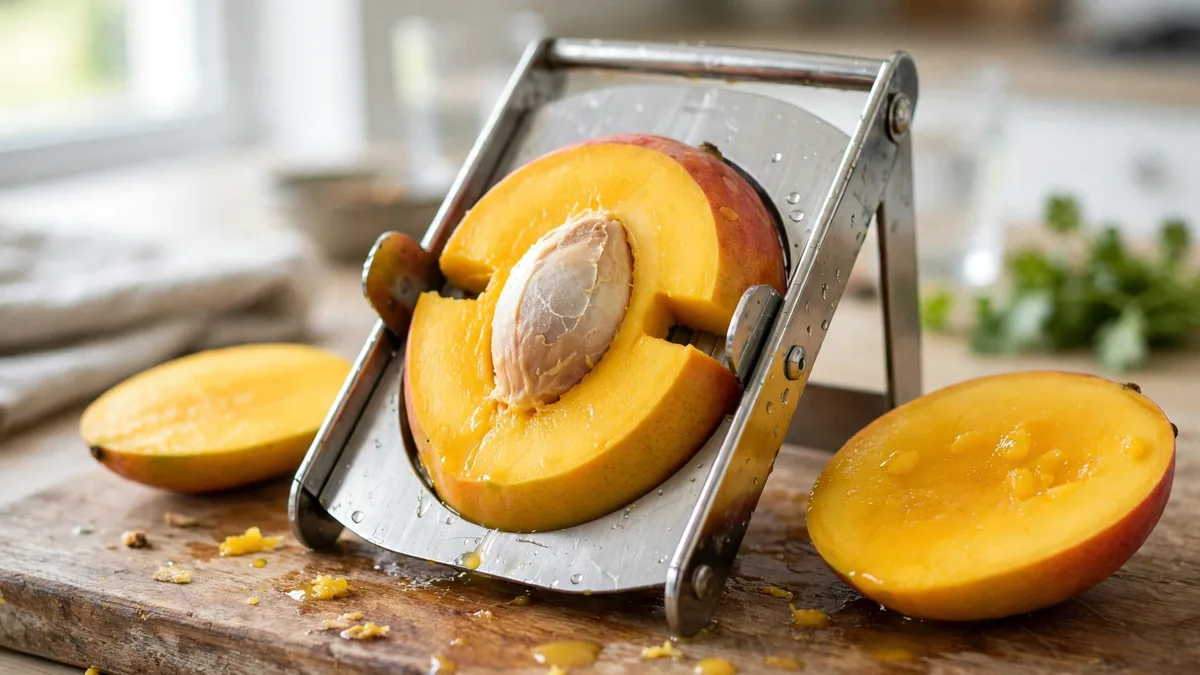
A mango slicer solves one stubborn problem: the pit. Unlike an apple, which has a small core a ring slicer can punch straight through, a mango has a large, flat, oval pit that takes up most of the middle of the fruit and runs almost the full length of it. Cut straight down the middle and you hit the pit. Cut around it by eye and you waste half the flesh on one side and leave the blade skating across the stone on the other. A mango slicer is built around that pit. Most designs are an oval frame with a blade shaped to pass either side of the flat stone, so one push separates the two fat cheeks from the pit in a single motion, leaving the pit behind with only a thin layer of flesh still clinging to it.
The same logic sits behind our guide to the best avocado slicers: one fiddly job done faster and more evenly than a knife.
It is worth drawing a clear line, because mango tools are easily confused. A mango slicer cuts cheeks away from the pit and slices the flesh; it does not peel anything unless it has a built-in peeler, and it does not juice anything. A slicer is also not a knife: a knife does the job slowly, with a lot of trimming and waste, while a slicer does the hard part in one push. And it is not a corer: a mango pit is flat, not round, so a corer would be useless on it.
The Main Types of Mango Slicer Compared
Most mango slicers fall into four designs, and the right one depends on how often you eat mangoes and what you do with them once they are cut.
The cheek slicer is the most common design and the best choice for most people. It is an oval frame, usually stainless steel with a plastic or rubberised handle, with a blade that follows the shape of the pit. You stand the mango upright, centre the frame over the top, and press straight down. The blade passes either side of the pit and the two cheeks drop away cleanly. It is fast and wastes little flesh, but a frame built for a medium mango struggles with a very large one.
The mango splitter is a close cousin, built more like a pair of tongs or a press. You place the mango in a cradle and squeeze the handles, and twin blades cut the cheeks off in one motion. It needs less hand strength than a frame slicer, which suits anyone with a weak grip, and it holds the fruit steady while it cuts. The trade-off is bulk and a hinge that needs cleaning after every use.
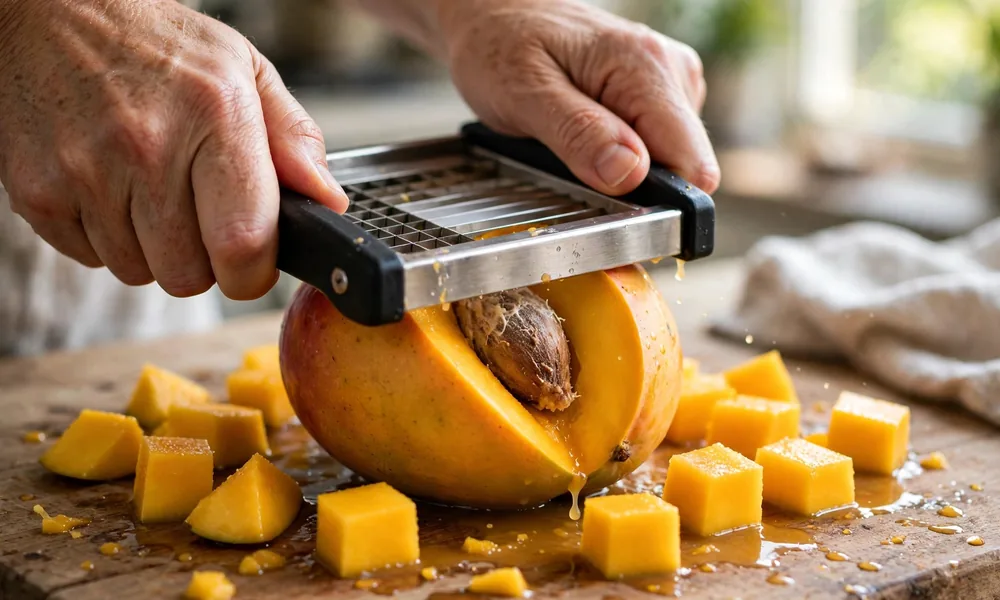
The slicer-cuber does two jobs in one tool: one end cuts the cheeks from the pit, and the other scores the flesh into cubes while it is still in the skin. It is the fastest route to a bowl of mango cubes for salads, smoothies and desserts, and it saves the crosshatch step entirely. The cubes come out even, but a dull cubing grid mashes the flesh instead of cutting it.
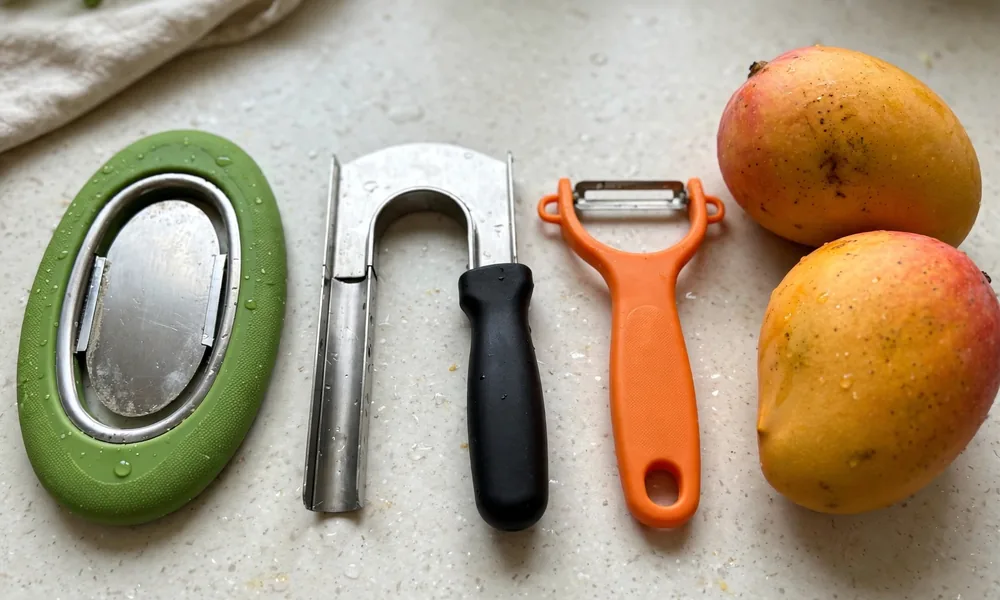
The peeler-slicer combination pairs a peeling blade with a cheek slicer in one handle. It suits anyone who peels the whole mango before cutting it, and it means one tool does the whole job from skin to slices. It can be a compromise, though, with a smaller peeler and a lighter slicer than dedicated tools.
The Best Mango Slicers of 2026 at a Glance
| Mango Slicer | Best For | Cutting Style | Why It Stands Out |
|---|---|---|---|
| Cheek Slicer | Everyday mango prep | Cheeks off the pit, one push | Fastest, least waste, easiest to clean |
| Mango Splitter | Weak grip, large mangoes | Press-cut cheeks | Most leverage, holds fruit steady |
| Slicer-Cuber | Salads, smoothies, desserts | Cheeks off, then cubes | Cubes straight to the bowl |
| Peeler-Slicer Combination | Peel then slice | Peel and cheek-cut | One tool does the whole job |
| Stainless Steel Cheek Slicer | Daily use | Cheeks off the pit, one push | Stays sharp for years |
How to Choose a Mango Slicer That Cuts Cleanly
Start with the blade. Stainless steel is the best material, because it stays sharp, resists rust from acidic mango juice, and does not stain. The blade should feel sharp to the touch, with a clean edge and no nicks: a dull blade tears the flesh instead of cutting it, and torn flesh browns fast. The opening must also match the pit: wide enough to pass either side of the stone without catching it, or the blade stalls on the pit or takes good flesh with it.
Next, look at the frame and the fit. Measure the frame against the mangoes you buy: most slicers suit a medium mango, but a very large one will jam. The handle matters just as much. You will press down with both hands, so it must be wide enough to fill the palm, slightly textured so it stays grippy when wet with juice, and shaped so the slicer does not twist in your hand. Two handles beat one for even pressure.
Think about cleaning before you buy, because a slicer that cannot be cleaned in seconds will spend its life at the back of the drawer, however sharp it starts out. Rinse the blade under warm running water straight after use, before the juice dries, and use a soft brush to clear the gaps where dried mango collects and glues the parts together. The same care over blade quality sits behind our guide to the best apple slicers, where a sharp, well-spaced blade is the difference between a clean cut and a crushed one.
Picking a Ripe Mango First
Picking the fruit matters more than the tool. A slicer cannot rescue an under-ripe mango: the flesh is hard and sour, and the blade will tear it no matter how sharp it is. A ripe mango gives slightly when you squeeze it gently, without feeling soft or bruised, and it smells sweet at the stem end. The skin should be more gold and blush than green, though colour alone is a poor guide, because some varieties stay green even when they are ripe. Use them within a few days, because a mango only gets softer after picking. Slice just before serving, because cut mango softens fast.
Using a Mango Slicer, Step by Step
Stand the mango upright on the board, stem end down, so it sits steady. Find the flat sides: the pit runs from stem to tip, and its flat faces point to the two widest sides of the fruit. Centre the slicer over the top of the mango, with the oval opening lined up so the blade will pass either side of the pit, not across it. Press straight down with both palms, in one smooth push, and keep pressing until the cheeks drop away. Do not twist as you press.
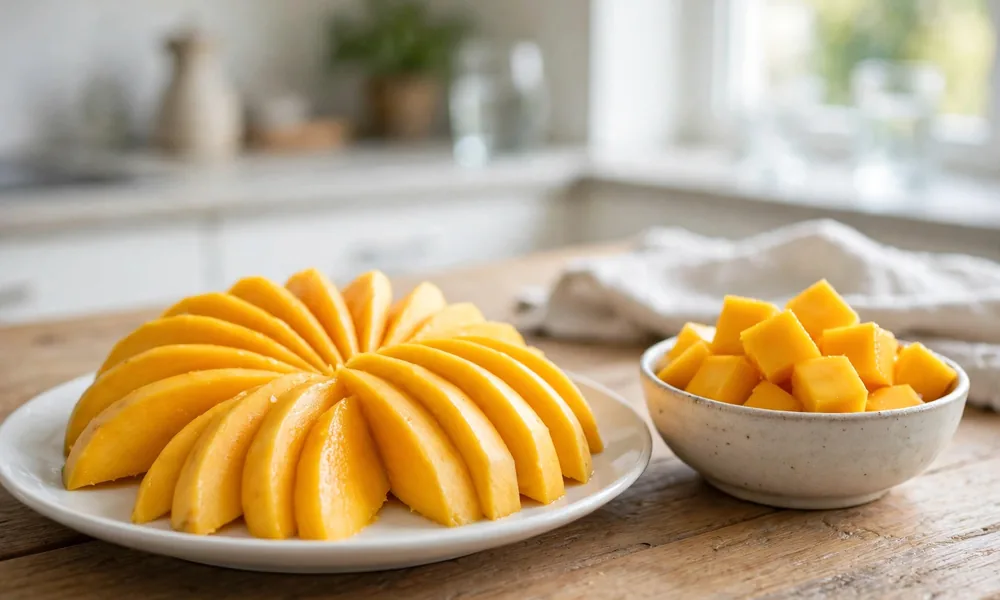
Once the cheeks are off, score the flesh in a crosshatch, cutting down to the skin but not through it, then push the skin from underneath so the cubes pop up like a hedgehog. Slice the cubes off with a knife, or scoop them out with a spoon. Our guide to the best pineapple corers shows the same lesson on a harder fruit: a sharp edge and a steady hand matter more than clever features.
Before You Buy: A Quick Checklist
- The oval opening fits the mangoes you buy, passing either side of the flat pit without catching it.
- The blade is stainless steel, sharp to the touch, with a clean edge and no nicks.
- The handle is wide, textured, and grippy when wet, and lets you press straight down with both palms.
- The slicer rinses clean in seconds, with no gaps or hinges that trap dried juice.
- It suits the job you do most: cheeks for plating, cubes for salads and smoothies, or both.
- It feels solid in the hand, with no flex in the frame and no loose parts.
Frequently Asked Questions
Do I need a mango slicer, or will a knife do?
A knife does the job, but it does it slowly and with more waste. A slicer cuts both cheeks off the pit in one push, which is the hard part. If you eat mangoes at least twice a week in season, a slicer earns its drawer space; occasional eaters can manage with a knife.
What is the flat pit, and why does it make mangoes hard to cut?
The pit is a large, flat, oval stone that runs almost the full length of the fruit. A knife either hits the stone or wastes flesh going around it. A mango slicer is shaped around the pit, with an oval blade that passes either side of it.
Which mango slicer is best for cubes?
A slicer-cuber is the fastest route to cubes, because it scores the flesh while the cheek is still in the skin. A plain cheek slicer works just as well if you score the crosshatch yourself afterwards.
Can a mango slicer handle unripe mangoes?
No. An under-ripe mango is hard and sour, and the blade will tear the flesh instead of cutting it, whatever the slicer costs. Wait until it gives slightly to a gentle squeeze and smells sweet at the stem end.
How do I clean a mango slicer?
Rinse it under warm running water straight after use, before the juice dries, and use a soft brush on the blade and any hinges. A quick hand rinse keeps the edge sharper and stops dried juice gluing the parts together.
Are mango slicers worth it for one mango a week?
Probably not. A slicer earns its place when mangoes are a regular habit, in season at least twice a week. For one a week, a sharp knife does the job.
The Bottom Line
A mango slicer is worth buying if mangoes are a regular part of your kitchen, and the cheek slicer is the one to buy first: one push, both cheeks off the pit, and flesh clean enough to slice or cube without waste. Pick a ripe mango, buy a steel frame that fits the fruit you buy, and rinse it straight after use.