
A whole pineapple looks generous until you try to cut it up with a knife. The spiky skin fights the blade, the juice runs everywhere, and the tough core hides in the middle of every slice. The best pineapple corers in 2026 fix that messy job: they peel, core, and slice a whole pineapple into neat rings in under a minute, with no sticky hands and almost no waste. This guide explains how they work and how to choose one.
Key Takeaways
- A spiral pineapple corer cuts the neatest rings, because one steady twist peels, cores, and slices in a single motion.
- Pick a ripe pineapple first: a corer cannot rescue an under-ripe fruit, however good the tool is.
- Look for a sharp stainless steel blade, a comfortable handle with real leverage, and a size that matches the pineapples you buy.
- Twist slowly and steadily, and stop before you reach the bottom, or the rings will tear and the shell will split.
- A good pineapple corer costs very little, so buy on build quality and blade sharpness rather than on extra gadgets.
What a Pineapple Corer Actually Does
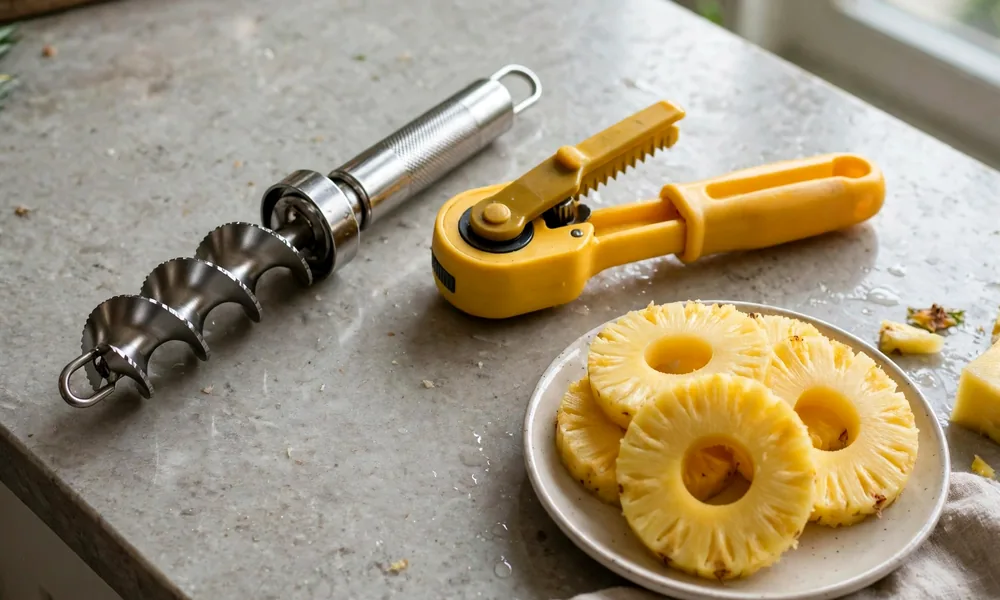
A pineapple corer does three jobs at once: it removes the spiky skin, cuts out the tough woody core, and slices the flesh into even rings. Most corers are a hollow tube with a spiral blade at one end and a handle at the other. Cut the top off, push the tube in, twist, and pull: the spiral cuts a neat cylinder out of the shell, the core stays inside the tube, and the rings slide off in a stack. A well-made corer leaves the shell whole enough to use as a bowl. A poor one tears the flesh, leaves the core in place, or jams halfway down.
It is worth drawing a clear line, because pineapple tools are easily confused. A pineapple corer cores and rings a whole pineapple; it does not juice anything. A juicer is a different machine, and our guide to pineapple juice covers what to look for there. A corer is also not a knife: a knife does the job slowly, with a lot of trimming and waste, while a corer does it in one twist. And it is not a peeler, which cannot cope with a pineapple at all.
Even rings matter because pineapple is almost always on display. Rings grill evenly, stack neatly on a burger, and sit flat in a fruit salad. Uneven pieces cook at different speeds and look messy.
The Main Types of Pineapple Corer
Most pineapple corers fall into five designs. The classic spiral twist corer is the most common: a stainless steel tube with a spiral blade, turned by a T-shaped handle. It is cheap, light, and easy to clean, and when the blade is sharp it gives the cleanest rings of all. Its weakness is strength: a very large or firm pineapple can be hard work. Our guide to avocado slicers shows the same lesson on a smaller fruit: a sharp edge and a comfortable handle matter more than clever features.
The ratchet corer adds a gear mechanism that turns a small push into a twist, so it needs less strength. It suits anyone with weak wrists, and it gives even rings with less effort. The trade-off is cleaning: the ratchet has more moving parts, and juice gets into the mechanism. A spiral corer is the better first buy for most people.
The core-and-peel corer is a two-part tool: a serrated peeler that strips the skin, and a tube that punches the core out. It gives more control over how much flesh you keep, but it is slower and messier than a spiral corer. Buy one only if you buy pineapples of very different sizes.
The corer-slicer is a close cousin of the spiral design, with a built-in slicer that cuts the cylinder into rings as you pull it out. It is the fastest design, and the rings come out ready to plate, but they are fixed at one thickness, and chunks or wedges still need a knife. Finally, the push corer is a simple tube you press straight down, with no twist at all. It is the cheapest and easiest to store, but it needs a lot of force and tears more often than it cuts.
The Best Pineapple Corers of 2026 at a Glance
| Pineapple Corer | Best For | Cutting Style | Why It Stands Out |
|---|---|---|---|
| Classic Spiral Twist Corer | Everyday coring | Peel, core, slice | Cleanest rings |
| Ratchet Corer | Weak wrists | Peel, core, slice | Less effort |
| Core-and-Peel Corer | Control over waste | Peel then core | More control |
| Corer-Slicer | Rings straight to plate | Peel, core, slice | Fastest |
| Push Corer | Small kitchens, budgets | Core only | Cheapest |
| Stainless Steel Spiral Corer | Daily use | Peel, core, slice | Lasts for years |
Pick a Ripe Pineapple First
Picking the fruit matters more than the tool. A corer cannot rescue an under-ripe pineapple: the flesh is hard and sour, and the blade will tear it. A ripe pineapple smells sweet at the base and feels heavy for its size. The skin should be more gold than green, and a leaf should pull out with a gentle tug. If the leaves pull out too easily, the fruit is over-ripe and will collapse.

Give it a gentle squeeze: it should yield slightly, without feeling soft or bruised. Buy pineapples at room temperature and use them within a few days, because a pineapple does not ripen much after picking: it only gets softer. Store it on the counter, crown down if you can, and chill it for an hour before coring if you like cold fruit.
How to Choose a Pineapple Corer That Cuts Cleanly
Start with the blade: stainless steel, sharp to the touch, with a clean spiral edge and no nicks. A dull blade tears the flesh instead of cutting it. The tube should be wide enough for the pineapples you buy: most corers suit a medium pineapple, but a very large one will jam, and a very small one will leave most of the flesh in the shell.
Next, look at the handle. You will twist with both hands, so it must be long enough for leverage and grippy when wet with juice. A T-shaped handle suits most people best. A stainless steel tube and a sturdy handle outlast thin metal and stay free of rust. If you core for a crowd, a ratchet corer saves real effort.
Using a Pineapple Corer, Step by Step
Cut the crown off first, taking a flat slice about two centimetres thick so the top is level. Stand the pineapple upright in a bowl, to catch the juice, and place the corer in the centre of the cut face. Push down gently until the blade bites, then twist slowly and steadily. Do not rush: a fast twist tears the flesh. Stop about two centimetres short of the bottom, so you do not cut through the shell.
Pull the corer straight out, and the cylinder of flesh should come with it. Slide the rings off one at a time and set them in a single layer on a plate. The core will be inside the tube: push it out and throw it away, because it is too tough to eat. Use the rings straight away, or chill them for an hour: cold rings are firmer and easier to grill.
What Pineapple Rings Are Best For
Pineapple rings earn their place on the grill first: they caramelise on a barbecue, hold their shape on a burger, and sit neatly on a pizza. At breakfast they top yoghurt and porridge. For children, rings are easier to pick up than chunks.
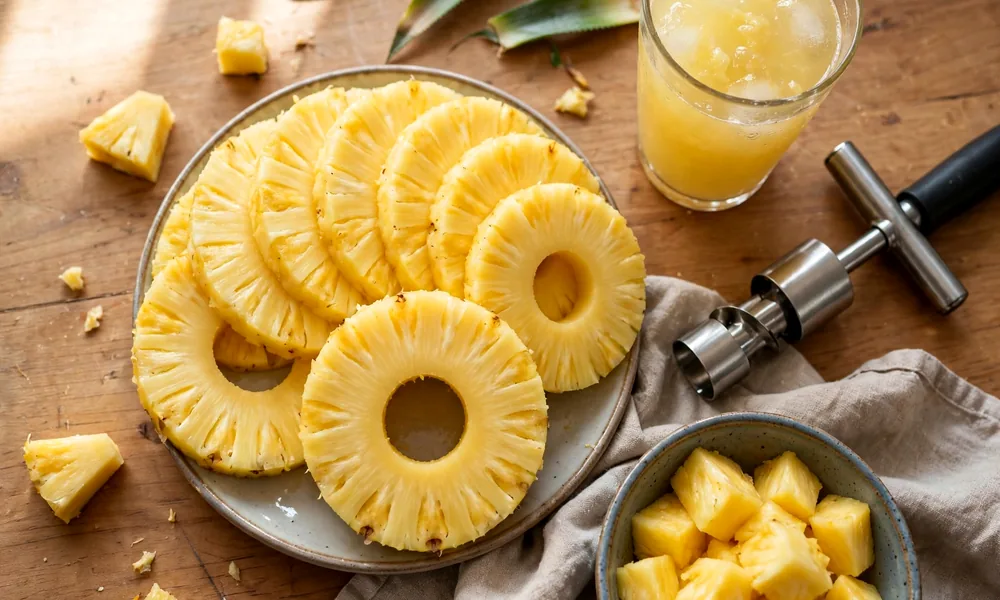
Rings are also the right shape for desserts and drinks: they fan across a cake, top an upside-down pudding, and garnish a glass of juice. Chunks, cut from the rings, freeze well and blend smoothly into smoothies. A pineapple corer is one of a family of single-purpose fruit tools. Our guide to strawberry slicers covers the same idea on a smaller fruit: one tool, one job, done cleanly.
Cleaning, Storage and Durability
Pineapple juice is sticky and acidic, so clean the corer straight after use: rinse under warm water before the juice dries, and use a soft brush inside the tube and around the spiral blade. Most stainless steel corers are dishwasher safe, but hand washing keeps the blade sharper for longer. Dry it before storing, away from heavier tools. If the blade goes dull, replace the corer: a dull spiral tears instead of cutting.
What to Avoid When Buying
Avoid corers with plastic blades instead of steel: they drag, go dull quickly, and can snap under pressure. Avoid very cheap twist corers with short handles, because a short handle gives no leverage. Avoid tubes too narrow for the pineapples you buy, because they leave most of the flesh in the shell. Be wary of corers that promise to peel, core, slice, and juice all at once: a tool that tries to do too much usually does none of it well. Also avoid deep crevices that trap juice.
Checklist: Buying a Pineapple Corer
- The blade is sharp stainless steel, with a clean spiral edge and no nicks or dull spots.
- The tube fits the pineapples you buy, and the rings come out even.
- The handle is long enough for leverage, grippy when wet, and comfortable in both hands.
- It is easy to clean, with no deep crevices that trap juice, and it dries quickly.
- It is sturdy enough to survive a firm pineapple without bending or jamming halfway down.
- It fits your storage, whether that is a drawer divider, a hook, or a shelf in a crowded cupboard.
Frequently Asked Questions
Is a pineapple corer worth buying?
Yes, if you eat fresh pineapple more than once a month. It is one of the cheapest kitchen tools you can buy, it turns a messy job into a one-minute task, and it wastes far less fruit than a knife.
Do I need to cut the top off first?
Yes. Cut the crown off with a sharp knife, taking a flat slice so the top is level. The corer needs a flat face to sit on, and it cannot cut through the crown.
Can a pineapple corer work on other fruit?
Not well. It is sized and shaped for pineapples, and other fruit is too small, too soft, or the wrong shape. Use the right tool for each fruit.
How do I stop the rings tearing?
Twist slowly and steadily, and stop two centimetres short of the bottom. A ripe pineapple helps: under-ripe flesh tears, and over-ripe flesh collapses.
Can I put a pineapple corer in the dishwasher?
Most stainless steel corers are dishwasher safe, but hand washing keeps the blade sharper for longer. If you use the dishwasher, use the top rack and dry it straight away.
What is the best pineapple corer design?
A classic spiral twist corer in stainless steel, with a sharp blade and a long T-shaped handle, suits most kitchens. A ratchet version helps if you have weak wrists.
The Bottom Line
Verdict: The Best pineapple corers are sturdy and cheap: a sharp stainless steel spiral blade, a solid tube that fits your fruit, and a handle with real leverage. Choose a spiral twist corer for the cleanest rings, a ratchet corer if you need less effort, and a corer-slicer if you serve rings straight to the plate. Pick a ripe pineapple, cut the top flat, and twist slowly.


