
The best popsicle molds in 2026 turn whatever fruit, juice or yoghurt you already have in the fridge into a proper frozen treat. A good mold freezes evenly, releases cleanly and holds its stick straight. This guide covers the popsicle molds worth buying in 2026, and the small details, like drip guards and fill lines, that decide whether you actually reach for the mold twice.
Key Takeaways
- A good popsicle mold freezes a batch solid in four to six hours, and the best ones do it without a single leak onto the freezer shelf.
- Silicone molds release the cleanest, while rigid plastic molds freeze faster but need a quick run under warm water to let go.
- Sticks that slot into a lid or a holder stay upright while the mixture sets, so the finished popsicle is straight and easy to hold.
- Fill each cavity just below the rim, because juice and yoghurt expand as they freeze and will push the lid off if you overfill.
- Buy a mold with a drip guard or a wide handle if children will be eating the results, because the first melt always runs down a small hand.
Why the Mold Matters More Than the Recipe
A popsicle is a simple thing, frozen juice or yoghurt on a stick, and it is tempting to think any container will do. In practice the mold decides three things: how evenly the mixture freezes, how cleanly it comes out and how pleasant it is to eat. A mold with thin walls in some places and thick walls in others freezes unevenly, so one popsicle is solid while the next is still slush in the middle. A mold with a wobbly stick holder freezes the stick at an angle, and a popsicle with a crooked stick is awkward to hold and snaps off at the base when a child tugs it. The release matters just as much. A mold that grips the frozen treat forces you to melt the outside to free it, and the outside is the part you wanted crisp and cold. For a fuller picture of the other end of the frozen question, the guide to the best ice cube trays covers the trays that freeze fast and pop out clean for everyday drinks, a different job from the slow, even freeze a popsicle needs.
The Main Types of Popsicle Mold Compared
| Mold type | Best for | Freeze time | Release | Watch out for |
|---|---|---|---|---|
| Upright silicone | Everyday batches of six to ten | 4–6 hours | Excellent | Floppy when full without a frame |
| Upright rigid plastic | Crisp shapes and fast freezing | 4–5 hours | Good with warm water | Sticks can tilt without a lid |
| Flat silicone tray | Small freezers and flat stacking | 3–4 hours | Excellent | Small cavities, thin popsicles |
| Single-serve with reusable stick | One popsicle at a time | 4–6 hours | Good | Slow if you want a batch |
| Novelty shapes | Children and parties | 5–7 hours | Fair | Detail traps the frozen mix |
The upright silicone mold is the best choice for most households in 2026. Its flexible walls peel away from the frozen treat instead of gripping it, and a good one has a rigid frame or a firm base that stops it wobbling on the way to the freezer. The upright rigid plastic mold freezes a little faster and holds its shape perfectly, but you will need ten seconds under warm water to release each popsicle, and the sticks need a proper lid to stay straight. The flat silicone tray is the quiet winner for small freezers: it stacks, it freezes fast because the cavities are shallow, and it releases beautifully, but the popsicles come out thin and melt quickly in a warm hand.

Silicone vs Plastic vs Stainless Steel
Silicone is the clear winner for most households, and it is not close. Food-grade silicone flexes, releases cleanly, does not crack in the cold and survives the dishwasher without warping. Its only real weakness is floppiness when full, which the better designs solve with a stiffened rim, a steel frame or a rigid outer shell that holds the soft cavities upright. Look for silicone that feels thick rather than thin and papery; thin silicone tears at the corners after a few months of peeling. The same material judgement sits behind the guide to the top silicone moulds, which covers baking, chocolate and soap moulds as well as freezer moulds, and reaches the same conclusion about thickness and cure quality.
Sticks, Lids and Drip Guards
The stick is half the product. A wooden stick is cheap, compostable and easy to hold, but it can splinter if it gets wet before freezing, and it is single-use. A reusable plastic stick with a built-in drip guard is the better choice for children: the guard catches the first melt before it runs down a wrist, and the stick washes clean for the next batch. Some molds come with sticks that slot through a lid, which is the single most useful feature a mold can have, because the lid holds every stick upright and centred while the mixture sets. Without that, sticks lean, drift and sometimes sink, and the finished popsicle is lopsided.
What to Fill Them With
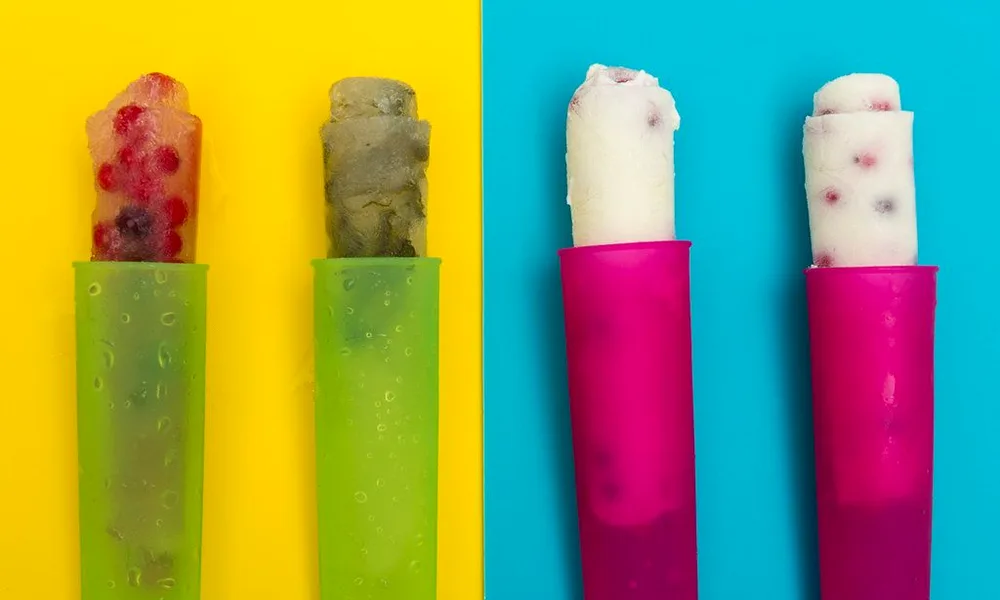
Juice makes the classic popsicle: bright, sweet and quick to freeze. Pure fruit juice freezes solid in about four hours, and a mix of juice and pureed fruit freezes a little slower but tastes fuller. Yoghurt makes a creamier popsicle that freezes in five to six hours and holds its shape longer in a warm hand, which is why it suits children and slow eaters. A layered popsicle, juice first, yoghurt second, looks impressive and freezes in stages, but it needs patience: freeze the first layer for an hour before you pour the second, or the colours bleed into each other.
How Long to Freeze, and How to Release
Most popsicles need four to six hours in a normal freezer, and an overnight freeze is the safest bet for a full batch. A shallow flat mold can be ready in three hours, while a deep novelty mold with thick sections can need seven. Do not rush it: a popsicle that looks frozen on the outside can still be soft in the middle, and it will bend, drip and fall off its stick the moment you lift it. If you are making a batch for the afternoon, fill the molds in the morning and forget about them until after lunch.
Cleaning and Storing the Molds
A mold that cannot be cleaned in seconds will spend its life at the back of the cupboard, however good its popsicles are. Silicone molds rinse clean under warm water, and most are dishwasher safe, though the top rack is kinder to them than the bottom. Rigid plastic molds need a bottle brush to reach the bottom of each cavity, because dried juice collects there and turns sticky. Novelty molds with fine detail are the worst to clean: the detail that makes a rocket shape fun is the same detail that traps fruit pulp in corners you cannot reach.
How to Choose the Right Popsicle Molds
Start with the eaters. If children will be eating the results, buy a mold with short cavities, reusable sticks and drip guards, because a small hand cannot manage a long, heavy popsicle without dropping it. If you are making popsicles for adults, buy a taller mold with a larger cavity, because a generous popsicle is the point. Count the cavities honestly: a mold that makes ten sounds generous, but if your freezer only fits it on one shelf, a mold that makes six and stacks is the better buy. Measure the shelf before you buy, and remember the lid adds height.
Material comes next, and the answer is almost always thick food-grade silicone with a rigid frame. Check the silicone by pinching a flat edge: a good mold springs back with no white marks, while a cheap one shows a pale crease where it was bent. Check the sticks by fitting one into the lid: it should sit upright and centred, with no wobble. Check the fill line, if there is one, and if there is not, remember the finger of space at the top. The guide to the best ice molds for clear cocktail cubes makes the same point about directional freezing and lids, though its molds freeze water for drinks rather than treats on sticks, and the two jobs need different shapes even when they share the same freezer.
Your Popsicle Mold Checklist
- Thick food-grade silicone with a rigid frame or firm base, so the mold carries flat to the freezer.
- A lid that holds every stick upright and centred while the mixture sets.
- Reusable sticks with drip guards, especially if children will be eating the results.
- Cavities wide enough for fruit chunks, with a visible fill line or a finger of space at the top.
- A size that fits your freezer shelf with the lid on, and stacks if you buy two.
- Dishwasher-safe parts and cavities you can reach with a normal sponge or bottle brush.
Frequently Asked Questions
How long do popsicles take to freeze in a mold?
Most batches need four to six hours in a normal freezer, and an overnight freeze is the safest bet. Shallow flat molds can be ready in three hours, while deep novelty molds can need seven. A popsicle that is soft in the middle will bend and fall off its stick, so give it the full time.
Why does my popsicle stick lean to one side?
The stick moved while the mixture was still liquid. Buy a mold with a lid that holds the sticks upright, or push the stick in after the mixture has chilled in the freezer for an hour, when it is thick enough to hold the stick in place.
How do I get a popsicle out without melting it?
Hold a silicone mold under warm running water for five to ten seconds, then peel the silicone back slowly. For rigid plastic, run warm water over the outside for fifteen seconds and twist gently. Never yank the stick, or it will snap off at the base.
Can I use yoghurt in a popsicle mold?
Yes, and it makes a creamier popsicle that holds its shape longer in a warm hand. Yoghurt freezes in five to six hours, a little slower than juice, and it holds fruit chunks in place far better than thin juice does.
Are silicone popsicle molds safe?
Food-grade silicone rated for freezer use is safe, and it is the standard material for freezer molds. Look for platinum-cured, food-grade silicone, wash a new mold before its first use, and keep craft or resin molds in a separate drawer from food molds.
What is the difference between a popsicle mold and an ice mold?
A popsicle mold makes a frozen treat on a stick, with cavities shaped for juice, yoghurt and fruit, while an ice mold makes cubes or spheres for drinks. The two share silicone and lids, but a popsicle mold needs a stick holder and a drip guard, and an ice mold needs directional freezing for clear cubes.
Bottom Line
Verdict: The Best. The best popsicle molds in 2026 are thick silicone upright molds with a rigid frame, a lid that holds the sticks straight and reusable sticks with drip guards. They freeze a batch solid in four to six hours, release cleanly with a few seconds of warm water and wash up in seconds. Buy the size that fits your freezer shelf, fill each cavity just below the rim, and freeze overnight when you can. The mold is a small purchase, but it is the difference between a summer of homemade popsicles and a drawer full of good intentions.


