
Top Silicone Moulds for Clean Releases in 2026
The top silicone moulds for clean releases in 2026 are the ones that let food, soap, or wax slide out with their shape intact and their detail sharp. A good silicone mould flexes just enough to peel away from what it holds, holds its shape in a hot oven or a cold freezer, and comes back to the same form the hundredth time you use it. The difference is rarely the recipe. It is the thickness of the silicone, the quality of the cure, and the shape of the cavities.
Key takeaways
- Food-grade silicone rated to at least 220°C is the safe baseline for baking moulds.
- Thick, even walls release far more cleanly than flimsy moulds, .
- Shallow, simple cavities release better than deep, fiddly detail, so match the mould to the job.
- Never grease a silicone mould the way you grease a metal tin; a light wipe is enough.
- Set every flexible mould on a rigid baking tray before filling it, or it will sag and spill.
What makes a silicone mould release cleanly
A clean release starts with the silicone itself. Platinum-cured, food-grade silicone has a smooth, non-porous surface that food and wax do not grip. Cheaper tin-cured silicone can feel sticky, smell faintly chemical when it heats up, and develop a tacky film after a few washes. You can tell the difference before you buy: a good mould feels smooth and slightly matte, springs back when you bend it, and shows no white marks when you pinch and twist a flat edge.
Thickness is the second factor, and it is the one most buyers ignore. A mould that is thick through the base and walls keeps its shape when you lift it, so the contents come out instead of folding over. A thin mould collapses in your hand, and the cake or soap bar inside it bends, cracks, or tears at the edges. Thick walls also spread oven heat more evenly, so the outside of a muffin does not overcook while the middle stays wet.
Shape is the third factor. Wide openings, gentle slopes, and smooth curves release easily. Narrow necks, sharp undercuts, and tiny raised details trap food and soap, however good the silicone is. That is why a simple round cupcake mould almost always releases better than a mould shaped like a rose with folded petals. Chill the finished piece in the fridge or freezer for twenty minutes first, then peel the mould back slowly.
The best types of silicone moulds in 2026
Silicone moulds fall into a few clear families, and each one suits a different job. Buying the right family matters more than buying the most expensive brand,
Baking trays and muffin moulds
Baking moulds are the workhorses. A twelve-cup muffin tray, a loaf mould, and a set of individual cups will cover most home baking, from muffins and cupcakes to mini loaves and savoury egg bites. Look for a tray with a reinforced rim or a steel frame built into the edge, because a plain flexible tray is almost impossible to carry to the oven once it is full of batter. For wider baking context, a solid metal pan still has its place, and the guide to the best cake pans explains where metal beats silicone and where it does not.
Chocolate and candy moulds
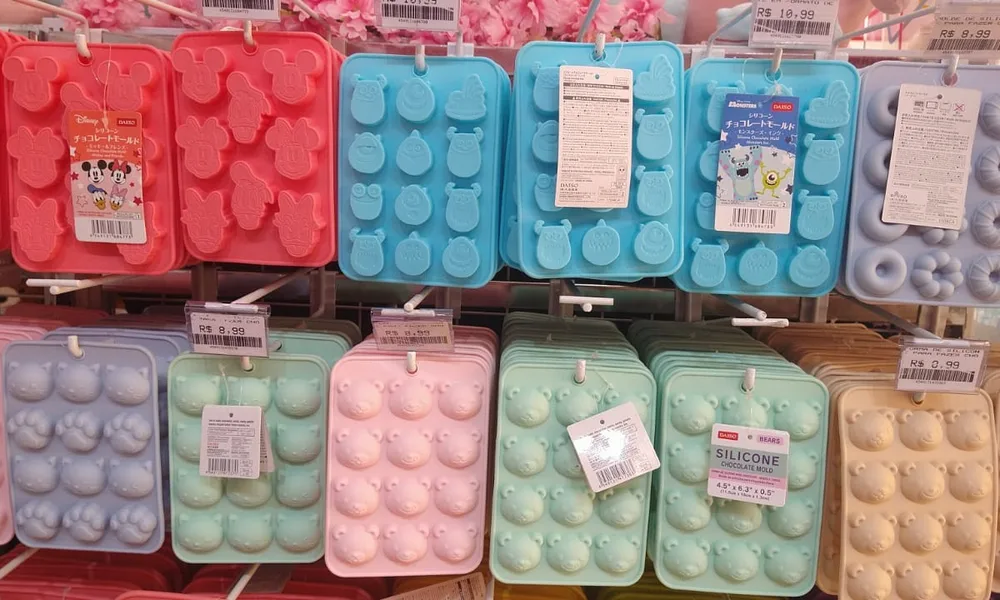
Chocolate moulds are the detail specialists. Their cavities are small, shallow, and sharply defined, which is exactly what gives a chocolate its glossy finish and crisp edges. The best ones are made from thicker silicone than baking trays, because thin chocolate moulds flex while the chocolate is still setting and leave a wavy surface. Fill them with a spoon or a piping bag, tap the mould firmly on the counter to knock out air bubbles, and chill the chocolate until it is fully hard before you try to release it.
Soap moulds
Soap moulds are built for a different kind of release. Melt-and-pour soap is poured hot and sets firm, and a good silicone soap mould lets the bar pop out with its pattern intact instead of tearing the corners. Loaf moulds suit full-sized bars, while single-cavity moulds suit gift sets and guest soaps. The walls need to be thick enough to stand upright on their own while the soap is liquid, and the base needs to be flat so the bar cures level. If soap making is new to you, the guide to soap-making kits covers the bases, scents, and tools that pair well with a good mould.
Candle, resin, and craft moulds
Candle and resin moulds are the most demanding of all, because hot wax and liquid resin find every weakness in a mould. The silicone must be heat-resistant well beyond the pouring temperature of the wax, and thick enough that the weight of the resin does not bow the sides outward. Keep craft moulds and baking moulds in separate drawers: a mould used for resin will never be clean enough for food again.
Ice and freezer moulds
Freezer moulds are the simplest family, and they are where silicone earns its keep most visibly. Ice spheres, popsicles, and frozen desserts slide out of silicone with a twist that a rigid plastic tray can never match. The best freezer moulds have a lid or a flat top so they stack without spilling, and their cavities are deep enough that the finished ice is worth the freezer space. Fill them just below the rim so the water has room to expand, and run the base under warm water for a few seconds if a cube is stubborn.
Silicone moulds compared
| Type | Best for | Release | Heat limit | Care |
|---|---|---|---|---|
| Baking trays and cups | Muffins, cupcakes, mini loaves | Excellent | 220–230°C | Dishwasher safe, tray support |
| Chocolate moulds | Chocolates, candy, truffles | Very good | 200°C | Hand wash, chill before release |
| Soap moulds | Melt-and-pour bars | Excellent | 200°C | Hand wash, fridge before release |
| Candle and resin moulds | Pillars, resin art | Good | 230°C | Keep separate from food moulds |
| Ice and freezer moulds | Ice, popsicles, frozen desserts | Excellent | Freezer only | Rinse, stack with lids |
The table shows the trade-off clearly. Baking and freezer moulds are the most forgiving, chocolate and soap moulds reward patience and cold, and craft moulds demand the most care.
How to choose the right silicone mould
Start with the job, not the shape. Decide what you will make most often, then buy a mould built for that job in a size that fits your oven or your freezer. A muffin tray that does not fit on your baking sheet is useless, and a loaf mould that is too tall for your oven shelf will never bake through. Measure the shelf and the tray before you order.
Check the temperature rating on the packaging, and treat anything without a stated rating as a warning sign. Food-grade silicone for baking should be rated to at least 220°C, and the best moulds reach 230°C or more. A good mould should smell of nothing at all after its first wash.
Look at the thickness with your own hands if you can. Press the base and the walls: they should feel firm and spring back at once, not stay dented. Check the seams and edges for rough flashing, the thin ridge of extra silicone left by the manufacturing mould, because rough edges catch food and tear first.

Care, cleaning, and storage
Silicone moulds are easy to clean, but they punish lazy habits. Wash them in hot, soapy water after every use, with a soft sponge rather than a scouring pad, which scratches the smooth surface and creates places for food to grip. Dry them fully before you store them, because a damp mould in a closed drawer grows a musty smell that is hard to shift.
Grease is the most common cleaning mistake. Silicone does not need greasing for most bakes, and a heavy coat of oil or butter spray leaves a sticky residue that builds up with every use. If a recipe is very sticky, wipe the cavities with a tiny amount of neutral oil on a paper towel and no more. A related flat silicone tool faces the same care questions, and the guide to silicone baking mats explains how to keep silicone surfaces clean without damaging them.
Store moulds flat or stacked loosely, never folded tight or crushed under a heavy pan. Silicone remembers a hard crease, and a creased mould will never sit flat on a tray again. If a mould picks up a smell, soak it in hot water with a spoonful of bicarbonate of soda for an hour, then wash and dry it normally.
Mistakes that ruin a clean release
The first mistake is impatience. Pulling a warm cake out of a silicone mould tears the crumb, smears chocolate, and cracks soap bars. Let baking cool for ten minutes in the mould, chill chocolate until it is fully hard, and give soap a night to set. The second mistake is overfilling: batter rises as it bakes, and a cavity filled to the brim spills over, glues itself to the outside of the mould, and makes the whole tray hard to clean, so fill to two-thirds and no more. The third mistake is the wrong support: carrying a full, flexible mould across the kitchen without a tray underneath guarantees a wobble, a spill, and an uneven bake. Peel the mould away from the food, never the food away from the mould.
Silicone mould buying checklist
- Food-grade, platinum-cured silicone rated to at least 220°C, with the rating printed on the packaging.
- Thick, even walls and base that spring back at once when pressed, with no white marks on the pinch test.
- Cavity shape matched to the job: wide and simple for baking, detailed and thick for chocolate and soap.
- Size that fits your oven shelf and your rigid baking tray, with room for the tray underneath.
- Smooth seams and edges, with no rough flashing that can catch food or tear.
- Separate moulds for food and for craft use, so resin and wax never meet your baking.

Frequently asked questions
Do silicone moulds need greasing?
Usually not. A light wipe of neutral oil is enough for very sticky recipes, and too much grease makes sticking worse by leaving a tacky residue.
Are silicone moulds safe in the oven?
Yes, when they are food-grade and rated for the temperature you are using. Keep them below their stated limit, never put them under a grill or on a direct flame, and always set them on a rigid tray.
Why does my silicone mould smell?
Silicone absorbs strong odours from food, soap, and the cupboard. Soak the mould in hot water with bicarbonate of soda for an hour, wash it in hot soapy water, and dry it fully.
Can I use the same mould for food and resin?
No. Resin and wax leave residues that cannot be fully cleaned, and a mould used for craft should never return to the kitchen. Buy separate moulds for food and for craft, and label them so they do not get mixed up.
How long do silicone moulds last?
A good baking mould lasts for years of regular use. Replace it when the surface turns permanently tacky, the walls stay bent after washing, or the edges split.
Do silicone moulds bake as evenly as metal tins?
Not quite. Metal conducts heat faster, so silicone bakes a little more gently and can take a few minutes longer.
The bottom line
The top silicone moulds for clean releases in 2026 are thick, food-grade, and matched to the job you actually do most. Buy a baking tray with a rigid support, a chocolate mould with thick walls, a soap mould with a flat base, or a freezer mould with a lid, and treat each one to a cool, patient release.


