
The Slotted Spoons That Drain Cleanly and Serve Neatly in 2026
A slotted spoon is the quiet workhorse of the kitchen drawer: a spoon with holes or slots in its bowl that lets liquid drain away while the food stays put. The best slotted spoons in 2026 lift vegetables from a pot without a puddle, serve poached fruit without the syrup, and drain dumplings in one smooth movement. The difference between one that drains in a second and one that drips all the way to the plate comes down to the slots, the bowl, the handle, and the material.
A slotted spoon earns its place by doing the one thing a solid spoon cannot: separating food from liquid at the moment you lift it. Boiled carrots come out of the pot without carrying cooking water with them. It is not a strainer, not a skimmer, and not a ladle, and knowing where it sits among those neighbours is the fastest way to choose the right one.
Key Takeaways
- A slotted spoon drains liquid as it lifts; the slots should drain fast but stay narrow enough that peas and beans do not slip through.
- Round holes suit most jobs, long slots drain fastest for leafy vegetables, and fine perforations suit small food such as peas and sweetcorn.
- Stainless steel is the safest all-round choice: it will not melt, it survives the dishwasher, and it stays rigid under a heavy scoop.
- A handle of at least 30 centimetres keeps your hand clear of steam and reaches the bottom of a deep stockpot.
- Own two if you cook often: a large steel one for the stove and a smaller wooden one for the table.
What a Slotted Spoon Actually Is
A slotted spoon is a spoon whose bowl is pierced with holes, slots, or perforations. When you lift food from a pot, the liquid falls back through the openings while the food stays in the bowl.
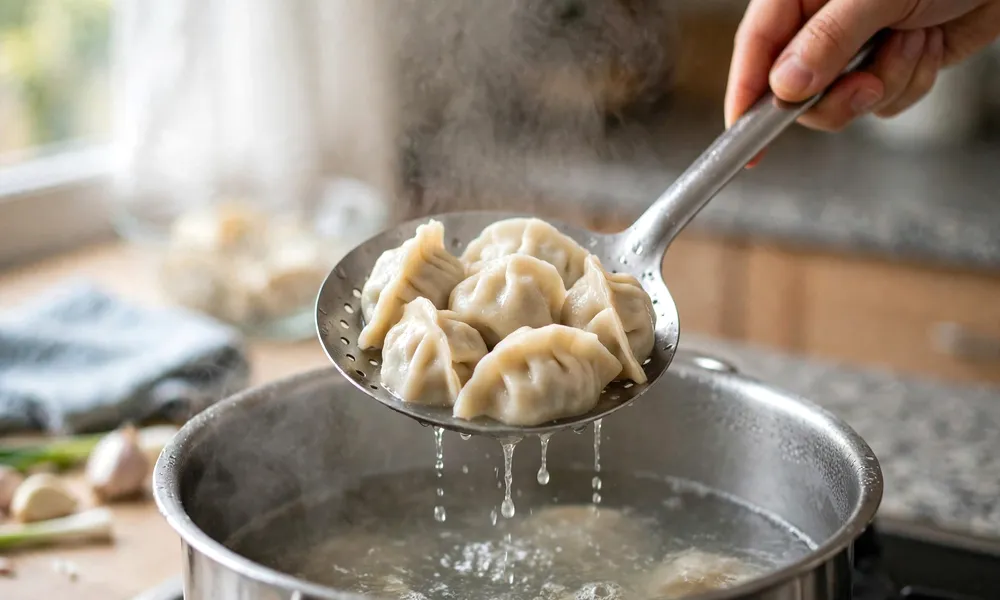
The draining action is the whole point. A solid spoon carries everything it scoops, liquid included, which is what you want for soup and what you do not want for boiled vegetables. A slotted spoon solves the problem at the source: the liquid never leaves the pot. Dumplings leave the broth behind, vegetables leave the boiling water behind, and poached fruit leaves the syrup behind.
The Main Types of Slotted Spoon
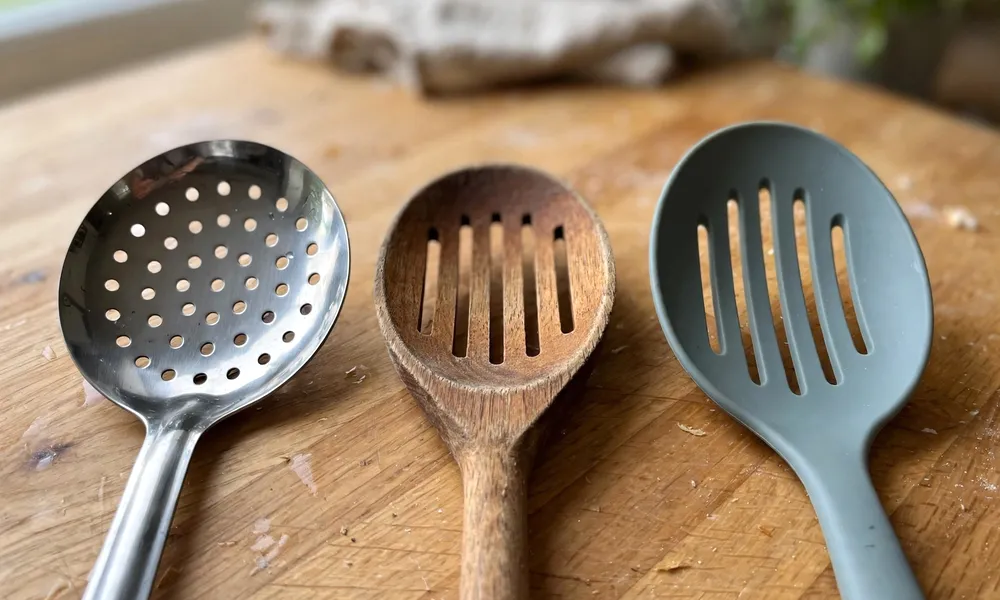
Three slot patterns cover nearly every slotted spoon on sale. The round-hole spoon is the all-rounder, the long-slot spoon is the fast drainer, and the perforated spoon is the fine worker for small food.
Round Holes: The All-Rounder
A spoon with round holes is the one to buy first. The holes drain cooking water in a second or two, yet hold back carrots, potatoes, dumplings, and meatballs, and the bowl keeps its shape under a heavy scoop.
Long Slots: The Fast Drainer
A spoon with long, narrow slots drains fastest, because the liquid has more places to escape. It suits leafy vegetables, blanched greens, and pasta. The trade-off is retention: peas, beans, and sweetcorn can slip through, so keep a round-hole spoon for small jobs.
Fine Perforations: The Small-Food Specialist
A spoon with many small perforations suits peas, sweetcorn, diced vegetables, and poached fruit, holding back even the smallest pieces while the liquid drains away. It drains more slowly, so it is not the best choice for a large batch of potatoes.
Slotted Spoons Compared
| Type | Slot pattern | Best for | Weakness |
|---|---|---|---|
| Round-hole steel | Round holes | Vegetables, dumplings, potatoes | Slower with leafy greens |
| Long-slot steel | Long slots | Greens, pasta, blanching | Small food slips through |
| Perforated steel | Fine holes | Peas, sweetcorn, fruit | Slowest to drain |
| Slotted wooden | Slots or holes | Non-stick pans, table | Needs hand washing |
| Slotted silicone | Slots | Non-stick pans, scraping | Can flex under heavy loads |
| Slotted serving spoon | Wide slots | Serving at the table | Too short for deep pots |
Materials: Steel, Wood, or Silicone
Stainless steel wins for most kitchens: it does not stain, it survives the dishwasher, and it will not melt if left against a hot pot. Look for 18/8 or 18/10 steel, a bowl formed from a single piece, and a handle welded cleanly with no rough seam. Steel stays rigid under a heavy scoop, when a flimsy spoon bends and spills.
A wooden slotted spoon is the kindest choice for non-stick and enamel pans, and it stays cool in the hand while the pot simmers. It needs hand washing, drying straight away, and a monthly rub of food-safe mineral oil, and it should never soak overnight or go in the dishwasher. The wooden spoons that earn their place by the stove show what good wood looks like: one piece, no glued joint, no varnish.
A silicone slotted spoon suits non-stick pans and cooks who want dishwasher-safe convenience without steel. Check the heat rating reaches at least 230 degrees, and look for a one-piece design with no gaps where food can hide. Silicone can stain with tomato and curry, so a darker shade is practical. Its one weakness is flex: a thin silicone spoon bends under a heavy scoop, so choose a thick, sturdy head.
Slotted Spoons Against Skimmers, Ladles, and Strainers
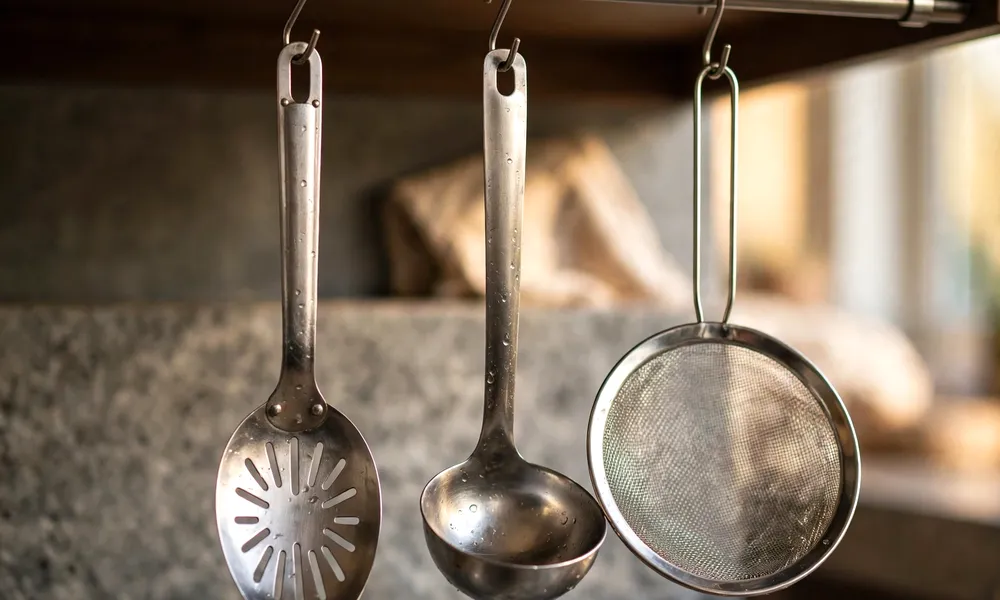
A skimmer is the closest neighbour, and the difference is where the work happens. A skimmer has a wide, shallow, perforated bowl on a long handle, made for working inside a hot pot: lifting chips from bubbling oil, clearing foam from stock, blanching vegetables while the pot stays on the heat. A slotted spoon has a smaller bowl and a shorter handle, made for serving food from a dish. The skimmers that lift, drain and skim cleanly cover the pot-side job; a slotted spoon covers the serving side.
A ladle is built to carry liquid, with a deep bowl and a pouring rim; a slotted spoon is built to leave liquid behind. Ladles serve soup, while a slotted spoon lifts the dumplings out of it. A mesh strainer pours a whole pot through at once, while a slotted spoon fishes food out a scoop at a time. Use a strainer when the liquid is finished with; use a slotted spoon while the cooking is still going on.
How to Choose a Slotted Spoon
Choosing a slotted spoon comes down to five checks. The first is the slots: round holes suit most jobs, long slots suit greens and pasta, and fine perforations suit peas and fruit. The second is the bowl: deep enough to carry a proper portion in one trip, around eight to nine centimetres long.
The third check is the handle: at least 30 centimetres long, balanced when held by the middle, with the bowl sitting level. A hanging loop is useful, since long spoons are awkward in a drawer. The fourth check is the join: the bowl should be welded cleanly to the handle, with no glue and no wobble. A good spoon feels rigid when flexed gently; a cheap one twists at the neck. The fifth check is the material against your pans.
Slotted Spoons in Action
A slotted spoon earns its keep in four everyday jobs. Serving boiled vegetables is the first: carrots, green beans, and potatoes lift out of the pot without carrying cooking water. Lifting dumplings and meatballs is the second: tongs crush them, while a slotted spoon cradles them and lets the broth drain back in a second.
Poaching is the third: poached fruit, poached eggs, and blanched vegetables all need to come out of liquid at exactly the right moment. Serving at the table is the fourth: a slotted serving spoon drains stock, butter, and cooking juices back into the dish while the vegetables stay in the bowl. The best serving spoons of 2026 show how it fits among the solid and wooden servers at the table.
Care and Storage
Rinse a steel spoon straight after use, before starch dries into the slots, and wash it in hot soapy water or the dishwasher. Wooden slotted spoons need hand washing, drying straight away, and a monthly rub of food-safe mineral oil. Never leave one soaking overnight or put it in the dishwasher: soaking and fierce heat swell the fibres, and when they dry they split.
For storage, hang a slotted spoon from a hook or stand it in a tall crock by the stove: left loose in a drawer it will snag and bend. Keep slotted spoons point-down in the dishwasher so water drains out of the bowl.
What to Avoid When Buying
The cheapest slotted spoons fail in predictable ways. Avoid slots with rough or burred edges, which catch food and tear dumplings; a bowl too shallow for the food you cook; a handle too short for your deepest pot; and a handle joined with glue or a single small spot weld, which will wobble and then snap. Avoid very thin steel, which flexes under a heavy scoop, and plastic handles for pot work, which soften in hot liquid. One good slotted spoon that lasts ten years beats a drawer full of thin ones that bend in a season.
Checklist: Before You Buy a Slotted Spoon
- Pick the slot pattern: round holes for most jobs, long slots for greens, fine perforations for peas and fruit.
- Check the bowl carries a proper portion in one trip, around eight to nine centimetres long.
- Choose a handle of at least 30 centimetres, with a hanging loop for storage.
- Hold the spoon by its middle: the bowl should sit level, not tip forward.
- Buy stainless steel for the stove, or wood or silicone if your pans are non-stick.
- Check the join is a clean weld with no rough seam, glue, or wobble.
Frequently Asked Questions
What is a slotted spoon used for?
A slotted spoon lifts solid food out of liquid while the liquid drains away: serving boiled vegetables, lifting dumplings and meatballs from broth, poaching fruit and eggs, and serving food at the table without a puddle.
What is the difference between a slotted spoon and a skimmer?
A skimmer has a wide, shallow, perforated bowl on a long handle, made for working inside a hot pot. A slotted spoon has a smaller bowl and a shorter handle, made for serving food from a dish.
What is the difference between a slotted spoon and a ladle?
A ladle has a deep bowl and a pouring rim and is built to carry liquid. A slotted spoon leaves liquid behind, lifting only the solid food. A kitchen that makes soup needs both.
Are slotted spoons dishwasher safe?
Stainless steel and silicone slotted spoons are dishwasher safe, though hand washing keeps steel looking its best. Wooden slotted spoons should never go in the dishwasher: hand wash, dry straight away, and oil once a month.
Which slot pattern is best?
Round holes suit most jobs and are the best first choice. Long slots drain fastest and suit leafy vegetables and pasta. Fine perforations suit peas, sweetcorn, and poached fruit.
Do I need both a slotted spoon and a solid spoon?
Yes. A solid spoon carries liquid, which is what you want for soup, stew, and sauce. A slotted spoon leaves liquid behind, which is what you want for vegetables, dumplings, and poached food.
The Verdict
The Best slotted spoon for most kitchens is a stainless steel round-hole spoon with a handle of at least 30 centimetres and a clean welded join: it drains in a second, stays rigid under a heavy scoop, and survives the dishwasher every night. Add a wooden one if your pans are non-stick, and a long-slot spoon if you blanch greens often.
The Bottom Line
A slotted spoon is a small, cheap tool that makes wet cooking tidier and serving neater. Buy a steel round-hole spoon first, check the slots are smooth and the handle long enough for your deepest pot, and keep a wooden one for non-stick pans. Do that, and food will arrive on the plate without the puddle.


