
Wooden spoons are the oldest tool in the kitchen, and they are still the one most cooks reach for first. A good wooden spoon stirs a thick stew without bending, scrapes a saucepan without scratching it, and stays cool in your hand while the pot simmers. Yet the difference between a wooden spoon that lasts twenty years and one that splits in a season comes down to the wood, the shape of its bowl, and how you look after it. This guide explains which wooden spoons are worth buying in 2026 and the care routine that keeps them working for years.
Wooden spoons earn their place because wood behaves differently from every other spoon material. It does not conduct heat to your hand, it will not scratch a non-stick or enamel pan, and it does not react with acidic foods. A metal spoon can chip a coating; a silicone spoon can feel floppy in a heavy dough. Wood sits in the middle: firm enough for a thick risotto, gentle enough for your best saucepan. The trick is choosing the right wood and shape, then oiling it now and again so it never dries out and cracks.
Key Takeaways
- One-piece wooden spoons are the safest everyday choice: no joints to loosen, no glue to fail, and nowhere for food to hide.
- Beech is the best all-round wood, olive wood is the hardest and most stain-resistant, and bamboo is the light budget option.
- A handle of at least 30 centimetres keeps your knuckles clear of steam and reaches the bottom of a deep stockpot.
- Oil wooden spoons once a month and never soak them or put them in the dishwasher, or they will split and harbour odours.
- Own two or three shapes: a classic round spoon for stirring, a flat-edge spoon for sauces, and a slotted spoon for lifting.
Why Wood Still Wins in the Kitchen
A wooden spoon works by being unremarkable, and that is its strength. When a sauce thickens, the spoon tells your hand what is happening: the resistance changes as a risotto turns creamy, and you feel it through the wood in a way a steel spoon never allows. Wood grips rather than slips when wet.
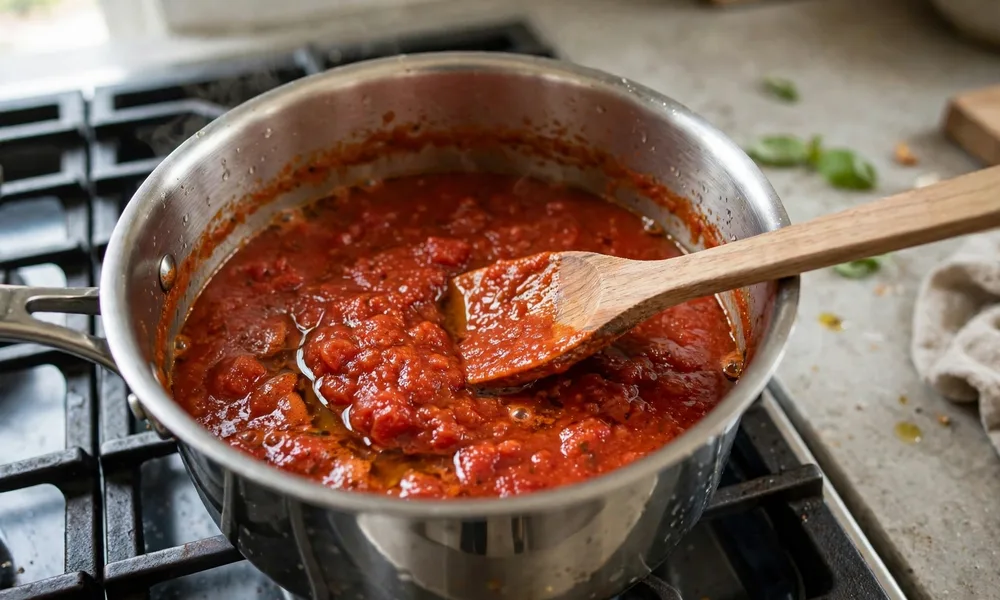
Wood is also kind to your pans. A non-stick coating, an enamelled cast-iron pot, and a ceramic saucepan all survive far longer when the only thing touching them is smooth hardwood. Metal spoons chip and scratch, and once a coating is damaged, food starts to stick. Wood cannot scratch those surfaces, and it never melts or warps like cheap plastic.
The Woods Compared
Not all wooden spoons are the same, because not all woods behave the same in a hot, wet kitchen. The wood decides how heavy the spoon feels, how easily it stains, and how long it lasts. Four woods cover nearly every spoon on sale.
| Wood | Feel and weight | Stain resistance | Care needed | Best for |
|---|---|---|---|---|
| Beech | Light and smooth | Fair | Oil monthly | Everyday stirring |
| Olive wood | Heavy and dense | Excellent | Oil monthly | Sauces and stews |
| Acacia | Medium, warm grain | Good | Oil monthly | Serving and stirring |
| Bamboo | Very light | Fair | Oil often | Budget sets |
Beech: The Everyday Workhorse
Beech is the classic spoon wood: pale, smooth, light in the hand, and strong enough for thick doughs and heavy stews. A one-piece beech spoon is usually the cheapest good spoon you can buy. Its one weakness is staining: tomato sauce and turmeric will mark pale beech over time, though the marks are harmless.
Olive Wood: The Hardest and Handsomest
Olive wood is denser and harder than beech, with a rich grain that looks better every year. Its hard surface resists staining from tomato and turmeric far better than softer woods. It costs more than beech, but it is the spoon to buy when you want one beautiful tool.
Acacia: The Warm All-Rounder
Acacia sits between beech and olive wood: harder than beech, lighter than olive, with a warm brown grain that looks good on the table as well as at the stove. Like all hardwoods it needs regular oiling and should never be left soaking.
Bamboo: Light, Cheap, and Honest
Bamboo is technically a grass, not a wood, and it makes a very light spoon that is easy on the wrist during long stirs. It is the cheapest option, but it splinters more easily than a true hardwood and dries out faster, so it needs oiling more often. Replace it when the edges roughen.
The Shapes Worth Owning
Once the wood is settled, the shape decides what the spoon can do. Most kitchens need two or three shapes, not ten: a classic round spoon for stirring, a flat-edge spoon for sauces, and a slotted spoon for lifting.
The Classic Round Spoon
This is the spoon every kitchen should own first. A deep, rounded bowl moves a thick stew, folds cake batter, and stirs a pot of soup without fuss. Look for one carved from a single piece of wood, with a smooth bowl and a handle long enough to keep your hand clear of steam.
The Flat-Edge Spoon
Most spoons have a rounded bowl, which leaves sauce untouched in the corners of a pan. A flat-edge spoon solves that: one straight side scrapes the base of a saucepan clean, so roux, custards, and risottos cook evenly without catching. It is the best upgrade for anyone who makes sauces regularly.
The Slotted Spoon
A slotted wooden spoon lifts solid food out of liquid while the liquid drains away: dumplings from broth, vegetables from a pot, or poached fruit from syrup. The slots should drain quickly but stay narrow enough that small pieces do not slip through.
The Long-Handled Spoon
Tall stockpots need a longer spoon, or your knuckles end up over boiling liquid. A handle of 35 to 40 centimetres suits a big stockpot, though it will not fit a standard drawer, so keep it in a crock by the stove.
Wooden Spoons Against Other Materials
Wood is not the best material for every job. A silicone spoon scrapes a mixing bowl cleaner than wood, because it flexes to follow the curve of the bowl, and it goes straight into the dishwasher. A stainless steel spoon powers through the stiffest bread dough without bending, and it never absorbs odours. Wood wins on heat, gentleness to pans, and feel, but it loses on scraping and heavy dough. The sensible answer is a small set: wooden spoons for the stove, one silicone spoon for baking, and one steel spoon for dough. That is why the mixing spoons worth keeping in the crock include all three materials side by side.
The comparison with spatulas that scrape every last bit is useful too. A spatula is a scraper and a turner; a wooden spoon is a stirrer and a taster. A kitchen that owns only spatulas will struggle with a thick stew, just as a kitchen that owns only spoons will leave batter in the bowl. Own both, and use each for what it does best.
How to Care for Wooden Spoons
Wooden spoons last for decades when cared for, and fail fast when they are not. The care takes about five minutes a month. Wash by hand in warm soapy water straight after use, dry straight away, and stand the spoon upright. Never leave it soaking overnight, and never put it in the dishwasher: long soaking and fierce heat swell the fibres, and when they dry they split, leaving cracks that trap food and harbour odours.
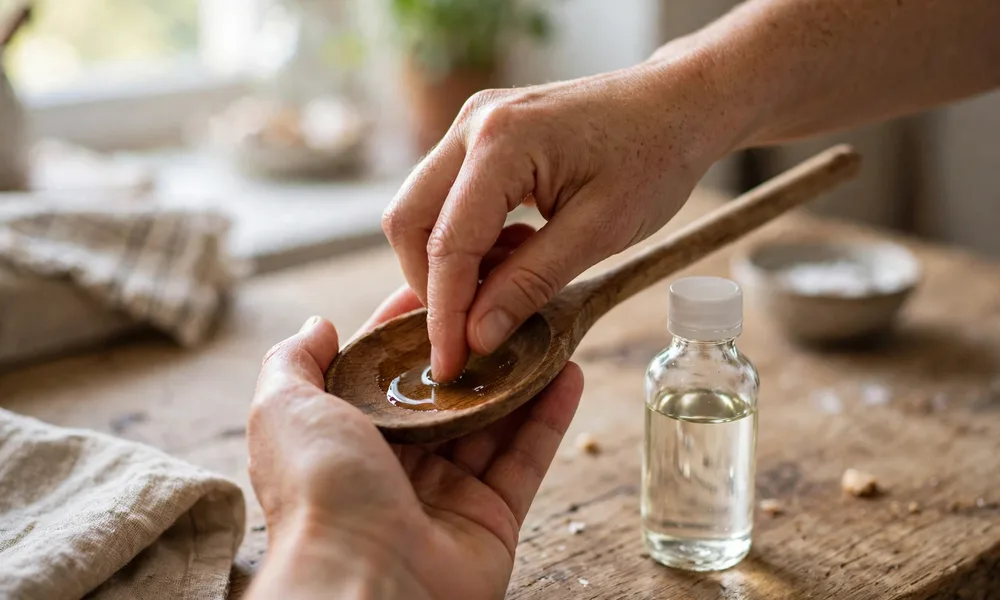
Once a month, rub the spoon all over with a little food-safe mineral oil, leave it overnight, then wipe off the excess. The oil replaces the moisture cooking drives out and keeps the wood from drying and cracking. Do not use cooking oil such as olive oil: it goes rancid. If a spoon stains, rub it with half a lemon and salt, rinse, and dry it at once. If the surface roughens, smooth it with fine sandpaper, wash it, and oil it again.
When should a wooden spoon be thrown away? Retire it when it has a deep crack that will not sand out, when the bowl has thinned so much it flexes, or when it smells stale even after washing and oiling.

What to Avoid When Buying
The cheapest wooden spoons are often the most expensive in the end. Avoid spoons made from two pieces glued together: the joint is the first thing to fail, and glue has no place near hot food. Avoid a varnished or lacquered finish, which flakes into food once it meets heat and water. Avoid very thin necks, which snap under a heavy dough, and hollow handles, which trap water and rot from the inside.
Also avoid spoons with rough, unfinished bowls: run your thumb over the bowl before you buy, and it should feel smooth, with no splinters or raised grain. Be wary of spoons sold as a set of twelve for almost nothing. One good beech spoon that lasts ten years beats twelve thin ones that split in a season.
Wooden Spoons Compared With Serving Spoons
Cooking spoons and serving spoons look alike, but they are built for different moments: a cooking spoon is long and sturdy for heat and heavy stirring, while a serving spoon is shorter, with a deeper bowl for carrying food to the plate. The best serving spoons of 2026 show what a good serving shape looks like.
Checklist: Before You Buy a Wooden Spoon
- Check it is carved from one piece of wood, with no glued joint and no varnish.
- Pick the wood for your cooking: beech for everyday use, olive wood for sauces and longevity.
- Choose a handle of at least 30 centimetres so your hand stays clear of steam.
- Run your thumb over the bowl and handle: both should feel smooth, with no splinters or rough grain.
- Buy the shapes you will use: a classic round spoon first, then a flat-edge spoon.
- Take home food-safe mineral oil too, so the monthly oiling routine starts on day one.
Frequently Asked Questions
Are wooden spoons safe to cook with?
Yes. Hardwood spoons are safe for everyday cooking, including with acidic foods such as tomato sauce, because wood does not react with acids or leach chemicals into food. Keep the spoon clean, dry, and oiled.
Can wooden spoons go in the dishwasher?
They should not. The long hot cycle and harsh detergent swell the wood fibres, causing splitting and warping. Hand wash in warm soapy water and dry straight away.
How often should I oil a wooden spoon?
About once a month with food-safe mineral oil, or whenever the wood looks pale and dry. Rub a thin coat over the whole spoon, leave it overnight, and wipe off the excess.
Do wooden spoons harbour bacteria?
A smooth, well-kept wooden spoon does not harbour bacteria any more than a plastic one, because wood dries out between uses. Cracks are the problem: a deeply cracked spoon can trap food and moisture, so replace it.
Which wood is best for wooden spoons?
Beech is the best all-round choice: light, strong, and affordable. Olive wood is harder, more stain-resistant, and longer-lasting if you want to spend more. Acacia is a good middle ground, and bamboo is the light budget option.
Why does my wooden spoon smell after cooking?
Strong foods such as garlic, onion, and curry can leave a smell in unsealed wood. Rub it with half a lemon and salt, rinse, dry it at once, and oil it.
The Bottom Line
A wooden spoon is the simplest tool in the kitchen and one of the hardest to improve on. Buy one carved from a single piece of beech or olive wood, with a smooth bowl and a handle long enough to keep your hand out of the steam, add a flat-edge spoon for sauces, and oil them once a month. Do that, and the same spoons will stir your soups and stews for years.


