A cherry pitter is a small kitchen tool with one job: pushing the stone out of a cherry while leaving the fruit whole. Pitting a bowl of cherries with a knife is slow and messy: the knife slips, the juice stains your hands and the worktop, and half the cherries come out mangled. A good cherry pitter turns that chore into a quick, clean press, again and again, without tearing the fruit apart. This guide explains what a cherry pitter is, how the main types work, and whether one deserves a place in your kitchen in 2026.
Cherries are good for eating fresh, baking into pies and freezing for smoothies, and the stone is the only thing standing in the way. It sits in the middle of a small, soft fruit that bruises easily and stains everything it touches. Removing it by hand is slow and messy; with the right tool it is fast and almost clean.
Key Takeaways
- A cherry pitter pushes the stone out in one press, leaving the cherry whole enough for baking, freezing and eating fresh.
- Single-cherry plunger pitters are the most reliable for home use, while multi-cherry pitters suit large batches for pies or jam.
- Look for a firm, centred plunger and a cup that holds the cherry still, because a wobbling cherry causes torn fruit and missed stones.
- Stainless steel parts resist juice stains and survive the dishwasher, while cheap plastic plungers bend and go blunt.
- A cherry pitter is worth buying if you pit more than a small bowl a few times a year, and it pays for itself the first summer you use it.
What a Cherry Pitter Actually Does
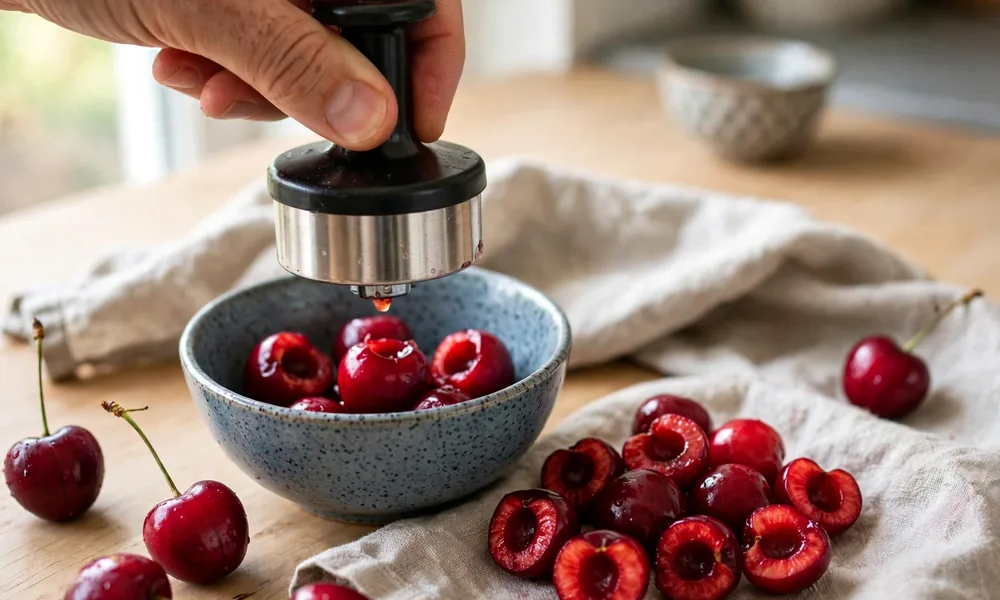
A cherry pitter holds a cherry in a small cup and drives a narrow plunger through it. The plunger pushes the stone out of the far side, usually into a container below, while the cherry stays in the cup, whole apart from two small holes. Place a cherry in the cup, press, lift the pitted cherry out, and repeat. A practiced user pits a cherry every couple of seconds.
Cherry tools are easily confused with other fruit tools. An avocado slicer, for example, is a three-in-one tool that twists the large stone out of a halved avocado and then slices the flesh, which works because an avocado is big and its stone is large enough to grip and twist. A cherry is far too small for that approach. A cherry pitter does not cut the fruit open at all; it drives the stone straight out through the flesh, a completely different mechanism for a completely different fruit. Our guide to avocado slicers explains the twist-out pitter in detail.
An egg slicer presses wires through a peeled, hard-boiled egg, and a tomato slicer cuts a soft, round fruit into even slices with a serrated edge. Neither removes a stone, and neither would work on a cherry. A cherry pitter is not a slicer at all; it is a small press built around one measurement, the size of a cherry stone, and everything about its design follows from that.
The Main Types of Cherry Pitter
Most cherry pitters fall into three designs, and the right one depends on how many cherries you pit.
Single-Cherry Plunger Pitters
The single-cherry plunger pitter is the most common design and the best choice for most people. It is a small handheld tool with a cup at one end and a plunger you press by hand. You load one cherry at a time, press, and the stone drops out below. It is cheap, light, easy to clean and easy to store, and because you handle each cherry individually, you can check that every stone is out. Its only weakness is speed: pitting a large bowl one cherry at a time takes patience.
Multi-Cherry Pitters
A multi-cherry pitter holds several cherries at once, usually six, and pits them all with a single press of a lever. The cherries sit in a row of cups, and a row of plungers drives all the stones out together into a tray underneath. This is the right choice if you pit cherries in bulk for pies, jam, freezing or canning. The trade-off is size and cleaning: it is bulkier, harder to store, and needs cherries of a fairly even size, because a very small cherry can slip in its cup and a very large one can jam.
Countertop and Clamp Pitters
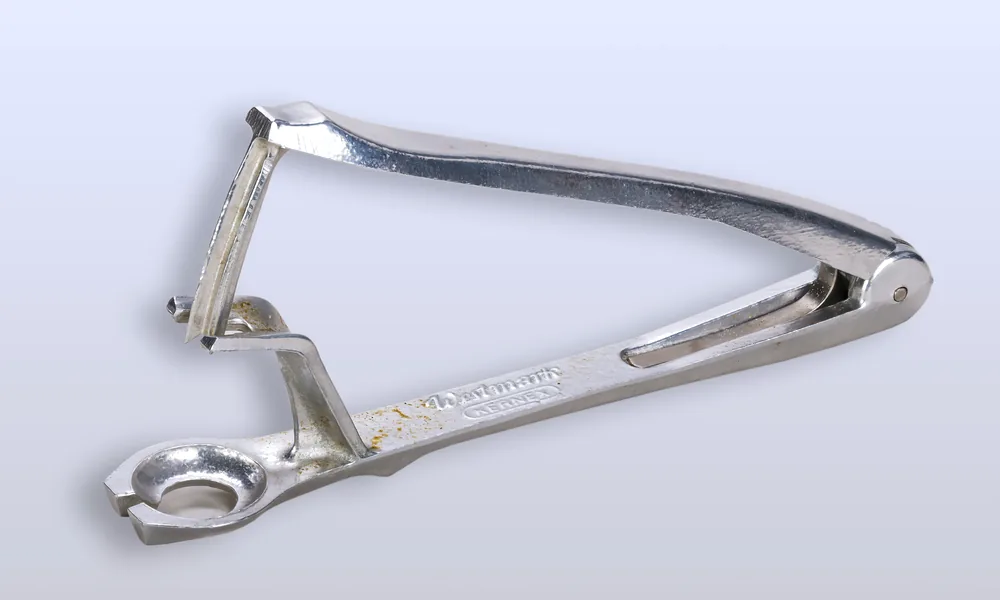
Countertop pitters are larger tools that sit on the worktop or clamp to the table edge. They work one cherry at a time with a long lever, so the pressing takes very little effort, and the stones fall into a built-in container. They suit anyone who pits regularly, or anyone with weak hands who finds a handheld plunger hard to squeeze. They cost more and take up real cupboard space.
Cherry Pitters Compared
| Cherry Pitter | Best For | Speed | Why It Stands Out |
|---|---|---|---|
| Single-cherry plunger | Everyday home use | One cherry per press | Cheap, reliable, easy to check every stone is out |
| Multi-cherry pitter | Pies, jam and freezing | Six cherries per press | Fastest way to clear a large bowl |
| Countertop or clamp pitter | Regular pitting, weak hands | One cherry per lever pull | Almost no hand strength needed |
| Combined cherry and olive pitter | Small kitchens, two jobs | One cherry per press | One tool for cherries and olives |
The single-cherry plunger wins for most people: it does the one job well, costs very little, and lets you see that each stone is out. The multi-cherry pitter is the better second buy if you regularly face a kilo or more at once. A countertop pitter suits only frequent pitters, or anyone with weak hands.
How to Choose a Good Cherry Pitter
Start with the cup. It holds the cherry still while the plunger drives the stone out, and a cherry that wobbles in its cup is the main reason pits get missed and fruit gets torn. The cup should cradle the cherry without swallowing it, with a hole at the bottom just wide enough for the stone to pass through. Too wide, and the cherry itself gets pushed through; too narrow, and the stone jams.
Next, look at the plunger. It should be narrow, firm and centred, so it meets the stone squarely rather than glancing off it. A plunger that is too wide crushes the fruit around the stone, and one that bends under pressure will miss the stone altogether. Stainless steel plungers stay straight far longer than plastic ones and do not stain. Press it a few times in the shop if you can: it should move smoothly and return cleanly, with no sticking or wobble.
Material matters more than brand. Stainless steel parts resist the deep red staining of cherry juice, survive the dishwasher, and keep their edge for years. Plastic pitters are lighter and cheaper, but the plunger takes all the force, and one that bends even slightly will start missing stones.
Check where the stones go. A good pitter drops them into a container or tray, so you are not chasing them across the worktop. Some handheld pitters have a small built-in catcher; others rely on you holding the tool over a bowl. Cups and plungers rinse clean under a tap, and cherry juice stains fast, so rinse the tool as soon as you finish.

Using a Cherry Pitter Properly
Start with ripe cherries: an under-ripe cherry has flesh that clings to the stone, so the plunger tears the fruit, while an over-ripe cherry collapses under the press. A ripe cherry is firm, glossy and dark, and gives slightly when you press it. Wash the cherries and pull off the stems first, because a stem in the cup stops the plunger meeting the stone squarely.
Place each cherry in the cup with the stem end up, so the plunger enters where the stem was and pushes the stone out through the bottom. Press firmly and steadily rather than jabbing: a smooth press drives the stone straight out, while a sharp jab can split the cherry. Check each cherry before moving on, because a stone that is only half out will hide inside the fruit. If a stone sticks in the plunger, push it off with the back of a spoon.
Work over a bowl or tray, because cherry juice sprays and stains, so wear an apron and wipe the worktop as you go. Pitted cherries keep in the fridge for two or three days, and freeze well in a single layer on a tray before you bag them.
What to Pit, and What to Leave Whole
Cherries for eating fresh are often better left whole, because the stone keeps the fruit firm. Pitting earns its keep when the cherry is going to be cooked, frozen, blended or served to children: pies, crumbles, compotes, jams, smoothies and ice cream all need pitted cherries, and cherries for freezing should always be pitted first. Sour cherries, the cherries of pies and jam, are almost always pitted in large batches, which is where a multi-cherry pitter earns its keep fastest.
Cleaning, Storage and Care
Most cherry pitters fit in a drawer. Rinse the tool as soon as you finish, because dried juice is sticky and can jam the mechanism, and hand washing keeps a steel plunger sharp for longer than a dishwasher. Check the plunger before each summer: if it has bent or gone blunt, it will start missing stones.
Cherry Pitter Checklist
- Cup holds the cherry snugly without swallowing it, with a stone-sized hole underneath.
- Plunger is narrow, firm and centred, and meets the stone squarely every time.
- Stainless steel parts resist juice stains and survive the dishwasher.
- Stones fall into a tray or container, not across the worktop.
- Tool rinses clean easily, with no hidden corners where juice can dry and jam it.
- Size matches your batch: single-cherry for everyday use, multi-cherry for pies and jam.
Frequently Asked Questions
Do I really need a cherry pitter?
You need one if you pit cherries more than a few times a year, or in any quantity. A knife works for a handful, but it is slow, messy and hard on the fruit.
Can a cherry pitter pit olives too?
Some combined tools can, but a dedicated cherry pitter usually does the job more cleanly, because its cup is sized for a cherry rather than compromised between two fruits.
Why do some cherries come out torn?
Usually the cherry was under-ripe, so the flesh clung to the stone, or it wobbled in a cup that was too big for it. Use ripe cherries, seat each one firmly, and press smoothly rather than jabbing.
How do I stop cherry juice staining everything?
Work over a bowl or tray, wear an apron, and rinse the tool and your hands as soon as you finish. Cherry juice stains fast once it dries.
Can I pit frozen cherries?
No, not well. A frozen cherry is too hard for the plunger. Pit cherries before freezing them, in a single layer on a tray, then bag them once they are solid.
What is the difference between a cherry pitter and an avocado pitter?
An avocado pitter twists a large stone out of a halved avocado, while a cherry pitter drives a small stone straight through a whole cherry. They are different mechanisms for different fruits. Our guide to avocado slicers explains the twist-out design, and our guide to tomato slicers shows yet another approach, the serrated edge, for a soft round fruit that needs slicing rather than pitting.
Bottom Line
A cherry pitter is a small, cheap tool that solves one annoying job properly. Buy a single-cherry plunger pitter with a snug cup and a firm steel plunger, and it will pit cleanly for years. Step up to a multi-cherry pitter only if you regularly face a kilo or more at once for pies, jam or freezing. Ripe cherries, a steady press and a quick rinse turn a messy chore into a five-minute job.