
The best apple slicers in 2026 do one small job perfectly: they turn a whole apple into neat, even wedges and take the core out in the same push. A good slicer presses straight down through a firm apple, the blades stay sharp, and the core lifts out cleanly with the tool. This guide covers the apple slicers worth buying in 2026, and the small details, like a coring ring that actually fits the core, that decide whether the tool earns its drawer space.
Key Takeaways
- A good apple slicer cores and slices in one push, with even wedges and a core that lifts out cleanly with the tool.
- Stainless steel blades cut cleanly through firm apples, while thin or dull blades crush the flesh and stall halfway down.
- Eight wedges suit lunchboxes and snacking, while twelve or sixteen thin wedges suit baking and salads.
- Wide, flat handles press straighter than narrow ones, and two handles beat one for even pressure on large apples.
- Rinse the blades straight after use, because dried apple juice glues the wedges to the blades and dulls the edge.
Why the Slicer Matters More Than the Knife
An apple is a round, firm fruit with a tough core, and cutting it with a knife means holding it in one hand and a sharp blade in the other, then cutting around the core four times and hoping the wedges come out even. A slicer removes the guesswork: one push, and the apple is wedged and cored at the same time. The difference shows up most at breakfast and in lunchboxes, where the same job happens every day and a minute saved is a minute that matters. A knife can do the job, but it does it slowly, unevenly and with more risk to a finger, especially when the apple is large and the hands are small or wet.
The slicer also decides how the apple looks and tastes. Even wedges brown evenly, stack neatly in a lunchbox and cook at the same rate in a pie, while uneven wedges leave one piece raw and another overdone. A clean cut keeps the flesh firm and bright, while a crushed cut bruises the flesh and turns it brown within minutes. The same logic sits behind the guide to the best avocado slicers, a different fruit and a different tool, but the same idea: a single-purpose slicer earns its place by doing one fiddly job faster and more evenly than a knife.
The Main Types of Apple Slicer Compared
| Slicer type | Best for | Wedges | Effort | Watch out for |
|---|---|---|---|---|
| Classic ring, two handles | Everyday slicing and lunchboxes | 8 or 12 | Moderate | Needs a firm, even push |
| Single-handle ring | Small hands and small apples | 8 | Moderate | Can twist on large apples |
| Lever slicer | Weak grip or large apples | 8 or 12 | Low | Bulky to store |
| Wedge cutter, no corer | Quick wedges for baking | 8 | Low | Core must be removed by hand |
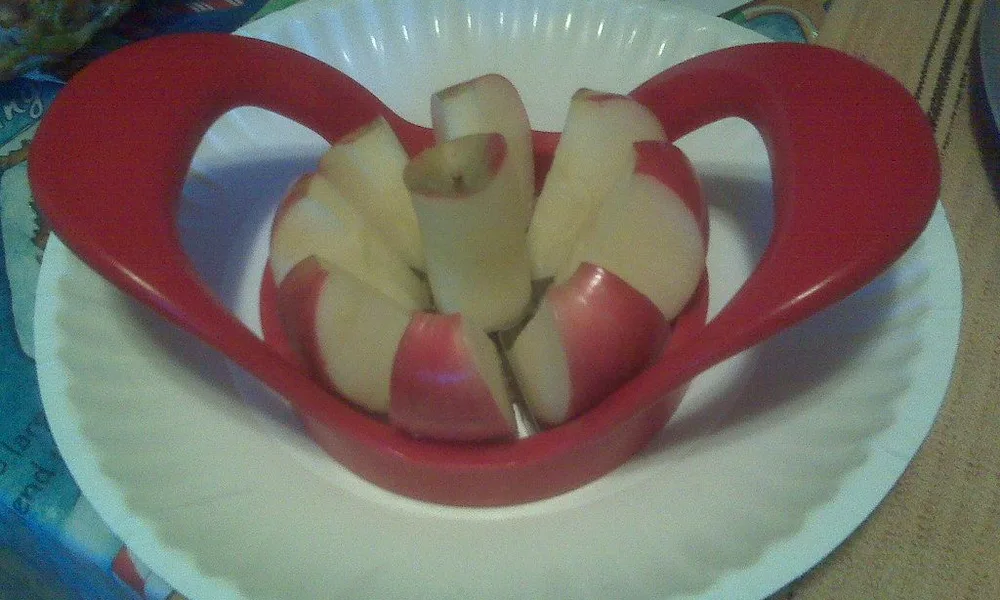
The classic ring slicer with two handles is the best choice for most households in 2026. Two handles let you press straight down with both hands, which keeps the blades level and stops the slicer twisting on a large apple. The single-handle version is easier to store and suits a child or a small hand, but it twists more easily and struggles with the biggest apples. The lever slicer is the kindest on the hands, because the lever does the pressing for you, but it takes up more drawer space and costs more. The wedge cutter without a corer is the cheapest option, and it cuts cleanly, but it only does half the job, so it suits a cook who is happy to core by hand.
Blades: What Cuts Clean and What Crushes
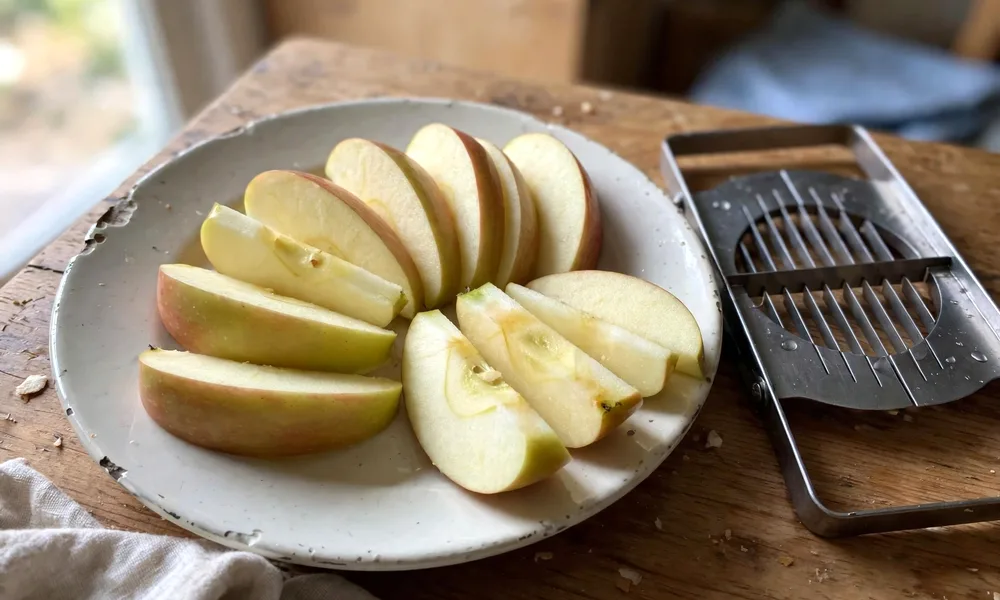
The blades are the heart of the tool. Stainless steel blades cut cleanly through firm flesh without tearing, and they stay sharp through years of daily use if you rinse them after each apple. Thin blades slice more cleanly than thick ones, because a thick blade wedges the flesh apart and bruises it, while a thin blade parts it. Look for blades that are evenly spaced and firmly fixed into the frame: a blade that flexes under pressure cuts unevenly, and a blade that is loose is a blade that will fail. The coring ring matters just as much. It should be wide enough to take the whole core, including the seeds, and sharp enough to cut through it rather than push it aside. A ring that is too small leaves core behind, and a ring that is too large takes good flesh with it.
Blade count decides the wedge. Eight wedges are thick, sturdy and easy to hold, which suits lunchboxes, snacking and children. Twelve wedges are thinner and neater, which suits salads and cheese boards, where the apple is one part of the plate rather than the whole snack. Sixteen wedges are very thin, and they suit baking, where the apple needs to cook quickly and evenly. A slicer that makes eight wedges will not make twelve, so choose the count for the job you do most, not the one that sounds most impressive. The same care over blade quality sits behind the guide to the best vegetable peelers, where a sharp, free-swivelling blade is the difference between a clean ribbon of peel and a ragged strip.
Handles and Pressure: How to Press Straight
The handle is the part you hold, so it deserves more attention than it gets. A good handle is wide enough to fill the palm, slightly textured so it stays grippy when wet, and shaped so the slicer does not twist in your hand. Two handles beat one for even pressure: press with both palms, straight down, and the blades travel level through the apple. One handle forces you to press off-centre, and the blades tilt, so one side cuts through while the other stalls. If the slicer has a single handle, hold the apple steady with your other hand on the worktop, and press slowly rather than in one hard shove.
Apple Size, Firmness and Variety
Not every apple suits a slicer. Firm, crisp varieties like Braeburn, Granny Smith and Honeycrisp cut cleanly, because their flesh holds its shape under the blades. Soft, mealy varieties like an overripe Golden Delicious crush rather than slice, and the wedges come out ragged and brown. Size matters too: a slicer is built for a medium apple, and a very large apple will not fit inside the ring, while a very small apple rattles around and the blades miss the core. Measure your apples against the ring before you buy, or buy a slicer with a slightly larger ring than you think you need.
Cleaning and Keeping the Blades Sharp
A slicer that cannot be cleaned in seconds will spend its life at the back of the drawer, however sharp it starts out. Rinse the blades under warm running water straight after use, before the juice dries, and use a soft brush to clear the gaps between the blades, where dried apple collects and glues the wedges to the tool. Most slicers are dishwasher safe, but the top rack is kinder to the blades than the bottom, and hand washing keeps the edge sharper for longer. Dry the slicer fully before you put it away, because a damp blade in a closed drawer rusts at the joints, and rust is the end of a good edge.
Sharpening a slicer is rarely worth it: the blades are thin, fixed into a frame and hard to reach with a stone. The better plan is to protect the edge you have. Do not use the slicer on anything harder than an apple, do not drop it blade-down into a sink full of cutlery, and do not store it loose in a drawer where the blades knock against other tools. A blade guard, a sheath or simply storing the slicer in its box keeps the edge true. The comparison of the best and worst peelers makes the same point about cleaning: a tool that cannot be rinsed clean in seconds will be abandoned, however sharp it starts out.
Who Should Buy One, and Who Should Not
An apple slicer is worth buying if you eat apples most days, pack lunchboxes, bake with apples or feed children who will eat a neat wedge but leave a whole apple untouched. It earns its drawer space through repetition: one push a day, every day, is a tool that pays for itself in weeks. It is also worth buying if you have a weak grip or arthritis, because a lever slicer or a two-handle ring does the pressing with your palms rather than your fingers, and it is far kinder than a knife.
Your Apple Slicer Checklist
- Stainless steel blades, evenly spaced and firmly fixed, with a coring ring wide enough to take the whole core.
- Two wide, grippy handles for a straight, even press, or a lever if your grip is weak.
- A wedge count that matches your main use: eight for lunchboxes, twelve for salads, sixteen for baking.
- A ring size that fits the apples you actually buy, with room for a large apple.
- Blades you can rinse clean in seconds, with gaps a soft brush can reach.
- A blade guard or a safe storage spot, so the edge stays sharp and the drawer stays safe.
Frequently Asked Questions
Do apple slicers work on all apples?
They work best on firm, crisp apples like Braeburn, Granny Smith and Honeycrisp. Soft or overripe apples crush rather than slice, and very large apples may not fit inside the ring. Chill a warm apple for twenty minutes before slicing for a cleaner cut.
How many wedges should an apple slicer make?
Eight wedges suit lunchboxes and snacking, twelve suit salads and cheese boards, and sixteen suit baking. Choose the count for the job you do most, because a slicer makes only the count it was built for.
Why does my apple slicer stall halfway through?
The blades are dull, the apple is too soft, or the press was off-centre. Lift the slicer, re-centre the coring ring over the stalk and press down slowly and evenly with both palms. A slicer that needs a hammer has dull blades and needs replacing.
Can I put an apple slicer in the dishwasher?
Most can go in the dishwasher, and the top rack is kinder to the blades than the bottom. Hand washing keeps the edge sharper for longer, and whatever you do, rinse the blades straight after use so the juice does not dry between them.
Is an apple slicer safe for children to use?
A two-handle ring slicer is safer than a knife, because the blades are held in a frame and the hands press on the handles, not near the edge. Children should still be supervised, and a single-handle slicer is easier for a small hand to control than a large two-handle one.
What is the difference between an apple slicer and an apple corer?
A slicer cores and wedges in one push, while a corer only removes the core and leaves the apple whole. A slicer suits snacking and lunchboxes, while a corer suits baking whole apples and stuffing them.
Bottom Line
Verdict: The Best. The best apple slicers in 2026 are classic ring slicers with two wide handles, stainless steel blades and a coring ring that takes the whole core in one push. Eight wedges suit lunchboxes, twelve suit salads, and the right choice is the count for the job you do most. Press straight down with both palms, rinse the blades straight after use and store the slicer where the edge stays sharp. It is a small, cheap tool, but used daily it is the difference between an apple eaten and an apple left in the fruit bowl.


