The Turkish Coffee Pot That Makes Foam Worth Waiting For in 2026
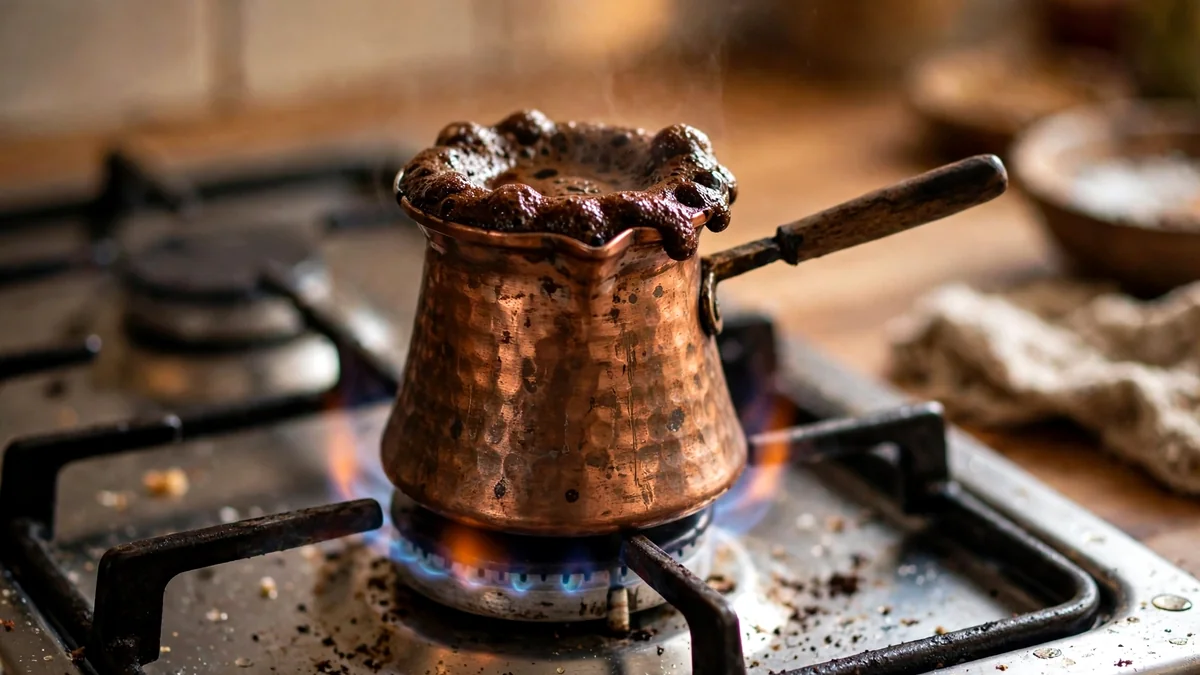
A good Turkish coffee pot turns three simple ingredients into one of the oldest cups of coffee still brewed every day. Very finely ground coffee, cold water and a little sugar go into a small long-handled pot called a cezve, also known as an ibrik, and simmer gently until a dark foam rises. The coffee is poured unfiltered into a small cup, grounds and all. The pot looks plain, yet the cup depends on it: even heat, good foam, and a clean pour.
Buying one is not like buying a kettle: no plug, no pump, no timer. What matters is the metal, the wall thickness, the base width, the handle length and the rim shape. A thin pot scorches the coffee before the foam forms, and an oversized pot leaves it shallow with thin foam. This guide covers the pots worth buying in 2026 and the habits that keep the foam thick. Turkish coffee is a method, not a bean, and our guide to Turkish coffee explains the drink itself.
Key Takeaways
- Buy the size that matches your brew: a pot only makes good foam when filled close to capacity, so two cups suits most people.
- Copper heats fastest and most evenly, brass is nearly as good and tougher, and stainless steel is the only choice that works on induction too.
- A narrow neck and a pouring lip help the foam survive the pour; a wide mouth lets it spread thin and disappear.
- A long handle that stays cool matters: you lift the pot off the heat the moment the foam rises, and a hot handle ruins that timing.
- Never let the coffee boil hard: slow heat, powder-fine grounds and no stirring on the stove make thick, dark foam.
How a Turkish Coffee Pot Actually Works
A cezve is a small pot with a wide base, a narrow neck and a long handle, holding one to six small cups. Cold water and powder-fine coffee go in together, sugar too if you take it, and the pot sits over a gentle heat. The grounds stay suspended as the water warms, and a dark foam gathers at the surface. That foam means the coffee is ready: the pot comes off the heat just before boiling, the foam is spooned into the cups first, and the rest is poured slowly after it.
The shape is not decoration. The wide base spreads heat evenly so the coffee never scorches, the narrow neck concentrates the foam so it stays thick, and the long handle lets you lift the pot the instant the foam rises. Unlike a moka pot, which pushes water up through the grounds with steam pressure, a cezve never pressurises the coffee at all, and the whole brew takes three or four minutes over a low flame.

The Best Turkish Coffee Pots of 2026 at a Glance
| Pick | Size | Best For | Standout Strength | Typical Price |
|---|---|---|---|---|
| Best overall | Two cups | Most kitchens | Heavy copper, even heat, thick foam | $30–$50 |
| Best for induction | Two cups | Induction hobs | Stainless steel with a magnetic base | $35–$60 |
| Best for one person | One cup | Solo mornings | Tiny pot, fast foam, no waste | $20–$35 |
| Best value | Two cups | First-time buyers | Simple brass, sturdy, cheap | $18–$30 |
| Best traditional | Two cups | Classic brewing | Hand-hammered copper, tin-lined inside | $45–$80 |
Best Overall Turkish Coffee Pot for Most Kitchens
The best overall Turkish coffee pot is a two-cup copper cezve with a thick base and a wooden handle. Two cups is the size most people brew: one generous cup for yourself, or two small cups for a guest, filled close to capacity so the foam forms properly. Copper heats quickly and evenly, and the whole brew is a race between the foam forming and the coffee boiling. Look for a tin or stainless lining, a handle fixed with two rivets, and a smooth interior. Expect to pay $30 to $50.
Best Turkish Coffee Pot for Induction Hobs
Copper and brass do not work on induction hobs, which need a magnetic base, so induction cooks need stainless steel. It costs a little more and heats a little more slowly than copper, but it is tougher, it will not tarnish, and it works on every hob. Look for a thick, flat base that sits flush on the hob: a thin or warped base heats unevenly and foams on one side only. Some stainless pots add a copper or aluminium core in the base, which restores much of the even heating plain steel loses.
Best Turkish Coffee Pot for One Person
If you brew for one, buy a one-cup pot. A pot only brews well when filled close to full, so a two-cup pot used for a single cup leaves the coffee shallow, the foam thin, and the grounds likely to scorch. A one-cup pot holds about 100 millilitres, heats in two to three minutes, and makes a single strong cup with a thick cap of foam, usually for $20 to $35.
Best Value Turkish Coffee Pot for First-Time Buyers
The best value pot is a simple two-cup brass cezve, usually $18 to $30. Brass conducts almost as well as copper, is a little harder and less prone to denting, and needs less polishing. A plain brass pot with a wooden handle and a tin lining does everything a beginner needs: even heat, a narrow neck for good foam, and a controlled pour. Do not pay extra for engraving or a presentation box; spend the money on good coffee ground powder-fine instead.
Best Traditional Turkish Coffee Pot
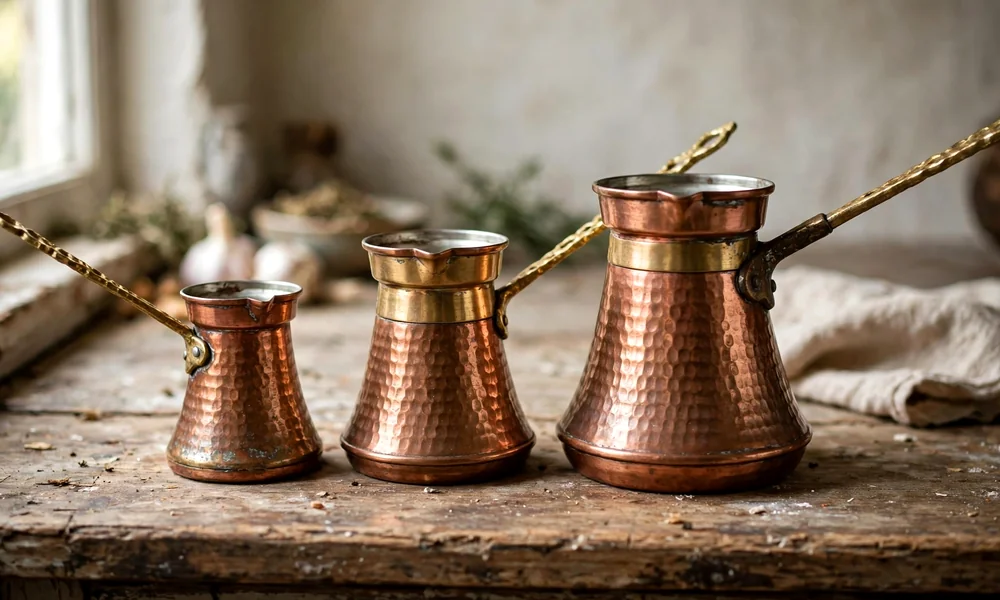
The best traditional pot is a hand-hammered copper cezve, tin-lined inside, with a long wooden handle and a slightly flared rim. Hammering is not just decoration: the dimpled surface stiffens the copper and helps heat spread. The tin lining keeps coffee from touching raw copper, which can give it a metallic taste. Traditional pots cost $45 to $80 and ask for more care: hand washing, thorough drying, and an occasional polish. The lining can be re-tinned, which is why these pots last for decades.
Copper vs Brass vs Stainless Steel
Copper is the classic choice: it conducts heat faster and more evenly than any other pot metal, giving the most forgiving brew. The foam forms gradually, the coffee heats without hot spots, and the pot responds quickly when you lift it off the flame. The trade-offs are tarnish and care: copper darkens with use, needs drying after every wash, and must be lined inside so coffee never sits against bare copper. Brass sits between copper and steel: it conducts well, though not quite as fast, and it is harder, so it dents less easily and tarnishes more slowly. Stainless steel is the practical choice: it does not tarnish and is the only metal of the three that works on induction. Its weakness is heat, since steel conducts slowly and unevenly, though a thick, layered base closes most of that gap. Electric Turkish coffee makers are a different product, and our guide to the best coffee makers covers the electric side.
Size: Match the Pot to Your Cups
Size is the most common buying mistake. A cezve is measured in small cups, usually 60 to 90 millilitres each, and should be filled to just below the neck for the foam to form. A pot too large leaves the coffee shallow and the foam thin; a pot too small boils over before the foam finishes forming. For most people, two cups is right, and if you are torn between two sizes, choose the smaller one.
Handles, Spouts and Lids
The handle decides whether the pot is a pleasure or a nuisance. It should be long enough to keep your hand from the flame, made of wood or another material that stays cool, and fixed so firmly the pot does not wobble when lifted full. A handle that heats up forces you to grab a cloth at the exact moment the foam is rising, when you need a steady hand most. The spout is the second detail: a good cezve has a small pinched lip that gathers the stream into a narrow pour, so the foam slides into the cup intact. Lids are rarely needed, since the coffee is brewed uncovered.
How to Brew Without Bitterness
Use cold, fresh water and coffee ground as fine as flour, finer than espresso. Stir the coffee, water and sugar together before the pot goes on the heat, then do not stir again: stirring after heating breaks the foam and makes the cup gritty. Heat slowly over a low flame: the foam gathers at the edges first, then covers the whole surface. Take the pot off the heat the moment the foam rises toward the rim, before the coffee boils, since boiling scorches the grounds and flattens the foam. Spoon a little foam into each cup first, then pour slowly down the side of the cup.
Caring for Copper and Brass
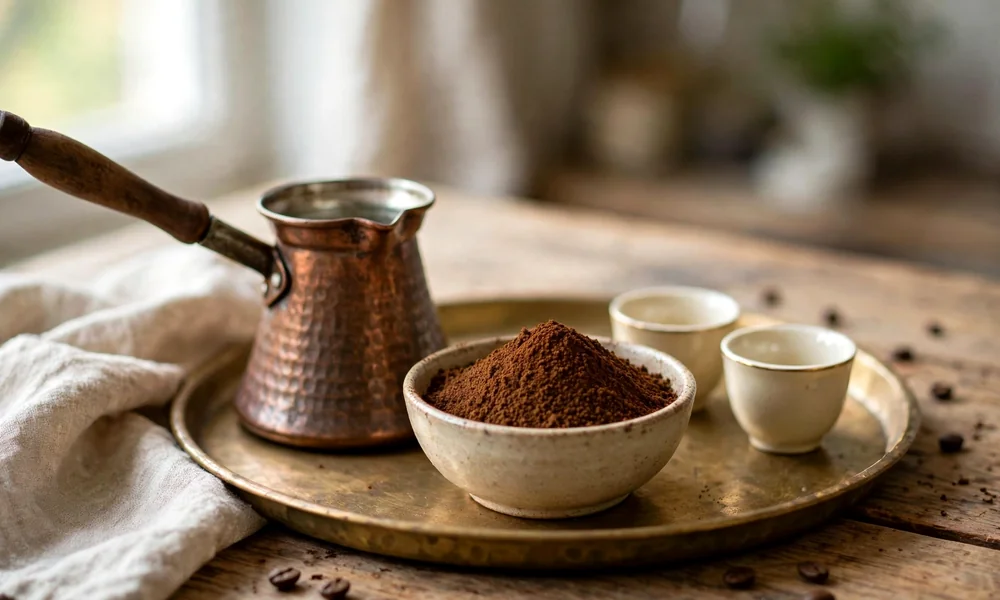
Wash a copper or brass pot by hand with warm water and a soft cloth, and dry it immediately. Dishwasher detergent dulls copper and can loosen the handle, and a pot left to air-dry spots and tarnishes fastest around the rim. Do not use abrasive pads inside: scratches in the tin lining expose the copper beneath and give the coffee a metallic edge. Tarnish outside is cosmetic; rinse the inside after every brew and store the pot uncovered.
Turkish Coffee Pot Buying Checklist
- Size matches your brew: one cup for solo, two for most people, four or more only for guests.
- Base sits flat without rocking, and the walls feel thick, not thin and tinny.
- Inside is lined with tin or stainless steel, smooth, with no rough seams.
- Handle is long, cool to the touch, and fixed firmly with two rivets.
- Rim has a pinched pouring lip so the foam survives the pour.
- Metal suits your hob: copper or brass for gas and electric, stainless steel for induction.
Frequently Asked Questions
What is a cezve?
A cezve, also called an ibrik, is the small long-handled pot used to brew Turkish coffee: wide base, narrow neck, long handle, used on a stove over gentle heat.
Can I use a Turkish coffee pot on an induction hob?
Only a stainless steel pot with a magnetic base works on induction; copper and brass do not work on induction at all. Buy stainless steel with a thick layered base, which heats far more evenly than thin steel.
What size Turkish coffee pot should I buy?
Buy the size that matches how many cups you brew most often. Two cups suits most people. A pot only makes good foam when filled close to capacity.
Why does my Turkish coffee have no foam?
Thin foam usually comes from four causes: the pot is too large, the heat is too high, the coffee is not ground fine enough, or the coffee boiled hard. Use powder-fine grounds, low heat, and lift the pot off the moment the foam rises.
Is copper or brass better for a Turkish coffee pot?
Copper heats faster and more evenly, giving the most forgiving brew and the thickest foam. Brass is nearly as good, harder, cheaper, and slower to tarnish. A well-made brass pot beats a thin copper one.
How do I clean a copper Turkish coffee pot?
Rinse it with warm water after every brew, wipe the inside dry, and wash by hand with a soft cloth. Do not use abrasive pads, which scratch the tin lining. Tarnish outside is cosmetic; the inside is what matters.
Bottom Line
The best Turkish coffee pot for most people in 2026 is a two-cup copper cezve with a thick base, a tin lining and a long wooden handle: it heats evenly, makes thick foam, and pours cleanly. If you cook on induction, buy stainless steel with a layered base instead. Match the size to your cups, keep the heat low, and lift the pot off the moment the foam rises.