Top Steering Wheel Covers for Comfort and Grip in 2026
Your hands spend more time on the steering wheel than on any other part of your car, and the best steering wheel covers in 2026 make that contact kinder, grippier and easier on the wheel itself. A good cover adds cushioning on long drives, stops a cold wheel from biting your palms on a winter morning, and keeps the original rim safe from sun damage, sweat and wear. A bad one slips as you turn and makes the wheel feel fatter than it really is.
Most drivers only think about a cover when the wheel starts to look tired, or when their hands ache after an hour behind it. This guide explains the types available, what to look for, what to avoid, and how to fit one properly.
Key Takeaways
- Measure your wheel before ordering, because a cover that is even slightly too loose will slip and bunch as you steer.
- Leather and microfibre give the best everyday grip, while heated covers are the only real fix for freezing winter mornings.
- A cover should never hide the buttons on the wheel or sit over the airbag seam in the centre.
- Thicker is not always better: too much padding dulls the feel of the road.
- Budget covers cost more in the end, because a loose, peeling cover gets replaced within months.
What a Steering Wheel Cover Actually Does
A steering wheel cover is a sleeve that wraps around the rim of the wheel, the ring your hands hold. It is not the same thing as a pair of driving gloves, which cover your hands instead of the wheel. The cover stays on the car, so it protects the wheel every time anyone drives, and it changes how the wheel feels in your hands on every journey.
The first job is protection. Sunlight, heat and the oils from your skin wear down a bare wheel over the years, leaving it shiny, cracked or peeling. A cover takes that wear instead, and when it finally looks tired you replace a cheap sleeve rather than an expensive wheel. The second job is comfort: a cover adds a soft layer that spreads the pressure on long drives. The third job is grip. Smooth plastic and worn leather get slippery when your hands are damp, and a textured cover keeps your hands planted.
The Main Types of Steering Wheel Cover
Most covers fall into five families, and the right choice depends on your climate, your hands, and how long you drive each week.
Leather Covers
Leather covers are the classic choice, and for most drivers they are still the best all-round option. Real leather feels warm in the hand, grips well without being sticky, and ages gracefully, developing a soft patina rather than peeling. Stitched leather covers, fitted tightly and laced or sewn into place, look like they came with the car. Cheaper imitation leather often turns shiny and peels at the seams within a year, so it is worth paying more for the real thing.
Microfibre and Suede Covers
Microfibre and suede covers feel soft and slightly grippy, a little like the steering wheels in sports cars. They are a good pick if your hands sweat, because the fabric absorbs moisture instead of letting it sit on the surface. The trade-off is cleaning: they mark easily, show dirt quickly, and need a gentle brush or a damp cloth to stay looking fresh.
Heated Covers
Heated covers plug into the car, usually through the cigarette lighter socket, and warm the rim on cold mornings. If you drive before dawn in winter, or you suffer from stiff hands, they are genuinely useful rather than a gimmick. Look for one with a simple on-off switch and a timer or thermostat, because a cover that stays hot all the way through a long drive becomes uncomfortable.
Woven and Fabric Covers
Woven fabric covers, including crocheted and knitted styles, add the most cushioning and come in the widest range of colours and patterns. They are popular with drivers who want a softer, thicker rim and a bit of personality in the cabin. The downside is bulk: a thick woven cover makes the wheel noticeably fatter, and it can slide more easily than a tight leather sleeve if the fit is not snug.
Silicone and Rubber Grip Covers
Silicone and rubber covers are thin, stretchy sleeves that add grip without adding much bulk. They are the cheapest option and the easiest to fit, stretching over the rim in seconds. They suit drivers who like the feel of their original wheel and just want a bit more hold, or a bit of protection for a new car. They do little for comfort on long drives, and the cheapest ones tear when you stretch them on.
What to Look For Before You Buy
Fit comes first, because everything else is wasted on a cover that does not fit. Measure the diameter of your wheel across the middle, and check the grip circumference, the thickness of the rim where your hands sit. Most covers are sized for wheels between 37 and 38 centimetres across, which suits most cars, but larger wheels in vans and trucks need a bigger size, and a cover made for a small hatchback will never stretch onto a lorry wheel.
Grip matters next. Hold the material in your hand if you can, or at least look for honest descriptions. A cover should feel secure without being tacky, and it should stay grippy when your hands are slightly damp. Stitching should be tight and even, with no loose threads at the seams, because a seam that starts to come apart will only get worse. The cover should also leave the buttons on the wheel spokes completely clear, and it must never cover the centre airbag panel. Like the protective covers that go over car seats, a steering wheel cover protects the wheel it wraps, and our guide to the best vs worst car seat covers shows the same rule: fit and material decide everything.
Thickness is a matter of taste, but it is worth thinking about before you order. A thick cover suits drivers with large hands or aching joints, and it makes a thin wheel feel substantial. A thin cover suits drivers who like to feel the road through their fingertips. Cleaning matters too. Leather wipes clean with a damp cloth, fabric needs a brush, and microfibre needs gentle care, so pick a material you will actually maintain.
How to Fit a Steering Wheel Cover Properly
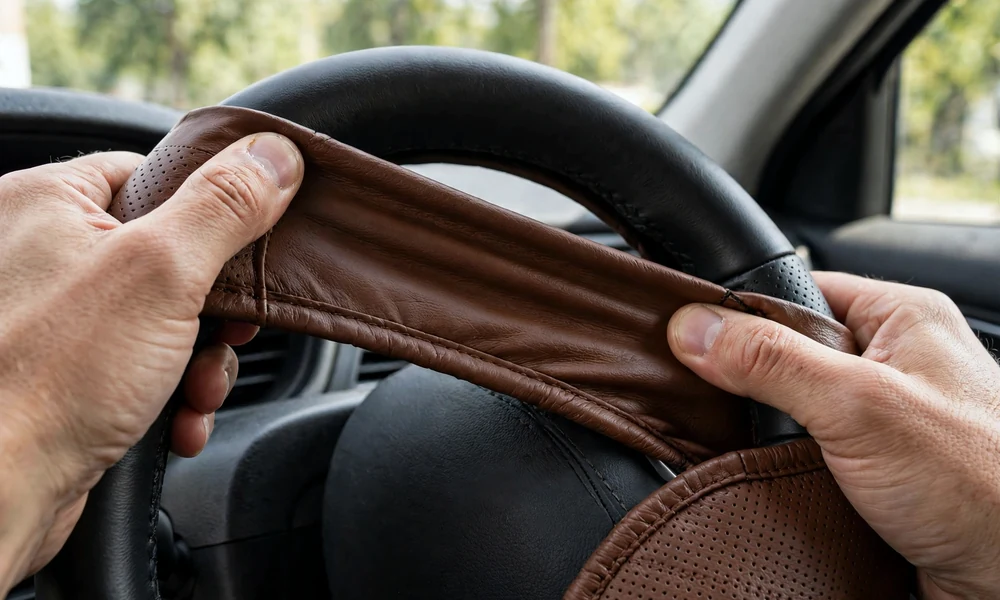
Fitting a cover is a ten-minute job, but it is worth doing slowly. Slip the top of the cover over the top of the wheel first, then work your way down each side, pulling firmly and evenly. Stretchy covers go on by hand; stitched leather covers may need lacing or a few minutes with a needle, and the result is worth the effort.
Once it is on, check the fit before you drive. The cover should sit tight all the way round, with no slack at the top and no bunching at the bottom. Turn the wheel from lock to lock while parked and watch for any movement: if the cover creeps even a little, it will creep more at speed, and it needs to come off and go back on tighter, or be exchanged for a smaller size. Check that the cover does not rub against the stalks behind the wheel. A cover that passes those checks is ready for the road.

What to Avoid
The worst covers all fail in the same quiet way: they look fine in the packet and fall apart in ordinary use. Universal covers that promise to fit every wheel are the main culprit. A cover made to fit everything properly fits nothing, and it will slide, bunch and need adjusting before every drive. Cheap imitation leather cracks and peels within months.
Very thick, padded covers deserve caution too. They feel cosy at first, then make the wheel so fat that your hands tire faster, not slower, and they can hide the shape of the rim so you lose your sense of where the wheel is pointing. Covers with loose beads, dangling tassels or hard decorative studs are worse still: they dig into your palms, catch on rings, and can come loose at the worst moment. And anything that covers the centre of the wheel or interferes with the airbag is not a bargain at any price. Our guide to the best car organizers shows how to keep the rest of the interior just as sorted.
Steering Wheel Covers Compared
| Cover type | Best for | Grip | Comfort | Upkeep |
|---|---|---|---|---|
| Leather | Everyday driving | Excellent | Very good | Wipe clean |
| Microfibre and suede | Sweaty hands, sporty feel | Excellent | Very good | Brush gently |
| Heated | Winter mornings, stiff hands | Good | Excellent in cold | Wipe clean |
| Woven and fabric | Softness and style | Good | Excellent | Hand wash |
| Silicone and rubber | Extra grip on a budget | Very good | Fair | Rinse clean |

Checklist: Buying Steering Wheel Covers
- Measure your wheel diameter and rim thickness before you order anything.
- Choose leather or microfibre for everyday grip, heated for cold mornings, woven for softness.
- Check that the cover leaves every button and the airbag panel completely clear.
- Look for tight, even stitching and a snug fit with no slack anywhere on the rim.
- Pick a material you will actually clean, and check how it should be washed.
- After fitting, turn the wheel lock to lock while parked and confirm the cover does not move.
Frequently Asked Questions
Will a steering wheel cover fit any car?
Not quite. Most covers suit standard car wheels of about 37 to 38 centimetres across, but larger wheels in vans and trucks need a bigger size. Measure your wheel first and check the size range on the listing.
Do steering wheel covers make driving safer?
A good one can help, because better grip means surer control, especially with damp hands. A loose cover does the opposite, so fit matters more than the material. Never use a cover that slips, bunches, or hides the wheel buttons.
How do I clean a steering wheel cover?
Leather and silicone covers wipe clean with a damp cloth. Microfibre and suede need a soft brush and a gentle cleaner, and woven covers can usually be hand washed and air dried.
Can I leave a heated cover plugged in all the time?
It is better not to. Use it to warm the wheel, then switch it off once your hands are comfortable, and unplug it when you leave the car. A cover with a timer or thermostat makes this easy.
Will a cover damage my steering wheel?
No, a well-fitted cover protects the wheel from sun, sweat and wear. The risk comes from a cover that is too tight and traps moisture underneath, so check the fit from time to time.
Are steering wheel covers the same as driving gloves?
No. A cover wraps around the wheel and stays in the car, protecting the rim and improving grip for every driver. Driving gloves cover your hands instead, and you take them with you when you leave.
The Bottom Line
The best steering wheel covers in 2026 are the ones you stop noticing: they fit tightly, grip in all weathers, and make the wheel feel better without changing how the car drives. Leather suits most drivers, microfibre suits sweaty hands, and heated covers suit cold mornings. Measure first, check the buttons and the airbag, and fit it slowly. Once the wheel feels right, the rest of the cabin follows, and our guide to the best car air fresheners is a good next step for a car that feels as fresh as it drives.