A step counter is a small device that counts the steps you take, and it does one job better than any other gadget in your pocket: it tells you, honestly, how much you actually moved today. It sounds simple, and it is, but for someone trying to walk more, recover from a sedentary routine, or keep a daily habit going, a step counter is the difference between guessing and knowing. A good one is accurate, comfortable, and so easy to use that you forget it is there. The best step counters of 2026 are the ones that count reliably, last for weeks on a charge or a battery, and make walking feel like a small daily win.
What Makes a Step Counter Good
The first thing to judge is accuracy. A step counter is only useful if its count is close to reality, and the best counters use a three-axis accelerometer that recognises the rhythm of walking while ignoring the shake of a car ride or the bounce of a washing machine. A counter that adds hundreds of phantom steps, or misses a whole flight of stairs, is a counter that cannot be trusted, and a counter that cannot be trusted will not motivate anyone. A counter that lands within a few steps of a hundred-step walk is a counter that earns trust.
The second thing is comfort and wearability. A step counter is worn every day, often for twelve hours or more, so a counter that is heavy, sharp-edged, or awkward to clip on will not be worn. The best counters are light, smooth, and easy to attach to a waistband, a pocket, a lanyard, or a wrist, and they stay put through a whole day of sitting, standing, and walking. Comfort turns a gadget into a habit.
The third thing is readability. A step counter should show your count at a glance, without a phone, an app, or a manual. The best counters have a large, clear display that can be read in bright sunlight and in a dim hallway, with big digits and a simple button to switch between steps, distance, and calories. A clear display matters every single day.
The Main Types of Step Counter
Clip-on step counters are the classic choice. They clip to a waistband, a belt, or a pocket, they are light, simple, and cheap, and they are the best choice for most people, because they do one job well and ask for nothing in return. They suit a walker who wants a number without notifications or charging cables, and they will not track heart rate or sleep. For most people, a clip-on step counter is the one to buy.
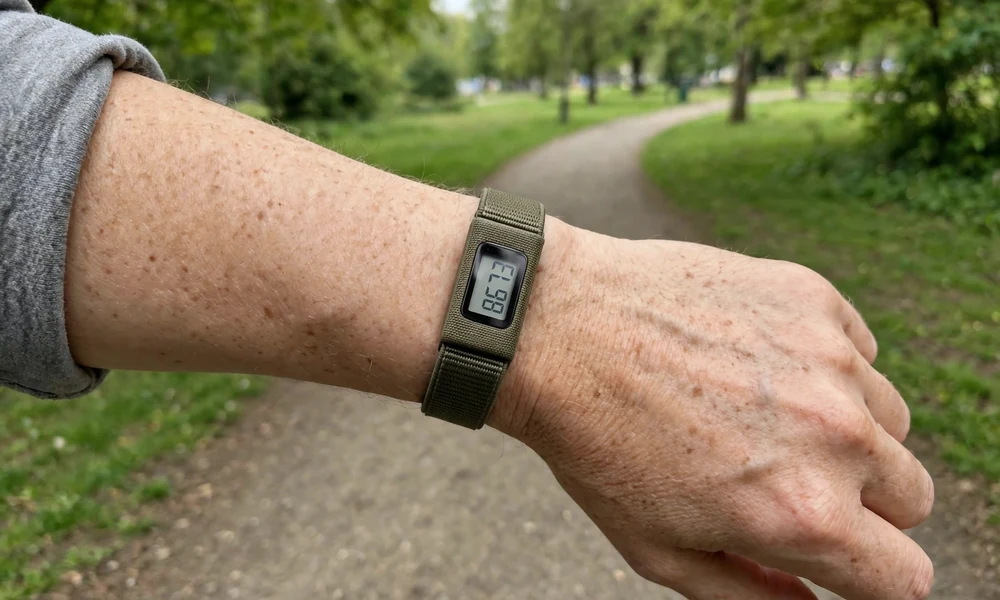
Wrist step counters are the convenient option. They sit on the wrist like a watch, they are always visible, and they are the best choice for someone who wants to glance at their count without reaching for a pocket. The downside is accuracy: a wrist counter can mistake arm swings for steps, so the best ones filter motion to tell a wave from a walk.
Phone-based step counters are the no-extra-device option. They use the motion sensor already in a phone, paired with a step-counting app, and they are the best choice for someone who always carries a phone and does not want another gadget to charge. The trade-off is that the phone has to be carried to count, so steps taken around the house without it simply do not exist. For a phone-first walker, a phone counter is the simplest way to start, and our guide to the best fitness apps of 2026 shows which apps count steps most reliably.
Simple pedometers are the budget option. They are the plainest step counters of all, with a small screen, one button, and a battery that lasts for months, and they are the best choice for an older walker, a child, or anyone who finds modern gadgets confusing. They are the cheapest way to start counting steps, though they are the least accurate of the four types and rarely store more than a few days of history.

The Best Step Counters of 2026
The best overall step counter is a clip-on model with a large display, a three-axis sensor, and a battery that lasts for months. It clips firmly to a waistband, it counts within a few steps of the truth, and its screen is big enough to read without glasses. It stores a week of daily totals and resets itself at midnight, and it is the counter to buy first.
The best step counter for accuracy is a clip-on model with a tuned motion filter and a seven-day memory. It is the one that survives the hundred-step test with the smallest error, and it is the one that does not add steps when you drive over a bumpy road or ride in a lift. It costs a little more, but a count you can believe is the whole point of owning a step counter.
The best wrist step counter is a slim band with a clear screen, a comfortable strap, and a battery that lasts for weeks. It shows steps, distance, and calories with one tap, it is light enough to forget, and it survives rain, sweat, and a splash in the sink. It is not a smartwatch, which is exactly why it works: it counts steps, shows the count, and gets out of the way.
The best step counter for seniors is a large-display pedometer with one big button, loud and clear digits, and a clip that grips firmly without pinching. It has no menus to get lost in, no app to install, and no charging cable to lose, and its battery lasts for months. It can be worn on a waistband or hung from a lanyard, and it is the counter to give to a parent who wants to walk more without learning a new gadget.
The best budget step counter is a plain clip-on pedometer that costs less than a lunch and still counts well. It has a small screen, a single button, and a battery that lasts for months, and it does the one job it promises without fuss. It will not store a month of history, but for someone who wants to try step counting without spending much, it is the honest starting point.
The best premium step counter is a slim wrist counter with a bright display, a week of stored history, and a build that feels more like a watch than a gadget. It counts accurately, it looks good enough to wear anywhere, and its battery lasts for weeks on a charge. It costs more, but it buys a display you can read in any light and a strap that stays comfortable all day.
How to Wear a Step Counter for Accurate Counts
Where a step counter sits matters more than most people realise. A clip-on counter works best on a waistband, a belt, or a pocket near the hip, where it can feel the rhythm of each step, and it works worst in a loose bag, a jacket pocket, or a hand, where it swings freely and counts movement that is not walking. A wrist counter works best snug on the wrist, not loose enough to slide, and it works worst on the hand you use to gesture, wave, or carry shopping. Keep the counter close to the body and still relative to it, and the count will be close to the truth.
The other habit that matters is wearing it all day. A step counter that is put on after breakfast and taken off before dinner misses the steps that matter most, the small ones around the house, the walk to the car, and the stairs at work. Put the counter on in the morning, take it off at night, and the number will tell a true story about your day.

Step Counters, Fitness Trackers, and Smartwatches
A step counter is not a fitness tracker, and it is not a smartwatch, and that is a strength rather than a weakness. A fitness tracker adds heart rate, sleep, and workout tracking, and a smartwatch adds calls, messages, and apps, but both of them need charging every few days, and both of them cost far more. A step counter does one job for weeks or months on a single battery, and it costs a fraction of the price. If steps are the habit you want to build, a step counter is the simplest tool for the job, and our guide to the best fitness trackers of 2026 is the place to look when you want heart rate and sleep tracking as well.
That said, some walkers will outgrow a step counter, and that is fine. If you start wanting to know your heart rate on a hill, or your sleep after a long walk, a tracker is the natural next step. If you want calls and messages on your wrist as well, a smartwatch is the next step after that, and our guide to the best smartwatches of 2026 compares the watches that count steps alongside everything else. The step counter is the starting point, not the end of the road, and the right upgrade is the one that matches the habit you have already built.
Common Mistakes When Buying a Step Counter
The first mistake is buying the cheapest counter without checking its accuracy. A counter that counts badly is worse than no counter at all, because it rewards you for steps you never took or punishes you for steps it missed, and either way the number stops meaning anything. The second is a display too small to read, the third is a counter that needs charging every day, and the fourth is an uncomfortable counter that ends up in a drawer. Avoid those four mistakes, and almost any well-reviewed counter will serve you well.
The other mistake is setting the wrong daily goal. Ten thousand steps is a famous number, but it is not a rule, and for someone who currently walks three thousand steps a day, a goal of ten thousand is a recipe for giving up. Start with your current average, add a thousand steps, and raise the goal only when the new total feels easy. A goal that is reached is a goal that gets walked.
The Verdict
The best step counter of 2026 is the one that counts accurately, feels comfortable all day, and shows your total at a glance, and the clip-on counter with a large display and a months-long battery is the one that does all three best. Buy a wrist counter if you want the count always in sight, a simple pedometer if you want the plainest possible device, and a phone counter if you do not want another gadget at all. Whichever you choose, wear it every day, set a goal you can reach, and let the number do its quiet work: one more walk, one more flight of stairs, and one more day of moving a little more than yesterday. That steady progress, measured honestly day after day, is exactly what a good step counter is for.