
A carry-on backpack is the bag that lets you skip the check-in queue, walk straight to the gate, and still have everything you need when you land. It holds a few days of clothes, a laptop, toiletries and a book, fits in the overhead bin or under the seat, and stays comfortable on your back across an airport, a station and a city street. A bad carry-on backpack is too big for the sizer, too heavy when full, or so awkward to pack that you end up sitting on it to close it. A good one opens flat, carries its weight close to your body, and makes the whole journey feel lighter. The best carry-on backpacks of 2026 are the ones that fit the airline rules and still feel good after a long day of travel, from the first security queue to the last walk to the hotel.
What Makes a Carry-On Backpack Good
The first thing to judge is the size. Most airlines allow a carry-on of about 55 by 40 by 20 centimetres, though the exact limit varies, and a backpack that is even a little too deep will fail the sizer at the gate. The best carry-on backpacks sit just inside the common limits, with a shape that is wide and flat rather than tall and bulging, so they slide into the bin without a fight. Measure the bag when it is packed, not when it is empty, because a soft bag grows as you fill it.
The second thing is the carry. A carry-on backpack is worn for hours, through airports and up hotel stairs, so the straps, the back panel and the hip belt matter as much as the capacity. The best packs have padded, adjustable shoulder straps, a back panel that lets air through, and a hip belt that takes the weight off your shoulders. A pack that digs in, slips or pulls you backwards will ruin a journey, however clever its pockets are. Comfort is the test that matters most.
The Main Types of Carry-On Backpack
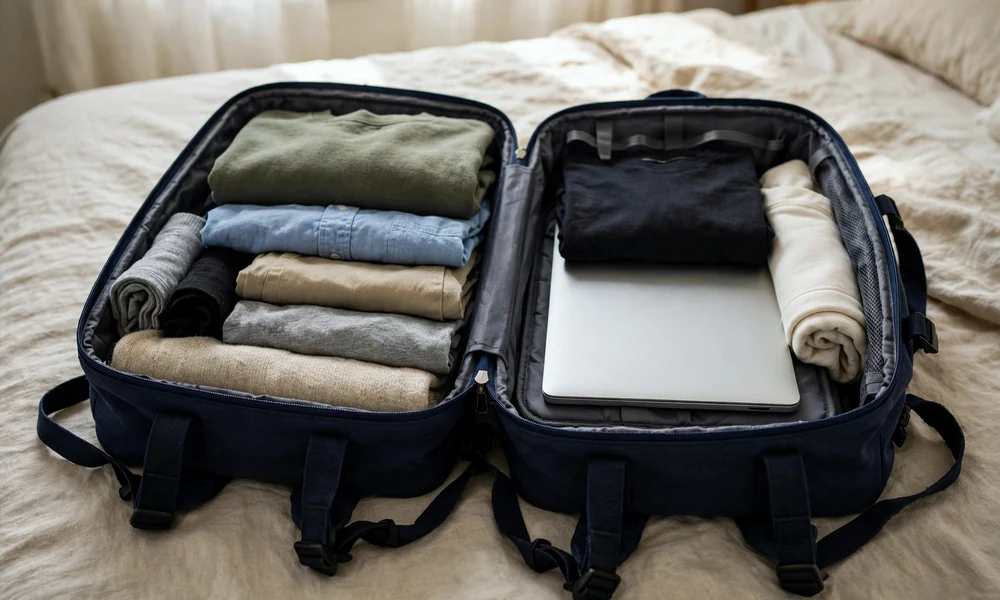
Clamshell carry-on backpacks are the classic choice. They open flat like a suitcase, with a full-length zip, so you can pack clothes in neat layers and find things without digging. They suit most travellers, they are easy to live out of in a hotel room, and they are the best choice for a trip of three to five days. The trade-off is the shape: a clamshell pack is wide and boxy, so it needs careful packing to stay inside the sizer.
Top-loading carry-on backpacks are the simple option. They have one big compartment with a drawcord or a lid, they are light and tough, and they are the best choice for a traveller who packs light and does not mind digging. They suit a short trip, and they are the easiest packs to squeeze into a tight overhead bin. The downside is the access: everything sits in one pile, so the thing at the bottom is always the thing you need first.
Panel-loading carry-on backpacks are the middle ground. They open partway with a U-shaped zip, giving better access than a top-loader without the full flat opening of a clamshell. They suit a traveller who wants a tidy bag without the bulk of a suitcase-style pack, and they are the most versatile option for a mixed trip. The trade-off is the zip: a long curved zip is the part most likely to fail, so the build quality matters.
Convertible carry-on backpacks are the flexible option. They hide the shoulder straps behind a panel and carry like a duffel or a briefcase, so they suit a business trip or a journey that ends in a meeting. They are the best choice for someone who wants one bag for work and for travel, and they look smarter than a hiking pack in a hotel lobby. The downside is the weight: the extra handles and panels add grams, and the straps are rarely as comfortable as a dedicated pack.
Compact carry-on backpacks are the small option. They hold about 25 to 30 litres, fit under the seat as well as in the bin, and suit a weekend away or a traveller who packs very light. They are the best choice for a short trip, a budget flight with a strict personal-item rule, or a second bag alongside a small case. The trade-off is obvious: a compact pack will not hold a week of clothes, and trying to force it will only make it bulge past the sizer.

How to Choose the Right Carry-On Backpack
Start with your airline, not the bag. Check the carry-on size and weight limits of the airlines you actually fly, because a pack that fits one carrier may fail another, and a pack that is fine empty may be too heavy once it holds a laptop and a pair of shoes. Buy for the strictest limit you face, not the most generous one, and remember that budget airlines measure more often. A bag chosen this way will never be the reason you pay a gate fee.
Then check the practical details. Look for a laptop sleeve that fits your machine, a water bottle pocket you can reach without taking the pack off, and compression straps that pull a half-full bag flat. Check the zips: they should run smoothly when the bag is full, not just when it is empty. And try the pack on with weight in it, because a bag that feels fine empty can feel very different with five kilos inside. A pack that passes these tests will serve you for years, and it will do so on short weekends and long holidays alike, without ever becoming a burden you regret buying.
The Best Carry-On Backpacks of 2026
The best clamshell carry-on backpack for most people this year is a 40-litre pack that opens flat, has a padded laptop sleeve, and sits just inside the common airline limits. It holds four or five days of clothes, it is easy to pack and unpack, and it carries well on a long walk through a terminal. It is the pack for most travellers, it is the one that never fails the sizer, and it is the one that still looks tidy after a year of trips.
The best compact carry-on backpack of 2026 is a 30-litre pack that fits under the seat, weighs little when empty, and still holds a weekend of clothes and a laptop. It suits a short trip, a budget flight, or a traveller who packs light, and it is the pack for someone who hates waiting at the carousel. It will not hold a week of kit, but for two or three days it is all you need, and it is the easiest pack to live with.
The best convertible carry-on backpack is a pack that hides its straps and carries like a duffel, with a clean shape that works in a meeting as well as at the gate. It costs more than a simple pack, but the flexibility is worth it. It is the pack for a business trip, it is the one that looks smart in a hotel lobby, and it is the one that turns from a backpack into a shoulder bag in seconds.
The best budget carry-on backpack of 2026 is a simple 35-litre pack, at a price that is less than a single checked-bag fee on some routes. It is sturdy, it opens wide enough to pack neatly, and it is genuinely useful. It will not have the finest straps or the cleverest pockets, but for a first carry-on pack, or for a traveller who flies only a few times a year, it is all that is needed. Cheap does not have to mean flimsy, and this pack proves it.

What Else You Need
A carry-on backpack works best with a little help. A good travel backpack guide will show you the wider range of packs for longer trips, and a hiking backpack is the better choice when the journey ends on a trail rather than in a hotel. And a daypack makes a useful second bag for exploring a city once the carry-on is left in the room. The carry-on is the bag that gets you there; the daypack is the bag that lets you enjoy the place.
Common Mistakes to Avoid
The biggest mistake is buying a carry-on backpack that is too big. A pack that is even a few centimetres too deep will fail the sizer, and a pack that fails the sizer will cost you a gate fee and a wait at the carousel. Measure the packed bag against your strictest airline before you travel, and leave a little room to spare. The second mistake is overpacking: a carry-on that is stuffed to bursting is heavy, hard to carry, and impossible to close neatly. Pack less than you think you need, and you will travel better, move faster through the airport, and find what you packed without emptying the whole bag onto the bed.
Another common mistake is choosing a pack for its looks rather than its straps. A handsome pack with thin, unpadded straps will hurt after an hour, however good it looks in the shop. Choose the pack for its carry first, and let the looks follow. And do not forget the weight: a heavy empty pack eats into your allowance before you have packed a thing, so check the empty weight and buy the lightest pack that still feels solid.
How Carry-On Backpacks Fit a Simpler Trip
A carry-on backpack is the simplest way to make travel easier. It means no waiting at the carousel, no worry about a lost bag, and no fee for a checked case. It gives you everything you need in one bag that stays with you, and it does it without anyone thinking about it. A trip with only a carry-on is a trip where you can change plans, catch an earlier flight, and walk out of the airport while everyone else is still waiting for their luggage.
The habit also pairs naturally with a little routine. A quick check of the airline limits before each trip, a pack the night before rather than in a rush, and a check of the zips and straps once a season will keep the bag working and the journey smooth. It is a small amount of work for a large amount of freedom, and it is the kind of routine that, once started, is hard to give up.
The Verdict
The best carry-on backpack of 2026 is the one that fits your airline and your back. For most people that means a 40-litre clamshell pack that opens flat, carries comfortably, and sits just inside the sizer. For a short trip, a compact 30-litre pack is the better choice. For work, a convertible pack is the one that matters. Whatever the choice, measure the packed bag first, try it on with weight in it, and pack less than you think you need. A pack chosen this way will not just carry your clothes; it will make the whole journey simpler, lighter and freer, and it will keep doing so trip after trip, year after year. And that is worth more than any bag.


