Taco holders are the small stands that keep a taco upright so the filling stays where it belongs, and the best taco holders of 2026 do that job without wobbling, tipping or trapping grease underneath. If you have ever built a perfect taco only to watch it fall sideways on the plate, spilling sour cream and salsa across the table, you already know the problem these holders solve. A taco holder is a cradle, usually with two or three slots, that holds hard or soft shells upright while you fill them and eat them. This guide compares taco holders with taco stands, explains the materials and shapes on sale, and shows how to choose the right one. They cost very little, they last for years, and once you have used one, going back to a flat plate feels like a step backwards.
Key Takeaways
- A taco holder and a taco stand are the same product under two names: both cradle tacos upright, and the buying decision is identical.
- Stainless steel holders are the most durable and oven-safe choice, while ceramic holders look best on the table and keep tacos warm.
- Two-slot holders suit solo meals and small kitchens; three- and four-slot racks suit families and taco nights with friends.
- Wide, flat feet and a low centre of gravity matter more than weight: a holder that tips when you load the first taco is useless.
- Check the slot width before you buy: hard shells need a snug slot, soft tortillas need a wider one, and a holder that fits both is rare.
What Is a Taco Holder?
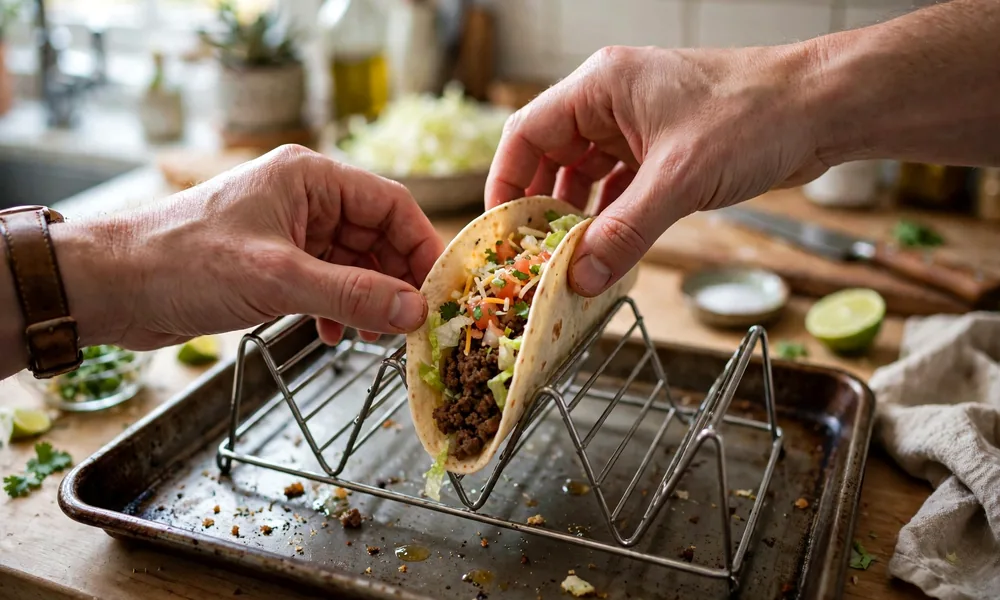
A taco holder is a small rack, usually made of metal, ceramic or silicone, with shaped slots that hold tacos upright. The classic design is a stainless steel frame with two or three U-shaped cradles, each wide enough for one taco shell. You set the holder on the table, slide a shell into each slot, fill it, and eat straight from the rack. The taco stays vertical and the filling stays inside, because the shell is supported on both sides rather than balanced on its base.
Most holders are sold in pairs or sets of four, and the sizes vary more than shoppers expect. A two-slot holder is about 20 centimetres long; a four-slot rack can be 40 centimetres long and needs a clear run of table space. If you host often, a set of matching holders turns taco night into a proper occasion, and our guide to the best serving trays of 2026 covers the trays that carry a loaded rack without it sliding around.

Taco Holders vs Taco Stands: What’s the Difference?
There is no difference. Taco holder and taco stand are two names for the same product, and sellers use them interchangeably. A listing that calls itself a taco stand is not a different shape, a different size or a different material: it is a taco holder with a different label. The confusion comes from the fact that some brands call the single-taco version a holder and the multi-taco rack a stand, but there is no standard behind that split, and plenty of sellers do the opposite. Judge every product on its slots, its material and its stability, not on which of the two words is in the name.
The Main Types of Taco Holders
Stainless Steel Holders
Stainless steel is the most common material and the most practical. It does not rust, it does not stain, it goes in the dishwasher, and most steel holders are safe in the oven, so you can crisp shells in the rack and serve in the same piece. The best steel holders have a brushed finish that hides fingerprints and feet wide enough to stop the rack rocking on a wooden table. Look for wire at least three millimetres thick, or a pressed-steel frame with a solid base.
Ceramic Holders
Ceramic holders are the prettiest option and the heaviest. A glazed ceramic holder sits flat, will not slide, and keeps tacos warm for a few minutes after they leave the oven. They come in bright colours and hand-painted patterns, which makes them the natural choice when the table matters as much as the food. The trade-off is fragility: a ceramic holder dropped on a tiled floor will chip or break, and most are hand-wash only.
Wire Rack Holders
Wire racks hold four, six or even eight tacos in a row, and they are the best choice for a crowd. A long wire rack lets you fill a whole batch at once on the worktop, then carry it to the table in one trip. The open wire design also lets heat escape, so shells stay crisp instead of steaming soft against a solid base. The weakness is stability: a long rack with narrow feet tips easily if it is loaded unevenly, so check that the feet run the full length of the rack and that the wire is welded, not just bent into shape.
Silicone Holders
Silicone holders are soft, flexible and nearly unbreakable. They grip the table, they do not scratch plates, and they fold flat for storage, which makes them the best choice for small kitchens and for taking on picnics or camping trips. They are also the worst at holding a heavy, fully loaded taco upright: soft silicone flexes, and a flexing slot lets the taco lean. Silicone suits soft tortillas and lighter fillings, and it suits children.
The Best Taco Holders of 2026 Compared
| Holder type | Best for | Stability | Cleaning | Watch out for |
|---|---|---|---|---|
| Stainless steel | Everyday use, oven crisping | Very good | Dishwasher | Thin wire bends and tips |
| Ceramic | Serving, keeping tacos warm | Excellent | Hand wash | Chips if dropped |
| Wire rack | Crowds, batch filling | Good if feet run full length | Dishwasher | Tips if loaded unevenly |
| Silicone | Small kitchens, picnics, children | Fair, flexes under load | Dishwasher | Leans with heavy fillings |
How to Choose a Taco Holder
Count the Slots You Actually Need
Two slots per person is the honest number for a taco night: one taco on the go and one waiting. A two-slot holder per person is the neatest solution, because everyone gets their own rack. If you buy a set, check whether the price is per holder or per set: many listings show four holders in the photo and charge for one.
Match the Slot to Your Shell
Hard shells are about two centimetres thick at the base and need a snug slot. Soft tortillas fold to three or four centimetres and need a wider slot, or they spring open and fall flat. A holder sold as fitting both usually fits neither well. Measure your usual shell before you order, and ignore any listing that does not give a slot width in centimetres.
Check Stability Before Anything Else
Stability is the whole point of a taco holder. A good holder has feet that spread wider than the slots, a low centre of gravity, and enough weight to stay put when you press a shell into it. Test it the first time you use it: load one end only and see if it rocks. If it rocks empty, it will tip full.

How to Use Taco Holders Well
Fill the shells in the holder, not on the plate. Set the holder on the worktop, slide the shells in, and spoon the filling from the centre outwards so the weight stays balanced. Warm the shells first, either in the oven in a steel holder or in a dry pan, because a cold shell cracks when you press it into the slot. Serve the holder on a plate or a tray, not straight on the tablecloth, because filling always escapes. Our guide to the best placemats of 2026 covers the wipe-clean mats that protect a table from exactly that kind of escape.
Eat from the holder, one taco at a time, and lift the taco out by the shell, not by the filling. The holder is there to keep the taco upright between bites, so put it back in the slot while you reach for the salsa. Keep a stack of napkins within reach: even the best holder cannot save a taco that is overfilled, and our guide to the best napkins of 2026 rounds up the ones that cope with greasy fingers without falling apart.
Care and Cleaning
Steel and silicone holders go in the dishwasher. Ceramic holders should be washed by hand in warm soapy water, dried straight away, and never stacked while damp. Whatever the material, rinse the holder soon after eating: dried cheese is the enemy, and a five-minute soak saves ten minutes of scrubbing later. Retire any holder with a cracked glaze or a split weld.
Buying Checklist
- Count two slots per person for a proper taco night, and check whether the price is per holder or per set.
- Match the slot width to your shell: snug for hard shells, wider for soft tortillas, and measure before you order.
- Test stability by loading one end only: a holder that rocks empty will tip when full.
- Choose dishwasher-safe steel or silicone for weeknights, and keep ceramic for serving.
- Check the material limits: oven-safe only if the maker says so, and never put ceramic or wood in a hot oven.
- Make sure the holders stack or fold flat if your cupboard space is tight.
Frequently Asked Questions
Are taco holders and taco stands the same thing?
Yes. They are two names for the same product, and sellers use them interchangeably. Judge a holder on its slots, material and stability, not on which word is in the name.
Can taco holders go in the oven?
Stainless steel holders usually can, and they are useful for crisping shells. Ceramic, wood and most silicone holders cannot go in a hot oven unless the maker gives a temperature rating, so check before you try.
How many tacos does one holder hold?
Most holders have two to four slots, and two slots per person is the honest number for a meal. Four-slot racks suit families, but everyone sharing one rack means passing it back and forth.
Do taco holders work with soft tortillas?
Yes, if the slot is wide enough. Soft tortillas fold to three or four centimetres, so they need a wider slot than hard shells. Warm the tortilla first so it folds without cracking.
Are taco holders dishwasher safe?
Steel and silicone holders usually are. Ceramic holders are mostly hand wash, and wooden holders must be washed by hand and oiled regularly. Check the listing before you buy.
What is the best material for a taco holder?
Stainless steel is the best all-rounder: durable, dishwasher-safe and oven-safe. Ceramic is best for serving and keeping tacos warm, silicone is best for small kitchens and children, and wood is best kept as an occasional serving piece.
The Bottom Line
The best taco holder of 2026 is a stainless steel rack with two or three slots, wire thick enough not to bend, feet wide enough not to tip, and a slot that matches the shells you actually eat. Buy one per person, fill the shells in the holder, and serve on a tray. If you only buy one thing, make it steel: it is the one material that works for filling, serving, crisping and washing up. Ceramic is the prettier choice for hosting and wire racks are the way to feed a crowd. Whatever you buy, ignore the name on the packet: the only test that matters is whether your taco is still standing when you reach for it.