
Top Tea Cups for a Proper Brew in 2026
Tea cups are the smallest vessel in the kitchen and the one that matters most to how tea tastes. A good tea cup keeps the brew at the right temperature, shows off its colour, feels comfortable in the hand, and turns a quick drink into a small ritual.
Key Takeaways
- Bone china is the best all-round tea cup material: it is light, strong, keeps tea warm, and shows the colour of the brew beautifully.
- A tea cup of 150 to 200 ml suits most teas, while smaller 90 to 120 ml cups suit strong brews and traditional tea ceremonies.
- A thin rim lets the tea flow smoothly onto the tongue, while a thick rim mutes flavour and makes the cup feel clumsy.
- A handle that fits one or two fingers and stays cool is essential, because a tea cup is lifted far more often than a mug.
- Choose cups with saucers for formal tea and for protecting wooden tables, and choose handle-less cups only for teas that are served cooler.
Why the Right Tea Cup Changes the Tea
Tea tastes different in different cups, and it is not a trick of the imagination. The same tea poured into a thick stoneware mug, a thin porcelain cup, and a glass tumbler tastes different in each one, because the vessel changes the temperature, the aroma, and even how the tea reaches your tongue. A good tea cup keeps the drink hot without burning your fingers, lets the smell rise freely, and feels light and balanced in the hand.
This guide explains how a tea cup changes flavour, compares the main materials, and shows how to choose a cup that makes every pot taste better.
The Main Types of Tea Cups
Tea cups fall into a few clear families, and each suits a different kind of tea drinker. The right choice depends on the tea you drink most, how you serve it, and how much washing you are willing to do.
Bone China Tea Cups
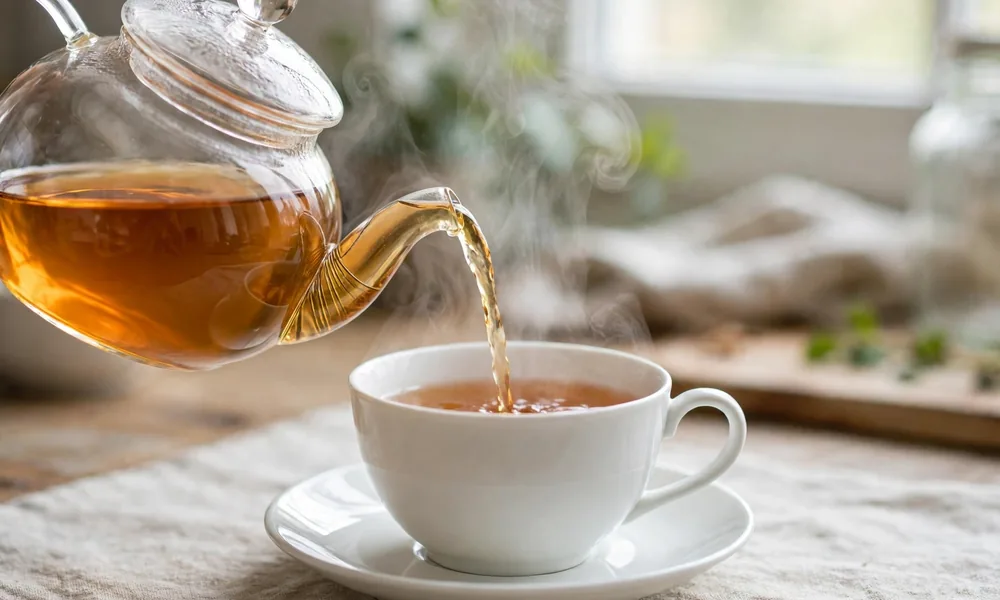
Bone china is the classic choice and still the most beautiful. It is thin, light, and slightly translucent, and it holds heat well without feeling hot in the hand. The fine rim delivers tea smoothly, and the white interior shows the true colour of the brew, which matters when you are judging a steep.
Porcelain Tea Cups
Porcelain is the everyday workhorse of the tea cup world. It is harder and more chip-resistant than bone china, washes easily, and comes in every colour and pattern imaginable. A good porcelain cup is light enough to lift comfortably, keeps tea warm for a reasonable time, and survives the dishwasher without fading.
Stoneware Tea Cups
Stoneware cups are thick, sturdy, and reassuringly heavy. They hold heat for a long time, which suits slow drinkers and cold rooms, and their earthy glazes look beautiful on a wooden table. The drawback is weight and thickness: a thick rim mutes the flavour of delicate teas, and a heavy cup is tiring to hold through a long conversation.
Glass Tea Cups
Glass tea cups show the tea in full, which is a pleasure in itself: the amber of a black tea, the pale gold of a green tea, the deep red of a hibiscus infusion. Double-walled glass cups keep the tea hot and the outside cool, and they suit flowering teas and fruit infusions that are as much a visual treat as a drink.
Cast Iron Tea Cups
Cast iron cups, usually sold with a matching teapot, hold heat longer than any other material and suit the slow, ceremonial style of drinking. They are heavy, need careful drying to prevent rust, and are usually handle-less, so they are best for teas served at a comfortable drinking temperature rather than piping hot.

The Best Tea Cups of 2026
The tea cups below cover the full range of everyday use, from a washable daily porcelain cup to a fine bone china showpiece. Each one is chosen for material quality, balance, rim thinness, and value, and each is available in the standard tea cup size.
| Tea Cup | Material | Best for | Care |
|---|---|---|---|
| Classic Bone China | Bone china | Formal tea and fine teas | Hand wash, gentle cycle |
| Everyday Porcelain | Porcelain | Daily drinking | Dishwasher and microwave safe |
| Rustic Stoneware | Stoneware | Black tea and chai | Dishwasher safe |
| Double-Wall Glass | Borosilicate glass | Flowering and fruit teas | Hand wash recommended |
| Cast Iron Cup | Cast iron, enamel lined | Slow, ceremonial tea | Hand wash, dry fully |
| Wide Breakfast Cup | Porcelain | Milky breakfast tea | Dishwasher safe |
Classic Bone China: Best Overall
The bone china cup is the best overall tea cup because nothing else delivers tea quite like it. The thin rim, the light weight, and the white interior all work together to show the tea at its best.
Everyday Porcelain: Best Value
The porcelain cup is the best value pick of 2026. It costs far less than bone china and survives the dishwasher and the microwave without complaint.
Rustic Stoneware: Best for Strong Tea
The stoneware cup is the pick for strong black tea and milky chai. Its thick walls hold heat through a long, slow drink, and its earthy glaze suits a kitchen table better than a formal parlour.
Double-Wall Glass: Best for Showing the Tea
The double-wall glass cup solves the one problem of glass: the outside stays cool while the tea stays hot.
Cast Iron Cup: Best for Slow Tea
The cast iron cup is the pick for slow, ceremonial tea drinking. It holds heat longer than any other cup, and its weight and texture slow you down in the best way.
Wide Breakfast Cup: Best for Milky Tea
The wide breakfast cup is the pick for milky morning tea. Its generous 250 ml capacity holds tea and milk with room to spare, the wide opening lets the aroma rise, and the sturdy handle suits a cup that is lifted often.
Choosing the Right Size
Size matters more than most people realise. A cup that is too large lets the tea cool before you finish it, and one that is too small means constant refills. For most teas, choose a cup of 150 to 200 ml. That is large enough for a proper serving, small enough that the tea stays hot to the last sip, and the standard size for a cup and saucer set.
Smaller cups of 90 to 120 ml suit strong brews, green teas, and traditional tea ceremonies, where the tea is poured in small amounts and drunk while it is fresh. Larger cups of 250 ml suit milky breakfast tea and anyone who drinks tea in long, slow sittings.
The Saucer Question
A saucer is more than decoration. It protects the table from drips and heat, gives you somewhere to rest a spoon, and catches the overflow when you pour generously. A cup with a matching saucer also looks finished, which matters when guests are at the table. For formal tea and for wooden tables, always use a saucer.
For everyday drinking at your own desk or in an armchair, a cup without a saucer is perfectly fine, and a wide, stable base matters more than a matching plate. If you buy cups without saucers, choose ones with a flat, broad foot so they do not tip easily, and keep a coaster nearby for wooden surfaces.
A small side plate does the same job if your cups did not come with saucers.

Setting the Table Around Your Tea Cups
Tea cups are part of the table setting, so choose them with the rest of the tea service in mind. Plain cups suit a patterned teapot, and patterned cups suit a plain teapot. A teapot that pours clean is the natural partner for a good cup, because a dripping spout undoes all the pleasure of a fine cup.
A tea infuser that brews a cleaner cup keeps loose leaves out of the drink, which matters most in a fine cup with a thin rim. For a full tea service, the right mug for coffee drinkers in the household keeps everyone happy at the same table.
Caring for Tea Cups
Good care is simple, but a few habits make a big difference. Rinse cups soon after use, because tea stains set quickly on porcelain and bone china, especially from strong black tea. A paste of baking soda and water removes most tea stains without scratching, and a soak in warm water with a denture tablet works for stubborn rings.
Wash bone china and glass cups by hand or on a gentle dishwasher cycle, and avoid stacking cups inside each other, which chips rims. Dry cast iron cups fully after washing, and rub a drop of oil on the outside if it ever looks dull.
Store cups upright on a shelf rather than hanging them by their handles, which can strain the join over time.
Tea Cup Buying Checklist
- Choose the material for your real life: bone china for fine tea, porcelain for daily use, stoneware for strong brews, glass for showing the tea.
- Buy the standard size of 150 to 200 ml, and check the actual capacity when the cups arrive, because sizes vary between makers.
- Buy a set of six matching cups, so one can be in the wash while the others are in use, and every guest gets the same cup.
- Check the rim with a fingertip: it should feel thin and smooth, never thick or rough, because the rim is where the tea meets your mouth.
- Check the handle fits one or two fingers comfortably and stays cool when the cup is full of hot tea.
- Decide about saucers before you buy, because a cup without a saucer needs a coaster and a flat, stable base.
Frequently Asked Questions
What is the difference between a tea cup and a coffee mug?
A tea cup is smaller, usually 150 to 200 ml, with a thinner wall and a finer rim, and it often comes with a saucer. A coffee mug is larger, usually 300 to 350 ml, with thicker walls and a bigger handle.
Are bone china tea cups dishwasher safe?
Most modern bone china is dishwasher safe on a gentle cycle, but hand washing is kinder and keeps the glaze and any decoration looking new for longer.
How do I remove tea stains from a white cup?
Make a paste of baking soda and water, rub it gently around the stain with a soft cloth, and rinse. For a stubborn ring, fill the cup with warm water and a denture cleaning tablet and leave it for half an hour.
Should tea cups have handles?
For hot tea, yes: a handle keeps your fingers away from the hot wall of the cup. Handle-less cups suit teas served at a comfortable drinking temperature, such as Japanese green tea, and they are held cradled in both hands. If you drink black tea at near-boiling temperature, choose a cup with a handle.
Can I put a tea cup in the microwave?
Plain porcelain, stoneware, and glass cups can go in the microwave, but never put a cup with a gold rim or metallic decoration in one.
How many tea cups should I own?
Six is the right number for most households: enough for a family tea and a few guests, and a full set looks better on the shelf than a mixed collection.
The Bottom Line
The best tea cup is the one that matches your tea, your table, and your habits. A bone china cup makes fine tea taste finer, a porcelain cup handles everyday drinking with the least fuss, and a stoneware cup keeps strong tea hot through a long, slow morning. Choose the right size, check the rim and the handle, and buy a set of six.


