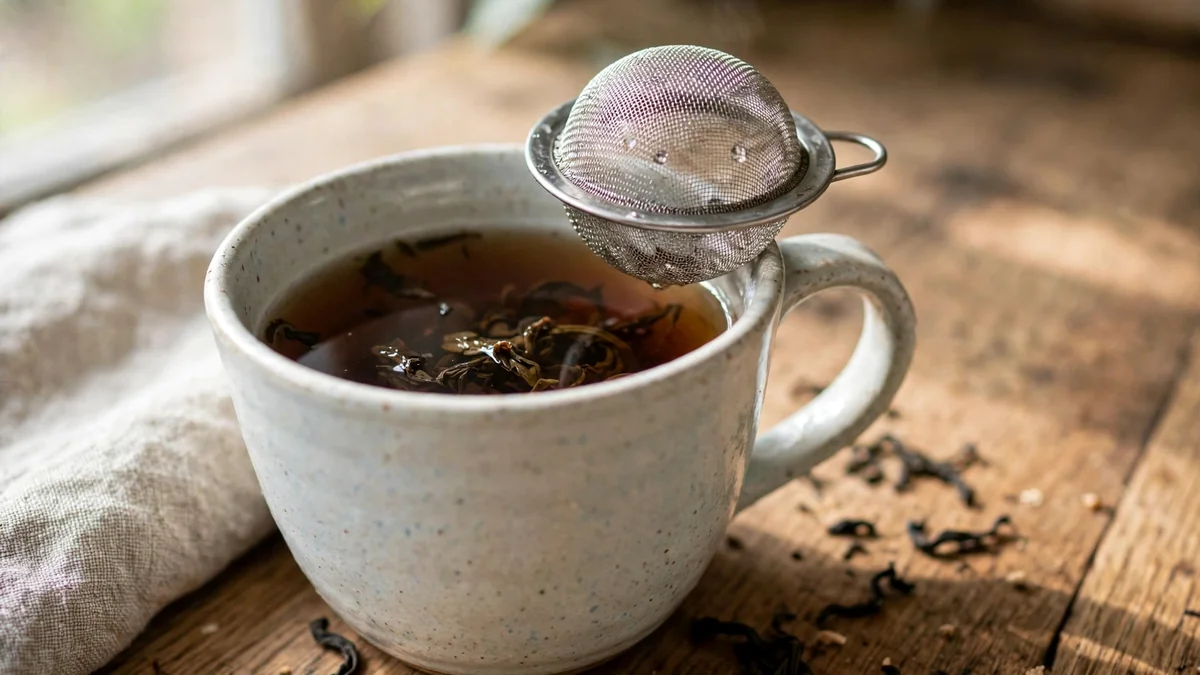
The Best Tea Strainers for a Clear, Leaf-Free Cup in 2026
The best tea strainers catch every last tea leaf before it reaches your cup, without slowing the pour to a dribble. A good tea strainer makes loose-leaf tea an everyday pleasure: the cup comes out clear, fragrant and free of grit, and the leaves lift away in one tidy piece. A bad one clogs after half a cup, lets fine dust through, or drips on the table. This guide compares the tea strainers worth owning in 2026, from small over-cup sieves to handled strainers, and explains how to match the strainer to the tea you drink most.
Key Takeaways
- A strainer works after brewing, catching leaves as you pour; an infuser holds leaves while they steep.
- Fine stainless steel mesh stops even dusty rooibos without choking the flow.
- Match the strainer to the vessel: an over-cup sieve suits a mug, a handled strainer suits a teapot.
- Look for a rim that sits flat and a handle that stays cool mid-pour.
- Rinse the mesh straight after use; dried leaves are the main reason strainers get thrown away.
What a Tea Strainer Actually Does
A tea strainer is a small sieve you pour brewed tea through. The leaves stay in the mesh and the clear tea runs into the cup below. It is the last step in making loose-leaf tea, and it decides whether the cup feels clean or gritty. A strainer is not the same tool as an infuser: an infuser holds the leaves in the water while they steep, while a strainer never enters the brewing water at all. The leaves steep freely in the pot, and the strainer catches them only at the pour. Our guide to the best tea infusers covers the baskets and balls that steep the leaves; this guide covers the sieves that finish the job.
Steeping freely and then straining has a real advantage. Loose leaves need room to open, and in a pot they have all of it, so the flavour comes out evenly. A fine mesh holds back large rolled leaves and the dust that broken-leaf teas shed, so the cup is clear even when the tea is finely cut. You also control the strength: you pour when the tea tastes right.
The Main Types of Tea Strainer
Tea strainers come in a handful of shapes, and the shape decides where it sits, how much tea it can handle, and how easy it is to clean. Most tea drinkers need only one, and the right one depends on whether you brew in a mug or a pot.
Over-Cup Mesh Strainers: The Everyday Choice
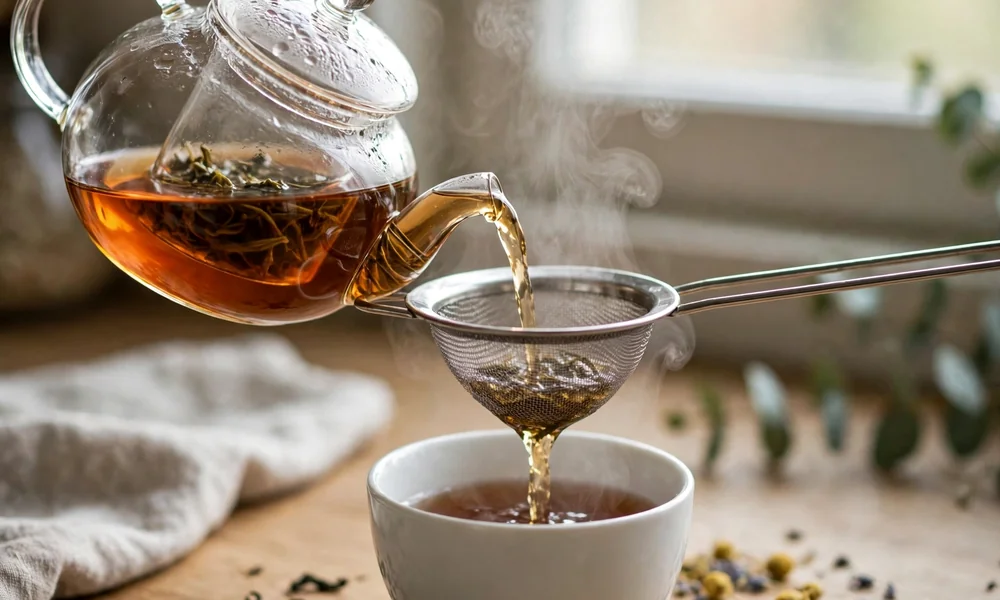
An over-cup strainer is a small mesh bowl with a rim that rests across a mug and a short handle. You set it on the cup, pour through it, and lift it away. It suits single cups, and a fine mesh catches even dusty teas. The weakness is capacity: pour a full pot through it and you will be emptying leaves halfway through.
Handled Sieves: Best for Pots
A handled sieve is a deeper mesh cup on a long handle, held over a cup or jug while you pour from the pot. The deeper bowl holds more leaves, so it copes with a full pot without clogging, and the long handle keeps your fingers away from the steam. It also doubles as a kitchen sieve for rinsing berries.
Spout Strainers: Best for Teapots
A spout strainer is a small mesh cone inside the spout of a teapot, catching leaves as the tea leaves the pot. Nothing extra to hold, nothing to drip. It only works with a pot built for it, so check the fit before you buy.
Strainer Baskets: Best for Large Batches
A strainer basket is a wide mesh cylinder that sits across the top of a jug. It holds a whole pot’s leaves without blocking, and the wide mesh keeps the tea flowing fast. It suits households that brew a big pot every morning, at the cost of more drawer space.
Tea Balls Used as Strainers: The Compromise
A tea ball is really an infuser, but some people pour through its open half. It works in a pinch, but the small mesh clogs quickly with fine tea. Keep the ball for steeping and buy a proper sieve for pouring.
What Makes a Good Tea Strainer
Mesh fineness comes first. Large punched holes let fine particles through, leaving silt in the cup. A fine woven mesh traps even dust-grade tea, and the best designs pair it with a generous surface area so the water still flows freely. Hold it up to the light: the mesh should look even, with no wide gaps.
Fit is second. A strainer that sits flat will not tip when the tea hits it, and a small hook on the far side holds it steady. Measure your usual mug first: a rim wider than the cup wobbles, and one narrower falls in.
Material is third. Stainless steel is the default: it does not stain or hold smells, it survives the dishwasher, and it lasts for years. Bamboo handles stay cool but need drying after every wash. Plastic stains with strong black tea. Whatever the material, the mesh should be stainless steel.
Cleaning is the part people forget. A smooth rim with no tight corners rinses clean, while a folded seam traps leaves. Tap it upside down over the bin first, then rinse. One left with wet leaves overnight ends up stained and smelly.
The 6 Best Tea Strainers of 2026
These six tea strainers cover every way most people brew: a quiet cup at the desk, a pot shared at the table, and tea made in a hurry. Each earns its place for a clear reason.
1. The Fine Over-Cup Mesh Strainer: Best Overall
The default recommendation: a shallow stainless steel bowl with fine woven mesh, a rim that sits flat across a standard mug, and a short handle that stays cool. It catches even dusty rooibos, pours fast, and rinses clean in seconds.
2. The Deep Handled Sieve: Best for Pots
The right choice for a full pot. Its deep bowl holds a whole pot’s leaves without clogging, and the long handle keeps your fingers clear of the steam. Look for a heat-proof grip and a small hook on the far side.
3. The Spout Strainer: Best for Teapots
The neatest option for teapot drinkers. It sits inside the spout and catches leaves as the tea pours, so there is nothing to hold and nothing to drip. Check the spout size before you buy.
4. The Wide Basket Strainer: Best for Large Batches
For households that brew a big pot every morning. Its broad mesh keeps the flow fast even with a full load of leaves, and it lifts out in one piece. It takes more drawer space, but it never clogs mid-pour.
5. The Bamboo-Handled Sieve: Best for Comfort
The most pleasant to hold. The wooden handle stays cool no matter how hot the tea, and the deep bowl copes with a generous pour. Dry the handle after washing.
6. The Compact Travel Strainer: Best for Tea Away from Home
A small folding sieve that fits in a bag with a travel mug, so you can brew loose leaf anywhere instead of settling for bags. Choose fine mesh and a case, since a bent mesh is the one real drawback.

Tea Strainers at a Glance
| Strainer | Best For | Mesh | Capacity | Cleaning |
|---|---|---|---|---|
| Over-cup mesh | Single mugs | Fine | One to two cups | Rinse |
| Handled sieve | Full pots | Fine | A full pot | Rinse |
| Spout strainer | Teapots | Fine | A full pot | Rinse in pot |
| Basket strainer | Large batches | Fine | A large pot | Tap and rinse |
| Bamboo-handled sieve | Comfortable pouring | Fine | A full pot | Rinse, dry handle |
| Travel strainer | Tea away from home | Fine | One cup | Rinse |
How to Use a Tea Strainer Well
Warm the cup first, then set the strainer across it so the rim sits flat. Pour slowly, starting in the centre of the mesh so the leaves spread out instead of piling in one corner. If the flow slows, pause and tap the strainer gently. Never press the leaves down: squeezing pushes bitter tannins and dust through the mesh.
When the cup is full, lift the strainer onto a small dish. Tip the leaves into the bin while they are still damp, because dried leaves stick to fine mesh. Rinse straight away. For a shared pot, strain the whole pot into a jug in one pour, then serve from the jug.
How to Choose the Right Tea Strainer
Start with how you brew. One mug calls for an over-cup strainer; a pot for the table calls for a handled sieve or a spout strainer. Our guide to the best teapots covers the pots that pair best with a spout strainer.
Then match the mesh to your tea. Whole-leaf green and oolong are forgiving, since their leaves are large. Broken-leaf black tea and rooibos need a genuinely fine mesh, or the cup will carry silt. If you drink mostly fine teas, spend the extra on the finest mesh.
Finally, think about the water you heat. A kettle that dribbles makes straining harder than it needs to be. Our guide to the best tea kettles covers kettles that pour in a clean, steady stream, which is exactly what a fine mesh wants.

Checklist: Before You Buy a Tea Strainer
- Check the mesh is fine and even, with no wide gaps or bent wires.
- Measure your usual mug or pot, and make sure the rim sits flat.
- Choose stainless steel mesh, even if the handle is bamboo or wood.
- Pick a handle that stays cool and gives a firm grip with wet hands.
- Check there are no folded seams where leaves can lodge.
- Make sure it fits your drawer or bag, so it gets used.
Frequently Asked Questions
Is a tea strainer the same as a tea infuser?
No. An infuser holds leaves in the water while they steep. A strainer catches leaves as you pour already-brewed tea into the cup, after the leaves have steeped freely in the pot.
What mesh size is best for a tea strainer?
Fine woven stainless steel mesh is best. It catches even dusty rooibos, while a coarse punched mesh lets fine particles through and leaves silt in the cup.
Can I use a tea strainer for coffee?
You can, for cold brew or French press coffee, but coffee grounds are finer than tea leaves, so it clogs faster. A strainer bought for tea works best kept for tea.
How do I clean a tea strainer?
Tip the leaves out while they are still damp, then rinse under running water. For stains, soak in hot water with a little bicarbonate of soda. Never leave wet leaves in the mesh overnight.
Do I need a strainer if my teapot has a built-in filter?
Not always. A good built-in spout strainer does the same job, but many are coarse and let dust through. If your cup still carries silt, a fine over-cup strainer will fix it.
Which tea strainer is best for green tea?
An over-cup fine mesh strainer suits green tea well, because the leaves are large and the mesh catches them easily. Pour gently: green tea turns bitter fast if the leaves are squeezed.
The Bottom Line
The best tea strainer for most people is a fine stainless steel over-cup mesh strainer: it catches every leaf, pours fast, and rinses clean in seconds. If you brew a full pot, step up to a deep handled sieve or a spout strainer that fits your pot. Match the mesh to the finest tea you drink, keep the rim flat, and rinse it straight after use, and every cup will come out clear.


