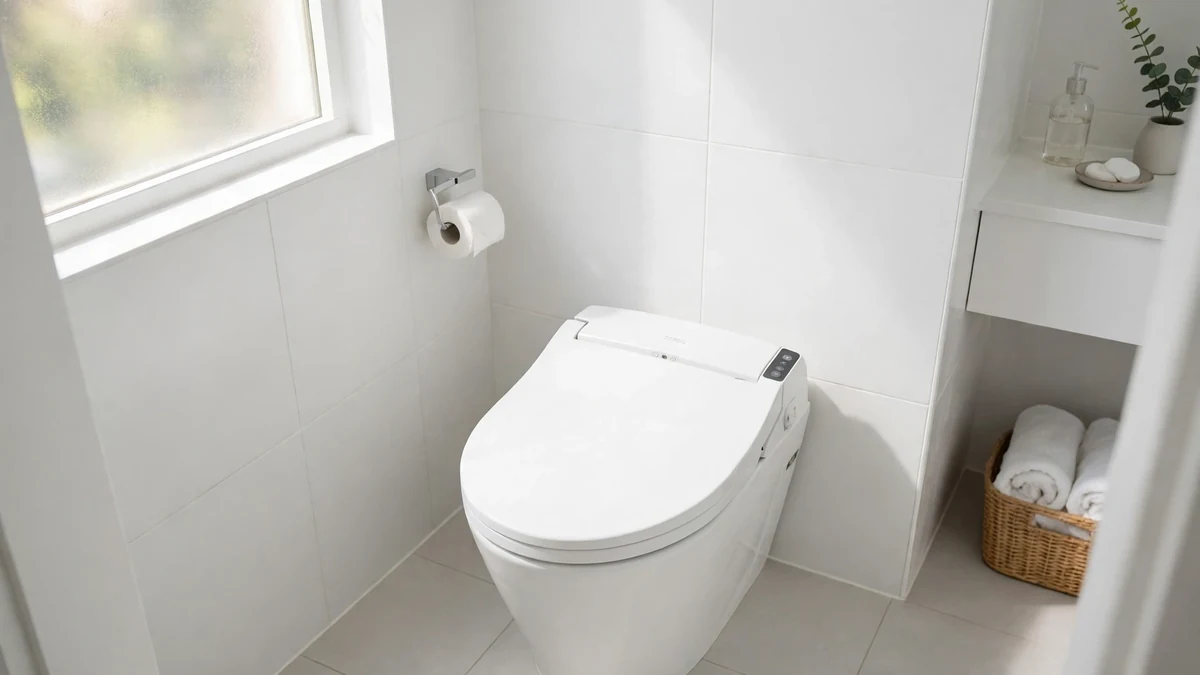
Top Toilet Seats for Comfort and Easy Cleaning in 2026
Top toilet seats for comfort and easy cleaning in 2026 are not the ones with the most features on the box. The best toilet seats feel comfortable every day, close quietly, stay firmly in place, and come off in seconds when it is time to clean underneath. A good seat is something you never think about. A bad one wobbles, slams, stains, and makes a simple job harder than it should be.
Choosing one is simpler than it looks: the shape and size of your bowl, the material, and the way it fixes to the bowl are what matter. Get those three right and almost everything else is a bonus.
Key takeaways
- Measure your bowl first: round bowls need a round seat, elongated bowls an elongated seat; the two do not fit each other.
- A soft-close seat is worth the small extra cost: it stops slamming, protects the hinges, and lasts longer.
- Quick-release hinges are the best cleaning feature: the seat lifts off in seconds with no tools.
- Moulded wood feels warmer and sturdier than plastic; thermoplastic resists stains and costs less.
- Check the fixings before you buy: a seat that cannot be tightened properly will always wobble.
Why toilet seats fail
Most toilet seats do not fail because they are cheap. They fail because they were the wrong shape, fitted badly, or made from a material that could not cope with daily cleaning. A seat that is too small leaves a rim of cold porcelain showing at the front; one that is too big overhangs and rocks. Either way, it feels wrong every time you sit down, and it never gets better on its own.
The fixings cause most of the trouble: two bolts through the back of the bowl, and if they work loose, the seat shifts and wobbles. Cheap plastic bolts stretch and crack, metal bolts rust, and the movement wears the hinges and cracks the seat. When you buy a seat, look at the fixings first, not last.
Cleaning is the other place seats fail. The hinge area is the hardest part of a toilet to clean, and on a fixed seat it is nearly impossible to reach. Dirt builds up around the hinges and under the seat, and no wiping from above will shift it. Quick-release hinges turn a ten-minute struggle into a thirty-second job.
Round or elongated: measure first
Toilet bowls come in two shapes, and the seat must match. A round bowl is roughly as wide as it is long, usually about 40 centimetres across and 42 to 45 from the fixing holes to the front. An elongated bowl is longer, usually 46 to 48, and gives more room to sit comfortably. Elongated bowls are common in newer homes; round bowls in older homes and small cloakrooms.
Measure from the fixing holes to the front edge, and the width, and check both against the product page. A round seat on an elongated bowl leaves a gap at the front; an elongated seat on a round bowl overhangs and rocks. For an unusual shape, such as a square or D-shaped bowl, you need a seat made for that exact model, named inside the cistern lid.
Also check the distance between the fixing holes, usually 14 to 15 centimetres but it varies. Seats with adjustable hinges slide to match the holes and fit almost every standard toilet.

The main types of toilet seat
Every toilet seat falls into one of four families, defined by material and features, each with a clear strength, weakness, and best bathroom.
Moulded wood seats
Moulded wood seats are made from wood fibre mixed with resin and pressed into shape. They are the sturdiest seats you can buy: solid under you, with no flex, and warmer to sit on than plastic, which matters on a cold morning. A good one has a smooth, hard finish that resists stains and wipes clean easily, and stainless steel hinges that will not rust.
The trade-off is weight and price, and if the finish chips, moisture can get into the wood fibre underneath. They suit a main family bathroom, where comfort and sturdiness matter most, and anyone heavier or less steady on their feet.
Thermoplastic seats
Thermoplastic seats are made from moulded polypropylene, the most common seats in shops. They are light, cheap, and easy to clean, and the best ones are surprisingly strong. Modern thermoplastic is hard and glossy, resists stains and bathroom chemicals, and does not absorb moisture, so it will not swell or warp.
The weakness is flex: a thin seat can bend under weight, and a cheap one can crack at the hinges. Look for thick, rigid moulding and metal hinges. Thermoplastic suits a cloakroom or rental, where the seat needs to be cheap, clean, and easy to replace.
Soft-close seats
A soft-close seat is not a material but a hinge: a damper in each hinge lowers lid and seat slowly and silently instead of letting them drop. It is a small feature that changes daily life more than any other. There is no slamming at night, no cracked seat from a dropped lid, and no pinched fingers. Soft-close hinges also last longer, because the damper takes the shock out of every closing.
Soft-close is now available on both moulded wood and thermoplastic seats for only a little extra, and the only downside is that the lid cannot be pushed down quickly. If you buy one feature, make it this one, and check it slows both the lid and the seat: some cheap seats only slow the lid.
Bidet and heated seats
Bidet seats add a washing spray, heated seats add warmth, and some combine both with a dryer and a remote control. They are a big step up in price and need a power socket nearby, which most bathrooms do not have. For people with mobility problems, or anyone wanting a gentler clean, a bidet seat can be genuinely life-changing, and it uses far less paper.
For most homes, though, a bidet seat is a luxury: the nozzles need regular cleaning, the electronics can break, and the seat is bulkier than a standard one. Try a simple non-electric bidet attachment first: it fits under a normal seat, costs far less, and shows whether you like the idea.
Comfort: what actually matters
Comfort comes from three things: shape, size, and stability. An elongated seat suits most adults better, because it gives more room and supports the thighs. A slightly contoured top spreads weight more evenly than a flat one, and a seat that does not move at all feels far more comfortable than one that shifts every time you sit down.
Height matters too. A standard seat sits about 40 centimetres from the floor, which is low for taller people and anyone with stiff knees. A raised seat adds a few centimetres and makes sitting and standing much easier. Check the bumpers underneath as well: four bumpers, evenly placed, keep the seat level and stop it rocking.
Material affects comfort too. Moulded wood feels warmer than plastic on a cold morning, a small difference you notice every day in winter. If your bathroom is chilly, moulded wood is the more comfortable choice.
Cleaning: the features that make it easy
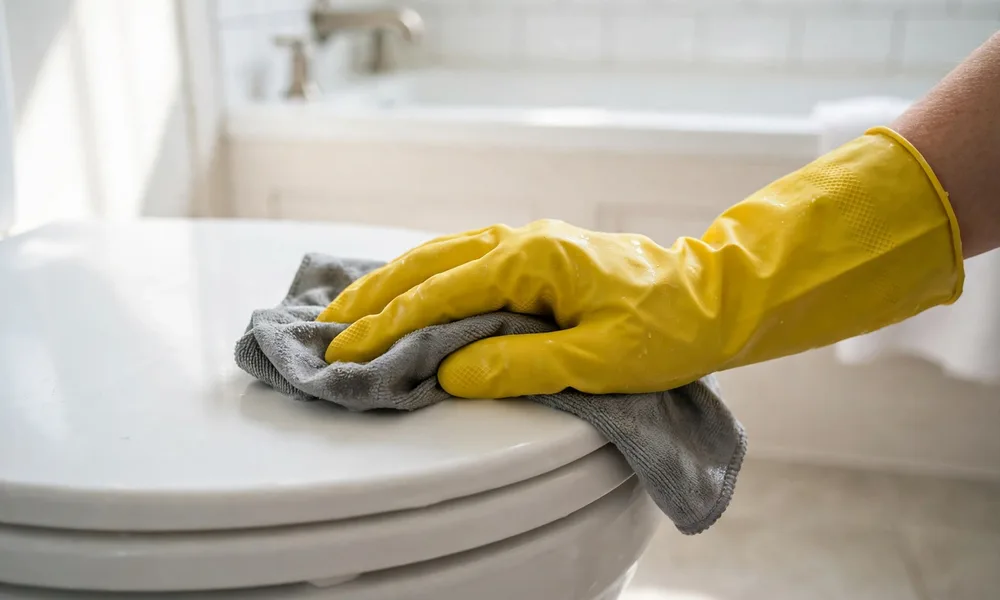
A toilet seat should be easy to clean, because it is cleaned more often than almost anything else in the house. The best cleaning feature is quick-release hinges: press a button or slide a catch and the whole seat lifts off in seconds, with no tools, so you can clean the seat, hinges, and bowl top properly. Without quick-release, the hinge area stays dirty no matter how hard you scrub.
The second thing to look for is a smooth, closed underside. Some seats have a hollow underside with ribs and gaps that trap dirt. Others have a smooth, sealed underside that wipes clean in one pass. A seat with an antibacterial coating sounds useful, but the coating wears off and is no substitute for cleaning. What matters is the shape: smooth, sealed, and free of crevices.
Clean the seat with a mild bathroom cleaner or soapy water, and avoid bleach, which can damage the finish and hinges. Wipe the hinges weekly and take the seat off once a month for a proper clean. A good plunger nearby, a tidy toilet paper holder, and a working bathroom fan keep the toilet area fresh.
Comparison table
| Toilet seat type | Comfort | Durability | Cleaning | Price | Best for |
|---|---|---|---|---|---|
| Moulded wood | Warmest, sturdiest | Very good | Good | Higher | Family bathrooms, comfort first |
| Thermoplastic | Good | Good | Very good | Low | Cloakrooms, rentals, value |
| Soft-close | Good | Best | Good | Mid-range | Every home, especially at night |
| Bidet / heated | Best | Moderate | Needs care | Highest | Mobility needs, luxury bathrooms |
Fitting a new toilet seat
Fitting a seat takes fifteen minutes and needs only a screwdriver and a spanner. Remove the old seat by unscrewing the bolts underneath, or from above after popping the covers off. Clean the bowl top properly while the seat is off, then line up the new hinges, tighten the bolts by hand first and then with the spanner, both sides evenly, a little at a time, until the seat sits level and does not shift.
The most common mistake is over-tightening, which cracks the hinges or the porcelain. Tighten until the seat does not move when pushed sideways, and no further, and check again after a week, because new fixings settle. If the seat still wobbles, check the bumpers and the size: a wrong-size seat will never sit still.

Checklist: choosing the best toilet seats in 2026
- Measure the bowl first: fixing holes to front edge, and width.
- Match the shape: round seat for a round bowl, elongated for an elongated bowl.
- Choose soft-close hinges, and check they slow both the lid and the seat.
- Pick quick-release hinges so the seat lifts off for cleaning.
- Choose moulded wood for warmth and sturdiness, thermoplastic for value and stain resistance.
- Check the fixings and bumpers before buying; re-tighten the bolts after a week.
Frequently asked questions
How do I know if my toilet is round or elongated?
Measure from the fixing holes to the front edge. Round bowls measure about 42 to 45 centimetres, elongated about 46 to 48. If unsure, check the model name inside the cistern lid.
Are soft-close toilet seats worth it?
Yes, for almost every home. They stop slamming, protect the hinges, prevent pinched fingers, and keep the bathroom quiet at night.
Why does my toilet seat keep coming loose?
Usually stretched or rusted bolts, or fixings never tightened evenly. Replace the bolts, tighten both sides a little at a time, and check again after a week. If it still moves, the seat may be the wrong shape or size.
Can I fit a new toilet seat myself?
Yes, fifteen minutes with a screwdriver and a spanner. Remove the old seat, clean the bowl top, line up the new hinges, and tighten evenly until the seat does not shift. Do not over-tighten, or you may crack the hinges or porcelain.
How often should a toilet seat be replaced?
A good seat lasts five to ten years. Replace it when the hinges crack, the seat rocks after tightening, the finish stains or chips, or the bumpers wear out; sooner if the hinges cannot be cleaned properly.
Are bidet toilet seats worth the money?
For people with mobility problems, or anyone who wants a gentler clean, yes. For most homes they are a luxury: far more expensive, needing a power socket. Try a non-electric bidet attachment first.
Bottom line
The best toilet seats of 2026 are the ones you never think about: the right shape for your bowl, comfortable to sit on, quiet to close, and easy to lift off and clean. For most homes, that means a moulded wood or good thermoplastic seat with soft-close and quick-release hinges, fitted carefully and checked after a week.