A good tortilla press turns a fiddly kitchen job into a thirty-second one. You drop a ball of masa in the middle, pull the handle, and out comes a round, even tortilla ready for the pan. No rolling pin, no flour dusted across the counter, no lopsided ovals that cook thin on one side and doughy on the other. For anyone who makes tacos at home more than once in a while, it is one of the cheapest upgrades a kitchen can get.
The catch is that not every press does the job well. A light, flimsy one leaves the centre thick and the edges paper-thin. A poorly hinged one presses harder on one side than the other. And a press with rough, pitted plates can tear a delicate corn tortilla before it ever reaches the heat. The differences between a great press and a frustrating one are small on the shelf and obvious at the counter, so it pays to know what you are looking at before you buy.
Why a press beats a rolling pin
Rolling a tortilla by hand is a skill, and it is one most home cooks never fully develop. Corn masa is not like wheat dough. It has no gluten to hold it together, so it cracks at the edges, sticks to the pin, and springs back the moment you lift it. A press solves all three problems at once by applying even pressure across the whole disc in a single motion.
What to look for in a tortilla press
Four things decide whether a press will serve you well for years or end up at the back of a cupboard: material, size, weight and the hinge. Get those four right and almost everything else is a detail.
Material
Cast iron is the classic choice, and for good reason. It is heavy, it does not flex, and it holds up to decades of use. A cast iron press needs seasoning or a light coat of oil to stop it rusting, and it is the heaviest option on the shelf, but nothing else presses quite as evenly. Aluminium presses are the light alternative. They are easy to lift, easy to store and easy to clean, and a well-made one with thick plates presses almost as well as iron. Stainless steel sits in between: strong, rust-proof and handsome, though usually the most expensive of the three. Wooden presses look beautiful and feel traditional, but wood can warp, crack and absorb moisture, so they need more care than metal.
Size
Most presses come in six, eight or ten inch sizes, measured across the plates. Six inches is right for street-style tacos and small corn tortillas. Eight inches is the most useful all-round size, big enough for a proper taco or a quesadilla and small enough to store easily. Ten inches suits flour tortillas and burrito wraps, but a press that big needs real weight behind it to press evenly, and it takes up serious cupboard space. If you only buy one, buy eight inches.
Weight and leverage
Weight is doing most of the work in a tortilla press. A heavy press needs less arm strength because gravity and the long handle do the pressing for you. A light press demands more force, and that force is where uneven tortillas come from, since a tired arm presses harder on the handle side. Look for a handle that is long enough to give you leverage without flexing, and a hinge that holds the top plate square to the bottom one all the way down. If the plates meet at an angle, one side of your tortilla will always come out thicker than the other.
Plates and finish
The plates should be smooth and flat, with no rough casting marks, pits or raised edges. Rough plates grip the dough and tear it when you peel the tortilla away. Some presses come with a non-stick coating, which helps at first but wears off and cannot be re-seasoned, so a bare, well-seasoned cast iron or a smooth polished aluminium plate is the safer long-term bet. Always press between two sheets of parchment, plastic or a cut-open freezer bag. It stops sticking entirely and makes cleanup a matter of wiping the plates.

The presses worth buying in 2026
Heavy cast iron, eight inch
This is the workhorse, and for most cooks it is the right answer. A cast iron press in the eight-inch size weighs enough to press evenly with one smooth pull, and the weight stays constant for the life of the tool. It will press corn tortillas, flour tortillas and even empanada dough without complaint. The trade-off is the weight itself: at around eight pounds, it is not something you will want to lift down from a high shelf every night. Keep it somewhere reachable, season it now and then, and it will outlast every other tool in your kitchen. If you already cook with cast iron, this will feel familiar from the first press. Our guide to cast iron skillets covers the seasoning habits that keep iron in good shape, and the same rules apply here.
Lightweight aluminium, eight inch
Aluminium is the right pick if weight matters to you, or if the press will live in a small kitchen where it gets lifted in and out of a cupboard often. A good aluminium press weighs a third of an iron one and still presses a clean, even tortilla, provided the plates are thick. Thin, cheap aluminium flexes under pressure, which is the single most common reason a budget press disappoints. Look for plates at least a quarter of an inch thick and a handle that is bolted on, not riveted. Aluminium does not rust, it washes easily, and it is the best choice for anyone who presses tortillas a few times a month rather than a few times a week.
Large ten inch, cast iron or steel
A ten-inch press is for flour tortillas, burritos and anyone who cooks for a crowd. The bigger plates mean bigger tortillas, but they also mean the press has to work harder to keep the pressure even across a wider disc. That is why the good ten-inch presses are the heaviest ones, often over ten pounds. If you mostly make small corn tortillas, a ten-inch press is overkill and will slow you down. If you make burritos every weekend, nothing else will do.
Wooden press
A wooden press is the traditional tool in many Mexican kitchens, and a well-made one presses beautifully. Wood is naturally non-stick, it is light in the hand, and it looks good enough to leave on the counter. The catch is maintenance. Wood needs oiling, it can crack if it dries out, and it should never go in the dishwasher or sit in water. A wooden press suits a cook who enjoys looking after their tools and presses tortillas often enough to keep the wood conditioned. For everyone else, metal is the lower-maintenance choice.
What to skip
Skip any press with thin, wobbly plates, a short stubby handle, or a hinge that lets the top plate rock side to side. Skip presses with decorative patterns cast into the plates, since the pattern transfers onto the tortilla and creates weak spots. And skip the cheapest no-name presses with rough, sand-cast plates that feel like sandpaper; they tear dough, they are hard to clean, and they cost more in wasted masa than you saved at the till. A press is a simple tool, and simple tools fail in simple ways. Buy the solid one.
How to press a tortilla that cooks evenly
Good pressing starts before the press. The masa needs to be soft and pliable, about the texture of play dough. If it cracks when you roll a ball, add water a teaspoon at a time until it holds together. If it sticks to your hands, it is too wet, and a pinch of masa harina will bring it back. Roll the dough into a ball slightly smaller than a golf ball for a six-inch tortilla, and a little larger for eight inches.
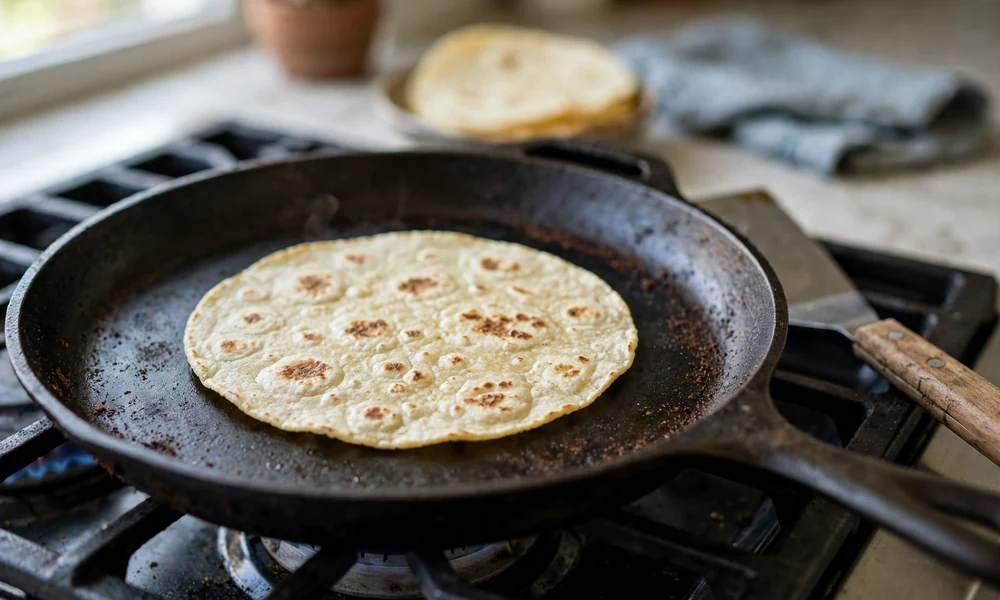
Place the ball slightly off-centre, toward the hinge, because the handle side presses a fraction harder and the offset evens it out. Cover it with parchment, pull the handle down in one smooth motion, and hold it for two or three seconds. Lift the top plate, peel the tortilla off the parchment, and lay it straight onto a hot, dry comal or skillet. Cook it for about a minute a side, until it puffs and picks up light brown spots, then stack it in a cloth-lined basket or a tortilla warmer so the steam keeps it soft.
The first tortilla is almost always a test. If it comes out too thick, press harder or use a smaller ball. If the edges crack, the masa is too dry. If it sticks, the parchment was missing or the dough was too wet. Two or three tries and you will have the feel of it, and from then on it is pure rhythm.
Care, storage and a note on other presses
A cast iron press needs the same care as any cast iron: dry it straight after washing, rub it with a thin coat of oil, and store it somewhere dry. Aluminium and steel just need a wash and a dry. Wooden presses need an occasional rub with food-safe mineral oil and should be stored away from heat. Whatever the material, keep the press somewhere you can reach it without a step stool. A tool you have to work to reach is a tool you stop using.
It is worth knowing that a tortilla press is a different tool from the other presses in a kitchen. A panini press cooks with heat and weight, and its plates are ridged and electric. Our guide to the best panini presses is useful if you want a heated press for sandwiches, but it will not make you a tortilla. The tortilla press does one job, with no power and no heat, and that simplicity is exactly why it lasts.
Mistakes that ruin a good tortilla
The most common mistake is pressing too hard on a dry dough, which cracks the edges and leaves the centre thick. The second is skipping the parchment, which glues the tortilla to the plates and tears it on the peel. The third is cooking on a pan that is not hot enough, which dries the tortilla out before it can puff. And the fourth is storing finished tortillas in the open air, where they go stiff in minutes. Press gently, use parchment, heat the pan properly, and keep the stack covered, and the tortillas will take care of themselves.
The bottom line
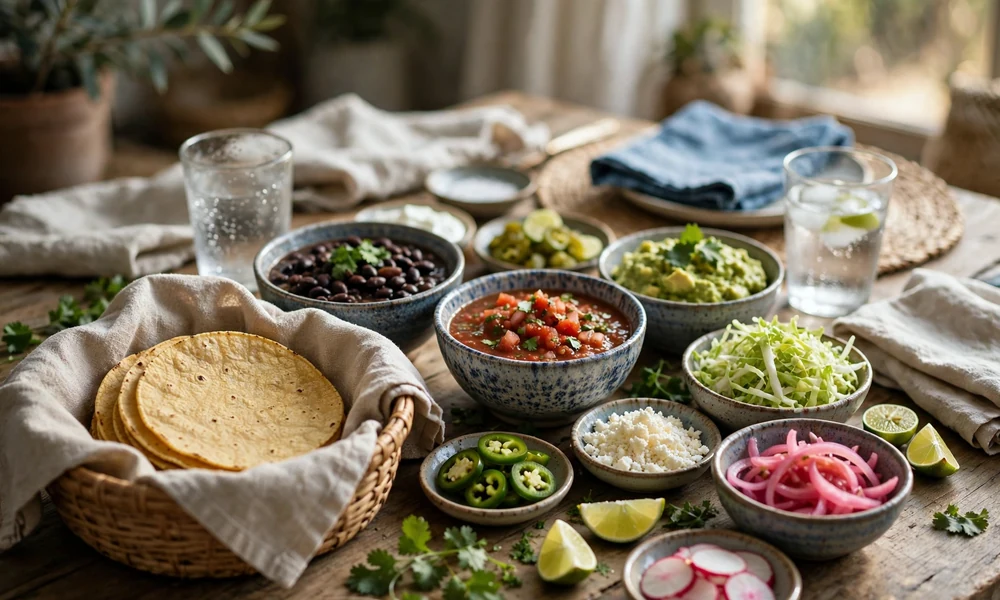
A tortilla press is a small, simple, inexpensive tool, and that is its charm. There is nothing to plug in, nothing to program, and nothing to wear out. Buy a solid one, in the right size, with smooth plates and a square hinge, and it will make better tortillas than a rolling pin ever could, for as long as you own it. Once you have pressed your own, warm and soft and straight off the comal, the bagged ones from the supermarket will never quite taste the same. If you need inspiration for what to put in them, our guide to the best and worst tacos is a good place to start.