
Best Egg Separators 2026
Separating an egg sounds simple until you actually have to do it. The white clings to the yolk, a bit of shell slips in, and by the third egg your hands are sticky and the yolk has broken into the bowl you meant to keep clean.
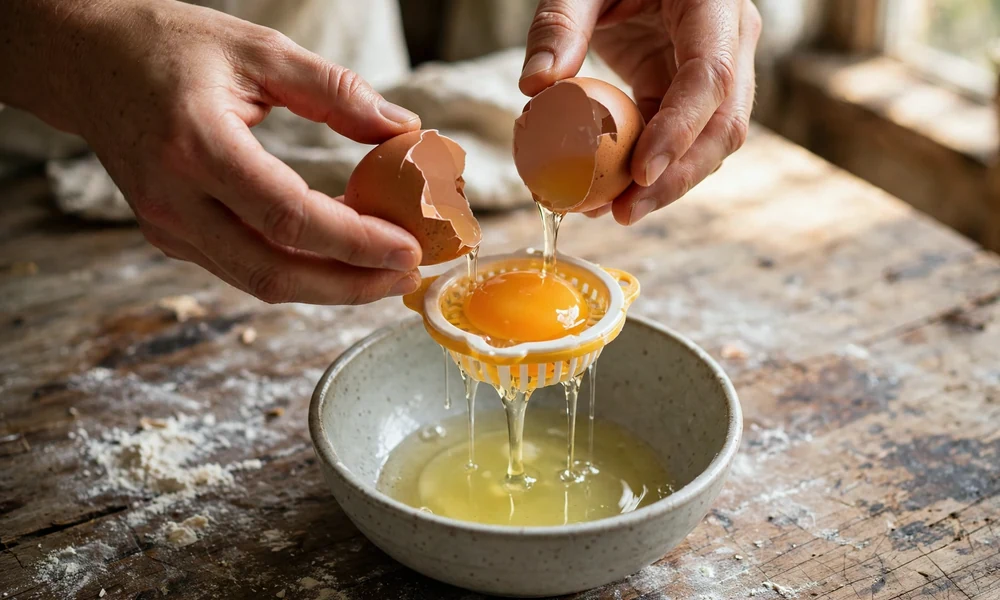
A good egg separator turns that fiddly job into a ten-second one. You crack the egg, tip it in, and the white drains away while the yolk sits safely in the cup. These are the best egg separators of 2026, chosen for clean separation, easy cleaning, and a design that actually fits over the bowls you already own.
Key Takeaways
- Slot size matters more than brand: slots that are too narrow hold the white back, and slots that are too wide let a soft yolk slip through.
- Ceramic cups suit bakers who separate a lot of eggs at once, while a steel slotted tool suits everyday cooks who want something that goes in the dishwasher.
- A separator must sit steadily on your bowl, because one that wobbles or slides will spill the yolk at the worst moment.
- Fresh eggs separate far more cleanly than older ones, whatever tool you use, since a firm white holds its shape and a plump yolk resists breaking.
- Keep the yolk bowl and the white bowl apart from the start, because one broken yolk in the whites will stop them whipping properly.
Egg Separators 2026 at a Glance
| Best for | Separator type | Material | Standout strength |
|---|---|---|---|
| Best overall | Ceramic slotted cup | Glazed ceramic | Steady, gentle on yolks, easy to rinse |
| Best for daily cooking | Steel slotted spoon | Stainless steel | Dishwasher safe and nearly unbreakable |
| Best for small hands | Plastic clip-on gadget | BPA-free plastic | Light, cheap, and clips onto any bowl |
| Best for baking days | Wide ceramic cup | Glazed ceramic | Handles a dozen eggs without a wobble |
| Best for tiny kitchens | Bottle-top separator | Silicone and plastic | Fits in a drawer and costs almost nothing |
| Best for meringues | Fine-slot steel cup | Stainless steel | Keeps every trace of yolk out of the whites |
What an Egg Separator Is Really For
An egg separator does one job: it lets the white fall through while the yolk stays put. That sounds trivial, but the difference between a clean split and a broken yolk decides whether your meringue whips up stiff or collapses into a sad puddle. Fat is the enemy of whipped egg white, and even a small smear of yolk is enough to stop the foam forming.
Most people only reach for a separator when a recipe demands it. Meringues, soufflés, custards, and angel food cakes all want whites or yolks on their own, and a good separator makes those recipes feel approachable instead of fussy. It also helps at breakfast, when you want a white-only omelette or a yolk-rich sauce without the faff of passing the yolk between shell halves.

The Main Types of Egg Separator
Ceramic Slotted Cups
The ceramic cup is the classic. You set it over a bowl, crack the egg into it, and the white slips through the slots in the rim while the yolk stays in the cup. The weight of the ceramic keeps it steady, and the glazed surface is smooth enough that the yolk slides out cleanly when you tip it into its own bowl.
Look for a cup with slots that are wide enough to let a thick white through but narrow enough to catch the yolk. Slots around four to five millimetres hit that balance for most hens’ eggs. Wider slots drain faster but risk a soft yolk, and narrower slots leave you waiting while the white creeps through.
Steel Slotted Tools
Steel separators usually look like a shallow spoon or a small cup on a handle, with long slots cut through the bowl of the tool. They are the workhorses of the family: they survive the dishwasher, they do not chip, and they last for years. If you separate eggs most days, steel is the sensible choice.
The handle is the part to judge. A long handle lets you hold the tool over a bowl without your fingers getting in the white, and a hooked end lets it rest on the bowl rim while you crack the next egg. Short-handled steel separators feel fiddly by comparison, especially over a deep mixing bowl.
Steel is also the easiest to keep clean. Egg white dries into a stubborn film on almost any material, but steel takes a soak and a scrub without complaint. Avoid steel tools with rough or unfinished slot edges, since a burr can nick the yolk membrane as the egg slides in.
Plastic Clip-On Gadgets
Plastic separators are the cheapest and the lightest, and many of them clip directly onto the rim of a bowl, which keeps both hands free. They come in bright colours, they weigh almost nothing, and they are the best choice for children learning to cook or for a holiday cottage kitchen.
Plastic does have one real advantage over ceramic and steel: it never chips a bowl. If your favourite mixing bowls are handmade pottery or thin glass, a soft plastic separator is the kindest tool you can use with them.
How to Choose the Right Egg Separator
Start with your bowls. Measure the rim of the bowl you separate eggs over most often, and make sure the separator sits across it without rocking. A cup that is too small falls in, and one that is too big slides about. If you use several bowl sizes, a handled steel tool is more forgiving than a fixed cup.
Next, think about how many eggs you separate at a time. One or two eggs for breakfast is a job for any tool. A dozen eggs for a meringue tower or a batch of custards calls for a wide ceramic cup that you can work through quickly without stopping to empty it. Speed matters here, because egg white left sitting in the cup starts to set and clings.
Material is a question of habit. If you wash up by hand and like beautiful tools, ceramic will make you happy every time you use it. If you throw everything in the dishwasher and want a tool you never have to think about, steel is the answer. If you want something light, cheap, and kind to your bowls, plastic does the job.
How to Use an Egg Separator Well
Crack the egg on a flat surface, not on the rim of the bowl. A flat crack makes a cleaner break with fewer shell fragments, and it keeps the yolk membrane intact. Open the egg close over the separator, and let the white start draining before you tip the shell away.
Give the white time. The thick part of the white drains slowly, and rushing it by shaking the cup is how yolks break. A gentle tilt of the cup, or a slow stir with a fingertip, coaxes the last of the white through without disturbing the yolk. Two bowls help here: one for whites, one for yolks, with the separator resting on the white bowl.
Common Mistakes to Avoid
The most common mistake is separating eggs over the wrong bowl. If you crack straight over the whites bowl and the yolk breaks, the whole bowl is spoiled. Always use a third small bowl or cup as a staging post, and only tip each separated egg into the main bowls once you have checked it.
The third mistake is leaving the separator dirty. Dried egg white is one of the hardest things in a kitchen to clean, and a separator with white baked into its slots will drain slowly next time. Rinse it the moment you finish, even if you plan to wash it properly later. A quick rinse now saves a long soak tomorrow.

Egg Separators and the Rest of the Kitchen
An egg separator rarely lives alone in a drawer. It sits beside the other small tools that make breakfast and baking easier, and it is worth thinking about the set as a whole. A good breakfast setup, for instance, pairs a separator with egg cups that keep soft-boiled eggs upright and warm, and our guide to the best egg cups of 2026 covers the ones worth keeping on the breakfast table.
Bakers will get the most from a separator when the rest of the kit is right too. A cake that needs six separated whites also needs a pan that bakes evenly, and our guide to the best loaf pans of 2026 looks at the pans that turn those whites into a proper loaf. The separator is a small part of the job, but it is the part that decides whether the batter starts clean.
The same logic applies to the gadget drawer in general. Small tools earn their place by doing one job well and staying out of the way the rest of the time, and the avocado slicer is a good example of that bargain. Our guide to the best avocado slicers of 2026 covers a tool that, like the egg separator, saves a few minutes and a little mess every time it comes out.
Frequently Asked Questions
Do I really need an egg separator? Not for one egg, but yes if you bake regularly. A separator is faster, cleaner, and kinder to yolks than the shell method once you have more than a couple of eggs to split.
Which material is best for an egg separator? Ceramic is the gentlest on yolks and the prettiest to use, steel is the toughest and the easiest to clean, and plastic is the lightest and cheapest. The best material is the one that matches how you cook and how you wash up.
Can I separate eggs with a slotted spoon? You can, and it works in a pinch, but a slotted spoon holds the yolk less securely than a proper separator and the white drains more slowly. A dedicated tool is worth it if you separate eggs more than once a month.
Why will my egg whites not whip up? The usual cause is a trace of yolk or fat in the whites. Even a tiny smear stops the foam forming, so separate each egg over a small cup first, and make sure the bowl and whisk are clean and dry.
Should eggs be cold or warm when I separate them? Cold. Cold eggs separate more cleanly because the whites are firmer and the yolks hold their shape. Let the separated whites warm to room temperature afterwards if the recipe calls for it.
The Bottom Line
The best egg separator of 2026 is the one that fits your bowls, suits your cooking, and gets used instead of sitting in a drawer. For most kitchens that means a ceramic cup for baking days and a steel tool for everyday cooking, with a plastic gadget kept handy for children and small hands.
Start with the basics: fresh eggs, cold from the fridge, cracked on a flat surface, separated one at a time over a small cup. Then choose the tool that makes that routine easiest. The separator itself is a small thing, but it is the small thing that decides whether your meringues rise, your custards set, and your breakfast stays calm.


