Loaf Pans That Bake Evenly Every Time in 2026
The best loaf pans bake evenly every time because they spread heat across the whole loaf instead of scorching the corners and leaving the middle pale. A good loaf pan turns simple dough into a loaf with a golden crust, a soft even crumb and straight sides. A bad one gives you a loaf that is dark on the bottom, raw in the centre and stuck to the pan. The difference is almost never the recipe.
Loaf pans look simple, and that is why most people buy the cheapest one on the shelf. But a loaf pan touches every part of the loaf at once, and a thin pan with hot spots will punish even a good baker. This guide compares the main types of loaf pan in 2026, from heavy steel and cast iron to ceramic and silicone. Whether you bake every week or once a month, the right pan makes the result repeatable.
Key Takeaways
- Heavy pans bake more evenly than thin ones, because thick metal spreads heat.
- Steel and cast iron give the best crust; ceramic gives a gentler, more even bake.
- A standard loaf pan measures about 23 by 13 centimetres; check the size before you buy.
- Grease and flour the pan, or line it with parchment, and your loaf will release cleanly every time.
- An oven thermometer is the cheapest fix for uneven baking, because most ovens run hotter or cooler than the dial.
What Makes a Loaf Pan Bake Evenly
Even baking starts with even heat. A thick, heavy pan spreads heat across its whole surface, so the corners, base and sides all bake at a similar rate. A thin pan heats fast in some spots and slowly in others, which is how you get a loaf burnt on the bottom and pale on top. Weight is the simplest test in the shop: the heavier pan in the same size is usually the better baker.
Material decides how that heat behaves. Steel heats quickly and gives a crisp, golden crust, which is why most professional bakers use it. Cast iron heats slowly but holds heat superbly, giving the most even bake of all. Ceramic and stoneware heat gently and evenly, which suits fruit loaves that burn easily. Silicone is light and flexible, but it insulates the dough and often gives a pale, soft crust.
Shape matters more than most bakers expect. Straight, upright sides give a tall loaf with a square profile that slices evenly for sandwiches. Sloped sides release more easily but narrow the loaf towards the top. Dark pans absorb more heat and brown faster, so reduce the oven temperature by about 10 degrees when you use one. Light-coloured pans brown more slowly, which is kinder to sweet doughs.

The Main Types of Loaf Pan
Loaf pans come in four main materials, and each one bakes a slightly different loaf. The right choice depends on what you bake most.
Steel Loaf Pans
A steel loaf pan is the workhorse of the baking world. Aluminised steel is the professional standard: it heats quickly, spreads heat evenly, resists rust and gives a crisp golden crust. Plain carbon steel bakes just as well but needs oiling to stop it rusting. A good steel pan is heavy for its size, with folded rims. If you bake bread every week, a heavy steel pan is the one to buy.
Cast Iron Loaf Pans
A cast iron loaf pan is the heaviest pan here, and the most even baker once it is hot. Cast iron holds heat like nothing else, so the loaf bakes at the same rate from start to finish. The crust it gives is superb: dark, crisp and deeply flavoured. The trade-offs are weight and care: it is heavy to lift, needs seasoning to stay non-stick, and must be dried properly to stop it rusting. If you do not mind the upkeep, cast iron gives the best loaf.
Ceramic and Stoneware Loaf Pans
A ceramic or stoneware loaf pan bakes gently and evenly, which suits enriched doughs, fruit loaves and banana bread that scorch easily in metal. The thick walls spread heat slowly, so the loaf rises evenly and browns without burning. Ceramic pans look good enough to serve from. Their weaknesses are weight, fragility and price: a ceramic pan can chip or crack if dropped or plunged into cold water while hot. For slow, gentle baking, ceramic is hard to beat.
Silicone Loaf Pans
A silicone loaf pan is light, flexible and almost impossible to stick to, which appeals to beginners. You can peel the pan away from the loaf, and it stores flat in a drawer. But silicone insulates the dough, so the loaf bakes slowly and the crust comes out pale and soft. It also needs a baking tray underneath for support. It suits soft, moist bakes like banana bread, but it is the weakest choice for a proper sandwich loaf.
What Matters When You Buy a Loaf Pan
Size comes first, because loaf pans are not as standard as they look. The common size is about 23 by 13 centimetres, measured across the top, and most recipes are written for it. But pans vary, and a pan that is too big gives a flat loaf while one that is too small overflows. Check the measurements on the base. If you bake from a bread machine, the dough is shaped for a machine pan, so our guide to the best bread makers is the better starting point; a loaf pan is for dough you mix and shape by hand.
Weight and thickness are the best guide to quality. A heavy pan bakes evenly, resists warping and lasts longer. A light, thin pan buckles in a hot oven, creates hot spots and gives uneven loaves. Pick the pan up in the shop: if it feels flimsy, it will bake flimsy. Look for a flat base and folded rims that keep the pan rigid.
The non-stick coating decides how easily the loaf comes out. A good coating releases cleanly for years if you treat it gently, but it scratches easily and fails if you use metal utensils. Uncoated steel and cast iron need greasing and flouring, or a parchment sling, but they last indefinitely. Whatever you buy, avoid the cheapest non-stick pans: their coatings fail within a year, and a loaf stuck in the pan is a loaf ruined. The same lesson applies to the machines that make the dough, as our guide to the best vs worst bread makers shows with its own list of coatings that fail early.
Cleaning is worth a thought too. A steel or silicone pan goes in the dishwasher, though hand washing keeps any coating alive longer. Cast iron must never go in the dishwasher: wash it in hot water, dry it on the stove, and rub in a little oil. Store pans where they cannot knock against each other, because chips and scratches are how good pans die. Once the loaf is out, keep it fresh: our guide to bread boxes that keep loaves fresh longer covers what to do with the loaf after the pan has done its job.
Loaf Pan Materials Compared
| Material | Evenness | Crust | Care | Best for |
|---|---|---|---|---|
| Steel | Very good | Crisp, golden | Easy | Weekly sandwich bread |
| Cast iron | Best | Dark, crisp | Seasoning needed | Serious bakers |
| Ceramic | Very good | Soft, even | Gentle handling | Fruit loaves and enriched doughs |
| Silicone | Fair | Pale, soft | Very easy | Banana bread and moist bakes |

The Best Loaf Pans of 2026
Best Overall: A Heavy Aluminised Steel Loaf Pan
The best overall loaf pan in 2026 is a heavy aluminised steel pan in the standard 23 by 13 centimetre size. It heats quickly, spreads heat evenly, gives a crisp golden crust and releases cleanly with a little grease. It is the pan professional bakers use. Look for thick steel, folded rims and a flat base, and avoid the lightest pan on the shelf.
Best Cast Iron: A Seasoned Cast Iron Loaf Pan
If you want the most even bake and the best crust, a seasoned cast iron loaf pan is the one to buy. It holds heat better than any other pan, and the crust is dark, crisp and deeply flavoured. It is heavy, and it needs seasoning and proper drying, but the results repay the effort. Buy it if you bake often.
Best Budget: A Plain Carbon Steel Loaf Pan
A plain carbon steel loaf pan gives most of the performance of aluminised steel at a lower price, which makes it the best budget loaf pan. It bakes evenly, gives a good crust and lasts for years if you keep it oiled and dry. It will darken with use, which is normal. Grease and flour it well, or line it with parchment, and it will release cleanly.
Baking Evenly: Oven, Temperature and Preparation
The pan is only half the story. Most ovens lie about their temperature, running ten or twenty degrees hotter or cooler than the dial says. An oven thermometer tells the truth: check it before the dough goes in. Bake on the middle shelf, where the heat is most even, and avoid the bottom shelf, which scorches the base.
Preparation decides whether the loaf releases. Grease the pan with butter or oil, then dust it lightly with flour. For a guaranteed release, line the base and long sides with a strip of parchment, leaving the ends overhanging so you can lift the loaf out. Fill the pan no more than two-thirds full, so the dough has room to rise. Let the dough rise until it crowns about two centimetres above the rim.
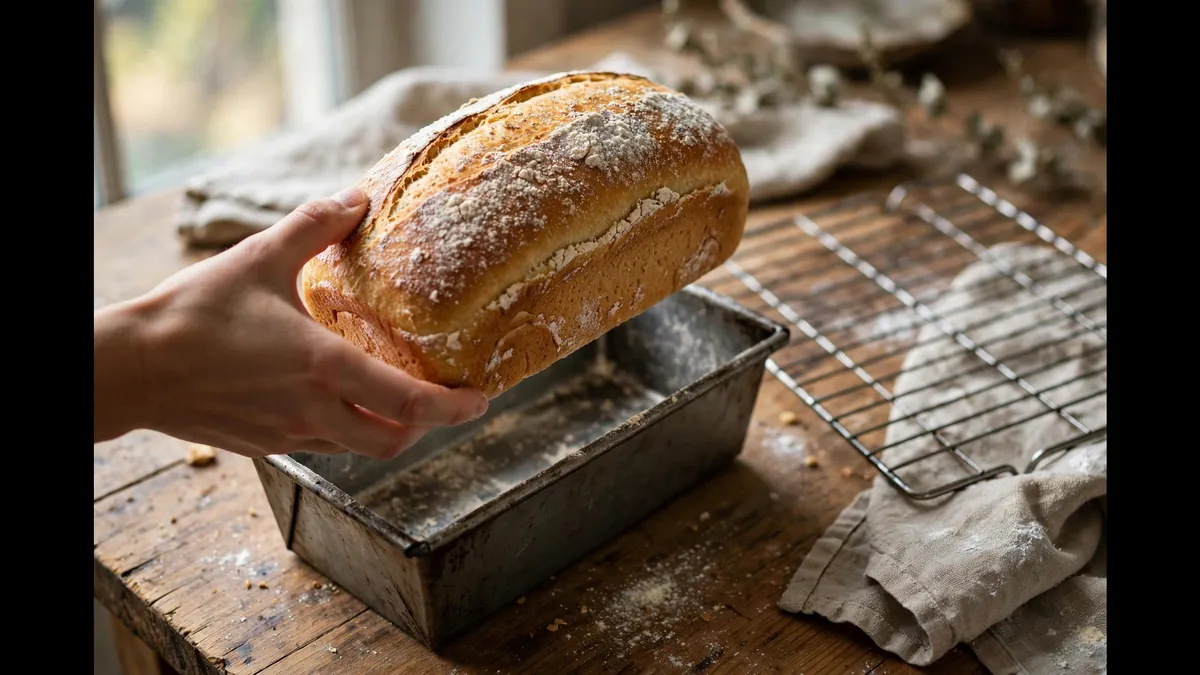
Cooling matters as much as baking. Turn the loaf out within five to ten minutes of leaving the oven, and cool it on a wire rack. A loaf left in the pan keeps cooking from the trapped heat, and the base goes damp. Wait until the loaf is fully cool before slicing, because a warm loaf is still setting inside and will squash under the knife.

Your Even-Baking Checklist
- Use a heavy pan: thick steel or cast iron spreads heat evenly.
- Check the size: a standard pan is about 23 by 13 centimetres at the top.
- Grease and flour the pan, or line it with parchment, for a clean release.
- Use an oven thermometer and bake on the middle shelf.
- Turn the pan halfway through if your oven has hot spots.
- Turn the loaf out within ten minutes and cool it on a rack.
Frequently Asked Questions
What size loaf pan should I buy?
The standard size is about 23 by 13 centimetres, measured across the top, and most recipes are written for it. Check the size on the base before you buy.
Why is my loaf burnt on the bottom but pale on top?
The pan is too thin, or you are baking on the bottom shelf. Use a heavier pan and bake on the middle shelf.
Should I use a dark or light loaf pan?
Dark pans absorb more heat and brown faster, so reduce the oven temperature by about 10 degrees. Light pans brown more slowly.
How do I stop bread sticking to a loaf pan?
Grease the pan with butter or oil and dust it with flour, or line it with parchment.
Can I use a silicone loaf pan for sandwich bread?
You can, but the crust will be pale and soft, because silicone insulates the dough.
Do I need to season a cast iron loaf pan?
Yes. Rub it with a thin layer of oil, bake it empty, and repeat a few times. Keep it dry after washing.
The Bottom Line
Loaf pans that bake evenly every time in 2026 are the heavy ones: an aluminised steel pan for everyday bread, a cast iron pan for the best crust, and a plain steel pan for a tight budget. Buy the right size, grease it well, and turn the loaf out promptly.