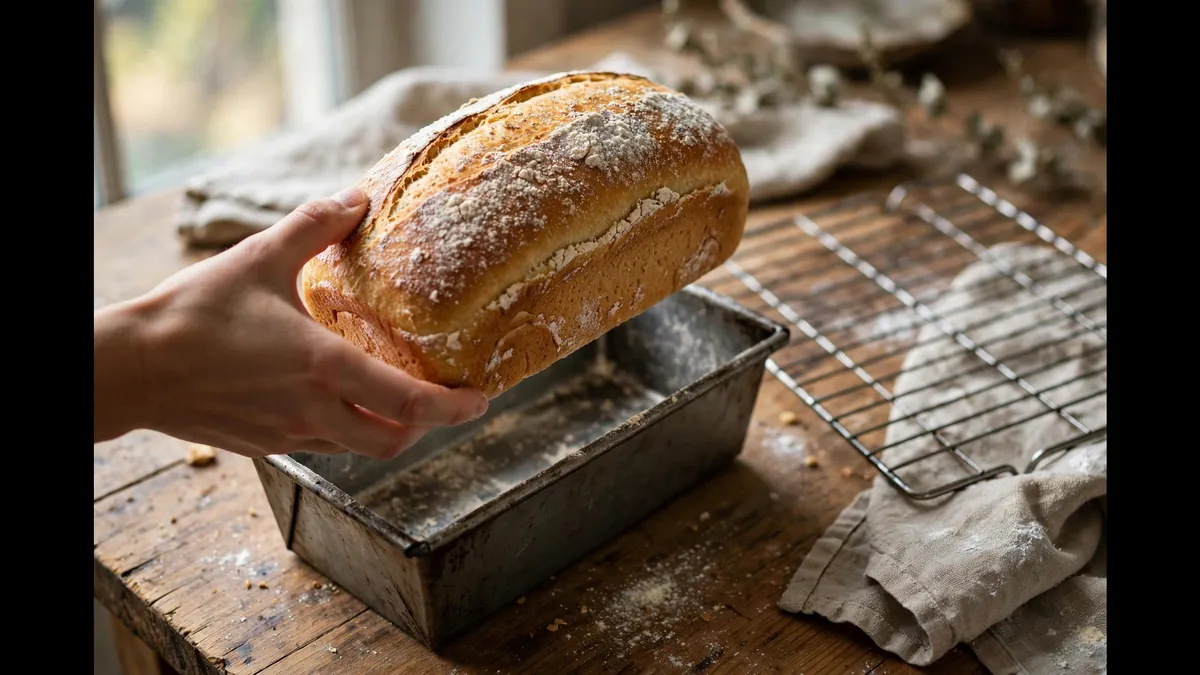
A bread maker promises the simplest deal in the kitchen: tip in flour, water, yeast and salt, press a button, and come back to a warm loaf. When the machine is good, that promise holds week after week. When it is bad, the same promise turns into wasted ingredients and loaves that collapse, burn on top, stay raw in the middle, or come out dense enough to hold a door open. The two kinds of machine look almost identical on a shelf. The difference is inside, in the motor, the pan, the heating element and the sensor, and you cannot see any of it until the loaf comes out.
This guide puts the best bread makers of 2026 against the worst, side by side, so you can tell them apart before you buy. We look at what the best machines do well, the faults that sink the worst ones, and how to test any machine during the return window. If you only want the good news, our guide to the best bread makers 2026 covers the winners. If you want the full warning list, the worst bread makers 2026 guide covers the failures. Here, both sides share one page, because the fastest way to spot a bad machine is to know exactly what a good one does differently.
Key takeaways
- A good bread maker kneads strongly, proves at a steady temperature and bakes evenly; a bad one guesses at every stage.
- A collapsed loaf is almost always a machine fault, not a recipe fault: weak kneading and poor heat control are the usual causes.
- The paddle hole and the stuck paddle are design problems, so check the pan and paddle shape before you buy.
- Wholemeal and gluten-free programmes are where cheap machines fail first, because both need longer kneading and steadier heat.
- Test a bread maker hard during the return window, because the worst faults appear on the second or third loaf, not the first.
How a bread maker actually works
A bread maker has four jobs, done in sequence, inside a sealed metal box, with no human watching: mix, knead for twenty minutes or more, hold the dough warm while the yeast works, then bake. If any stage goes wrong, the stages after it cannot recover. You only find out three hours later, when the lid opens.
The sealed box is the whole problem. You cannot see the dough, feel it, or add a splash of water when it looks dry. A good machine compensates with a strong motor, a well-shaped pan and a sensor that measures temperature and adjusts. A bad machine guesses: it kneads on a fixed timer whether the dough is ready or not, and bakes until the timer ends whether the crust is done or not. The result is a loaf that looks different every time, even with the same recipe measured to the gram.

The best side: what the best bread makers get right
The best bread makers of 2026 share a short list of qualities, and none of them is about the number of programmes on the box. They knead properly, they hold a steady temperature, they bake evenly, and they are built to last. Everything else is decoration.
Strong, steady kneading
A good motor works the dough until it is smooth and elastic, without straining, overheating or slowing down halfway through. You can hear the difference: a strong machine hums steadily, while a weak one labours and sometimes stalls when the dough gets stiff. Wholemeal dough is the real test, because the bran and fibre resist the paddle. A good machine powers through it. A weak one leaves floury pockets and an uneven crumb.
Kneading matters because it builds the gluten network that traps gas from the yeast. Under-kneaded dough rises weakly and bakes into a dense loaf. The best machines hit the middle reliably, loaf after loaf, because the motor and the paddle shape were designed together, not bolted together from the cheapest parts.
Even heat, top to bottom
The best machines bake with an element that wraps the pan evenly and a pan thick enough to hold heat. The crust comes out the same colour on the top, the sides and the base, and the crumb is cooked through to the centre. That sounds basic, but it is exactly where cheap machines fail: a thin pan loses heat at the corners, a single element scorches the bottom while the top stays pale, and the loaf comes out looking like two different bakes in one.
Crust settings on a good machine actually do something. Light, medium and dark produce visibly different loaves, because the machine controls temperature rather than just adding minutes. On a bad machine the settings are a fiction: the crust comes out the same whatever you press, because the element is either on or off and nobody is measuring anything.
A pan and paddle designed to be lived with
The best machines have a pan with a non-stick coating that survives years of use, a paddle that comes off the shaft without a fight, and a loaf that slides out cleanly. The paddle hole in the base is small, because the paddle itself is small and well shaped. Spare pans and paddles are available, so one worn part does not kill the whole machine.
A bread maker is a machine you use weekly for years. The pan coating wears, the paddle loosens, the belt stretches. The best brands sell spares for years. The worst brands do not sell spares at all, and one dead paddle turns a working machine into a heavy paperweight.
Programmes that earn their place
A good machine offers a sensible set of programmes: white, wholemeal, gluten-free, dough-only, jam and a fast bake. Each one is genuinely different, with different kneading times and bake profiles. The gluten-free programme is the mark of a serious machine: gluten-free dough needs longer, gentler handling and a steadier rise.
The worst side: where the worst bread makers fail
The worst bread makers fail in the same five ways, and once you know them you can spot them in reviews and in your own kitchen before the return window closes.
Collapsed and sunken loaves
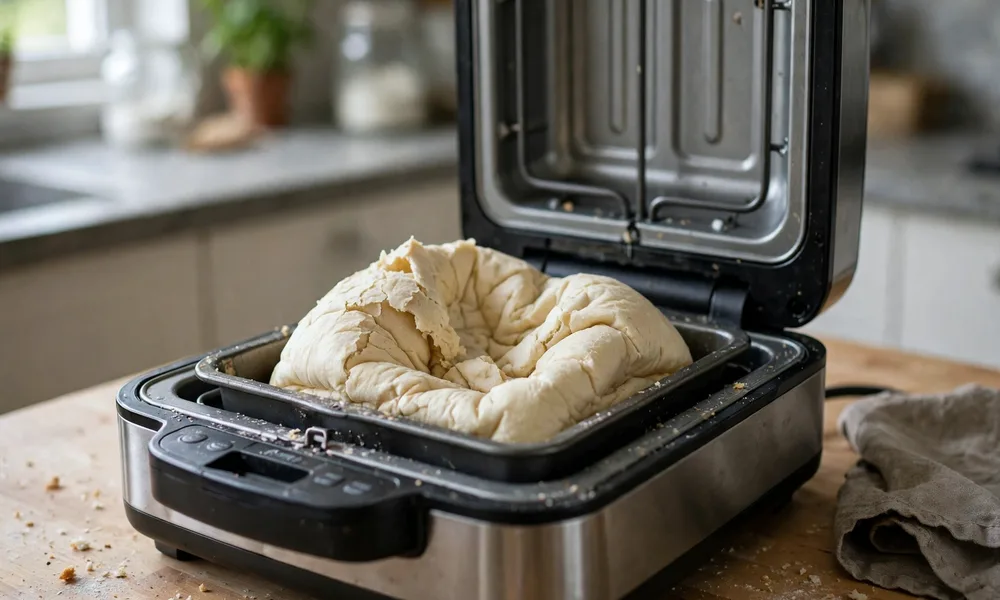
The classic bad-machine loaf rises beautifully and then falls in on itself, leaving a crater in the top and a dense, damp layer at the bottom. This is usually over-proving followed by under-baking: the dough rises too long or too warm, the yeast runs out of food, and the oven stage is too weak to set the structure before it collapses.
The paddle hole and the stuck paddle
Every bread maker leaves a hole in the bottom of the loaf, but a bad machine leaves a crater. An oversized paddle tears a chunk out of the base, and a paddle that seizes onto its shaft has to be dug out with a knife. Both are design problems, and neither can be fixed with a better recipe.
Uneven crusts and raw middles
A thin pan and a single heating element produce the same result every time: dark on top, pale on the sides, and a middle that is still doughy when the timer beeps. No crust setting can fix this, because the problem is physics, not programming. The heat never reaches the centre evenly.
Programmes that are all the same
The worst machines boast twenty programmes, and most of them are the same programme with a different label. Wholemeal gets the same kneading time as white, so the loaf comes out dense. Gluten-free gets the same proving time as white, so it collapses. The programme list is marketing, not engineering.
No spares, no support, no second year
The no-name clone often works fine for the first month. Then the paddle loosens or the coating flakes, and there is nowhere to buy a replacement. A bread maker you cannot repair is a disposable machine wearing a premium price.
Best vs worst: head to head
| What matters | The best | The worst |
|---|---|---|
| Kneading | Strong motor, smooth elastic dough every time | Weak motor, stalls on wholemeal, uneven crumb |
| Heat | Even bake, same colour all round, cooked centre | Burnt top, pale sides, raw middle |
| Pan and paddle | Small paddle hole, loaf slides out, spares available | Crater in the base, paddle seizes, no spares |
| Programmes | Few, genuinely different, gluten-free that works | Twenty labels on one fixed cycle |
| Consistency | Same loaf from the same recipe, week after week | Different result every time, even measured to the gram |
| Durability | Years of weekly use, repairable | Dead within a year, often unrepairable |
The table tells the whole story in one glance: the best machines are consistent, the worst are not. Anyone can make one good loaf by luck. A good bread maker makes a good loaf on a tired Tuesday night with supermarket flour, and does it again the next week.
Price is a clue, but not a guarantee. The worst machines are usually the cheapest: a weak motor and a thin pan at a price that leaves no room for a sensor or a decent element. But an expensive machine can fail too, usually the oversized family machine with a pan too big for a normal loaf. Price tells you what the manufacturer spent. The loaf tells you what they spent it on.
How to test any bread maker in the return window
Buy the machine, then bake hard for two weeks. Make a white loaf, a wholemeal loaf and a gluten-free loaf, each twice, with the same recipe. A good machine gives you the same result twice. A bad machine gives you two different loaves, and the second is usually worse, because the faults show up once the pan has been through a few heat cycles.
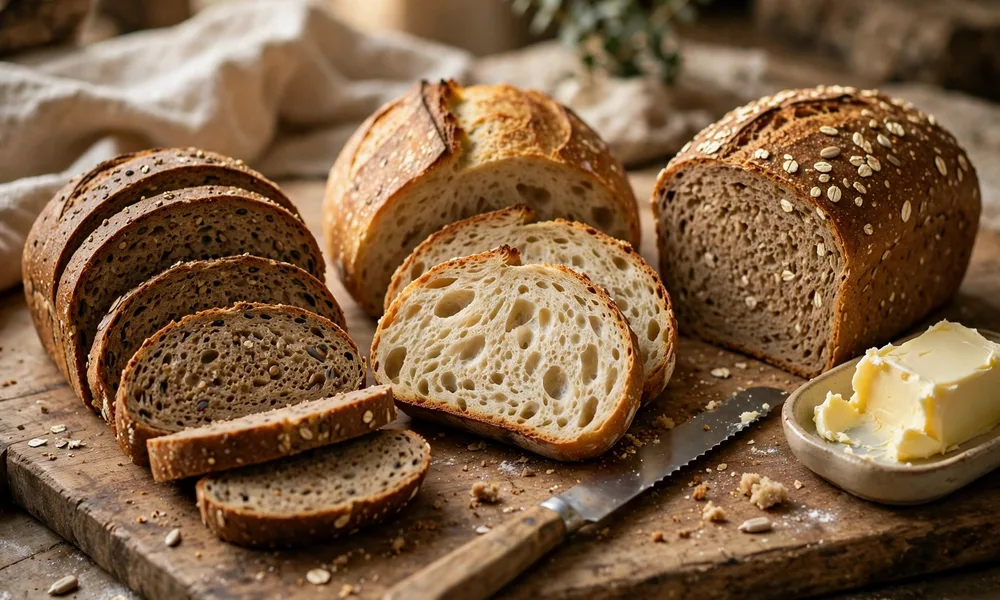
Check the paddle after every bake: it should lift off the shaft with a gentle pull. Cut each loaf in half and look at the crumb: even holes, no damp layer at the bottom, no raw strip in the middle. If anything is wrong twice in a row, send it back. The return window is your only free test, and the faults do not fix themselves.
Before the first bake, search for spare pans and paddles for the exact model. If you cannot find them, the machine has a built-in expiry date.
Who each side is for
The best bread makers are for anyone who wants fresh bread as a habit rather than a project: busy households, people who bake two or three loaves a week, and anyone who wants wholemeal or gluten-free to actually work. They cost more up front and less over five years, because they keep working and can be repaired.
The worst bread makers are for nobody, honestly, but they keep selling because they look identical to the good ones and cost half as much. If your budget is truly tight, a better move is a second-hand machine from a good brand, or a stand mixer with a dough hook and an ordinary oven. A stand mixer comparison shows what a strong motor costs when it only has to mix and knead: if a bread maker costs less than a decent mixer, ask where the savings came from. The answer is usually the motor, the pan and the sensor, the three things that make bread.
Verdict
The best bread makers earn their place on the counter by doing four jobs properly, in sequence, without supervision: strong kneading, steady proving, even baking and a pan you can live with for years. The worst fail at one or more of those jobs, and the failure shows up in the loaf, every time, in ways no recipe can rescue. The gap between them is not about programmes or looks. It is about a motor, a sensor and a pan, and it is worth paying for. Buy the machine that bakes the same good loaf twice, check for spares before you buy, and test it hard in the first two weeks.