The Smokers That Give Backyard BBQ Real Flavour in 2026
The best smokers for backyard BBQ in 2026 hold a low, steady temperature for hours and fill the meat with real wood smoke. A good smoker turns a tough cut like brisket into something tender and deeply flavoured, cooking slowly at about 107 to 135 degrees Celsius. That slow cooking is the whole point: a smoker is not a grill with the lid down, but a different tool for a different kind of cooking.
Most people buy their first smoker after one great plate of smoked food somewhere else: ribs that fall off the bone, brisket with a dark bark and a pink smoke ring. You do not need a restaurant rig or years of practice to get close to that at home. This guide covers the main ways to smoke, from offset smokers to pellet smokers.
Key Takeaways
- A smoker cooks low and slow, at roughly 107 to 135 degrees, while a grill cooks hot and fast.
- Offsets give the most authentic flavour but need the most attention; pellet smokers are the easiest way to smoke well.
- Thin blue smoke is what you want; thick white smoke tastes bitter.
- Allow about 450 grams of raw meat per person for brisket or pork shoulder.
- Buy for your usual gathering, and budget for a cover and a thermometer.
What Makes a Smoker Different From a Grill
A grill is built to sear: intense heat directly under the food cooks a steak in minutes. A smoker does the opposite, keeping the fire away from the food and holding a low temperature for many hours while smoke does the work. Heat and smoke wrap the meat in flavour while collagen slowly breaks down. That is why a brisket that would be tough after an hour on a grill becomes meltingly soft after twelve hours in a smoker. A probe thermometer clipped to the grate tells the truth, so buy one before your first cook.
The two tools overlap: many grills can smoke a little, and some smokers can grill a little. Our guide to the best grills for backyard cooking covers the grill side. But a dedicated smoker is built for low and slow cooking, with a separate firebox and a chamber sized for large cuts. If you mostly cook burgers, buy a grill; if you dream about brisket, buy a smoker.

The Main Types of Smoker
Smokers come in four main styles, and the right one depends on how much time you want to spend tending the fire.
Offset Smokers
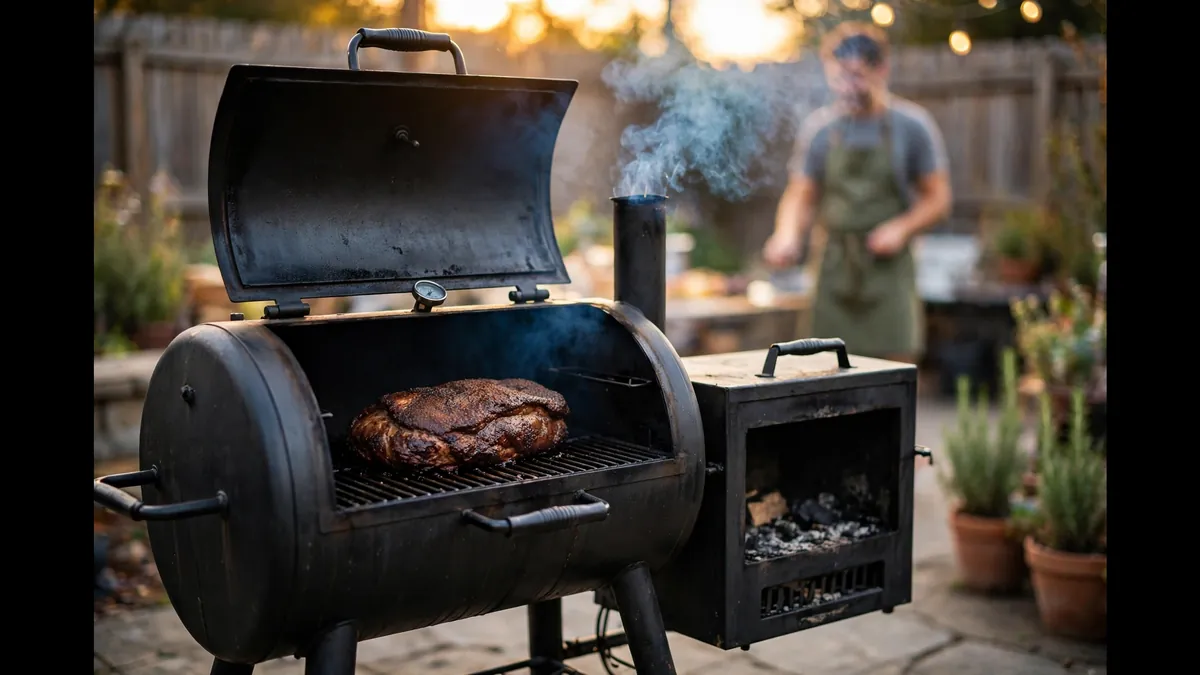
An offset smoker has a firebox attached to the side of a long horizontal chamber. Heat and smoke travel sideways across the meat and out of a chimney. This traditional Texas style gives the most authentic smoke flavour, because the meat is cooked entirely by real wood fire. The trade-off is attention: the fire needs tending every forty-five minutes. Thick steel holds heat far better than thin steel, so build quality matters most here. If you love tending a fire and want the deepest flavour, buy an offset.
Pellet Smokers
A pellet smoker burns small compressed wood pellets, fed automatically from a hopper, with a fan and controller holding the temperature you set. Load the hopper, set the temperature, and it does the rest. The smoke flavour is cleaner and lighter than an offset, but the results are consistently good. A pellet smoker can also roast and grill, making it the most versatile smoker here. Its weaknesses are dependence on electricity and pellets, and a higher price.
Vertical and Bullet Smokers
A vertical smoker stacks its grates above the heat source, with a water pan between the fire and the food. The classic bullet shape is compact and affordable. The water pan steadies the temperature and keeps the chamber moist, which helps brisket and ribs stay juicy. A vertical smoker uses less fuel than an offset and fits a small patio, but the bottom grate runs hotter than the top, so rotate the meat. For a first smoker on a budget, it is hard to fault.
Electric Smokers
An electric smoker uses a heating element and a tray of wood chips, with a thermostat holding the temperature. It is the simplest smoker to use: plug it in, add chips, set the temperature, and wait. There is no fire to tend, which suits flats and small gardens. The smoke flavour is milder, and the bark on brisket is softer, because it runs moist. If ease matters more than the deepest flavour, an electric smoker will make you happy.
What Matters When You Buy a Smoker
Capacity comes first. A smoker that holds a whole brisket and a rack of ribs covers most family gatherings. Measure the cooking grates, not the headline size, and remember that a brisket needs room around it for smoke to circulate. A family of four needs about 1,000 square centimetres, and regular hosts should look for 1,500 or more. Match the size to the table you usually feed.
Build quality is the second test, and it shows up in the weight. Thick steel holds heat and resists warping, while thin metal loses heat and rusts through in a few seasons. Check the lid seal with a thin piece of paper: if it slides out easily, smoke and heat are leaking. Stainless steel grates are easy to clean and resist rust; porcelain-coated grates are cheaper but chip if knocked.
Fuel costs deserve a thought before you buy. An offset burns charcoal and wood chunks, cheap per cook but needing dry storage. A pellet smoker burns pellets, which cost more per cook than charcoal but are clean and easy to store. An electric smoker costs the least to run. Think about what you can buy easily near home, because a smoker you cannot fuel is just garden furniture. Our guide to the best charcoal grills explains the differences between lump charcoal and briquettes.
Cleaning decides how long your smoker lasts. Removable grates, an accessible ash tray and a grease drain mean you will actually clean it. Grease left in the bottom turns rancid and can catch fire. After every cook, brush the grates while they are warm and empty the ash once it is cold. Keep it covered when not in use: a good cover is cheap insurance against rust, and our guide to the best grill covers covers sizing and materials that work just as well for smokers.
Smoker Types Compared
| Type | Smoke flavour | Effort | Capacity | Best for |
|---|---|---|---|---|
| Offset | Deepest, most authentic | High | Large | Brisket lovers who enjoy tending fire |
| Pellet | Clean and consistent | Low | Large | Busy cooks who want easy smoking |
| Vertical / bullet | Good, moist smoke | Medium | Small to medium | First smokers and small patios |
| Electric | Mild | Very low | Medium | Beginners and small gardens |

The Best Smokers of 2026
Best Overall: A Thick Steel Offset Smoker
The best overall smoker for backyard BBQ in 2026 is a well-built offset in heavy steel, with a large chamber and a separate firebox. It gives the deepest smoke flavour of any home smoker and holds enough food for a crowd. The learning curve is real, but the reward is brisket with a dark, crisp bark and a smoke ring you can see from across the table. Buy the thickest steel you can afford, because weight is the best guide to quality in an offset.
Best Easy Smoker: A Pellet Smoker
If you want great smoked food without tending a fire, a pellet smoker is the best choice. It holds temperature within a few degrees for hours and feeds itself pellets. The smoke flavour is lighter than an offset, so use a strong wood pellet like hickory or mesquite for beef and pork, and save milder fruit woods for chicken and fish. A pellet smoker also doubles as a roaster and a grill. It needs power and dry pellet storage, so it suits a garden with an outdoor socket.
Best for Beginners: An Electric Smoker
An electric smoker is the best first smoker for anyone who wants smoked food with almost no learning curve. There is no fire to manage. The food will be moist and gently smoky, though the bark will be softer than from a wood-fired smoker. Look for a good door seal, a large chip tray and at least three racks.
Best for Small Spaces: A Vertical Bullet Smoker
A vertical bullet smoker is the best smoker for a small patio or a first smoker on a budget. It takes up little space, uses little fuel, and the water pan keeps meat moist. It holds a whole chicken, a pork shoulder or two racks of ribs. The bottom grate runs hotter than the top, so rotate the food halfway through.
Getting Real Flavour: Wood, Temperature and Time
Wood is where the flavour comes from. Hickory is the classic all-rounder for pork and beef, strong and a little sweet. Oak is milder and burns longer, a good base wood for brisket. Apple and cherry are gentle and fruity, best for chicken, pork and fish. Mesquite is the strongest of all and can turn bitter if you use too much. Never use treated timber, painted wood or pine, which produce harsh, resinous smoke.
The smoke itself should be thin and blue, almost invisible. Thick white smoke means the fire is smouldering, and it leaves a bitter taste on the meat. If your smoker is belching white smoke, open the vents, let the fire breathe, and wait for the smoke to thin out. A clean fire matters more than the brand of your smoker.
Time cannot be rushed. A pork shoulder takes eight to twelve hours, a brisket twelve to sixteen, and ribs five to six. Cook to temperature, not to the clock: pork shoulder and brisket are ready around 93 degrees inside, and ribs when the meat pulls back from the bone. Wrap the meat in foil or butcher paper once the bark has set, to push through the stall. Then rest it for at least an hour before slicing, wrapped in a towel in a cool box.
Your First Smoke Checklist
- Season a new smoker: run it empty for two to three hours.
- Use a probe thermometer on the grate and one in the meat, and trust the probes over the lid dial.
- Start with pork shoulder: forgiving, cheap and hard to ruin.
- Wait for thin blue smoke before the meat goes in.
- Wrap the meat once the bark has set, to push through the stall.
- Rest the meat for at least an hour before slicing.
Frequently Asked Questions
How long does it take to smoke a brisket?
Twelve to sixteen hours at 110 to 120 degrees, including the rest. Cook to about 93 to 96 degrees inside.
Is a pellet smoker as good as an offset smoker?
A pellet smoker is easier and more consistent; an offset gives deeper flavour but needs far more attention.
What wood should I use for smoking?
Hickory and oak suit beef and pork, apple and cherry suit chicken and fish, and mesquite suits beef in small amounts.
Do I need a water pan in my smoker?
A water pan steadies the temperature and keeps the chamber moist, and catches drips that would otherwise burn.
Why does my smoked meat taste bitter?
Bitter meat almost always comes from thick white smoke, meaning the fire is smouldering. Open the vents and wait for thin blue smoke.
Can I smoke in cold or windy weather?
Yes, but it uses more fuel. Shelter it from the wind and allow extra time.
The Bottom Line
The smokers that give backyard BBQ real flavour in 2026 hold a low, steady temperature and burn clean wood smoke for hours: a thick steel offset for the deepest flavour, a pellet smoker for the easiest results, an electric smoker for the simplest start, and a vertical bullet smoker for small spaces. Pick the type that matches how you cook.