The best travel backpacks for men in 2026 are smarter, lighter, and tougher than anything that came before them. After years of travel packs that were either flimsy day bags or overweight hiking rigs, this year’s standout models finally strike the right balance: they open like a suitcase, carry like a proper rucksack, and fit in an overhead bin.
A great travel backpack does three jobs at once: it protects a laptop and valuables, swallows several days of clothes, and stays comfortable through airports, train stations, and city streets. The packs here were chosen for that mix of capacity, comfort, organisation, durability, and value.
Whether you want a single carry-on for a two-week adventure or a compact pack for weekend escapes, the right choice comes down to fit first and features second. Below are the standout packs of the year, a side-by-side comparison, and a practical guide to choosing and packing your next bag.
Key takeaways
- Fit matters most: the right torso length and padded hip belt prevent sore shoulders and a bouncing pack.
- For carry-on-only travel, look for 30 to 45 litres; 20 to 28 litres suits weekends and personal-item use.
- Clamshell opening beats top loading for travel, because you can pack and unpack like a suitcase.
- A suspended laptop sleeve, a hidden passport pocket, and lockable zippers are worth paying extra for.
- Water-resistant fabric plus a rain cover keeps your gear dry.

What Makes a Great Travel Backpack for Men
Not every backpack is a travel backpack. A good hiking pack carries weight beautifully but opens from the top, which makes finding a shirt at the bottom a daily frustration. A good school bag is comfortable but too small and floppy for a week on the road. The best travel packs borrow the best of both worlds.
Start with the back panel. A proper travel pack has a structured, ventilated back with adjustable shoulder straps and a hip belt that takes weight off your shoulders. Cheap packs skip the hip belt or make it a thin webbing strap, and your shoulders pay for it by the second day.
Fit and Torso Length
Men’s travel packs usually come in one size, but torso length still varies a lot. A pack that is too long digs into your lower back, while one that is too short pulls you backwards. Before you buy, measure from the bony bump at the base of your neck to the top of your hip bones. Most men fall between 18 and 21 inches, and most 40-litre packs are built for exactly that range.
Capacity and Carry-On Rules
A 40-litre pack is the sweet spot for most men: big enough for five to seven days of clothes, small enough to meet most airline carry-on limits. A pack measuring 55 by 40 by 20 centimetres will pass almost everywhere, while anything over 45 litres risks a forced check-in.
Opening Style and Organisation
Clamshell opening is the single most useful feature on a travel backpack. The main compartment unzips all the way around, so the pack opens flat like a suitcase. Inside, look for compression straps, a mesh divider, and a zippered pocket for small items. Outside, you want a quick-access pocket for a passport and boarding pass, and a bottle pocket that fits a full-size bottle.
Materials and Weather Protection
Most quality travel packs use ballistic nylon or high-denier polyester with a water-resistant coating. Nylon is tougher and lighter; polyester is cheaper and holds its colour well. Check the zippers, though: YKK zippers are the industry standard, and lockable pulls add real security in crowded places.
The Best Travel Backpacks for Men in 2026
The packs below cover every style of trip, from a three-day city break to a month-long journey. Each earned its place through comfort, build quality, smart features, and value.
The All-Rounder: 40-Litre Carry-On Classic
This is the pack to buy if you only want one bag. At 40 litres it hits the carry-on sweet spot, with a full clamshell opening, a suspended 16-inch laptop sleeve, and a hip belt that tucks away when you do not need it. The harness stays comfortable all day, and the fabric shrugs off rain and scuffs.
The Lightweight Champion: 35-Litre Featherweight
Weighing barely over a kilogram empty, this pack is for travellers who count every gram. The secret is a stripped-back design: fewer pockets, lighter fabric, and a minimalist frame that still carries well. You give up some organisation and the hip belt is basic, but the weight saving is worth it on short trips.
The Premium Pick: 45-Litre Executive Travel Pack
If you travel for work and want a bag that looks the part in a hotel lobby, this is the one. Premium materials, a laptop compartment that opens flat for airport security, and a pass-through sleeve that slides over a rolling suitcase handle. It costs more than the rest of the list, but the build quality and the warranty justify the price.
The Budget Winner: 38-Litre Value Pack
You do not need to spend a fortune to get a good travel backpack. This 38-litre pack covers the essentials: clamshell opening, a padded laptop sleeve, lockable zippers, and a comfortable harness, all at a price that leaves money for the trip itself.
The Adventure Hybrid: 42-Litre Trail-Ready Pack
Some trips mix cities with mountains, and this pack is built for both. It has a proper hiking-style suspension, a ventilated back panel, and lash points for a jacket, yet it still opens clamshell-style and fits in an overhead bin. For dedicated trail days, our guide to the best hiking backpacks 2026 covers packs built purely for the trail.
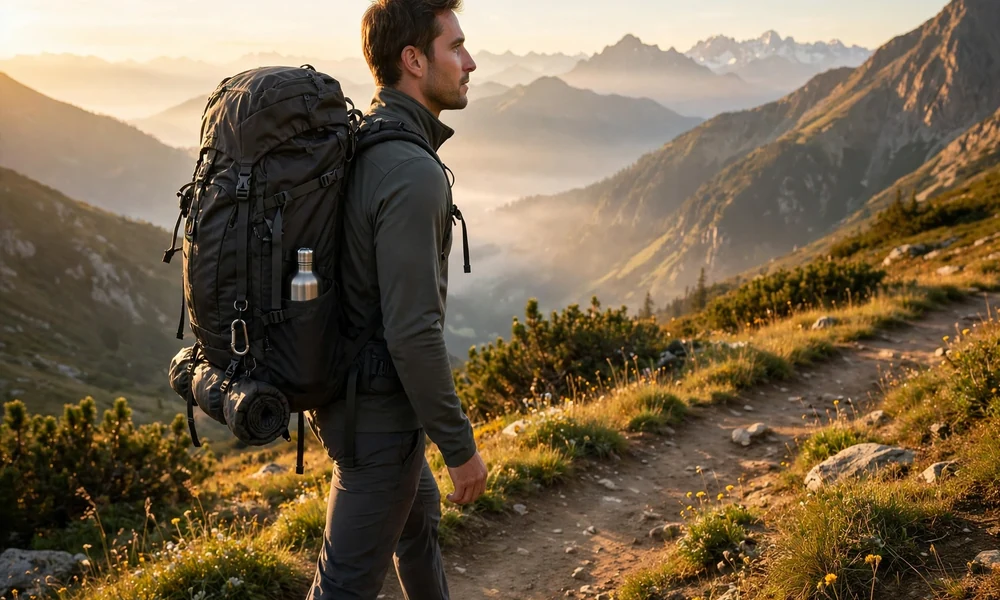
The Compact Carry: 28-Litre Weekend Pack
For weekend trips and light packers, a 28-litre pack is all you need. It holds two or three days of clothes, a laptop, and a wash bag, and it fits under the seat in front of you on most airlines. The best compact packs still include a clamshell opening and a proper hip belt, which smaller day bags often skip.
Best Travel Backpacks for Men: Comparison Table
| Pack | Capacity | Weight | Best for | Carry-on |
|---|---|---|---|---|
| All-Rounder Classic | 40 litres | 1.8 kg | Most trips | Yes |
| Lightweight Champion | 35 litres | 1.1 kg | Light packers | Yes |
| Premium Executive | 45 litres | 2.2 kg | Business travel | Most airlines |
| Budget Winner | 38 litres | 1.7 kg | First-time buyers | Yes |
| Adventure Hybrid | 42 litres | 2.0 kg | Mixed city and trail | Yes |
| Compact Weekend | 28 litres | 1.3 kg | Weekend trips | Yes, plus under-seat |
How to Choose the Right Size
Choosing the right size is the decision people get wrong most often. Bigger is not better: an oversized pack tempts you to overpack, weighs more, and risks a forced check-in. Start from your trip, not the bag. A three-day city break needs 25 to 30 litres, a week needs 35 to 40, and two weeks or more needs 40 to 45, unless you do laundry on the road.
Think about what you actually carry. A laptop, charger, shoes, and a jacket take up a surprising amount of space. Lay out everything you plan to take, then choose the smallest pack it fits into comfortably. If you are shopping for a partner as well, keep in mind that fit differs: our guide to the best travel backpacks for women 2026 covers women-specific torso lengths and narrower straps that make a real difference on long days.
Finally, check your airline. Budget carriers often limit carry-on bags to 55 by 40 by 20 centimetres and 10 kilograms, and a pack within those limits on paper can still fail if you overstuff it, so leave a little room and use the compression straps.
Packing Like a Pro
A good pack rewards good packing. Roll soft clothes instead of folding them: it saves space and reduces creases. Use the compression straps to squeeze everything down, and keep heavy items close to your back and high up, which keeps the load stable. Put journey essentials such as a book, headphones, and snacks in the quick-access pocket.

Packing cubes make the biggest difference of all. They compress clothes, keep categories separate, and let you unpack one section without disturbing the rest. If you have never tried them, our round-up of the best travel packing cubes 2026 explains which sizes and sets work best inside a 40-litre pack. A small laundry bag for dirty clothes is the other cheap upgrade that keeps the rest of your bag fresh.
Details That Matter on the Road
Small details separate a good travel backpack from a great one. Lockable zippers matter in hostels and crowded stations. A hidden pocket against your back is the safest place for a passport and cash. A luggage pass-through sleeve is a small thing until you are sprinting through an airport with a rolling suitcase, and stowable straps stop the pack snagging on conveyor belts.

Comfort details matter just as much. Look for load-lifter straps, a sternum strap that stops the shoulder straps sliding apart, and a back panel with airflow channels. Try the pack loaded before you travel: a bag that feels fine empty can feel very different with ten kilograms inside.
What to Avoid When Buying
The worst travel backpacks share the same flaws. Avoid packs with a single top opening if you travel with more than a day bag, because digging through them gets old fast. Avoid packs with no hip belt if you plan to carry more than seven kilograms, and avoid ultra-cheap packs with thin fabric and flimsy zippers.
Be wary of packs that look great in photos but have no frame or structure. A shapeless bag slumps, digs into your back, and makes packing harder. Check the warranty too: the best brands stand behind their packs for years.
Pre-Trip Checklist
- Measure your torso and try the pack loaded before you buy.
- Check carry-on size and weight limits for every carrier on your itinerary.
- Test the clamshell opening and check your laptop fits the sleeve.
- Pack with cubes, keep heavy items close to your back, and leave room for souvenirs.
- Store passport and cash in the hidden back pocket, never outside.
- Adjust all straps, stow loose ends, and attach the rain cover.
Frequently Asked Questions
What size travel backpack is best for men?
For most men, 40 litres is the best all-round size. It fits five to seven days of clothes and meets most airline carry-on limits. Choose 28 to 35 litres for weekends and 45 litres for trips of two weeks or more.
Are travel backpacks better than rolling suitcases?
It depends on the trip. Backpacks win on cobbled streets, stairs, public transport, and rough ground, where wheels are a burden. Suitcases win for heavy loads and formal business travel.
Can a 40-litre backpack be a carry-on?
Yes, in most cases. A 40-litre pack measuring around 55 by 40 by 20 centimetres fits the carry-on limits of most airlines. Always check your carrier, and avoid overstuffing the pack beyond its stated dimensions.
How much should a good travel backpack weigh?
Empty weight should be between 1.1 and 2.2 kilograms, depending on size and features. Lighter is better for comfort, but the lightest packs have fewer pockets and a simpler harness.
Do I need a rain cover for my travel backpack?
Yes, for any trip where you might face heavy rain. Most travel packs are water-resistant, not waterproof, and a downpour will eventually soak through.
How do I clean a travel backpack?
Empty it fully, shake out loose dirt, and hand wash it with mild soap and lukewarm water using a soft brush or cloth. Never machine wash a structured pack, as it can damage the frame and coatings. Air dry it fully before storing it.
The Bottom Line
The best travel backpacks for men in 2026 prove you do not need to choose between comfort, organisation, and carry-on convenience. Pick the size that matches your trips, insist on a clamshell opening and a proper hip belt, and buy the best quality your budget allows. Get those three decisions right, and your pack will simply work, trip after trip.