
The best video doorbells of 2026 do one job better than everything else on the box: they catch the delivery. Not the visitor who rings and waits, but the courier who walks up, drops a parcel, takes a photo and is back in the van within twenty seconds. If your doorbell misses that window, it has failed at the exact moment you bought it for. A video doorbell that only wakes up after the courier has left is a doorbell-shaped ornament, and the box will not tell you that.
Most doorbells promise the same things: sharp video, night vision, motion alerts and two-way talk. The differences that matter are invisible until a delivery actually happens. How fast does the camera wake when someone steps onto the path? Does it recognise a parcel sitting on the step? This guide answers those questions, so you can pick a video doorbell that actually catches the delivery in 2026.
Key Takeaways
- Wake-up speed matters most: a doorbell that takes more than three seconds to start recording will miss fast couriers entirely.
- Real package detection watches the step after the courier leaves,
- A tall, wide field of view matters more than resolution, because the parcel sits low on the step, below where most doorbells point.
- Night vision and a small amount of light at the door decide whether the evening delivery is usable footage or a dark blur.
- Check what the doorbell records without a subscription before you buy,
What Catching the Delivery Actually Means
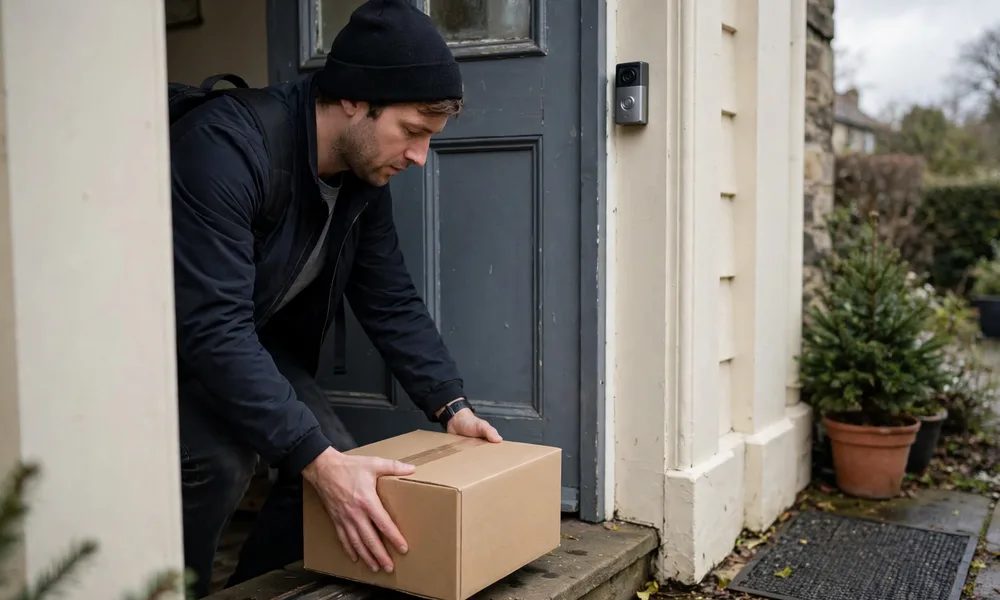
A delivery is a short sequence, and a doorbell has to catch all of it. First the courier approaches, usually walking fast and carrying a box that hides their face. Then they put the parcel down, often bending low with their back to the camera. A doorbell that only records the middle of that sequence, or only the moment someone presses the button, is not doing the job.
The hard part is the speed. A courier delivering fifty parcels before lunch does not wait around, and from the first footstep on the path to the van door closing can be under half a minute. The best video doorbells of 2026 manage this in about two seconds. The worst take eight or ten, and by then the only footage you have is an empty step and a parcel that appeared out of nowhere.
The Five Things That Decide Whether a Delivery Gets Caught
Every doorbell that catches deliveries reliably does five things well, and they are the same five things in every price range. You need one that gets these five right, in your house, on your step, with your Wi-Fi.
Wake-up speed
A doorbell that sleeps to save battery has to wake fast, and the difference between two seconds and eight seconds is the difference between a useful clip and a missed delivery. The fastest doorbells use a low-power motion sensor that is always half-awake, so the camera is already starting by the time the courier is halfway up the path. Wired doorbells usually wake faster than battery ones, because they do not ration power so carefully, but the best battery doorbells of 2026 are nearly as quick in mild weather.
Package detection that knows a box from a bush
Package detection turns a doorbell from a camera into a delivery watcher. A good system tells you a parcel has arrived, and it keeps watching the parcel afterwards, alerting you again if it disappears. That second alert matters, because a parcel left alone for hours is a parcel someone might take, and a doorbell that only records people will miss the moment a stranger picks up a box without showing their face. A package alert you ignore is worse than no alert at all, because it trains you to miss the real one.
A wide, tall field of view
Most doorbells point at faces, and most parcels sit on the ground. That mismatch is why so many delivery clips show a courier from the waist up and a step that is out of frame. A good doorbell for deliveries has a tall field of view, often roughly square, so it can see the courier’s face and the parcel on the step in the same frame.
Night vision that works on a dark step
Many deliveries happen after dark, especially in winter, when the light is gone by late afternoon. A doorbell that only works in daylight misses a third of the year. Good night vision uses infrared light the eye cannot see, and the best models add colour night vision, which keeps the picture in colour after dark. The other half of night performance is the light at your own door. A single warm porch bulb, left on or triggered by motion, does more for night footage than any sensor upgrade, and it costs almost nothing.
Storage that keeps the clip until you watch it
A doorbell that records the delivery perfectly and then deletes the clip before you see it has still failed. Some models store clips in the cloud for thirty or sixty days, some store them on a memory card or a hub inside the house, and some store nothing at all unless you pay a monthly fee. Before you buy, check how long clips are kept without a subscription, whether the doorbell records at all without one, and what the subscription costs per year. A doorbell that needs a subscription to record is not a cheap doorbell with an optional extra; it is an expensive doorbell with the price split in two.
Wired or Battery: Which Catches More Deliveries?
Wired doorbells have two advantages that matter for deliveries. They wake faster, because they are not rationing a battery, and they can keep a short buffer of the seconds before motion was detected, so the clip starts before the courier is even in frame. If your house already has doorbell wiring, a wired model is the safer choice for a busy front step.
Battery doorbells are the right choice when there is no wiring, when you rent, or when the wiring is in the wrong place. The trade-off is maintenance. A battery doorbell on a busy step can need charging every few weeks in winter, and a dead battery catches nothing. If you go battery, buy a model with a removable battery you can swap in seconds, and keep a spare charged.
Video Doorbells Compared: What Matters for Deliveries
| Feature | Why it matters | What good looks like |
|---|---|---|
| Wake-up speed | Slow wake-up misses the courier | Recording within about 2 seconds |
| Package detection | Alerts on arrival and on theft | Detects boxes, not just people |
| Field of view | Parcels sit low, faces sit high | Tall view, or a lens aimed at the step |
| Night vision | Many deliveries happen after dark | Colour night vision or good infrared |
| Pre-roll recording | Catches the approach early | 3 to 6 seconds of buffered footage |
| Storage without a fee | A deleted clip is a missed delivery | At least 7 days kept, or local storage |
| Power | Dead batteries catch nothing | Wired, or a swappable battery |
The Subscription Question, Asked Before You Buy
Subscriptions are where doorbell pricing gets slippery. The doorbell on the shelf might cost less than a dinner out, but if it needs a monthly plan to record video, to keep clips for more than a day, or to recognise packages, the real cost over three years can be double the shelf price. The mistake is buying without knowing which side of that line you are on. The subscription also decides how the doorbell fits into the rest of your home. Some doorbells share one plan with the maker’s cameras, while other brands charge per device, so read our guide to the best vs worst home security cameras before you commit to a brand, because the doorbell and the cameras will live in the same app and on the same bill. The same logic applies to the lock on the same door: a doorbell and a smart lock from the same maker share one app, which is a small thing until you are standing in the rain trying to remember which app opens the door.
Where to Mount It So It Sees the Step
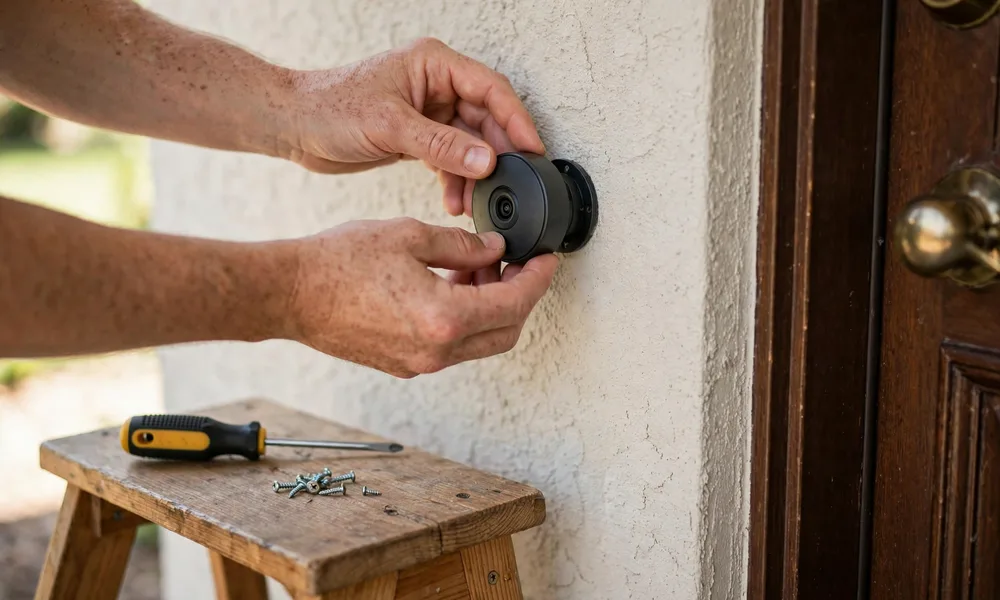
Mounting is the part most people rush, and it decides whether the doorbell sees parcels or only faces. Fit it about chest height, roughly four feet from the ground, on the wall beside the door handle, not above it. That height puts the camera level with a visitor’s face and low enough to see the step. The other mounting question is Wi-Fi: a doorbell lives outside, often on the far side of a thick front wall, and a weak signal makes even a good doorbell slow to answer. For the full picture of what works and what does not, our best vs worst video doorbells comparison puts the strongest and weakest models side by side, so you can see which faults to avoid before you spend anything.

Checklist: Before You Buy a Video Doorbell
- Walk your own path the way a courier would and time how long the doorbell takes to start recording.
- Check that package detection works on the free tier, and alerts when a parcel is taken as well as when it arrives.
- Confirm the step is in frame, not just faces, and fit a wedge mount if the camera points past the parcel.
- Test the night picture on your own step, with your own porch light, before the return window closes.
- Read the free storage terms: how long clips are kept, and whether anything records without a subscription.
- Check the Wi-Fi strength at the front door, and fix a weak signal before you judge the doorbell.
Frequently Asked Questions
Do video doorbells record without a subscription?
Some do and some do not. Models with local storage record to a memory card or a hub with no monthly fee, Others record nothing at all without a plan. Check the free tier in writing before you buy.
Can a video doorbell catch a delivery if nobody rings?
Yes, if motion detection and package detection are switched on. The best doorbells start recording when someone steps onto the path, and alert you when a parcel appears on the step.
Are battery doorbells slower than wired ones?
Usually, but the gap is small on the best models of 2026. Wired doorbells wake a little faster and can keep pre-roll footage from before the motion trigger. Battery models catch up in mild weather but slow down in the cold.
Will a video doorbell work in the rain?
A good one will. Look for a proper weather rating and a lens that sheds water, and fit the doorbell under a porch overhang if you can. Rain on the lens is the most common cause of blurry delivery clips,
Can a doorbell stop parcel theft?
It cannot stop someone taking a parcel, but it can make the theft visible. A doorbell with package detection alerts you the moment a parcel disappears, and the clip gives you a face, a time and a direction to share.
Do I need a chime as well as the doorbell?
Not always. Most doorbells ring through your phone, and many can use your existing wired chime. If you go battery-only, a plug-in chime in the hallway is worth the small extra cost,
The Bottom Line
The best video doorbell is not the one with the highest resolution or the longest feature list. It is the one that wakes up fast, sees the step as well as the face, recognises a parcel, works after dark and keeps the clip until you have watched it. Test it hard in the first week, the way a courier would use it, and send it back if it misses. The wrong one will miss a dozen before you notice.


