
Home safes that protect what matters most in 2026 are not the heaviest boxes on the shelf or the ones with the most impressive-looking locks. They are the ones that match what you actually own, the risks your home actually faces, and the habits you will actually keep. A safe that is too small ends up with valuables piled on top of it. A safe that is too complicated ends up left open. And a safe that was never bolted down is not a safe at all: it is a convenient carry case for a burglar.
Most people buy a home safe after something goes wrong: a break-in on the street, a house fire in the news, or the slow realisation that passports, jewellery and spare keys are scattered across drawers with no protection at all.
Key Takeaways
- List what the safe must hold before you shop, then buy one size bigger than that list suggests, because safes fill up fast.
- A fire rating matters more than a burglary rating for most homes, since fire destroys what thieves only steal.
- An electronic keypad is the easiest lock to live with, but only if it has a key override and a battery you can change from outside.
- A safe that is not bolted to the floor or wall can simply be carried away, whatever its lock or steel thickness.
- Keep the combination or key somewhere you can reach in an emergency, and never store the only copy of either inside the safe itself.
What a Home Safe Actually Protects
A home safe does two different jobs, and it helps to know which one you are buying it for. The first is keeping things away from thieves: jewellery, watches, cash and anything that can be sold quickly. The second is keeping things safe from fire and water: passports, birth certificates, property deeds, wills, insurance papers and the backup codes for your accounts. Many safes do one of these jobs well and the other badly, so the contents list decides the purchase.
Start by gathering everything you would want protected into one pile on a table. Passports and documents, the jewellery you rarely wear, the watch that belonged to a parent, the spare car key, the emergency cash. Measure the pile, and be honest about what will join it: the next passport renewal, a child’s first valuables, the documents from a house move.
The Types of Home Safe, Compared
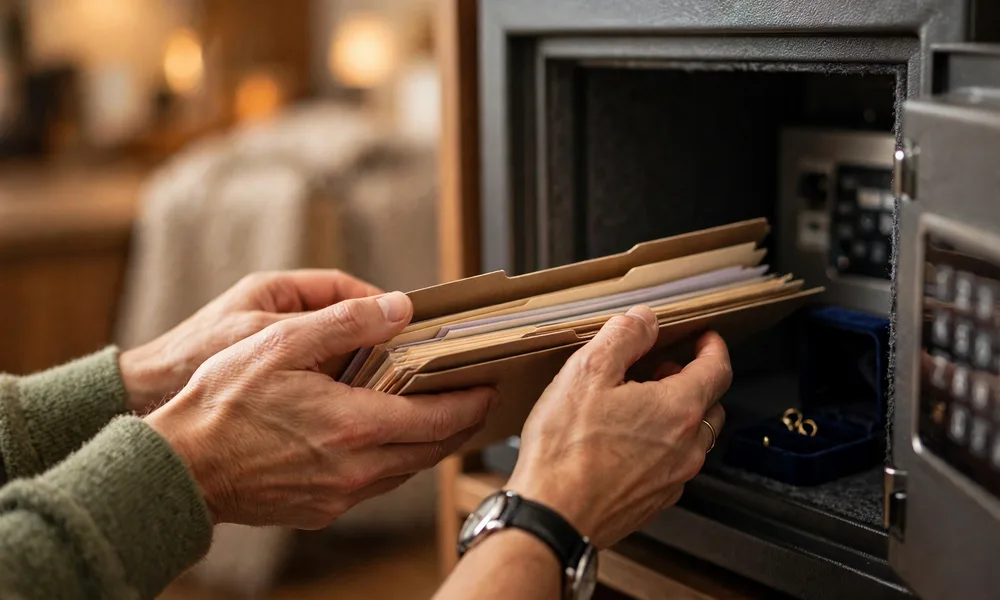
Home safes fall into a few clear types, and each one suits a different household. A small electronic safe, the kind that sits in a wardrobe, is the most common choice and the easiest to live with. A fireproof document safe is built around insulation rather than steel, and it is the right pick when paper is the priority. A floor safe hides under a rug, a wall safe hides behind a picture, and a large cabinet safe covers bulkier items.
| Type | Best for | Typical size | Watch out for |
|---|---|---|---|
| Electronic cabinet safe | Everyday valuables, jewellery, cash | 20 to 60 litres | Needs bolting down, or it walks away |
| Fireproof document safe | Passports, deeds, paper records | 15 to 40 litres | Heavier than it looks, and slow to open |
| Floor safe | Hidden storage, high-value items | 10 to 30 litres | Installation means cutting the floor |
| Wall safe | Documents and small valuables | 10 to 25 litres | Thin walls limit the depth you can fit |
How to Choose the Right Size
Safe sizes are quoted in litres, which tells you almost nothing until you translate it into objects. A 20-litre safe holds a stack of documents, a few jewellery boxes and a small cash tin, and not much else. A 40-litre safe holds the same pile plus a laptop or a camera, with room to see what you are reaching for. The rule that experienced owners repeat is simple: buy the next size up from the one that fits today.
Inside, adjustable shelves matter more than raw volume. A safe with one fixed shelf forces you to stack things, and stacked things get damaged and forgotten. Weight is part of the decision as well: a 40-litre fireproof safe can weigh 40 kilograms or more, which is a two-person lift up a flight of stairs, so measure every doorway on the route in.
Locks: Keypad, Dial or Fingerprint
The lock is the part of a safe you interact with, so it decides whether the safe feels like a help or a hassle. Electronic keypads are the most popular choice: they open fast, the code can be changed in a minute, and several people can each have their own code. The weakness is the battery, so look for a keypad with an external battery contact or a key override.
The combination dial
The old-fashioned combination dial needs no batteries and no electronics, and it will still work in twenty years exactly as it works today. It is slower and harder to use in the dark, which is why it suits a safe that is opened rarely. For a safe opened several times a week, it becomes a chore.
The fingerprint lock
Fingerprint locks feel modern and open in a second, which is genuinely useful in a hurry. They also have the most ways to disappoint: a wet or dusty finger, a sensor that ages, a child whose fingerprint was never registered. Treat a fingerprint lock as a convenience on top of a keypad or a key, never as the only way in.
Fire and Water Ratings, in Plain English
Fire ratings are where safe shopping gets confusing, because the numbers look precise and mean very different things. A common rating promises that the inside of the safe stays below the temperature at which paper chars for a stated time, often 30 or 60 minutes, in a test fire. Take the rating as a minimum, not a guarantee, and choose a longer rating than you think you need.
Water resistance is the part people forget until the washing machine leaks or the fire brigade arrives. A safe that survives a fire and then fills with water has still destroyed the documents inside, so keep documents in sealed plastic wallets inside the safe. The smoke detectors in the rest of the house are part of the same system, so the smoke detectors that alert you before it is too late deserve the same attention as the safe itself.
Where to Put It, and How to Bolt It Down
The best place for a home safe is somewhere a burglar will not look first and somewhere you can reach without a performance. The master bedroom wardrobe is the classic spot: it is private, it is where you are when you need the safe, and the safe can be bolted to the floor or the wall out of sight. The garage and the hallway are the worst, because they are the first rooms a burglar enters.
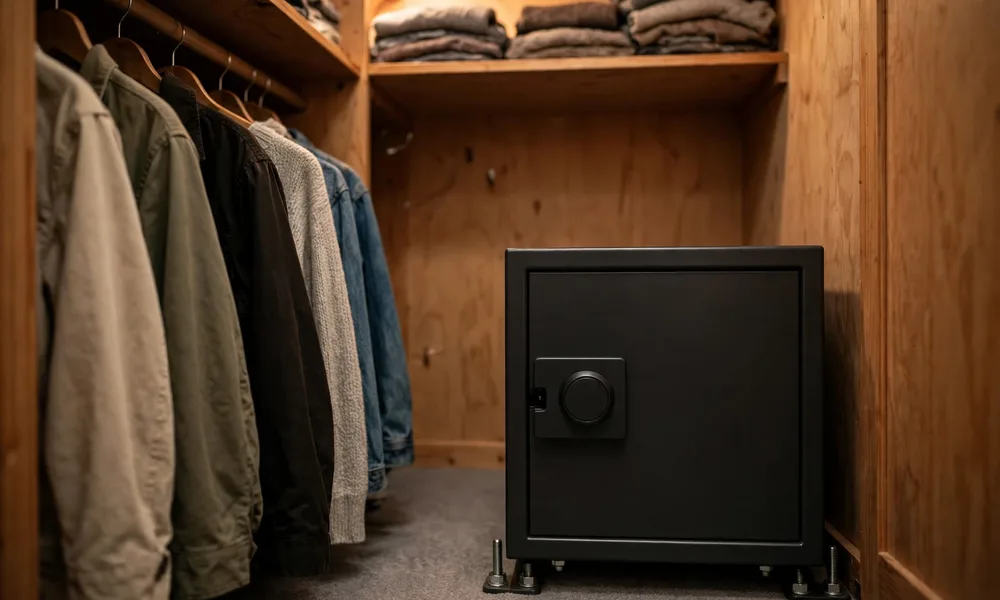
Bolting the safe down is not optional, and it is the step most buyers skip. A safe that weighs 30 kilograms can be carried by one determined person, and a safe that weighs 60 kilograms can be carried by two. The bolts that come in the box are usually enough: drill through the pre-cut holes in the base or the back, fix the safe to a solid floor or a wall stud, and test it by pulling hard. If the safe moves, it is not fixed.
Home Safe vs a Bank Safe Deposit Box
Some things belong in a bank rather than at home, and it is worth deciding which is which before you buy. A bank safe deposit box is protected by the bank’s building, its alarms and its staff, and it is the right home for the originals you almost never need: the property deeds, the will, the rarest jewellery. The trade-off is access: the box is only open when the bank is open.
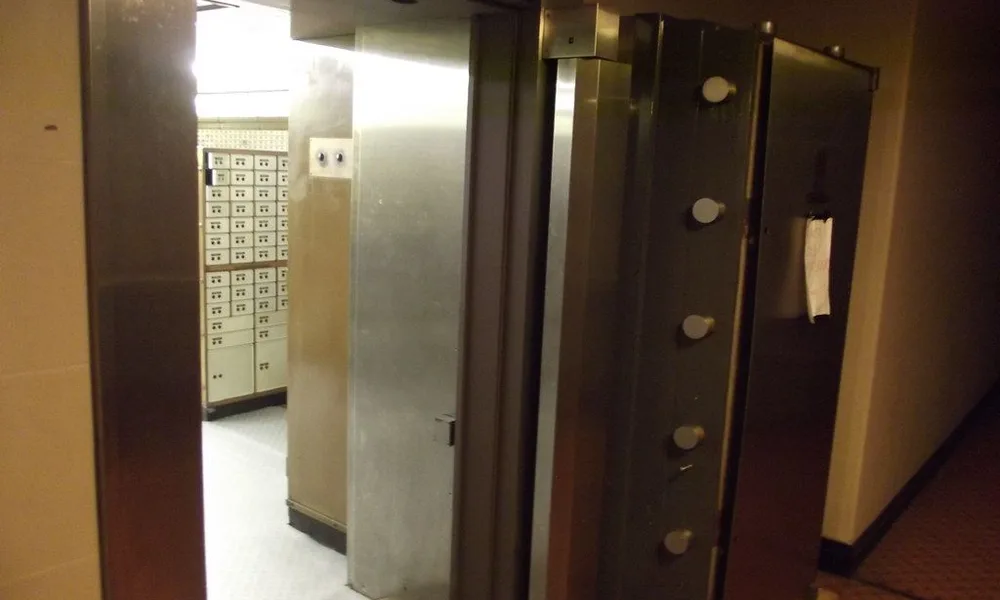
A home safe is the opposite bargain. It gives you access at midnight on a Sunday, which is exactly when you discover the passport has expired, but it relies entirely on your own house, your own bolts and your own habits. Most households end up using both: the home safe for the things they need within the hour, the bank box for the things they need within the year.
Checklist: Before You Buy a Home Safe
- List everything the safe must hold, measure the pile, and buy one size bigger than the list suggests.
- Check the fire rating in minutes and the temperature it protects to, and choose a longer rating for paper and a digital-media rating for drives.
- Make sure the lock has a second way in: a key override for a keypad, or a keypad alongside a fingerprint reader.
- Confirm the safe has bolt holes in the base and the back, and that you know what floor or wall it will be fixed to.
- Measure the route into the house and the space where it will sit, including the door swing and the shelf heights inside.
- Decide where the spare key and the combination will live, and write down who else is allowed to know them.
Frequently Asked Questions
What size home safe do most families need?
Most families find that a 30 to 50 litre safe covers documents, jewellery, a little cash and a laptop, with room to spare. Smaller safes look tidy in the shop and fill up within a year, so if the choice is between two sizes, take the larger one.
Are electronic safes safe from hackers?
A home safe is not connected to the internet, so there is nothing to hack from outside the house. The real risks are simpler: a code that is easy to guess, a key left nearby, or a safe that was never bolted down. Choose a code that is not a birthday and change the factory code on the day the safe arrives.
Can a home safe be opened if I forget the combination?
Most electronic safes have a key override, and most manufacturers can supply a replacement key if you can prove ownership, though the process is deliberately slow. Combination dial safes are harder: a locksmith can open one, but it takes time and costs money. Keep the combination somewhere secure outside the safe.
Is a fireproof safe also burglar-proof?
Not necessarily. Fireproofing is insulation, and burglary resistance is steel and bolts, and a safe can be strong in one and weak in the other. If theft is your main worry, look for a safe with a burglary rating and thick steel, and bolt it down. If fire is the main worry, prioritise the fire rating.
Where is the worst place to put a home safe?
The garage is the worst common choice: it is the first room a burglar enters, it is easy to work in unseen, and a safe there can be loaded into a van in minutes. The best places are private rooms that are not entered first, with the safe bolted down and out of direct sight.
Do I still need a safe if I have security cameras?
Yes, because cameras and safes do different jobs. The security cameras that keep watch without a subscription record what happened and can deter a burglar, but they cannot stop one from taking the jewellery box from the drawer. A video doorbell that catches the delivery adds another layer at the front door, but the safe is what protects the valuables once someone is already inside.
The Bottom Line
The home safe that protects what matters most is the one that fits your valuables with room to spare, opens the way you like to open things, survives a fire long enough for help to arrive, and is bolted to something solid in a room a burglar does not enter first. Buy the size up, change the factory code on day one, and bolt it down before you load it.


