
Earbuds are the most personal piece of technology most of us own. They wake us with a podcast, carry us through a commute, sit in on work calls, and keep us company on a run. A good pair disappears into your day so completely that you forget it is there. A bad pair does the opposite: it slips out of your ear on a busy platform, cuts out halfway through a call, or runs flat before you reach the office. The two kinds look almost identical in the shop, and the box rarely tells you which one you are holding.
This comparison judges every kind of earbud, not just the wireless kind: true wireless, wired, open-ear and neckband, best against worst, side by side. That matters, because the wireless-only test and the travel-only test already exist on this site, and neither answers the first question a buyer should ask, which is which type fits their life. Our guide to the best earbuds of 2026 covers the winners across all four types; here both sides share one page, because the fastest way to spot a bad pair is to know exactly what a good one does differently, whatever its type.
Key Takeaways
- Fit decides almost everything: a secure seal improves bass, comfort and noise control more than any feature on the box.
- Choose the type first: true wireless for convenience, wired for sound, open-ear for awareness, neckband for battery life.
- Headline battery figures almost always include the charging case, so check the single-charge figure for the earbuds themselves.
- A pair that sounds fine in a quiet room can be useless for calls, because microphones fail in wind and traffic first.
- Test earbuds hard during the return window, because the worst faults take days of real use to appear.
How Earbuds Actually Work
Inside each earbud there is a driver that makes the sound, a battery, a Bluetooth radio in the wireless kinds, microphones, and touch sensors, all packed into something the size of a fingertip. With true wireless pairs, the case is a third product: a battery, a charger and a hinge, expected to survive being dropped, sat on and opened a dozen times a day. When any one of those parts is built to a price, the earbuds can still sound acceptable on day one, which is why so many bad pairs get good first impressions.
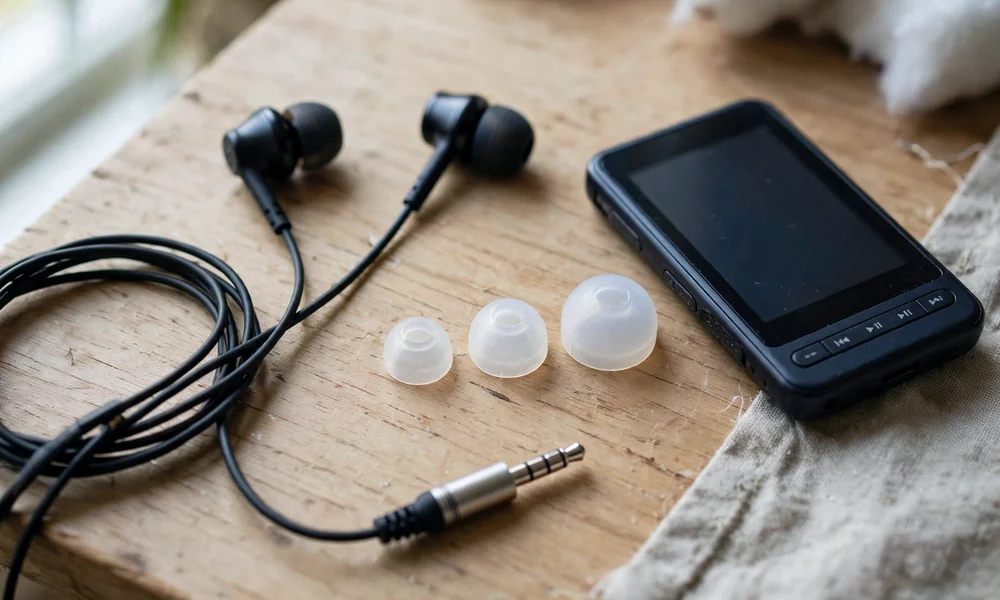
The seal is the part buyers underestimate. A tip that seals the ear canal keeps bass in and outside sound out, and both noise cancelling and sound quality depend on that seal before any electronics get involved. A loose tip makes even a good driver sound thin and tinny, and makes noise cancelling pointless, because the sound simply walks in around the edges.

Choose Your Type First
True wireless earbuds are the default choice in 2026, and for most people they are the right one. Nothing connects the two buds, the case charges them between uses, and the best pairs give seven or eight hours per charge plus a full day from the case.
Wired earphones are the quiet bargain of the earbud world. No battery, no Bluetooth, no pairing, no charging, and often better sound for the money, because every penny goes into the driver instead of radios and batteries. They suit music lovers, long listening sessions and anyone whose phone still has a headphone socket, or who does not mind a small adapter. Their weakness is the cable: it tangles, it snags on door handles, and it tugs the buds out of your ears at the worst moment.
Open-ear earbuds sit outside the ear canal and let the world in, which makes them the right choice for runners, cyclists and anyone who needs to hear traffic or a colleague. They trade bass and noise control for awareness, and that trade is worth making when safety depends on hearing what is around you. They are also the kindest option for ears that ache after an hour with a sealed tip inside them. Neckband earbuds, with a band that rests on the shoulders and holds a bigger battery, suit long days and long calls, and they are almost impossible to lose, because the band keeps both buds attached to you.
What the Best Earbuds Get Right
The best earbuds of 2026 share a short list of qualities, and none of them is about the number of features on the box. They fit properly, they sound steady, they hold a connection, and they last the day. A good pair comes with several sizes of ear tips, and the right size seals the ear canal without pressing hard. The best pairs also offer different tip materials, because foam suits some ears and silicone suits others, and the difference between the right tip and the wrong one is the difference between a pair you love and a pair you abandon.
Sound is the second test, and the best earbuds sound balanced rather than impressive. Bass is present without swamping voices, speech is clear, and high notes do not turn harsh when you turn the volume up. That steadiness matters more than any single demo track, because most listening happens at moderate volume in noisy places, not in a quiet room with the volume low.
Connection and battery come next, and the best pairs treat them as seriously as sound. A good pair connects the moment you open the case, stays connected through a crowded station, and switches between phone and laptop without a ritual of forgetting and re-pairing. Battery figures are honest: seven or eight hours per charge with noise cancelling on, plus at least twenty-four hours from the case, and a quick charge that gives an hour of listening from ten minutes in the case. The best microphones are the final test: they pick up your voice in wind and traffic, so the person on the other end hears you rather than the street.
What the Worst Earbuds Get Wrong
The worst earbuds fail at fit first. They ship one tip size, or tips so hard they ache within twenty minutes, and no combination of settings fixes a bud that will not stay sealed. The sound goes thin, the bass disappears, and the bud works its way out with every step. Some of the worst pairs are also too big for small ears or too heavy for long wear, and they press on the ear until taking them out feels like relief. A pair that hurts is a pair that stays in the drawer.
The second failure is the connection. Bluetooth dropouts and pairing failures are the most common wireless faults, and no equaliser setting can fix them. The worst pairs stutter when you put your phone in a pocket, cut out on one side when you turn your head, or take a minute to connect every morning.
The third failure is the battery lie. Headline figures almost always include the case, so a pair that promises thirty hours may only give four hours per charge, and the case may only hold two more charges before it needs a cable of its own. The worst pairs also age badly: after six months the battery fades to half its original life, one bud drains faster than the other, and the case stops charging one side entirely.
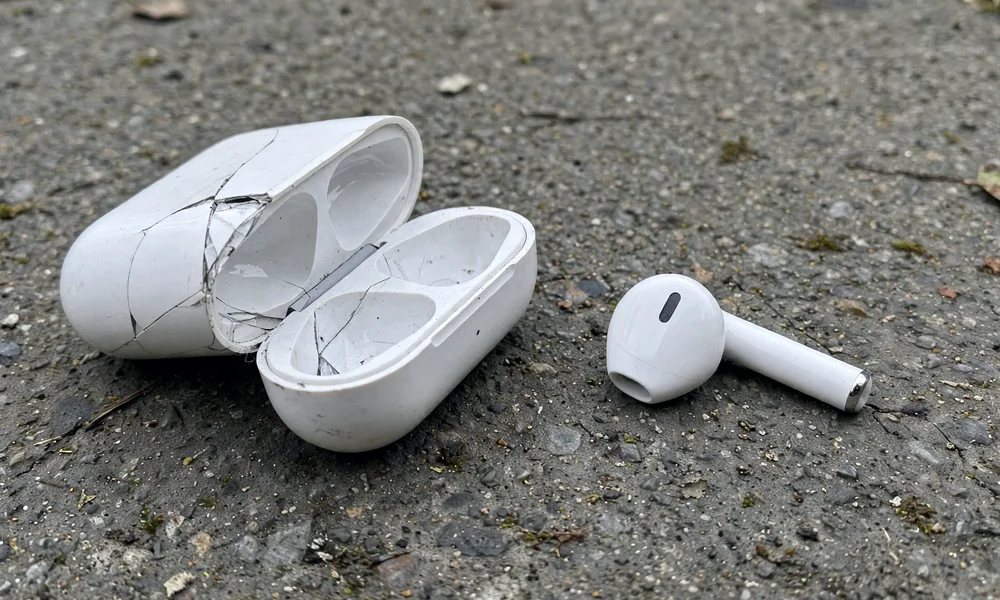
The fourth failure is the case and the call quality. The worst cases have hinges that crack, lids that pop open in a pocket, and magnets too weak to hold the buds, so one bud falls out and is lost within a month. The worst microphones sound fine in a quiet room and useless everywhere else: wind turns your voice into noise, traffic drowns you out, and the person on the other end keeps asking you to repeat yourself.
Best vs Worst Earbuds at a Glance
| Test | Best earbuds | Worst earbuds |
|---|---|---|
| Fit | Several tip sizes and materials, seal without pressure | One hard tip size, slips out, aches in twenty minutes |
| Sound | Balanced at any volume, both buds equal | Thin and tinny, harsh when loud, one bud quieter |
| Connection | Instant pairing, steady in a crowd | Dropouts, one-sided cutouts, forgets pairing |
| Battery | Seven to eight hours per charge, honest case total | Four hours per charge, fades within months |
| Calls | Clear voice in wind and traffic | Useless outdoors, touch controls hang up calls |
| Case | Solid hinge, strong magnets, survives drops | Cracked hinge, weak magnets, loses a bud |
Which Earbuds for Which Life
For commuting and everyday use, a true wireless pair with good noise cancelling, seven hours per charge and a solid case is the answer for most people. It handles the train, the office and the walk home, and it disappears into a pocket between uses. Our guide to the best and worst wireless earbuds goes deeper on that kind alone. For flights and long journeys, the same pair needs a case that holds a full day of charge and a low-profile bud you can sleep on, and our guide to the best and worst travel earbuds judges pairs by how they behave in the cabin.
For music lovers on a budget, wired earphones give the best sound for the money, with no battery to fade and no connection to drop. For runners and cyclists, open-ear buds are the only safe choice, because hearing traffic matters more than hearing bass. For long working days full of calls, a neckband pair or a true wireless pair with strong microphones will save you from repeating yourself, and for small ears, the fit test matters more than any review: try every tip in the box, wear the pair for twenty minutes, and send it back if it aches or slips.
The Verdict
The best earbuds of 2026 are the ones that get the unglamorous things right: a fit that seals without pressing, sound that stays steady at any volume, a connection that holds in a crowd, and a battery that lasts the day. They cost more than the cheapest pairs, but the difference is spread across thousands of hours of listening. The worst earbuds are the ones that spend their budget on the box instead of the buds: one tip size, a stuttering connection, a battery figure that only exists with the case, and a hinge that cracks within months. Buy the pair that fits your ears and your life, not the pair with the longest feature list, and test it hard during the return window.
Test Them Before the Return Window Closes
Wear a new pair for a full day before you decide: walk, take a call outside, ride a train, and let the battery run down. If a bud slips, the sound stutters, one side fades, or your caller cannot hear you in the wind, send the pair back. Try every tip size in the box, because the right tip can rescue a good pair and the wrong one can condemn it. A pair that passes a week of real life is a pair that will still be earning its place in your pocket in two years.


