
Why a Good Belt Is Worth More Than You Think in 2026
A good belt is the quietest piece of clothing you own, and the one you notice most when it fails. It holds your trousers where they belong, finishes an outfit in a way no other accessory can, and gets handled every single day, often several times a day. Yet most people buy one as an afterthought, and then wonder why it fails within a year. In 2026, when a well-made belt can last a decade and a bad one barely survives a season, the difference is worth understanding before you spend anything.
This guide explains what separates a belt worth buying from one worth skipping. It covers the leathers and materials that actually last, the widths and buckles that suit different outfits, how to get the size right first time, and the seven belts that earn a place in a wardrobe in 2026, .
Key takeaways
- Full-grain leather is the longest-lasting belt material by a wide margin, and it ages better the more you wear it.
- Buy your belt two inches larger than your trouser waist size, and check the fit on the middle hole, not the last one.
- A belt should match your shoes in colour and finish, not your shirt, your tie, or your bag.
- One good casual belt and one good dress belt cover almost every outfit; a third, woven or webbing belt, covers the rest.
- A cracked, peeling, or curling belt is finished, and no amount of polish or conditioner will bring it back.
How we judged the best belts
Every belt here was judged on the same five points. First, material: is it full-grain or top-grain leather, a genuine woven fabric, or a bonded leather that will peel? Second, construction: are the edges finished and sealed, is the stitching even and tight, and is the buckle fixed with screws or rivets rather than glue? Third, comfort and fit: does it sit flat, stay put through a long day, and offer enough holes for a proper fit? Fourth, looks: does it work with the outfits it is meant for, and does the buckle suit the occasion? Fifth, value over time: what does it cost per year of wear, not just on the day you buy it?
The best belts at a glance
| Belt | Best for | Material | Width | Approx. price |
|---|---|---|---|---|
| Classic full-grain leather belt | Everyday wear | Full-grain leather | 35 mm | $60–$120 |
| Slim dress belt | Suits and formal wear | Top-grain leather | 30 mm | $50–$100 |
| Casual stitched leather belt | Jeans and chinos | Full-grain leather | 38 mm | $40–$90 |
| Woven leather belt | Smart-casual outfits | Woven leather | 35 mm | $45–$95 |
| Canvas webbing belt | Weekends and outdoors | Cotton webbing | 38 mm | $20–$45 |
| Ratchet belt | Precise, adjustable fit | Leather strap | 35 mm | $50–$110 |
| Reversible leather belt | Two colours, one belt | Top-grain leather | 32 mm | $45–$85 |
The 7 best belts for 2026
1. Best overall: the classic full-grain leather belt
The classic full-grain leather belt is the best all-round belt you can buy, because it does the simple things better than anything else. Full-grain leather is the top layer of the hide, with its natural grain intact, so it is strong, resists stretching, and develops a rich patina instead of wearing out. A plain 35 mm strap in dark brown or black, with a simple brass or nickel buckle, goes with almost everything you own.
2. Best for suits: the slim dress belt
A dress belt is a different tool from a casual one, and the slim dress belt is built for the job. At around 30 mm wide, with a smooth, unstitched strap and a flat, understated buckle, it slips through the narrow loops of suit trousers and sits flat under a jacket without a bulge. Black goes with black shoes and dark suits, while dark brown suits navy and charcoal.
3. Best for jeans: the casual stitched leather belt
Jeans need a belt with a bit of character, and the casual stitched leather belt is made for them. A slightly wider 38 mm strap, contrast stitching along the edges, and a solid brass buckle give it the rugged look that suits denim, and the thicker leather stands up to the wider belt loops on jeans. For more on building outfits around denim, see our guide to the best jeans for every body type in 2026.
4. Best smart-casual: the woven leather belt
The woven leather belt is the most versatile smart-casual belt there is, because its stretch forgives a lot. Thin strips of leather are braided together, so the belt flexes as you sit, stand, and eat, and the prong can fasten through the weave at almost any point, giving you a near-perfect fit every time. It looks relaxed with chinos and a linen shirt, and it is the easiest belt to pack, since it coils up small and never creases.
5. Best for weekends: the canvas webbing belt
Some days call for a belt you do not have to think about, and the canvas webbing belt is that belt. Tough cotton webbing with a simple metal or plastic buckle, it survives rain, sweat, washing, and being stuffed in a bag, which is more than most leather belts can claim. It is the right choice for shorts, cargo trousers, and outdoor days, and at twenty to forty-five dollars it is cheap enough to own in two or three colours.
6. Best adjustable fit: the ratchet belt
If you have ever found yourself between holes on a normal belt, the ratchet belt solves the problem properly. Instead of holes punched every inch, a track on the back of the strap lets the buckle click into place in tiny quarter-inch steps, so the fit is exact whether you have just eaten or just come from the gym. The mechanism is hidden inside a normal-looking buckle, so it works with a suit as well as with jeans, and the strap can be trimmed to size at home.
7. Best for travel: the reversible leather belt
The reversible leather belt is two belts in one, and that is exactly why it earns its place. Black on one side and brown on the other, it covers both shoe colours without taking up space in a suitcase, and the buckle simply twists around to switch sides. It is not quite as heavy or as characterful as a dedicated full-grain belt, but for a weekend away or a light-packing trip it is the smartest belt you can own.
Materials: what your belt is really made of
Leather quality decides how long a belt lasts more than any other factor. Full-grain leather, the untouched top layer of the hide, is the strongest and the best-looking over time. Top-grain leather is lightly sanded and finished, so it looks more uniform but is slightly less durable. Genuine leather sounds reassuring, but it is actually one of the lower grades, made from the layers left after the top is removed, and it is often the material in belts that crack and peel within a year. Bonded leather is the worst of all: leather scraps glued together, which flakes apart once the coating wears.
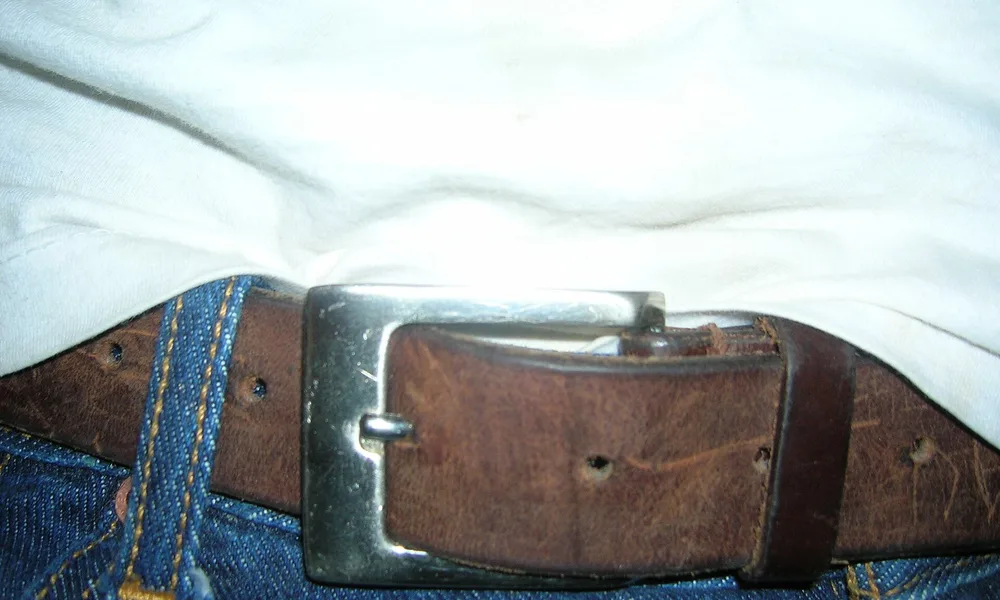
Non-leather belts have their place too. Woven leather and braided belts trade a little formality for comfort and stretch. Canvas and webbing belts are washable, lightweight, and honest about being casual. Elastic and stretch belts suit travel and long days sitting down.
Fit and sizing: how a belt should feel
Getting the size right is simple once you know the rule, and most people get it wrong. Belt sizes are measured from the buckle to the middle hole, and the right size is usually two inches larger than your trouser waist size, so a 34-inch waist takes a 36-inch belt.
Width matters as much as length. Dress trousers have narrow loops that suit a 30 mm belt, while jeans and chinos take 35 to 38 mm. Match the belt to your shoes in colour and finish: black leather shoes want a black belt, brown shoes want a brown one, and the buckle metal should match your watch and other hardware. For a sense of how the rest of your outfit should come together, see our guide to the best dress shirts for work and weddings in 2026, and match your buckle metal to the finish of your watch in our best versus worst watches for 2026.
Looking after your belt so it lasts
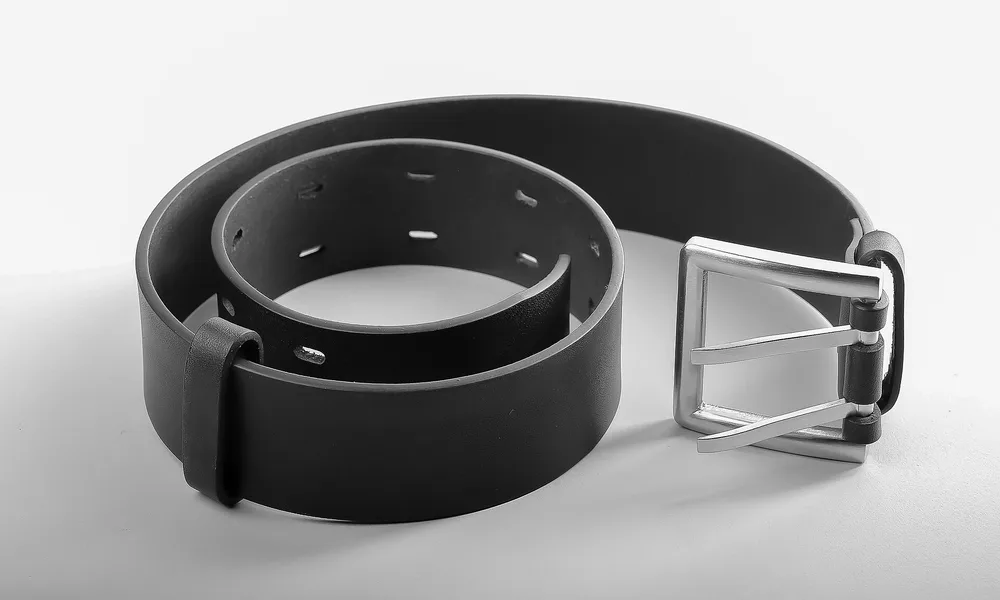
A good leather belt needs very little care, but it does need some. Keep it hanging or loosely coiled, never folded tight or knotted, because sharp folds crack the leather at the bend. Wipe it down with a damp cloth when it gets dirty, let it dry naturally away from radiators, and condition it with a leather balm two or three times a year to keep it supple. Never soak a leather belt, never machine-wash it, and never hang it in a damp bathroom. Webbing belts can go in the washing machine in a laundry bag, and woven belts just need a brush down.

Before you buy checklist
- Check the leather grade on the label: full-grain first, top-grain second, never bonded leather.
- Measure from your trouser waist size and add two inches, then confirm the middle-hole fit when it arrives.
- Match the belt width to your trouser loops: 30 mm for suits, 35 to 38 mm for jeans and chinos.
- Match the belt colour to your shoes, and the buckle metal to your watch and other accessories.
- Inspect the edges and stitching: sealed, even edges and tight stitching mean a belt built to last.
- Own two belts before you own five: one casual and one dress, in the colours you actually wear.
Frequently asked questions
What size belt should I buy?
Buy two inches larger than your trouser waist size. If you wear 34-inch trousers, buy a 36-inch belt.
How do I know if a belt is real leather?
Look for the grade on the label: full-grain or top-grain means real, high-quality leather. Genuine leather is a lower grade, and bonded leather is mostly glue and scraps.
Should my belt match my shoes?
Yes, as a rule. Black shoes go with a black belt, brown shoes with a brown belt, and the shades should be close. The buckle metal should also match your watch, cufflinks, and other hardware for a finished look.
How many belts do I actually need?
Two cover almost everything: one casual leather belt in brown or black, and one slim dress belt. Add a woven or webbing belt for weekends and travel, and you have every occasion covered with three.
Why does my belt crack at the holes?
Cracking at the holes is the first sign of low-grade or bonded leather, and it is made worse by a belt that is too small, so the same hole takes all the strain every day. A full-grain belt in the right size rarely cracks, and rotating between two belts helps both last longer.
Can I wear a belt with a suit?
Yes, but choose a slim dress belt in the same colour as your shoes, with a small, plain buckle. The belt should sit flat and unnoticed. With a suit, braces are the alternative, but a belt is the simpler and more common choice.
The bottom line
A good belt is worth more than you think because it is the hardest-working item in your wardrobe and the cheapest one to get wrong. Spend a little more on full-grain leather, buy the right size, match it to your shoes, and look after it, and a single belt will serve you for years. The belt you barely notice is the one doing its job best.


