
How to Choose a Wallet That Lasts for Years in 2026
A wallet is the most handled object most people own. It is picked up, opened, sat on, stuffed into pockets, and dropped on tables dozens of times a week, and it carries the things you cannot afford to lose: your cards, your cash, and your identification. Yet wallets are usually bought in a hurry. Choosing a wallet that lasts for years is not about spending the most money. It is about knowing what to look for before you buy, and what to avoid.
This guide walks through the whole decision: the types of wallet and who each one suits, the materials that survive daily use, how many cards a wallet should really hold,.
Key takeaways
- Full-grain leather outlasts every other wallet material, and it looks better as it ages instead of worse.
- Count the cards you actually carry every day, then buy a wallet with exactly that many slots, plus one spare.
- A bifold suits most people; a slim card holder suits those who carry four cards or fewer and little cash.
- Check the stitching, the card slots, and the edges before you buy: loose threads and rough edges fail first.
- Empty your wallet once a month, because an overstuffed wallet stretches, cracks, and wears out twice as fast.
How we judged the best wallets
Every wallet here was judged on the same five points. First, material: is it full-grain or top-grain leather, a quality fabric, or a bonded leather that will peel? Second, construction: is the stitching tight and even, are the edges burnished and sealed, and do the card slots grip without tearing? Third, capacity: does it hold a realistic daily load without bulging, and does it stay slim in a pocket? Fourth, design: is it easy to get cards in and out, does it sit comfortably, and does it suit the way you actually live? Fifth, value over time: what does it cost per year of use, not just on the day you buy it?
The best wallets at a glance
| Wallet | Best for | Capacity | Material | Approx. price |
|---|---|---|---|---|
| Classic leather bifold | Most people, every day | 8–10 cards | Full-grain leather | $60–$120 |
| Slim card holder | Minimalists | 4–6 cards | Leather or metal | $30–$80 |
| Leather trifold | Maximum capacity | 10–14 cards | Top-grain leather | $50–$100 |
| Front-pocket wallet | Comfort and security | 6–8 cards | Leather | $40–$90 |
| Money clip wallet | Cash carriers | 6 cards + cash | Leather and metal | $35–$85 |
| Long wallet | Notes flat, no folding | 10–12 cards | Leather | $70–$140 |
| RFID-blocking wallet | Contactless-card security | 8–10 cards | Leather with lining | $45–$95 |
The 7 best wallets for 2026
1. Best overall: the classic leather bifold
The classic leather bifold is the best wallet for most people, because it gets the balance right. It folds once, holds eight to ten cards plus folded notes, fits in a back or jacket pocket, and opens flat so you can see everything at a glance. A full-grain leather bifold in black or dark brown will last for years, develop a patina that makes it look better with age, and suit everything from a suit to jeans.
2. Best for minimalists: the slim card holder
The slim card holder is for people who have stopped carrying cash and loyalty cards they never use. Four to six cards, a couple of folded notes if needed, and nothing else, in a wallet so thin you forget it is in your pocket. It forces good habits: you carry what you need and leave the rest at home, and your pocket stays flat instead of bulging. Leather versions age gracefully, while metal ones are nearly indestructible.
3. Best for capacity: the leather trifold
The leather trifold folds twice, which makes it thicker, but it also makes it the highest-capacity wallet here, holding ten to fourteen cards plus notes, receipts, and an ID window. It suits people who carry a lot: multiple bank cards, store cards, a driving licence, and a health card. The trade-off is bulk, so it is best in a jacket pocket or a bag rather than a tight jeans pocket.
4. Best for comfort: the front-pocket wallet
Sitting on a thick wallet all day is bad for your back and bad for the wallet, and the front-pocket wallet is the answer. Slimmer and slightly smaller than a bifold, it is shaped to sit in a front trouser pocket, where it is more comfortable, harder to steal, and less likely to be sat on and crushed. It holds six to eight cards and folded notes, and it is the best choice for anyone who spends long hours sitting, driving, or at a desk.
5. Best for cash: the money clip wallet
Some people still carry cash every day, and the money clip wallet is built for them. A slim leather sleeve holds your cards, while a strong metal clip on the outside grips folded notes flat and tight, so you can see and reach your cash without opening anything. It is thinner than a bifold, faster to use at a till, and it keeps your notes neat instead of crumpled at the bottom of a pocket.
6. Best for notes: the long wallet
The long wallet, sometimes called a breast wallet, keeps banknotes flat instead of folding them, and some people will never go back once they have tried it. It holds ten to twelve cards in a slim, elegant shape that slides into a jacket’s inside pocket and barely shows. It is the most formal wallet here, and the best match for a suit, but it is too long for most trouser pockets, so it belongs with a jacket or a bag.
7. Best for security: the RFID-blocking wallet
Contactless cards can be read wirelessly, and an RFID-blocking wallet stops that from happening. A thin shielding layer built into the lining blocks the radio signal, so your cards cannot be scanned while they sit in your pocket. The best versions look and feel exactly like a normal leather bifold, with the same card capacity and the same slim shape, so you give up nothing for the extra protection. For keeping the rest of your valuables safe at home, see our guide to the best home safes that protect what matters most in 2026.
Materials: leather grades and the alternatives
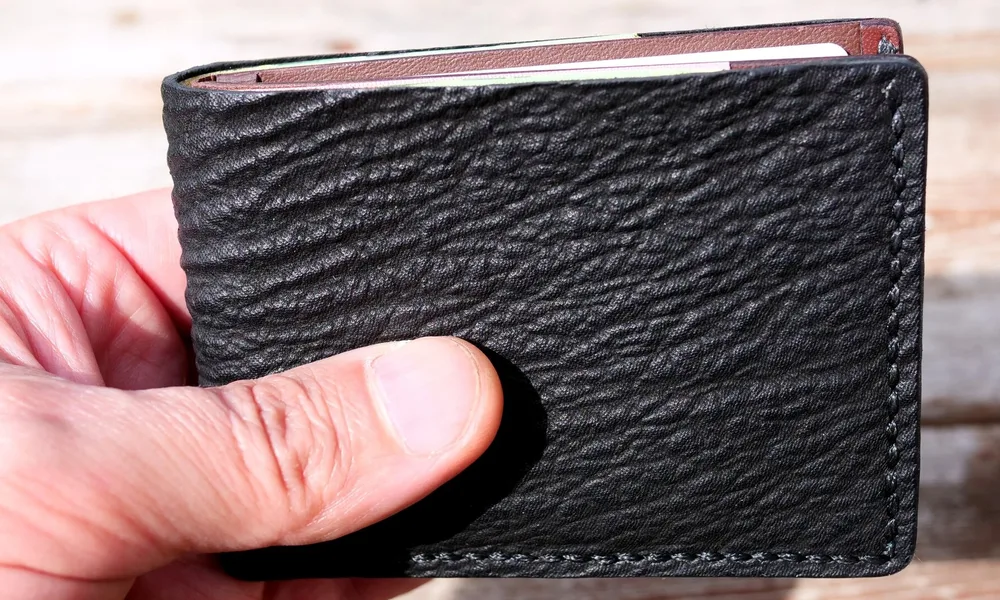
Leather quality decides how long a wallet lasts more than any other factor. Full-grain leather is the untouched top layer of the hide, so it is strong, resists stretching, and develops a rich patina. Top-grain leather is lightly sanded and finished, so it looks more uniform but is slightly less durable. Genuine leather sounds reassuring, but it is actually a lower grade, made from the layers left after the top is removed, and it is the material in wallets that peel and crack within a year. Bonded leather is the worst of all: leather scraps glued together, which flakes apart once the coating wears.
Non-leather wallets have their place too. Canvas and nylon wallets are light, washable, and good for travel and outdoor use. Metal card holders are slim and almost impossible to break, though they hold little cash. Cork and plant-based leathers are improving fast and suit anyone who wants to avoid animal leather.
Capacity: how much should a wallet really hold?
Most wallets fail because they are overstuffed, not because they are badly made. Before you buy, empty your current wallet and count what you actually use. Most people need a payment card, a credit card, an ID card, and one or two others, which is five or six cards in total. Everything else, old receipts, loyalty cards for shops you visit twice a year, and expired cards, should live at home, not in your pocket. Buy a wallet with exactly that many slots plus one spare, and your wallet will stay slim, its stitching will last longer, and it will be far more comfortable to carry.
Looking after your wallet so it lasts for years
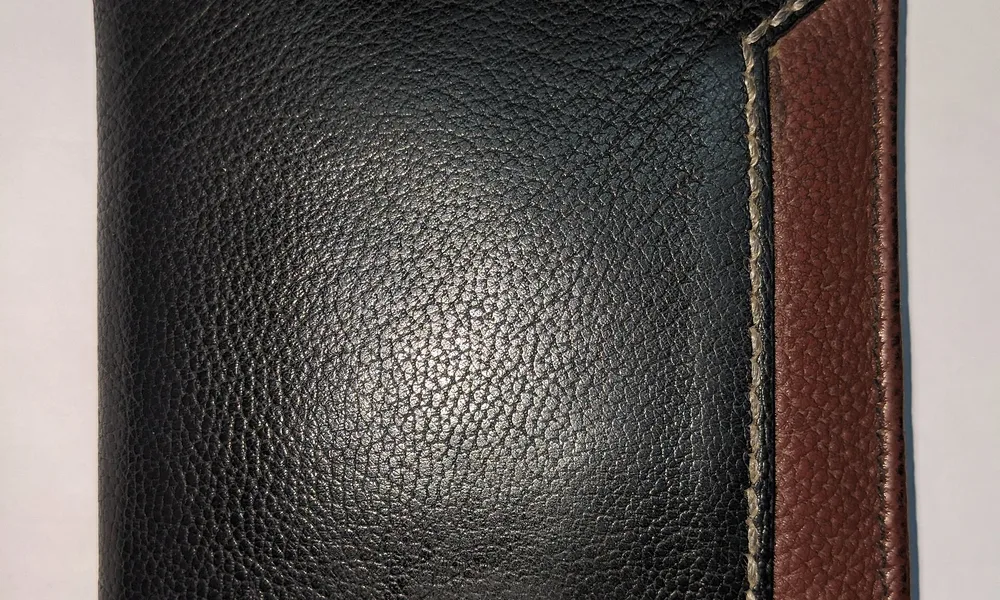
A good leather wallet needs very little care, but it does need some. Empty it once a month and throw away the receipts and cards you do not use. Wipe it with a damp cloth when it gets dirty, let it dry naturally away from radiators, and condition it with a leather balm two or three times a year to keep it supple. Never sit on a wallet in a back pocket for long periods if you can avoid it: the pressure bends cards, stretches stitching, and warps the leather. Never machine-wash a leather wallet, and never leave it in a hot car.
Before you buy checklist
- Count the cards you carry every day, and buy a wallet with that many slots plus one spare, no more.
- Check the leather grade on the label: full-grain first, top-grain second, never bonded leather.
- Inspect the stitching and edges: tight, even stitching and sealed edges mean a wallet built to last.
- Test the card slots: cards should slide in firmly and come out easily, without tearing the lining.
- Choose the shape for your pocket: bifold for most people, front-pocket for comfort, long wallet for jackets.
- Carry it in your pocket for a day if you can, and check it sits flat and does not dig in when you sit down.
Frequently asked questions
How many cards should a wallet hold?
Most people need five or six cards: a payment card, a credit card, an ID card, and one or two others. Buy a wallet with that many slots plus one spare. A wallet with far more slots than you need will tempt you to overfill it, which stretches and damages it.
Is full-grain leather worth the extra money?
Yes. Full-grain leather is the strongest grade, it resists stretching and cracking, and it develops a patina that looks better with age.
Do I need an RFID-blocking wallet?
It is a sensible precaution if you carry several contactless cards and spend time in crowded places, and the best RFID wallets look and feel exactly like normal leather wallets, so you give up nothing. It is not essential, but it is cheap insurance against a real, if uncommon, risk.
Why does my wallet wear out so quickly?
Overstuffing is the most common cause: too many cards and receipts stretch the stitching and crack the leather. The second cause is low-grade or bonded leather, which peels and flakes. Empty your wallet monthly, and buy full-grain leather next time.
Front pocket or back pocket?
Front pocket is more comfortable, better for your back, and harder for a pickpocket to reach, which is why front-pocket wallets exist. Back pocket is fine for a slim bifold, but sitting on a thick wallet all day will wear it out faster and can cause back discomfort.
What makes a good wallet gift?
A full-grain leather bifold in black or dark brown is the safest gift, because it suits almost everyone. For more gift ideas, see our best Christmas gifts for men in 2026 and our tote bags worth carrying every day in 2026.
The bottom line
A wallet that lasts for years is not a mystery and it is not a luxury. It is a full-grain leather wallet, in the right shape for your pocket, with exactly the capacity you need and stitching that was made to be used every day. Count your cards, check the leather grade, buy once, and look after it, and the wallet you buy in 2026 will still be in your pocket in 2031.


