Pick up any bottle of vitamin C supplements in 2026 and the front tells a confident story: immune support, brighter skin, a big round number in milligrams. Turn the bottle around and the back tells a different story, written in serving sizes, percentages, blends and small print. The gap between the two is where the money in the aisle is made.
This guide is not about which brand to buy. It is about what the labels do not tell you — what they tell you in language designed to be skimmed past. We walk through a Supplement Facts panel line by line and decode the claims on the front.
Key Takeaways
- The Supplement Facts panel matters more than the front: the real dose, serving size and added ingredients are all on the back.
- A Daily Value above 100% sounds impressive, but absorption falls as the dose rises, so megadoses are mostly wasted.
- Serving size is the oldest trick in the aisle: a bottle that looks cheap can be expensive per dose once you count the tablets in one serving.
- Proprietary blends hide amounts. If a label will not say exactly how much vitamin C is in each serving, put the bottle back.
- Seals from USP, NSF or ConsumerLab mean independent testing; “premium” and “clinical strength” mean nothing on their own.
Start With the Supplement Facts Panel, Not the Front
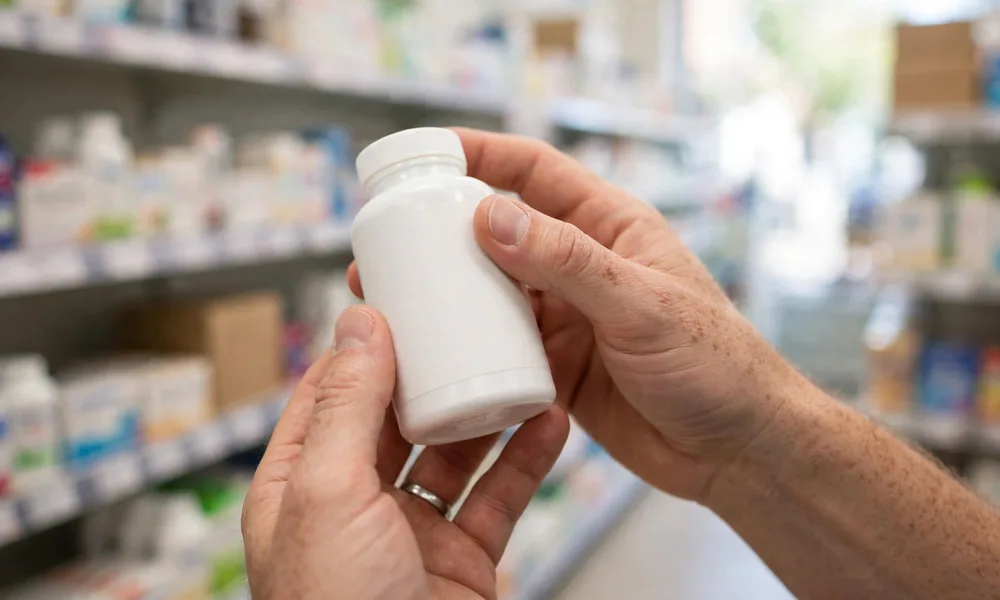
Every vitamin C supplement carries a Supplement Facts panel, the black-and-white box on the back of the bottle. It looks boring, and that is the point: it is the one part of the label the manufacturer cannot dress up. The front is marketing; the panel is the record.
The panel answers four questions. What is the serving size, and how many servings are in the container? How much vitamin C is in one serving, in milligrams? What percentage of the Daily Value is that? And what else is in the product, listed below the panel by weight?
Check serving size first, because everything else is measured against it. If the serving is two tablets, the 1,000 mg on the panel is the amount in two tablets, not one, and a bottle that claims to last 60 days lasts 30. Gummies are the worst offenders: a serving is often two or three, so “60 gummies” is really 20 or 30 servings.
The Daily Value Percentage Is Doing More Work Than You Think
Next to the milligram amount sits a percentage: “Vitamin C 500 mg — 556% Daily Value”. The Daily Value for vitamin C is 90 mg, so any ordinary dose produces a percentage in the hundreds or thousands. The scale stops meaning much past 100%.
The reason is absorption. Your body absorbs roughly 70 to 90 percent of a 200 mg dose, but only about half of a 1,000 mg dose, and less still as the dose climbs. Past saturation, the extra is mostly excreted. A 500 mg tablet is a sensible safety net; a 2,000 mg tablet is mostly an expensive way to produce bright yellow urine.
Serving Size Is Where the Maths Gets Slippery
Serving size hides in three places. First, the serving itself: two or three units, so the bottle lasts half as long as suggested. Second, the price illusion: 120 tablets at a serving of two is a 60-day supply, while 90 tablets at a serving of one is a 90-day supply. Always divide the price by servings, never by tablets.
Third, the added ingredients are measured per serving too. Gummies list sugar per serving, and two gummies might hold 3 grams — small, until you realise the serving is three gummies taken every day. Effervescent tablets carry the same issue with sodium, sometimes several hundred milligrams per tablet. To compare bottles, work out the price per 500 mg: price divided by servings, divided by milligrams per serving, times 500.
What the Front of the Bottle Is Allowed to Say
The front of the bottle follows different rules from the back. Makers may make “structure/function” claims — that a nutrient supports a normal bodily function, such as “supports immune health”. They may not claim to diagnose, treat, cure or prevent a disease, which is why you never see “prevents colds” on a lawful label.
Watch for words that sound meaningful and are not regulated at all. “Premium”, “pure”, “advanced” and “clinical strength” have no legal definition for supplements. The same goes for “natural”: supplement vitamin C is usually made by fermenting corn starch into ascorbic acid, whether the label calls it natural or not. And “with rose hips” sounds generous, but a tablet can hold 5 mg of rose hips beside 500 mg of vitamin C.
The Seals on the Back: A Plain-English Decoder
Near the bottom of the back label you may find a small seal — the most useful mark on the bottle, because it is the only one the manufacturer did not award to itself. Supplements are not approved before sale the way medicines are, so independent testing is the main check that a bottle contains what it claims.
The USP Verified mark means the product was tested for identity, strength, purity and consistency. NSF Certified for Sport means testing for contaminants and banned substances. ConsumerLab buys products off the shelf and publishes pass-or-fail results. These three are worth looking for.
Be careful with seals that look official but are not testing marks. “Made in a GMP facility” is a baseline expectation, not a guarantee about this bottle. “Third-party tested” without naming the tester is a claim you cannot verify. Also check the lot number and expiry date, usually stamped on the bottle: vitamin C degrades in heat, light and humidity, so a bottle with no expiry date is one to leave behind.

Reading the Ingredients List After the Vitamin C
Below the panel sits the “other ingredients” list, ordered by weight. In a tablet you will usually see binders such as microcrystalline cellulose and silicon dioxide — unglamorous, harmless, and present in tiny amounts. A long list of these is normal; it is simply how a tablet holds together.
What is worth noticing is what else is in the product. Artificial colours and sweeteners are common in chewables and gummies, and sugar alcohols such as sorbitol can upset sensitive stomachs. If you have a sensitivity — to gluten, dairy, soy or gelatin — this is where you will find it. The list also reveals the form: “ascorbic acid” is the standard form, while “calcium ascorbate” is a buffered form, gentler on the stomach but with less vitamin C per tablet.
Forms, Blends and Fancy Names on the Label
Liposomal vitamin C deserves a paragraph of its own, because its labels are the most confusing in the aisle. These products wrap vitamin C in tiny fat bubbles, and the label emphasises absorption in large type. What it may not emphasise is the price: often five to ten times as much per milligram as plain ascorbic acid. For an everyday 200 to 500 mg dose, plain ascorbic acid is already well absorbed, and the premium buys little.
“Time release” is another phrase to read carefully. These tablets release vitamin C slowly over several hours, which sounds sensible, but the evidence for a real advantage at normal doses is thin — and if the label gives no duration, the claim has no content. The same applies to “high absorption”. Finally, watch for the “immune complex” listing vitamin C beside zinc, elderberry and echinacea with a single total weight: you cannot tell how much of anything you are getting. The mineral most often paired with vitamin C is zinc, and our guide to how to choose a zinc supplement without the guesswork covers the forms and doses that matter there.
Comparing Labels: Four Bottles, Four Stories
| Label type | What the front says | What the back reveals | Verdict |
|---|---|---|---|
| Plain ascorbic acid tablets | Vitamin C 500 mg | One tablet per serving, 250 servings, no added sugar, USP seal | Best value for most people |
| Gummies | Immune support, delicious orange flavour | Three gummies per serving, 3 g sugar, 250 mg vitamin C per serving | Easy to take, weak dose, sugary |
| Liposomal liquid | High absorption, 1,000 mg | One tablespoon per serving, five times the price per mg | Premium price, modest gain |
| Proprietary immune blend | Immune complex with 10 ingredients | Blend total 800 mg, no individual amounts, no third-party seal | Do not buy |
The front of the bottle is a promise, and the back is the evidence. The plain tablet promises the least and delivers the most; the blend promises the most and delivers the least evidence.
The Price-Per-Dose Check
Price is the last thing to check, and the label gives you everything you need. Divide the price by the number of servings for the price per serving, then divide that by the milligrams per serving and multiply by 500: the price per 500 mg.
One more price trap is not on the label at all: the subscription. Many brands sell vitamin C monthly at a discount that looks generous, and the discount is real — but only if you need a bottle every month. A 250-tablet bottle at one tablet a day lasts eight months, so a monthly plan would bury you in tablets. For a broader view, our guide to the best multivitamins of 2026 explains when a broad formula makes sense — and our guide to the best immune boosters of 2026 is a useful companion read.
Vitamin C Supplements Label Checklist
- Serving size: count servings in the container, not tablets, and divide the price by servings.
- Vitamin C amount: one clear number in milligrams, named form, never hidden in a proprietary blend.
- Daily Value percentage: read it with the serving size; absorption falls as the dose rises.
- Added sugar and sodium: check gummies for sugar and fizzy tablets for sodium, per serving.
- Third-party seal: look for USP, NSF or ConsumerLab; treat unnamed “third-party tested” claims as decoration.
- Expiry date and lot number: check both before you buy, and store the bottle sealed in a cool, dry place.

Frequently Asked Questions
What should I look for first on a vitamin C supplement label?
The Supplement Facts panel: serving size, milligrams of vitamin C per serving, and whether the amount is listed on its own or hidden in a proprietary blend. Those three lines tell you the dose and the value.
Is a higher Daily Value percentage better?
Not past a point. The Daily Value is 90 mg, so any normal dose produces a percentage in the hundreds, and your body absorbs a smaller share as the dose rises.
What does “proprietary blend” mean on a vitamin C label?
Several ingredients are listed together with one total weight, so you cannot tell how much of each you are getting. For vitamin C, that hides the one number that matters most — so do not buy it.
Are gummy vitamin C supplements as good as tablets?
They hold the same nutrient, but usually less per serving plus added sugar, and the serving is often two or three gummies. Check the vitamin C and sugar per serving first.
What do USP and NSF seals mean on a supplement?
An independent organisation tested the product for identity, strength and purity, and checked the facility’s manufacturing practices. They are the most reliable marks on the label.
How should I store vitamin C supplements?
Sealed, in a cool, dry place away from light and humidity — never in a steamy bathroom. Vitamin C degrades in heat and moisture, so check the expiry date before you buy.
The Bottom Line
Vitamin C supplements are simple products wrapped in complicated labels, and the complication is not an accident. Big percentages, small serving sizes, proprietary blends and impressive-sounding claims all make a bottle look like more than it is. The defence is simple: turn the bottle around, read the panel, count the servings, check the seal, and work out the price per 500 mg.