
Blush is the makeup that makes a face look alive. A good blush adds a soft flush to the cheeks, the way skin looks after a walk in cold air or a good laugh, and the whole face seems healthier and more awake. A bad blush does the opposite: it sits on the skin in a harsh stripe, looks orange or muddy, fades within an hour, or leaves a chalky patch that no amount of blending will fix. The difference between the two is rarely the price of the compact.
This comparison puts the best blushes of 2026 head to head against the worst, judging them the way you would actually wear them: how naturally the colour blends, whether the shade suits real skin, how long it lasts through a working day, and whether the formula feels comfortable on the cheek. The tool matters too, and our guide to makeup brushes that blend without scratching explains why a soft, fluffy brush is the difference between a gentle wash of colour and a hard line.
Key Takeaways
- Blendability is everything: a good blush melts into the skin, while a bad one sits in a visible stripe.
- Shade matters more than brand: the right pink, peach or rose for your skin tone beats any famous name.
- Less product is more: a light layer built up slowly looks natural, while a heavy load looks painted on.
- Check it after an hour: a good blush looks the same at lunchtime, while a bad one has faded or turned patchy.
- Powder, cream and liquid do different jobs: powder suits oily skin, cream suits dry skin, and the wrong one will fight you.
How Blush Actually Works
A blush is coloured pigment mixed into a base of powder, cream or liquid, and its job is to mimic the natural flush of blood rising to the cheeks. At its heart it is pigment plus a carrier: powder blushes use fine talc or mica, cream blushes use waxes and oils, and liquid blushes use a light gel. Change the balance and you change everything. More pigment gives stronger colour but a harder edge, more oil gives a dewy glow but less staying power, more powder gives a soft matte finish but a drier feel, so every formula is a trade-off between colour, wear and comfort.
Finish is the first thing to understand, because matte and shimmer blushes behave very differently. A matte blush has no shine, which makes it perfect for a natural daytime flush, but it can look flat and dusty if the formula is poor. A shimmer blush contains tiny reflective particles that catch the light, which can make the cheeks look radiant, but it can also emphasise pores and texture, especially on mature skin. A satin finish sits between the two, with a soft glow and no visible glitter, and it is the safest choice for most people most days.
Staying power is the second test, and it is where cheap blushes most often fail. The cheek is warm, it moves when you smile and talk, and it produces oil through the day, so a blush has to grip the skin and flex with it. A good one bonds lightly with the skin and fades evenly, so by evening it is simply softer. A bad one slides off in patches, leaving colour in some spots and bare skin in others, or it sinks into pores and looks darker and muddier as the hours pass. The base underneath matters as well, and a blush applied over a well-matched foundation lasts far longer than one applied over bare, oily skin.
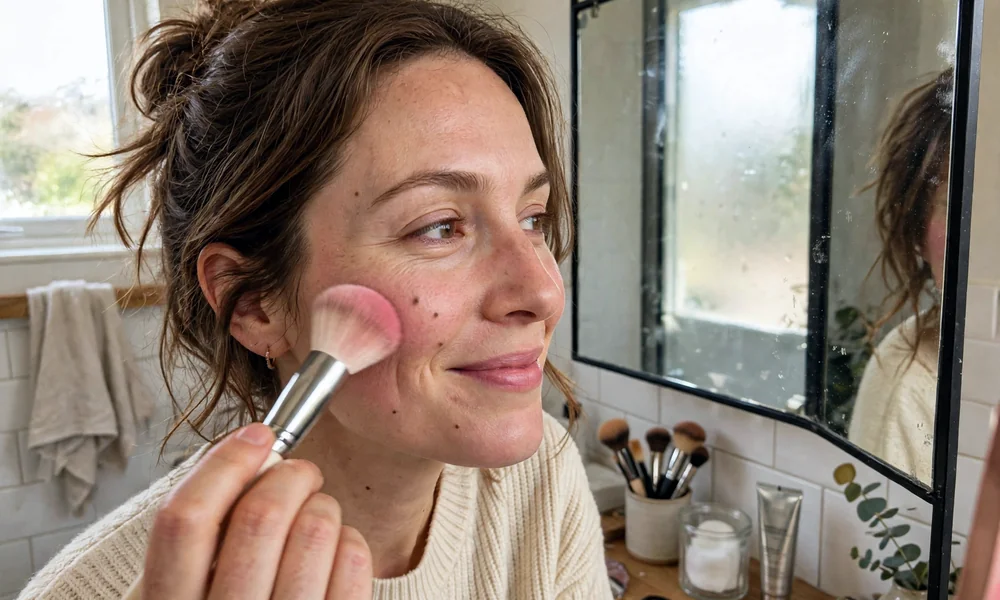
The Best Blushes of 2026
The best blushes of 2026 share one quality above all others: they look like skin, only healthier. The colour is sheer enough to build slowly, so the first sweep gives a whisper of pink and the second gives a little more, and you stop when it looks right rather than when the product runs out. That control is what separates a good blush from a mediocre one. With a good blush, you decide how flushed you look. With a bad one, the blush decides for you, dumping a dark patch on the cheek that takes five minutes of blending to rescue.
A great powder blush is finely milled, which means the particles are tiny and even, so the colour spreads smoothly instead of landing in speckles. The best powder blushes of 2026 press firmly into the pan, so the brush picks up just enough product, and they release their colour evenly across the cheek. They also layer well over foundation without lifting it or turning it patchy, which is a test many blushes fail. The shades are the other half of the story: the best ranges include soft pinks for fair skin, warm peaches for medium skin and rich berries for deep skin, because one universal pink suits almost nobody.
Cream blushes are the quiet success of 2026, and they suit anyone whose skin runs dry or who prefers a dewy finish. The best creams melt on contact with warm skin, blend with fingers or a brush in seconds, and leave a glow that looks like healthy skin rather than makeup. They are also forgiving: a little too much can be patted down with a fingertip, while a powder mistake needs a brush and a prayer. The trade-off is wear, because creams fade faster than powders, but a good cream blush set lightly with a dusting of translucent powder lasts the working day. The rest of the face should stay in balance too, and our comparison of lipsticks that stay put without drying is a reminder that cheeks and lips should echo each other, not compete.
Longevity is the final mark of a great blush, and it is the one you can only judge by wearing it. A good blush survives a full day of smiling, talking and walking in the sun, fading evenly rather than disappearing in patches. The best formulas of 2026 use pigments that bond gently to the skin and a base that resists oil, so the colour you see at eight in the morning is still there, a little softer, at six in the evening. A blush that lasts the day has paid for itself, because it means no midday reapplication, no mirror checks and no worrying about whether your cheeks have gone bare by lunch.

The Worst Blushes of 2026
The worst blushes of 2026 fail in ways that are obvious within the first hour, and the most common failure is also the most visible: they are far too pigmented. One touch of the brush picks up a shocking amount of colour, and the first sweep leaves a dark stripe that has to be blended for minutes, often with a clean brush or a sponge, and even then a shadow of the stripe remains. A blush this strong is not a sign of quality, it is a sign that the maker never tested it on a real face.
Chalkiness is the second great failure, and it is the one that ages the face. A bad powder blush is coarsely milled, so it sits on top of the skin in a dry, dusty layer that catches the light and emphasises every pore and fine line. On dry skin it looks flaky, on oily skin it mixes with oil and turns muddy, and on mature skin it settles into texture that was invisible before the blush went on. The colour often looks fine in the pan and wrong on the cheek, because a chalky formula changes shade as it dries, turning a soft rose into a dull brick or a fresh peach into a flat orange.
Then there is the blush that simply vanishes, which is a stranger failure but a common one. Some cheap blushes look vivid in the pan and almost invisible on the skin, because the pigment is weak and the filler is strong, so you have to load the brush three or four times to see anything at all. Others last an hour and then fade completely, leaving no trace by lunchtime, which means carrying the compact everywhere and reapplying in every bathroom you pass. A blush that cannot be seen or cannot stay is not doing its job.
The worst blushes also get the shade badly wrong, and this is where the cheapest ranges give themselves away. Their pinks are too blue and look cold on warm skin, their peaches are too orange and look brassy, and their roses are too brown and look like a bruise. The shades often look identical in the pan and wildly different on the cheek, because the base colour shifts as it meets skin. A good range tests its shades on many skin tones before selling them, and it shows. The base underneath plays its part as well, and our guide to foundations that disappear into skin explains why a blush can only look as good as the skin it sits on.

How to Choose a Blush That Suits You
Start with your skin tone, not with a shade someone else recommends. Fair skin suits soft pinks and light peaches, medium skin suits warm roses and corals, and deep skin suits rich berries, plums and warm terracottas. The test is simple: smile, and look at the colour your cheeks turn naturally, then choose a blush one shade deeper than that. If the blush in the pan looks identical to your natural flush, it will disappear on the skin, and if it looks wildly different, it will look like makeup rather than a flush.
Test a blush on your cheek, not on your hand, because the cheek is warmer, oilier and more textured than the hand, and blushes behave differently there. Sweep a little onto the apples of your cheeks, blend it upward toward the temples, and then walk away from the mirror for ten minutes. A good blush settles into the skin and looks softer after ten minutes, while a bad one dries darker, turns patchy or vanishes. Check it in daylight too, because bathroom light flatters everything, and a blush that looks perfect indoors can look orange or chalky in the sun.
Think about formula before you buy, because the right formula depends on your skin. Powder suits oily and combination skin, because it absorbs oil and stays put, while cream suits dry and mature skin, because it adds moisture and glow. Liquid blush suits anyone who wants a sheer, natural finish, but it dries quickly, so it must be blended fast. Whichever you choose, apply it lightly and build it slowly: two thin layers always look better than one heavy one.
The Verdict
The best blushes of 2026 are the ones that look like you on a very good day: soft colour, easy blending, a shade that suits your skin, and wear that lasts until evening. They make the whole face look healthier, they waste none of your time, and they forgive a heavy hand. The worst blushes do the opposite at every turn, striping, chalking, fading and turning the wrong colour, and the money saved on the price is lost in wasted product and ruined mornings. Choose your shade in daylight, test it on your cheek, build it slowly, and replace any blush that stripes, chalks or disappears by lunch.


